
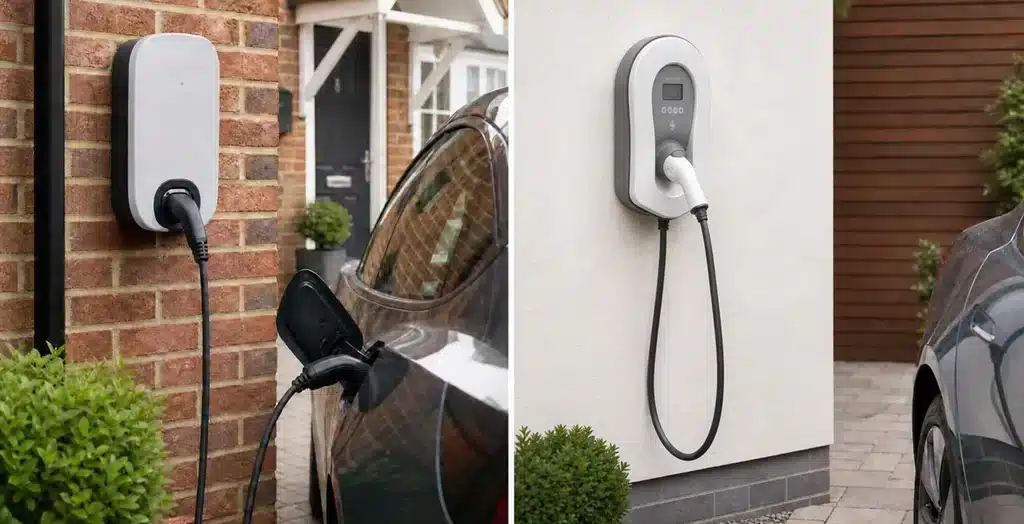
If you are choosing a home charger, one of the biggest decisions is whether to go tethered or untethered. Both work well, but they suit different charging habits.
What tethered means
A tethered charger has a cable permanently attached to the unit. You simply unplug it from the charger and plug it into the car.
Pros
- quick and easy to use
- no need to carry a separate cable
- tidy if you always charge the same car
Cons
- less flexible if you change vehicles
- cable type is fixed
- harder to repair if the cable develops a fault
What untethered means
An untethered charger does not have a fixed cable. You plug in the cable you want to use each time.
Pros
- can use the same cable with any other Type 2 public charger
- fexibility. only the cable needs changing if you switch to a vehicle with a different connector type or you need a longer length
- more compact as there is no cable hanging from the unit
- usually cheaper than a tethered unit
Cons
- slightly more steps every time you charge
- cable needs to be stored somewhere
Which one is better?
There is no single best answer. Tethered chargers suit drivers who want maximum convenience. Untethered chargers suit drivers who want flexibility and a cleaner setup.
If your household may change EVs in future, untethered is often the safer long-term choice.
What matters most
Whichever type you choose, make sure the charger and cable match your vehicle and your charging routine. The right setup should make home charging easy, not complicated.
Tethered is simpler. Untethered is more flexible. The best choice depends on how you charge today and what you may drive later.
If you need a new or replacement charging cable use our Cable Finder

