
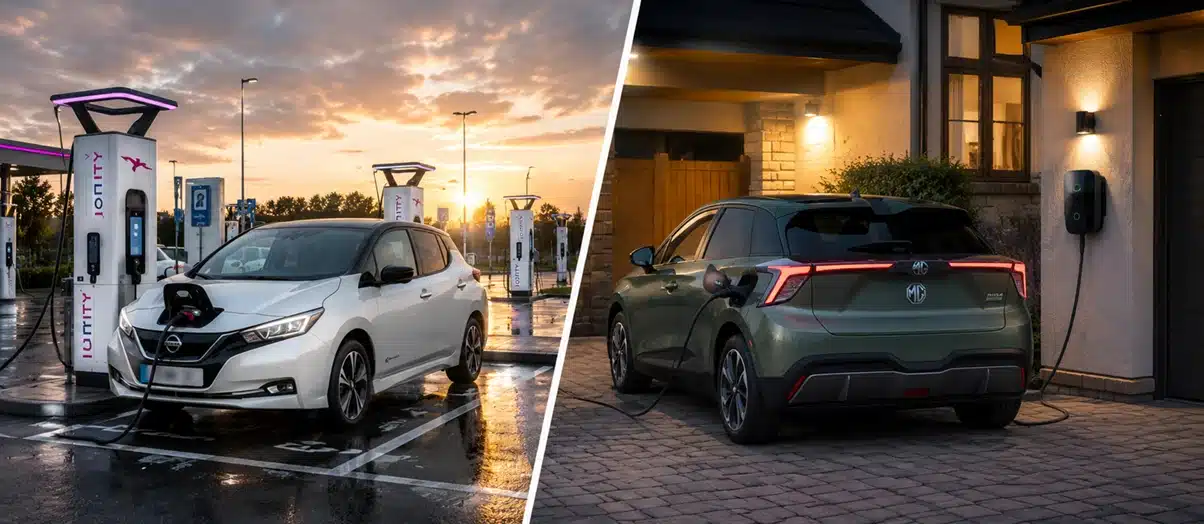
The cost of charging an electric vehicle using public charging infrastructure has kept attention on the savings that can be achieved by charging at home.
Public rapid and ultra-rapid chargers remain essential for long journeys, but the cost per kWh can be considerably higher than domestic electricity rates, particularly when drivers use off-peak home charging tariffs.
For everyday EVs such as the Nissan Leaf, MG4 EV, Renault Megane E-Tech and Volvo EX30, the cost difference between home charging and public ultra-rapid charging can be substantial over the course of a year.
As an example, a driver covering most of their weekly mileage from home charging may only need to use public charging occasionally. By contrast, a driver who relies heavily on rapid charging can face much higher running costs, especially during frequent motorway journeys.
This has encouraged many EV owners to make better use of home wall chargers, portable EV chargers and suitable off-peak tariffs where available.
What This Means For Drivers
Home charging remains one of the biggest financial advantages of EV ownership. A suitable charging cable, a reliable charging routine and access to lower-cost electricity can help reduce overall running costs.
Looking For A Charging Cable For Your EV?
Choosing the correct charging cable is important for safe, reliable and convenient charging at home, work and public charging points.
We supply Type 2 charging cables, portable EV chargers and vehicle-specific charging accessories for a wide range of electric and plug-in hybrid vehicles.
If you are unsure which charging cable is suitable for your vehicle, please visit our contact page and we will be happy to help.

