
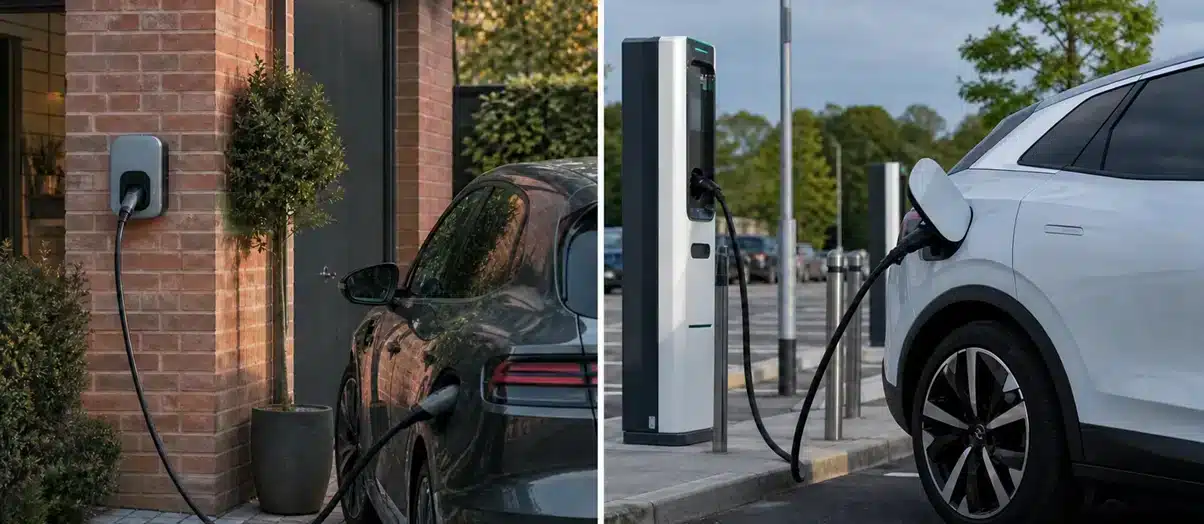
For most EV drivers, the cheapest way to charge is still at home. Public charging is useful, especially on longer journeys, but it usually costs more per unit of electricity and can add up quickly if you rely on it often.
Why home charging is usually cheaper
Home charging gives you access to lower electricity rates, especially if you are on an off-peak EV tariff. That means you can charge overnight at a much lower cost than you would usually pay at a public charger.
Industry guidance and charging comparisons consistently show the same pattern: home charging is generally the most cost-effective option, while rapid public charging is the most expensive.
Why public charging costs more
Public charging operators have to cover installation, land, maintenance and network costs. That is why public charging tends to cost more per kWh than charging at home.
The price difference is especially noticeable on rapid and ultra-rapid chargers, which are designed for speed and convenience rather than low cost.
When public charging still makes sense
Public charging is still important. You will likely use it for motorway trips, long-distance travel, charging when away from home, and topping up during a busy day.
In other words, public charging is the backup and convenience option. Home charging is the everyday cost-saver.
What this means for EV owners
If you can charge at home, even part of the time, you will usually save money over relying on the public network. That is why so many EV owners invest in the right home charging setup and a reliable charging cable.
A good cable makes home charging easier, more consistent and more convenient.
Simple takeaway
- Cheapest: home charging, especially off-peak
- Most convenient on the road: public charging
- Best overall setup: a mix of both, with home charging doing most of the work
If you are planning your EV charging setup, it is worth choosing the right cable and charger from the start so you can make the most of lower-cost home charging.

