
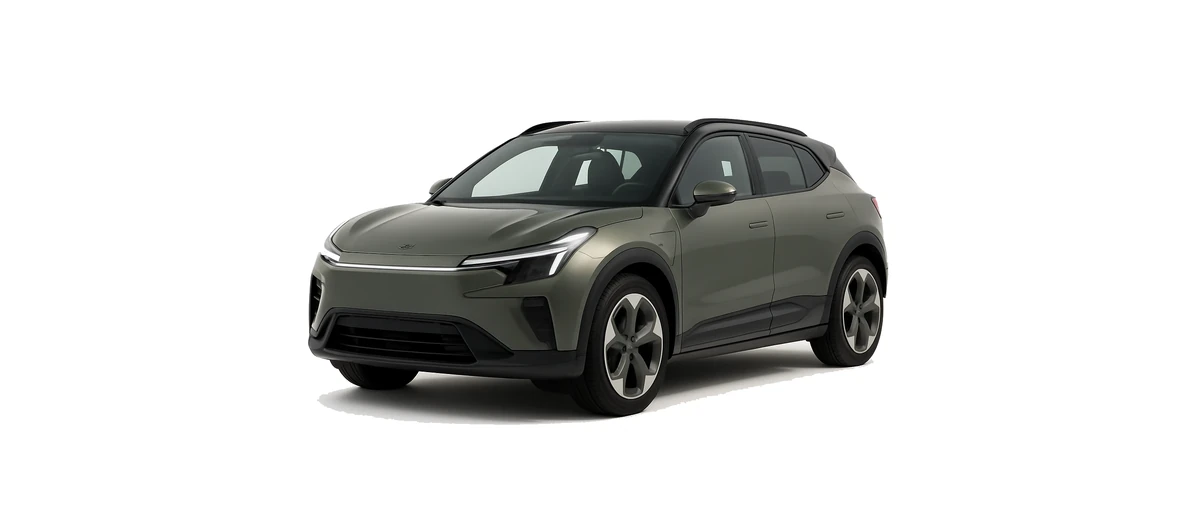
The Zeekr X is a compact electric SUV/crossover from Zeekr, built on Geely’s fully electric SEA platform. At the time of writing, the Zeekr X has not been confirmed as a live UK-market model, with public reporting suggesting Zeekr’s UK launch is expected towards the end of 2026 and first customer cars potentially following in early 2027. For that reason, this guide is based on current European MY26 Zeekr X data and should be checked against official UK Zeekr documentation once UK specifications are published.
For UK drivers preparing for the Zeekr X, the important charging point is that the European MY26 line-up does not have one single charging specification. The Core RWD and Long Range RWD are listed with 11 kW AC charging, while the Privilege AWD is listed with 22 kW AC charging. On DC rapid charging, the Long Range RWD is the standout version, with Zeekr quoting up to 230 kW and a 10–80% charge in around 18 minutes. Those headline figures should not be applied to every Zeekr X variant.
Zeekr X Battery and Charging Specifications
Current European MY26 information lists the Zeekr X as a battery-electric vehicle using a Type 2 connection for AC charging and CCS Combo 2 for DC rapid charging. EV Database European data places the charging port at the left rear of the car. This Type 2/CCS arrangement is the standard setup expected for UK and European public charging.
The Zeekr X uses a 400 V electrical architecture. It is not a plug-in hybrid and no PHEV version has been found for the European or expected UK context. European specifications currently show three main MY26 versions: Core RWD, Long Range RWD and Privilege AWD. UK trim names, prices, availability and final homologated figures may differ, so buyers should treat these figures as a useful guide rather than final UK-market confirmation.
| European MY26 variant | Battery | AC charging | DC rapid charging | WLTP range |
|---|---|---|---|---|
| Core RWD | 49 kWh gross / 47 kWh usable | 11 kW | Up to 130 kW | 330 km / about 205 miles |
| Long Range RWD | 61 kWh gross / 59 kWh usable | 11 kW | Up to 230 kW | 405 km / about 252 miles |
| Privilege AWD | 69 kWh gross / 65 kWh usable | 22 kW | About 150–158 kW | 415 km / about 258 miles |
Battery Options
The entry European MY26 Core RWD is listed with a 49 kWh gross battery, with EV Database estimating 47 kWh usable capacity. It has the smallest battery in the current European range and a WLTP figure of 330 km, or about 205 miles.
The Long Range RWD uses a 61 kWh gross battery, with around 59 kWh usable capacity according to EV Database. This version is particularly notable because it uses Zeekr’s Golden Battery LFP pack and is the model associated with the 230 kW DC peak and claimed 18-minute 10–80% rapid charge. It has a WLTP figure of 405 km, or about 252 miles.
The Privilege AWD has the largest battery in the current European comparison, listed at 69 kWh gross and around 65 kWh usable. It also has the longest WLTP figure currently shown, at 415 km, or about 258 miles. However, it is not the fastest DC-charging version according to the available MY26 data.
AC Charging Speed
For AC charging, the Zeekr X uses a Type 2 connection. This is the cable type used for home wallboxes and many public AC charge points across the UK and Europe.
European MY26 specifications list the Core RWD and Long Range RWD with 11 kW AC charging. The Privilege AWD is listed with 22 kW AC charging. This difference matters mainly on three-phase supplies. Most UK homes have single-phase electricity, where a typical dedicated home wallbox provides up to 7.4 kW. In that situation, all Zeekr X variants would usually be limited by the wallbox and domestic supply rather than by the car’s maximum onboard AC charger rating.
For public AC charging, a three-phase Type 2 cable is a sensible choice. It allows the 11 kW versions to make use of compatible 11 kW public AC posts and allows the Privilege AWD to take advantage of 22 kW AC where the charge point, site supply and vehicle specification all support it.
DC Rapid Charging Speed
For rapid charging, the Zeekr X uses CCS Combo 2. DC rapid chargers provide electricity directly to the battery and use a tethered cable attached to the charger, so you do not need to bring your own cable for CCS rapid charging.
The important detail is that the 230 kW and 18-minute 10–80% figures apply to the European MY26 Long Range RWD version, not the whole Zeekr X range. Current European data lists the Core RWD at up to 130 kW DC. The Privilege AWD is listed around 150–158 kW DC, with EV Database indicating a 10–80% time of about 26 minutes. The Long Range RWD is the headline rapid-charging model, with Zeekr claiming 10–80% in around 18 minutes under suitable conditions.
In real-world use, the maximum charging speed depends on battery temperature, state of charge, charger capability, site load and weather. It is also normal for charging to slow noticeably above 80%, which is why longer journeys are usually planned around rapid charging from roughly 10% to 80% rather than waiting for 100% at every stop.
Range and Efficiency
The best WLTP figure in the current European data is 415 km, or around 258 miles, for the Privilege AWD. EV Database estimates real-world range at around 220 miles for the Privilege AWD, with lower estimates for some other variants depending on battery size and drivetrain.
As with any EV, real-world range will vary. Motorway speed, cold weather, rain, roof boxes, wheel choice, cabin heating and driving style can all make a noticeable difference. A driver using the Zeekr X mainly for local journeys may see energy use very differently from someone covering long motorway routes in winter. For planning purposes, it is best to treat WLTP range as a comparison figure and use conservative assumptions for long journeys.
Charging at Home
For most UK drivers, the most convenient way to charge a Zeekr X will be a dedicated Type 2 home wallbox. A typical UK single-phase wallbox provides up to 7.4 kW, which is a practical match for overnight charging. Even where a Zeekr X variant can accept 11 kW or 22 kW AC, most UK domestic installations will not provide that higher power without a suitable three-phase supply.
A 7.4 kW home charger can add a useful amount of range during an overnight parking period, making it well suited to daily commuting and routine local use. Charging at home also allows owners to take advantage of off-peak EV electricity tariffs where available, although tariff choice and savings will depend on the household’s energy supplier and usage pattern.
A 3-pin plug-in charger is generally best suited as a backup or occasional charging solution, but can be used regularly if a qualified electrician has confirmed the socket and electrical installation are suitable for sustained EV charging. EV charging places a high continuous load on a socket for many hours, so it should not be treated in the same way as an ordinary household appliance.
Public Charging
For public charging, Zeekr X drivers should expect to use two main types of charging: untethered AC posts and tethered CCS rapid chargers. Untethered AC posts require the driver’s own Type 2 cable. These are common in town centres, supermarkets, hotels, workplaces and destination car parks. They are useful when the car will be parked for a few hours.
Rapid and ultra-rapid chargers use CCS and normally have the cable attached to the charger. These are the chargers to use on longer journeys when you want a faster top-up. The Long Range RWD will benefit most from very high-power CCS chargers because it is the version currently listed with up to 230 kW DC. The Core RWD and Privilege AWD can still rapid charge, but their maximum rates are lower in the current European data.
For the best experience, plan stops around charger reliability, location and facilities rather than peak kW alone. A well-placed, available 150 kW charger can be more useful than a faster charger that is busy, awkwardly located or out of service.
Vehicle-Specific Features
European MY26 Zeekr X data lists a heat pump as standard, which should help with cabin heating efficiency in colder conditions compared with relying solely on resistance heating. Final UK equipment should still be confirmed when the car is officially specified for the UK market.
EV Database also lists vehicle-to-load support at up to 3.3 kW via a Type 2 adapter for MY26 variants. V2L can be useful for powering external electrical equipment when parked, subject to the correct adapter and vehicle settings. Current MY26 data does not list V2H or V2G support, so the Zeekr X should not be assumed to work as a home backup power source or grid export vehicle.
Charging Tips
- Choose the right AC cable: a Type 2 cable is the correct cable type for AC charging. A three-phase cable is the most flexible choice for public AC charging.
- Do not assume every Zeekr X charges at 230 kW: that figure is currently linked to the MY26 Long Range RWD version.
- Use CCS for rapid charging: DC rapid chargers have tethered CCS cables, so your own Type 2 cable is for AC charging only.
- Plan rapid stops from 10–80%: charging beyond 80% on DC is usually slower and less time-efficient on long trips.
- Check UK specifications before ordering: trim names, equipment and charging speeds may change for the UK launch.
Frequently Asked Questions
Is the Zeekr X on sale in the UK?
At the time of writing, the Zeekr X has not been confirmed as a live UK-market model. Public reporting suggests Zeekr plans to launch in the UK towards the end of 2026, with first customer cars potentially expected in early 2027. UK specifications should be verified when Zeekr publishes official UK details.
What charging cable does the Zeekr X use?
Based on European MY26 data, the Zeekr X uses a Type 2 cable for AC charging and a CCS Combo 2 connection for DC rapid charging. For UK public AC charging, a Type 2 cable is the key cable to carry.
Can the Zeekr X charge at 22 kW AC?
Not every version. Current European MY26 data lists 11 kW AC charging for the Core RWD and Long Range RWD, while the Privilege AWD is listed with 22 kW AC. At most UK homes, charging will usually be limited to around 7.4 kW by the single-phase wallbox and domestic supply.
Does every Zeekr X rapid charge at 230 kW?
No. The 230 kW peak and claimed 18-minute 10–80% time apply to the European MY26 Long Range RWD version. The Core RWD and Privilege AWD have lower DC charging limits in the current data.
Should I buy a tethered or untethered home charger?
Either can work. A tethered Type 2 wallbox is convenient because the cable is attached and ready to use. An untethered wallbox looks tidier when not in use but requires you to plug in your own Type 2 cable each time.
What This Means for Drivers
The Zeekr X looks set to be an interesting compact electric SUV for UK buyers if and when it arrives, but the current charging story needs careful reading. The Long Range RWD is the rapid-charging highlight, while the Privilege AWD is the version currently listed with 22 kW AC charging and the longest WLTP figure. For everyday UK use, however, the practical recommendation is straightforward: plan for a Type 2 cable, a 7.4 kW home wallbox where possible, and CCS rapid charging for longer journeys.
Because UK specifications are not yet final, prospective owners should avoid making assumptions based on one European variant. Before ordering a car or charging equipment, check the final UK trim, onboard charger rating and official charging guidance.
Looking for a Charging Cable for Zeekr X?
We offer Zeekr X charging cables for Type 2 AC charging, including options suitable for home wallboxes and public AC charge points. Choose a cable that matches your charging setup and the final UK specification of your vehicle.
Please note that this information is intended as a guide. Charging specifications may change due to model and year of manufacture. For precise information, always refer to your vehicle user manual.

