
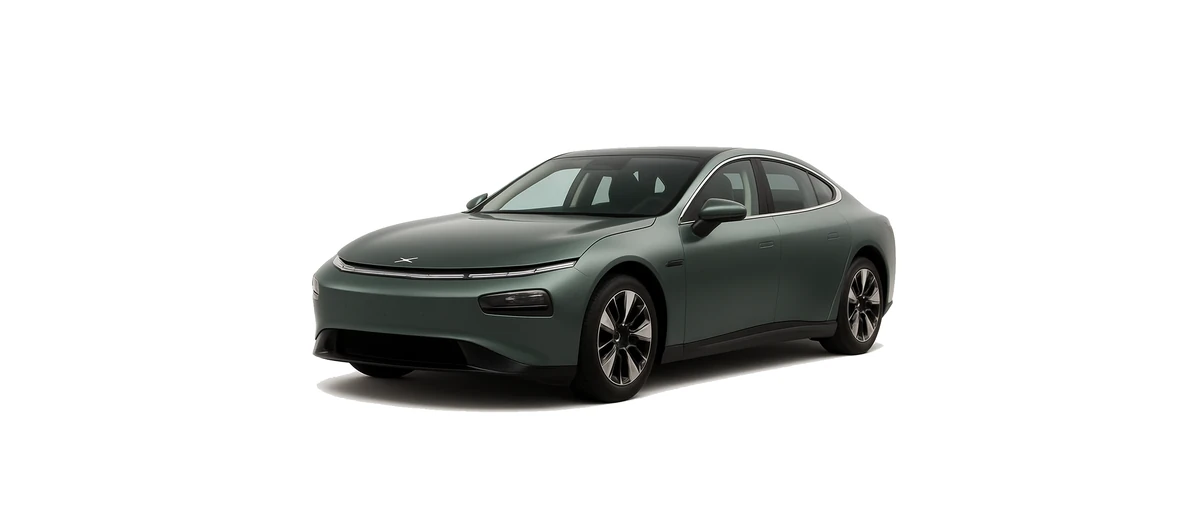
The Xpeng P7 is a battery-electric executive sedan / sports sedan sold in European and overseas markets. For UK drivers, the important context is that the P7 is not currently shown on XPENG UK’s official model line-up, and European P7 specifications should not be confused with newer P7+ figures or China-market range-extender references. This guide therefore focuses on the European-specification Xpeng P7 data available for models around the 2023-2026 period, which is most relevant to UK importers, owners of European cars, and drivers checking charging-cable compatibility.
In practical terms, the P7 uses familiar European charging hardware: Type 2 for AC charging and CCS2 for DC rapid charging. The European P7 is listed with an 11 kW AC onboard charger and up to 175 kW DC rapid charging, making it straightforward to use with most UK home wallboxes, workplace chargers, destination chargers and motorway rapid chargers, provided the vehicle’s actual inlet and onboard-charger rating match the European specification.
Xpeng P7 Battery and Charging Specifications
The European/overseas Xpeng P7 is a full battery-electric vehicle, not a plug-in hybrid. The main battery pack in the researched European specification is an 86.2 kWh gross battery, with around 82.7 kWh usable capacity. This battery appears across the RWD Long Range, AWD Performance and Wing Edition-style variants in the European specification material.
| Specification | Xpeng P7 European specification |
|---|---|
| Vehicle type | Battery-electric sedan |
| Charging port | Type 2 AC / CCS2 DC |
| Battery capacity | 86.2 kWh gross / 82.7 kWh usable |
| AC charging | Up to 11 kW, 3-phase |
| DC rapid charging | Up to 175 kW manufacturer figure |
| 10-80% DC charging | About 29 minutes in manufacturer material, in suitable conditions |
| Best WLTP range figure | Up to 576 km / about 358 miles for RWD Long Range |
Because UK official availability is unclear, owners should check their individual car before buying accessories or quoting charge rates. Imported vehicles can vary by market, model year and software specification.
Battery Options
The key European P7 variants found in the research use the same stated battery capacity: 86.2 kWh gross and 82.7 kWh usable. The main differences are performance, drivetrain and range rather than battery size.
- RWD Long Range: the range-focused version, with a WLTP figure of up to 576 km, or about 358 miles.
- AWD Performance: uses the same battery capacity in European data, but trades some range for higher performance. WLTP range is listed at around 505 km, or about 314 miles.
- Wing Edition: presented in European/Norway specification material alongside the RWD and AWD versions. Battery and charging figures appear to be shared, but owners should confirm the exact details for their car.
It is worth repeating that these figures relate to the European P7 generation, not the newer P7+. The P7+ has different battery and charging references in some markets, so its specifications should not be applied to the P7 discussed here.
AC Charging Speed
For slower charging at home, work or destination sites, the Xpeng P7 uses a Type 2 AC connection. European specification data lists an 11 kW 3-phase onboard AC charger. This is a good fit for many European public AC chargers and for UK locations with 3-phase supply.
Most UK homes, however, have single-phase electricity. A typical UK home wallbox is rated at up to 7.4 kW, so the charge rate is likely to be limited by the property supply rather than the car’s 11 kW onboard charger. On that basis, an empty-to-full charge may take roughly 13 hours 15 minutes at 7.4 kW, while an 11 kW 3-phase AC supply can reduce that to around 9 hours in ideal conditions.
For cable choice, a Type 2 charging cable is the correct cable type for untethered AC charge points. Many home wallboxes are tethered and have their own fixed cable, but untethered home units, workplace chargers and many public AC posts require the driver to bring a cable.
DC Rapid Charging Speed
For long journeys, the Xpeng P7 uses the CCS2 portion of its charging inlet for DC rapid charging. Manufacturer literature gives a maximum DC rate of up to 175 kW and a 10-80% charge time of about 29 minutes. Independent database figures suggest that, under ideal high-power charging conditions, peak power may be slightly higher and the 10-80% session may be a little quicker, but real-world results depend on charger output, battery temperature, state of charge and site conditions.
As with most EVs, the most useful rapid-charging window is usually around 10-80%. Charging beyond 80% on a rapid charger normally slows down, so it is often quicker on a long trip to charge to 70-80% and continue to the next suitable stop rather than waiting for a full battery.
You do not need to buy a separate cable for DC rapid charging. UK and European CCS rapid chargers are normally tethered, meaning the thick DC cable is attached to the charger.
Range and Efficiency
The longest-range European P7 variant is the RWD Long Range, with a WLTP figure of up to 576 km, which is about 358 miles. The AWD Performance and Wing-style versions are listed at around 505 km WLTP, or about 314 miles, depending on specification.
In normal UK use, real-world range will usually be lower than the headline WLTP value. Independent estimates for the AWD Performance are around 460 km, or about 286 miles, while broader real-world expectations for the P7 can sit around the 300-mile mark in favourable mixed driving. Cold weather, motorway speeds, wet roads, larger wheels, roof loads and heavy use of cabin heating can all reduce range.
The P7 is listed with a heat pump in European specification data, which can help reduce the energy used for cabin heating in colder weather compared with a less efficient heating system. Even so, winter driving will still typically require more energy than mild-weather use.
Charging at Home
For UK drivers, a dedicated home wallbox is usually the most convenient way to charge an EV. With the Xpeng P7’s large battery, regular overnight charging makes more sense than frequently relying on rapid chargers. A 7.4 kW wallbox can comfortably add a substantial amount of range overnight, even if a true empty-to-full charge takes longer than a typical night.
If your home has access to 3-phase electricity and a compatible charger, the P7’s 11 kW AC capability may allow faster charging. This is less common in UK domestic settings but may be available at some homes, businesses or shared residential sites.
A 3-pin charger is generally best suited as a backup or occasional charging solution, but can be used regularly if a qualified electrician has confirmed the socket and electrical installation are suitable for sustained EV charging. Because the P7 has a large battery, charging from a domestic plug will be slow, so it is best regarded as a fallback rather than the main charging method for most owners.
Public Charging
On public AC charge points, the Xpeng P7 will use a Type 2 cable. These chargers are often found at supermarkets, hotels, workplaces, town centres and longer-stay car parks. If the post is untethered, you will need your own Type 2 cable. If the post is tethered, you simply use the cable attached to the charger.
On public rapid and ultra-rapid chargers, the P7 uses CCS2. These chargers are generally tethered, so no separate DC cable is required. For best results, choose a charger capable of at least the car’s expected peak rate. A 150 kW or 175 kW+ charger is a sensible target when you want the fastest stop, although charger availability, battery temperature and the current state of charge will influence the final speed.
Before setting off on a long UK journey in an imported or European-spec P7, it is sensible to check route-planning apps, charging network compatibility and payment methods. Some networks require their own app or RFID card, while others support contactless payment.
Vehicle-Specific Features
The European Xpeng P7 is listed with battery preconditioning, which can help prepare the battery for faster DC charging when the car knows it is heading to a rapid charger. In practice, preconditioning is most useful in cold weather and before high-power charging stops. Availability and behaviour may depend on vehicle software, navigation use and market specification, so owners should check the infotainment menus and manual for their specific car.
Vehicle-to-load functionality is also confirmed in XPENG material for the European P7, with sources listing up to 3.3 kW AC output. V2L can be useful for powering external electrical equipment within the system’s limits. It should not be confused with vehicle-to-grid or vehicle-to-home operation; V2G and V2H support should not be assumed for this P7 specification.
Charging Tips
- Use the right cable: choose a Type 2 cable for AC charging at untethered home, workplace and public charge points.
- Do not buy a DC cable: CCS rapid chargers have their own tethered cables.
- Plan around 10-80% on trips: this is usually the quickest rapid-charging window.
- Check your exact vehicle: because UK P7 availability is not confirmed, imported cars should be checked for inlet type, onboard charger rating and software features.
- Precondition when possible: if your car supports navigation-linked battery preconditioning, use it before rapid charging in cold weather.
- Avoid mixing P7 and P7+ figures: do not assume 800 V charging, 12-minute charging or different battery sizes apply to this European P7.
Frequently Asked Questions
What charging cable does the Xpeng P7 use?
The European-specification Xpeng P7 uses a Type 2 connector for AC charging. For DC rapid charging, it uses CCS2, and the cable is normally attached to the rapid charger.
Can the Xpeng P7 charge at 22 kW AC?
The researched European specification lists 11 kW AC charging, not 22 kW. If you have an imported car, check the vehicle documentation or charging screen before assuming a higher AC rate.
How long does the Xpeng P7 take to charge at home?
On a typical UK 7.4 kW single-phase wallbox, an empty-to-full charge is estimated at roughly 13 hours 15 minutes. In day-to-day use, most drivers charge from a partial battery, so charging sessions are often shorter.
How fast can the Xpeng P7 rapid charge?
Manufacturer information gives up to 175 kW DC and about 29 minutes for a 10-80% charge in suitable conditions. Actual speed depends on charger power, battery temperature and the battery’s state of charge.
Is the Xpeng P7 officially available in the UK?
Current XPENG UK model information does not list the P7, and European database sources mark P7 variants as not available in the UK. This guide should therefore be treated as most relevant to European-specification vehicles and import scenarios unless an official UK P7 launch is confirmed.
What This Means for Drivers
For UK owners and importers, the Xpeng P7 should be a relatively straightforward EV to charge as long as the car matches the European Type 2 and CCS2 specification. A Type 2 cable covers AC charging at untethered public posts and untethered home wallboxes, while rapid charging is handled by the tethered CCS2 cable at the charging station.
The main points to remember are the 11 kW AC limit, the large 82.7 kWh usable battery, and the importance of planning rapid charging around the 10-80% window. The RWD Long Range offers the strongest WLTP range, while AWD and Wing-style variants are likely to use more energy in exchange for performance. Above all, avoid applying newer P7+ charging figures to the European P7, as the two should be treated separately.
Looking for a Charging Cable for Xpeng P7?
If you need a suitable Type 2 cable for an imported or European-specification Xpeng P7, We offer charging cables selected for AC home, workplace and public charging use.
Please note that this information is intended as a guide. Charging specifications may change due to model and year of manufacture. For precise information, always refer to your vehicle user manual.

