
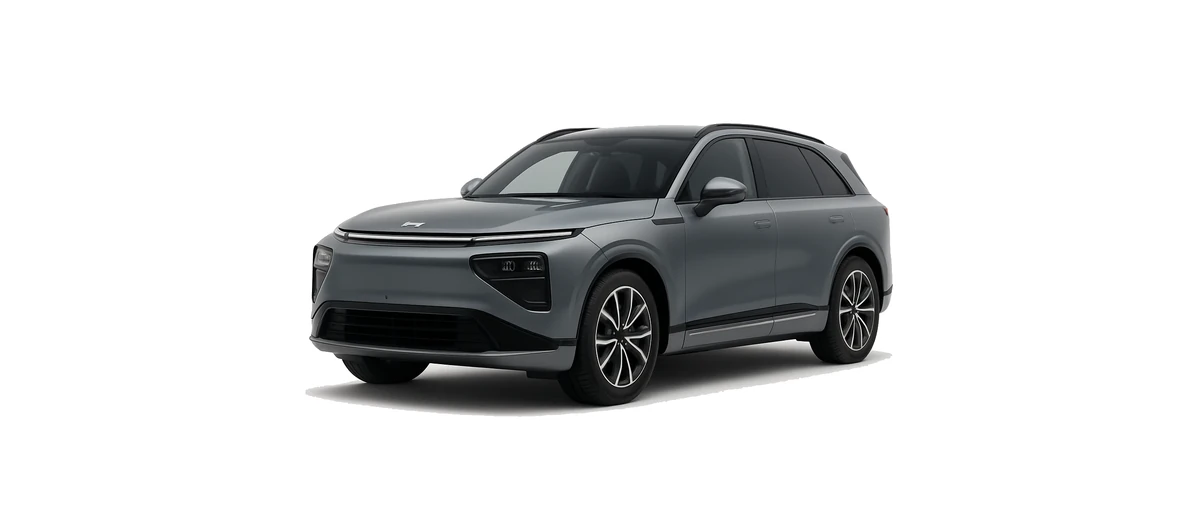
The Xpeng G9 is a large five-seat battery-electric SUV with some unusually high charging figures in current European MY25 specification. It is especially notable for its 800 V high-voltage architecture and quoted DC rapid charging capability of up to 445 kW on the Standard Range version and up to 525 kW on Long Range and Performance versions, where a suitable charger and battery conditions allow.
For UK drivers, there is an important caveat. As of the research date, official UK-market G9 trims, prices and final specifications had not been confirmed on XPENG UK’s public model pages. The figures in this guide are therefore based on current European MY25 data, mainly from the Netherlands and Norway, and should be treated as guidance until UK specifications are published.
From a charging-cable point of view, the essentials are straightforward: the European G9 uses a Type 2 inlet for AC charging and CCS2 for DC rapid charging. At home and on many public AC posts you will use a Type 2 charging cable or a tethered Type 2 wallbox. At public rapid and ultra-rapid chargers, the CCS cable is attached to the charger.
Xpeng G9 Battery and Charging Specifications
Current European MY25 Xpeng G9 specifications list two battery sizes across three main versions. The RWD Standard Range is listed with an 80.3 kWh gross battery, while the RWD Long Range and AWD Performance versions use a 94.6 kWh gross battery. EV Database lists usable capacities of approximately 78.2 kWh for the Standard Range and 92.2 kWh for the larger-battery models.
All listed European MY25 versions use Type 2 AC charging and CCS2 DC rapid charging. AC charging is rated at up to 11 kW, which is useful where three-phase AC charging is available. In typical UK home charging, however, the car will usually be connected to a single-phase 7.4 kW wallbox, so the wallbox rather than the vehicle’s onboard charger will set the maximum AC charging rate.
The headline DC figures are much higher than most electric SUVs. European data lists up to 445 kW DC for the Standard Range and up to 525 kW DC for Long Range and Performance models, with a quoted 10-80% time of around 12 minutes under ideal conditions. In everyday UK use, charging speed will depend heavily on charger output, battery temperature, state of charge, software and site conditions.
Battery Options
The European MY25 Xpeng G9 range is listed with the following battery options:
- RWD Standard Range: 80.3 kWh gross battery capacity, with EV Database listing around 78.2 kWh usable capacity. European brochure data quotes a WLTP range of up to 502 km, which is approximately 312 miles.
- RWD Long Range: 94.6 kWh gross battery capacity, with EV Database listing around 92.2 kWh usable capacity. European data quotes up to 585 km WLTP, approximately 364 miles.
- AWD Performance: 94.6 kWh gross battery capacity, also listed at around 92.2 kWh usable by EV Database. European data quotes up to 540 km WLTP, approximately 336 miles.
These figures should not be presented as final UK-market specifications until XPENG confirms the UK G9 line-up. It is possible that UK trims, equipment levels, charging limits or included accessories could differ from the European versions described here.
AC Charging Speed
AC charging is the charging you will normally use at home, at many workplaces and at slower public charging posts. The European MY25 Xpeng G9 is listed with an 11 kW onboard AC charger across Standard Range, Long Range and Performance versions.
In the UK, most homes have single-phase electricity, so the most common dedicated home EV charger is a 7.4 kW wallbox. On a 7.4 kW charger, EV Database estimates a 0-100% charging time of roughly 12 hours 30 minutes for the Standard Range and around 14 hours 45 minutes for the Long Range or Performance versions. In real use, drivers rarely charge from completely empty to completely full, so overnight top-ups are likely to be more practical than the full 0-100% figure suggests.
Where three-phase AC charging is available, such as at some commercial sites or specific homes with a suitable supply, the G9’s 11 kW AC capability can be used more fully. European estimates suggest around 8 hours 30 minutes to 10 hours for a full charge depending on battery size.
DC Rapid Charging Speed
DC rapid charging is where the Xpeng G9’s European specification stands out. Rather than relying on the car’s onboard AC charger, a DC charger supplies high-power direct current to the battery through the CCS2 connector. Public rapid and ultra-rapid charging stations have their own tethered CCS cables, so you do not need to bring a separate DC cable.
European MY25 data lists the Standard Range at up to 445 kW DC and the Long Range and Performance at up to 525 kW DC. Those are very high figures by current market standards, and they exceed the output of many UK rapid chargers. This means that, in many real-world sessions, the charger will limit the speed rather than the car.
The quoted 10-80% time of around 12 minutes should be understood as an ideal-condition figure. To approach that sort of speed, the car needs a suitably powerful charger, a battery at the right temperature, an appropriate starting state of charge and favourable site conditions. For journey planning, the 10-80% window remains the most sensible rapid-charging range because charging typically slows as the battery approaches a high state of charge.
Range and Efficiency
The longest-range European MY25 G9, the RWD Long Range, is listed at up to 585 km WLTP, which is around 364 miles. The Standard Range is listed at around 312 miles WLTP, while the AWD Performance is listed at around 336 miles WLTP. WLTP figures are useful for comparison, but real-world range varies with speed, weather, tyres, load, heating or air-conditioning use and driving style.
EV Database estimates real-world range at around 250 miles for the Standard Range, approximately 298 miles for the Long Range and around 289 miles for the Performance. These estimates are not official UK figures, but they give a more practical indication of what drivers may see across mixed use.
As with any large SUV, motorway driving in cold or wet weather will usually reduce range compared with gentler urban and suburban driving. Conversely, mild temperatures, moderate speeds and efficient driving can help you get closer to the car’s best range figures.
Charging at Home
For most UK owners, the easiest way to charge an electric SUV such as the G9 will be a dedicated Type 2 home wallbox. A 7.4 kW single-phase wallbox is the most common practical choice for UK homes, even though the European G9 can accept up to 11 kW AC where three-phase charging is available.
A tethered wallbox has a cable permanently attached, which is convenient if you normally charge the same vehicle in the same place. An untethered wallbox has a socket, so you use your own Type 2 to Type 2 cable. Untethered units can look neater and may be more flexible if different EVs use the charger.
A portable 3-pin EV charger can connect to a domestic socket, but it is slow for a battery of this size. A 3-pin charger is generally best suited as a backup or occasional charging solution, but can be used regularly if a qualified electrician has confirmed the socket and electrical installation are suitable for sustained EV charging. For regular charging, a properly installed wallbox is normally safer, faster and more convenient.
Public Charging
On public AC charging posts, you will usually need a Type 2 to Type 2 cable unless the post is tethered. These chargers are common in car parks, hotels, workplaces, supermarkets and town-centre locations. The charging rate may be 7 kW, 11 kW or 22 kW, but the car’s onboard AC charger and the site supply determine the actual speed. With the European G9’s 11 kW AC limit, a 22 kW AC post would not necessarily mean 22 kW charging.
For rapid charging, use CCS chargers. These include motorway service-area chargers and many newer hub-style charging sites. The cable is fixed to the charger, and you plug the CCS connector into the car’s CCS inlet. Because the G9’s European DC charging capability is so high, the best results will be on the most powerful ultra-rapid chargers available, but even then the full headline rate may only be reached for part of the session.
For longer trips, it is worth checking charger power, availability and reliability before setting off. A 150 kW charger can still be very useful, but it will not make use of the G9’s maximum DC capability. A 350 kW charger is closer to the sort of infrastructure needed for very fast charging, while the car’s highest European figures go beyond what many UK sites currently provide.
Vehicle-Specific Features
European materials list a standard heat pump and XPENG’s X-HP3.0 intelligent thermal management system. A heat pump can help improve efficiency in colder weather by reducing the energy needed for cabin heating compared with purely resistive heating, although the actual benefit depends on conditions and use.
Battery preconditioning is also listed for the European MY25 G9. This is particularly relevant for a car with such high DC charging potential. Preconditioning helps bring the battery closer to an ideal temperature before a rapid-charging stop, especially when the car’s navigation system is used to route to a compatible charger.
Vehicle-to-load capability is confirmed in European materials. Norway specification data describes up to 6 kW 230 V AC V2L output, while Netherlands material notes that the adapter is not included. V2L can be useful for powering suitable external electrical equipment, but owners should follow XPENG guidance on adapters, load limits and safe operation. V2G and V2H capability should not be assumed, as current European reference data does not list those functions as supported.
Charging Tips
- Use Type 2 for AC charging: A Type 2 to Type 2 cable is the key cable for untethered home wallboxes and many public AC posts.
- Use CCS for rapid charging: Public DC rapid chargers use tethered CCS cables, so you do not need to carry your own rapid-charging cable.
- Do not expect 525 kW everywhere: The Standard Range is listed at up to 445 kW DC, while Long Range and Performance are listed at up to 525 kW DC in European MY25 data. Many UK chargers will be the limiting factor.
- Rapid charge in the 10-80% window: This is usually the most time-efficient part of the battery to charge on a long journey.
- Precondition before ultra-rapid charging: Where available, navigation-linked battery preconditioning can help the car reach stronger charging performance.
- Check UK specifications before ordering accessories: Final UK equipment, included cables and adapters may differ from European market information.
Frequently Asked Questions
What charging cable does the Xpeng G9 use?
Current European MY25 Xpeng G9 specifications use a Type 2 connection for AC charging and CCS2 for DC rapid charging. For home and public AC charging, a Type 2 cable is the relevant cable. For public DC rapid charging, the CCS cable is attached to the charger.
Can the Xpeng G9 charge at 525 kW?
European MY25 specifications list up to 525 kW DC for the Long Range and Performance versions, while the Standard Range is listed at up to 445 kW DC. These are ideal maximum figures and require a suitable high-power charger, the right battery temperature and favourable conditions.
How long does the Xpeng G9 take to charge at home?
On a typical UK 7.4 kW home wallbox, estimates suggest roughly 12 hours 30 minutes for the Standard Range and around 14 hours 45 minutes for the larger-battery versions from 0-100%. Normal overnight top-ups are usually shorter because most drivers do not arrive home completely empty.
Is the Xpeng G9 available in the UK?
At the time of the source research, the G9 was expected for the UK but was not listed as an orderable UK model on XPENG UK’s official site. UK-market specifications should be re-checked before purchase or publication.
What This Means for Drivers
The Xpeng G9’s European charging specification is impressive, but UK owners should separate the car’s capability from the charging infrastructure they are likely to use day to day. At home, the G9 behaves like many other large EVs: a 7.4 kW Type 2 wallbox will usually be the most practical option for regular charging. On longer journeys, its high DC capability could make it extremely quick to charge at the right ultra-rapid site, but many UK chargers will not match the car’s maximum listed rate.
The most sensible preparation is to choose the correct Type 2 cable for AC charging, understand that CCS rapid charging uses tethered public cables, and treat the 12-minute 10-80% figure as a best-case European specification rather than a guaranteed everyday result. Once UK specifications are confirmed, buyers should check the exact trim, battery, charging rating and included accessories before making final decisions.
Looking for a Charging Cable for Xpeng G9?
If you are preparing for Xpeng G9 ownership, We can help you choose a suitable Type 2 charging cable for home wallboxes and public AC charging, based on the confirmed UK specification when available.
Please note that this information is intended as a guide. Charging specifications may change due to model and year of manufacture. For precise information, always refer to your vehicle user manual.

