
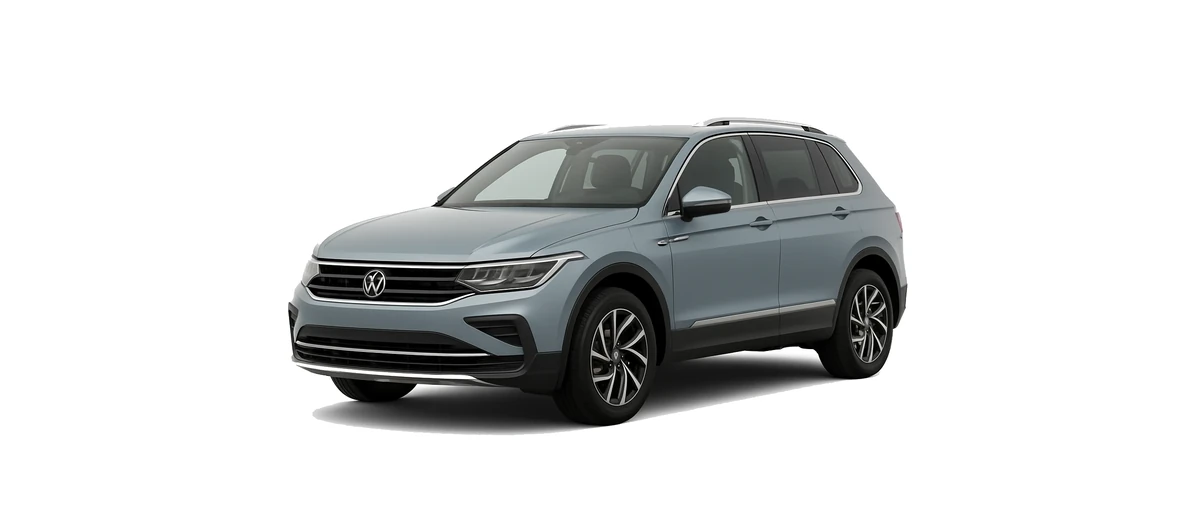
The VW Tiguan eHybrid is a plug-in hybrid SUV, not a full battery-electric vehicle. That distinction matters because its charging needs are different from a pure EV: the battery is smaller, many journeys can be completed electrically if you plug in regularly, and the petrol engine remains available for longer trips.
For UK owners, the most important point is to identify which Tiguan eHybrid generation you have. The current Mk3 Tiguan eHybrid uses Volkswagen’s newer 1.5 TSI plug-in hybrid system and has a substantially larger usable battery, faster AC charging and confirmed DC rapid charging capability in UK technical data. Earlier UK Tiguan eHybrid models, broadly from the Mk2/2021-2024 period, used a 1.4 TSI eHybrid system with a smaller battery and slower AC-only charging. Cable choice, public charging expectations and charging times are therefore quite different.
View VW Tiguan eHybrid Charging Cables
VW Tiguan eHybrid Battery and Charging Specifications
The current UK VW Tiguan eHybrid is offered as a 1.5 TSI eHybrid in 204PS and 272PS forms, depending on trim. Available technical data indicates that the battery and charging capability are broadly common across these current eHybrid outputs, although drivers should always check their vehicle specification or handbook if buying used or comparing trims.
For the current Mk3 UK model, Volkswagen UK technical data lists AC charging at up to 11 kW with a quoted 0-100% charging time of 2 hours 30 minutes. Volkswagen UK also lists DC charging at up to 40 kW with a quoted 5-80% time of 26 minutes. This makes the current Tiguan eHybrid unusual among plug-in hybrids, as many PHEVs rely on AC charging only.
The older Mk2 Tiguan eHybrid is very different. It is generally described with a smaller battery, up to around 30 miles WLTP electric range, and AC charging at up to about 3.6 kW. It should not be assumed to support 11 kW AC or DC rapid charging unless your exact vehicle handbook confirms otherwise.
Battery Options
For the current Mk3 UK Tiguan eHybrid, the key battery figure to use in day-to-day charging discussions is the usable capacity of around 19.7 kWh. Some sources list the pack as 25.7 kWh gross and 19.7 kWh usable; the usable figure is the more relevant one because it reflects the energy normally available to drive the car.
For earlier UK Tiguan eHybrid models using the 1.4 TSI plug-in hybrid system, the battery is commonly described as around 13 kWh gross, with references to approximately 10.4 kWh net or usable capacity. This explains why the older car has much shorter electric range and why its charging sessions are shorter in energy terms, even though the maximum AC charging rate is slower.
If you are buying a charging cable for a used Tiguan eHybrid, do not rely only on the badge. Check the model year, engine description and handbook. A current Mk3 1.5 TSI eHybrid and an older 1.4 TSI eHybrid have very different charging capabilities.
AC Charging Speed
AC charging is the main method most Tiguan eHybrid owners will use at home and at many public destination chargers. The current Mk3 Tiguan eHybrid supports up to 11 kW AC charging, and Volkswagen UK lists a 0-100% time of 2 hours 30 minutes. To reach that 11 kW rate, the charge point and electrical supply normally need to support three-phase AC charging.
This is an important UK home charging point. Many UK homes have a single-phase electricity supply, and a typical single-phase home wallbox is rated at up to 7.4 kW. In that situation, the car will not receive its full 11 kW AC capability, even though it can still be very convenient to charge. With a PHEV-size battery, regular overnight or daily top-ups remain practical on a standard home wallbox.
For public AC charging, a Type 2 cable suitable for three-phase 11 kW charging is the best match for the current Mk3 car where the public post supports it. On lower-powered AC posts, the vehicle will simply charge at the lower rate available from the post, cable and car combination.
For older Mk2 Tiguan eHybrid models, the onboard AC charger is limited to around 3.6 kW. A 7.4 kW or 11 kW public or home charge point will not make that older car charge at those higher rates. Reviews and charging guides commonly quote a wallbox charging time of about 3 hours 40 minutes for the earlier model.
DC Rapid Charging Speed
The current UK Mk3 Tiguan eHybrid has confirmed DC rapid charging support in Volkswagen UK technical data. The UK figure to use is up to 40 kW DC, with a quoted 5-80% time of 26 minutes. That is useful if you are travelling beyond the electric range and want to add a meaningful amount of battery charge during a short stop.
However, because the Tiguan eHybrid is a plug-in hybrid with a petrol engine, DC rapid charging will not usually be as essential as it is for a full EV. Many owners will get the best value by charging at home or at destinations and using DC rapid charging selectively when it genuinely saves time or helps complete a journey electrically.
Older 1.4 TSI Tiguan eHybrid models should be treated as AC-only unless your exact vehicle documentation states otherwise. Do not assume a used Tiguan eHybrid has DC rapid charging just because the current model does.
Range and Efficiency
The current UK Tiguan eHybrid has a much longer official electric range than the previous-generation version. Volkswagen UK data and current UK trim information indicate a WLTP electric range of up to around 77 miles, depending on trim and specification. As with any plug-in hybrid or EV, real-world electric range will vary with speed, temperature, load, driving style, terrain and use of heating or air conditioning.
The older Tiguan eHybrid was closer to a traditional short-range PHEV, with up to about 30 miles WLTP electric range. In colder weather or on faster roads, usable electric range may be lower.
Efficiency in a PHEV depends heavily on charging behaviour. If you charge regularly and use electric mode for local journeys, school runs, commuting and urban driving, the Tiguan eHybrid can make frequent use of its battery. If you rarely plug it in, it will behave much more like a petrol SUV carrying extra hybrid hardware, and running costs are likely to be less favourable.
Charging at Home
Home charging is usually the most convenient and cost-effective way to run a Tiguan eHybrid. For many owners, the routine is simple: plug in after work or overnight, start the next day with a full battery, and use electric driving for shorter trips.
A dedicated home wallbox is the preferred option for regular charging. It is safer and more convenient than relying on a domestic socket, can offer smart charging features, and is better suited to repeated EV charging loads. On the current Mk3 Tiguan eHybrid, a single-phase 7.4 kW wallbox will not provide the full 11 kW capability of the car, but it should still be more than adequate for routine PHEV charging for most households.
A 3-pin charger is generally best suited as a backup or occasional charging solution, but can be used regularly if a qualified electrician has confirmed the socket and electrical installation are suitable for sustained EV charging. Avoid using extension leads, damaged sockets or unknown electrical installations for EV charging.
If you have access to three-phase power at home or at work, the current Mk3 Tiguan eHybrid can make better use of its 11 kW AC onboard charging capability, provided the charge point and cable are also suitable.
Public Charging
Public charging for the Tiguan eHybrid falls into two main categories: AC destination charging and, for current Mk3 models, DC rapid charging.
AC destination charging is common at supermarkets, hotels, leisure centres, workplaces and town-centre car parks. Many of these posts require you to bring your own Type 2 cable. For the current Mk3 Tiguan eHybrid, a three-phase Type 2 cable is the most appropriate match if you want to use the car’s maximum 11 kW AC capability where available. For older Mk2 models, a Type 2 cable is still used for AC charging, but the vehicle itself will limit charging to around 3.6 kW.
DC rapid chargers are usually tethered, meaning the cable is attached to the charger. For current Mk3 Tiguan eHybrid owners, Volkswagen UK technical data lists up to 40 kW DC charging and a 5-80% time of 26 minutes. If you are unsure about the exact charging inlet or compatibility on your vehicle, check the handbook or ask a Volkswagen retailer before relying on rapid charging for a journey.
Vehicle-Specific Features
The main vehicle-specific charging feature of the current VW Tiguan eHybrid is the generational step forward from the older model. The current Mk3 car uses Volkswagen’s MQB evo platform and a newer 1.5 TSI plug-in hybrid setup. Compared with the previous 1.4 TSI Tiguan eHybrid, it has a larger usable battery, much longer official electric range, faster AC charging and UK-listed DC rapid charging.
The current model is available in 204PS and 272PS eHybrid versions depending on trim. Charging expectations should be based on the current UK technical data for the Mk3 eHybrid rather than on older Tiguan eHybrid figures or general assumptions about PHEVs.
No confirmed UK information in the provided data should be used to claim features such as vehicle-to-load, vehicle-to-grid, a heat pump or battery preconditioning for the Tiguan eHybrid. If those features matter to you, verify them against the current vehicle handbook or official specification for your exact car.
Charging Tips
- Check your generation first: current Mk3 1.5 TSI eHybrid models and older 1.4 TSI eHybrid models charge very differently.
- Use the usable battery figure: for the current model, around 19.7 kWh usable is the practical figure for charging and range expectations.
- Choose the right Type 2 cable: current Mk3 owners who use public AC charging should consider a cable suitable for three-phase 11 kW charging.
- Do not oversell charging speed on older cars: the previous-generation Tiguan eHybrid is limited to around 3.6 kW AC charging.
- Plug in frequently: the best running costs from a PHEV usually come from using electric power for short, regular journeys.
- Use rapid charging selectively: current Mk3 owners can use DC rapid charging, but home and destination charging will usually be cheaper and more routine.
Frequently Asked Questions
Is the VW Tiguan eHybrid a full electric car?
No. The VW Tiguan eHybrid is a plug-in hybrid. It has a rechargeable battery and electric motor, but it also has a petrol engine.
What charging cable does the VW Tiguan eHybrid use?
For AC charging, the Tiguan eHybrid uses a Type 2 connection. Many public AC posts require you to bring your own Type 2 cable.
Can the VW Tiguan eHybrid charge at 11 kW?
The current Mk3 UK Tiguan eHybrid supports up to 11 kW AC charging. Older 1.4 TSI Tiguan eHybrid models are limited to around 3.6 kW AC, so the answer depends on which generation you own.
Will a 7.4 kW home charger give the current Tiguan eHybrid its maximum AC speed?
No. A typical UK single-phase 7.4 kW wallbox will charge below the car’s 11 kW maximum. To reach 11 kW AC, you normally need a compatible three-phase supply, charge point and cable.
Does the VW Tiguan eHybrid support rapid charging?
The current Mk3 UK Tiguan eHybrid has Volkswagen UK-listed DC rapid charging at up to 40 kW, with a quoted 5-80% time of 26 minutes. Older Tiguan eHybrid models should be treated as AC-only unless your exact handbook confirms otherwise.
What This Means for Drivers
The VW Tiguan eHybrid can be a very practical plug-in hybrid SUV, but charging expectations must be matched to the correct generation. If you have the current Mk3 1.5 TSI eHybrid, you benefit from a larger usable battery, up to around 77 miles WLTP electric range, 11 kW AC charging and UK-listed 40 kW DC rapid charging. If you have the earlier 1.4 TSI eHybrid, expect a smaller battery, shorter electric range and AC charging at around 3.6 kW.
For most owners, the best approach is to charge at home or at work whenever possible, use public AC charging when parked for a while, and reserve DC rapid charging for current Mk3 cars when it fits the journey. Above all, treat the Tiguan eHybrid as a plug-in vehicle: the more consistently you charge it, the more often you can drive on electric power.
Looking for a Charging Cable for VW Tiguan eHybrid?
If you need a suitable cable for your Tiguan eHybrid, choose according to your vehicle generation and charging habits: current Mk3 owners will usually want a Type 2 cable suitable for 11 kW three-phase AC use, while earlier Tiguan eHybrid owners should remember that the car itself is limited to around 3.6 kW AC.
View VW Tiguan eHybrid Charging Cables
Please note that this information is intended as a guide. Charging specifications may change due to model and year of manufacture. For precise information, always refer to your vehicle user manual.

