
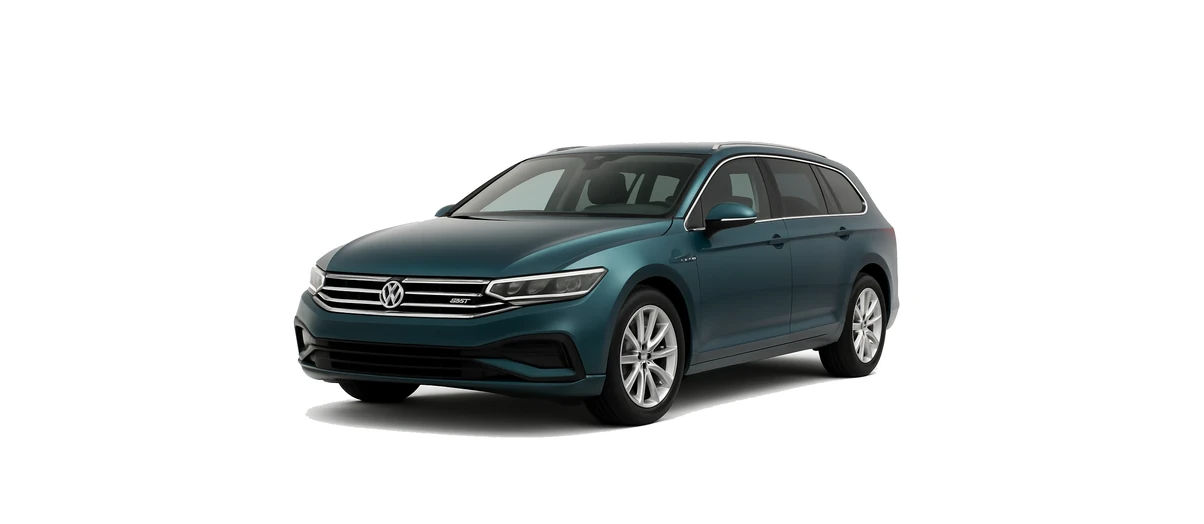
The current UK-market VW Passat eHybrid is a plug-in hybrid estate, not a fully electric car. It combines a petrol engine with a sizeable plug-in hybrid battery, giving it a much longer electric-only driving range than many older PHEVs. For drivers who can charge regularly, that means many daily journeys can be completed on electric power while still having the petrol engine available for longer trips.
This guide focuses on the current B9 Volkswagen Passat Estate eHybrid using Volkswagen UK technical data available in June 2026. It is important not to mix these figures with older Passat GTE or B8-generation plug-in hybrid models, as those cars can have very different battery sizes, AC charging speeds and rapid-charging capability.
View VW Passat eHybrid Charging Cables
VW Passat eHybrid Battery and Charging Specifications
The current Passat eHybrid is offered in the UK with plug-in hybrid powertrains producing 204 PS or 272 PS, depending on trim and version. Both use the same plug-in hybrid battery capacity according to Volkswagen UK technical data.
- Vehicle type: Plug-in hybrid estate
- Battery capacity: 19.7 kWh usable / net, 25.7 kWh gross
- Official electric range: Up to 82 miles WLTP, with some variation by trim and power output
- Maximum AC charging: 11 kW
- Maximum DC charging: 50 kW according to Volkswagen UK
- Official DC charge time: 5-80% in 26 minutes
- Likely UK/EU inlet arrangement: Type 2 for AC and CCS Combo 2 for DC, although owners should check the vehicle inlet or handbook for their exact car
The key point for owners is that the Passat eHybrid is unusually capable for a plug-in hybrid. Many PHEVs are limited to relatively slow AC charging and do not support DC rapid charging at all. The current Passat eHybrid supports both 11 kW AC charging and 50 kW DC charging, making it more flexible for drivers who rely on public charging as well as home charging.
Battery Options
Volkswagen UK lists a 19.7 kWh plug-in hybrid battery capacity for the current Passat eHybrid. Volkswagen technical material clarifies this as the net, usable capacity, with a 25.7 kWh gross battery capacity. The same battery capacity is listed for both the 204 PS and 272 PS UK plug-in hybrid versions.
This is a large battery by plug-in hybrid standards. In everyday use, it gives the Passat eHybrid the potential to cover commuting, school runs and local journeys on electric power if it is charged frequently. However, it remains a PHEV: once the usable electric charge is depleted, the petrol engine continues to provide normal hybrid operation.
If you are buying a used Passat, check carefully whether it is the current B9 Passat eHybrid or an older Passat GTE / B8 model. Older Passat plug-in hybrids should not be assumed to have the same battery size, charging speed or rapid-charging support as the current car.
AC Charging Speed
Volkswagen UK lists the current Passat eHybrid with 11 kW AC charging and an AC 0-100% charge time of around 2 hours 30 minutes. This 11 kW figure is the car’s onboard AC charging limit. It does not mean every chargepoint will supply 11 kW in every situation.
At home in the UK, many dedicated wallboxes are installed on a single-phase supply and commonly charge at up to around 7.4 kW, depending on the property, charger and electrical installation. On this kind of home charger, the Passat eHybrid will usually charge below its 11 kW maximum. That is still fast enough for most owners to recharge the battery conveniently while parked overnight or during the working day.
To access the car’s full 11 kW AC capability, you normally need a compatible three-phase AC chargepoint, such as certain public AC posts or suitable three-phase installations. A 22 kW-rated Type 2 cable is compatible for AC charging, but it will not make the car charge faster than the vehicle’s 11 kW onboard limit.
DC Rapid Charging Speed
One of the more notable features of the current UK Passat eHybrid is DC rapid charging. Volkswagen UK lists a maximum DC charging rate of 40 kW and an official 5-80% DC charging time of 26 minutes.
This is useful, but it should be understood in context. The Passat eHybrid is not a battery-electric vehicle designed around long-distance rapid charging. Its DC charging is best viewed as a convenient way to top up the plug-in hybrid battery during a longer day, between urban journeys, or when you want to maximise electric running away from home.
Some international Volkswagen material has referred to higher DC figures for related Passat eHybrid information, but for a UK charging guide Volkswagen UK’s 50 kW maximum and 5-80% in 26 minutes should take precedence.
Range and Efficiency
Volkswagen UK quotes up to 82 miles of WLTP all-electric range for the current Passat eHybrid. Technical data shows that the exact combined electric range can vary by trim and power output, broadly around the high-70s to low-80s miles under WLTP testing.
As with any plug-in hybrid, real-world electric range will depend on driving style, speed, temperature, route, tyres, use of heating or air conditioning and how heavily the car is loaded. The Passat is an estate, so motorway driving with passengers and luggage will usually use more energy than gentle urban driving.
For many UK drivers, the appeal is not that every journey will be electric, but that regular charging can make a large share of routine mileage electric. If your daily use is within the car’s electric range and you charge at home or work, petrol use can be reduced significantly. If you rarely plug in, the car will behave much more like a conventional hybrid and you will not get the best from the eHybrid system.
Charging at Home
A dedicated home wallbox is usually the most convenient way to charge the VW Passat eHybrid. With a typical UK single-phase wallbox, the car will generally charge at up to around 7.4 kW where the installation allows. That is below the car’s 11 kW AC maximum, but still practical for a 19.7 kWh usable battery.
For most owners, home charging means plugging in after the evening journey and starting the next day with a full or near-full battery. If you have an off-peak electricity tariff, scheduling charging during cheaper overnight periods can reduce running costs. Many smart chargers and vehicle charging timers can help with this.
A 3-pin portable charger is generally best suited as a backup or occasional charging solution, but can be used regularly if a qualified electrician has confirmed the socket and electrical installation are suitable for sustained EV charging. Standard domestic sockets were not designed with repeated high-load EV charging in mind, so the safety of the socket, circuit and installation matters.
If you want the fastest possible AC charging at home, an 11 kW setup may require a suitable three-phase supply and compatible charger. Many UK homes do not have three-phase electricity, so check with a qualified installer before assuming 11 kW home charging is available.
Public Charging
For public AC charging, the Passat eHybrid is best matched with a Type 2 cable suitable for 32 A three-phase use if you want to make use of the car’s full 11 kW AC capability on compatible chargepoints. A 22 kW-rated Type 2 cable is commonly chosen because it supports three-phase public AC charging, while remaining compatible with lower-powered AC posts.
On a 7 kW public AC post, the car will charge at around the post’s output limit. On an 11 kW or 22 kW AC post, the car’s onboard charger limits AC charging to 11 kW. In other words, using a 22 kW post or cable does not turn the Passat eHybrid into a 22 kW AC charging vehicle.
For DC rapid charging, you do not use your own Type 2 cable. DC rapid chargers have a tethered cable attached to the charger. For the UK and European context, the Passat eHybrid is expected to use CCS Combo 2 for DC charging, but because Volkswagen UK’s technical-data page confirms performance rather than explicitly naming the socket type, owners should check their vehicle inlet, handbook or Volkswagen documentation for confirmation.
Vehicle-Specific Features
The current UK Passat eHybrid stands out because it combines a long electric range for a PHEV with estate-car practicality. The current generation is sold in the UK as an estate only, so it should not be described as a current saloon model.
Another important feature is the separation between electric and petrol flexibility. With regular charging, the car can cover many short and medium-length trips using its plug-in battery. When a longer journey is required, the petrol engine means you are not dependent on rapid chargers in the same way as a fully electric vehicle.
The MQB evo-based Passat eHybrid also improves on many older plug-in hybrid expectations by offering 11 kW AC and DC rapid charging. That said, cable choice and charging advice must be based on the current B9 eHybrid, not older Passat GTE data.
Charging Tips
- Charge often: A plug-in hybrid is at its most efficient when you regularly use the battery rather than carrying it around uncharged.
- Use a proper wallbox where possible: It is safer, faster and more convenient than relying on a domestic socket.
- Choose the right public AC cable: A 32 A three-phase Type 2 cable is the sensible option if you want compatibility with 11 kW AC charging.
- Do not expect 22 kW AC charging: A 22 kW-rated cable may be useful, but the car is limited to 11 kW AC.
- Use DC charging selectively: Rapid charging is handy for top-ups, but the petrol engine means you do not always need to rapid charge on longer journeys.
- Check used-car details: Older Passat GTE models have different charging specifications, so confirm the exact model and year before buying a cable.
Frequently Asked Questions
Is the VW Passat eHybrid fully electric?
No. The current VW Passat eHybrid is a plug-in hybrid. It can drive on electric power when charged, but it also has a petrol engine.
What size battery does the current Passat eHybrid have?
Volkswagen UK lists a 19.7 kWh plug-in hybrid battery capacity. Volkswagen technical material clarifies this as the net capacity, with 25.7 kWh gross.
How fast can the VW Passat eHybrid charge on AC?
The current UK Passat eHybrid supports up to 11 kW AC charging. A typical UK single-phase home wallbox will usually charge below that, commonly up to around 7.4 kW depending on the installation.
Can the Passat eHybrid use rapid chargers?
Yes. Volkswagen UK lists 50 kW maximum DC charging and a 5-80% DC charging time of 26 minutes for the current model.
What charging cable do I need?
For AC charging, a Type 2 cable suitable for 32 A three-phase use is the most flexible choice for the current Passat eHybrid. It allows use of compatible 11 kW AC public charging, while remaining compatible with lower-powered AC chargepoints.
What This Means for Drivers
The current VW Passat eHybrid is one of the more charging-capable plug-in hybrids on the UK market. Its 19.7 kWh usable battery and up to 82-mile WLTP electric range mean it can handle a significant amount of day-to-day driving electrically, provided it is charged regularly.
For home charging, most drivers will be well served by a dedicated wallbox, even if it charges below the car’s 11 kW AC maximum. For public AC charging, choosing a cable that supports 32 A three-phase operation helps you take advantage of the car’s full AC capability where available. DC rapid charging adds useful flexibility, but it should be seen as a top-up option rather than the main charging method for most owners.
Looking for a Charging Cable for VW Passat eHybrid?
We offer charging cables for the VW Passat eHybrid, including options suitable for home and public AC charging. Always check your vehicle, charger and installation requirements before ordering, especially if comparing the current B9 Passat eHybrid with an older Passat GTE.
View VW Passat eHybrid Charging Cables
Please note that this information is intended as a guide. Charging specifications may change due to model and year of manufacture. For precise information, always refer to your vehicle user manual.

