
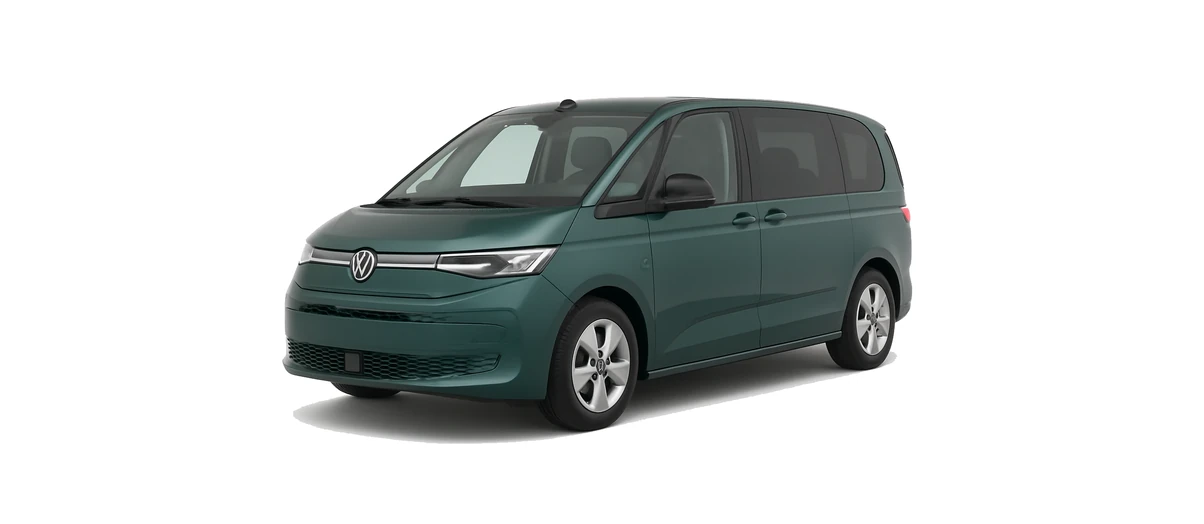
The VW Multivan is not a pure electric vehicle, and not every Multivan needs a charging cable. In the UK, the Multivan range includes petrol, diesel and plug-in hybrid versions, so the first step is to identify exactly which model you have. This guide focuses on the plug-in hybrid VW Multivan eHybrid models, especially the current Multivan T7 1.5 eHybrid 245PS DSG 4MOTION and the earlier 1.4 TSI eHybrid.
That distinction matters because the charging hardware changed significantly. The current UK Multivan eHybrid 4MOTION uses a larger 19.7 kWh battery and supports both Type 2 AC charging and CCS DC rapid charging. Older 1.4 eHybrid models use a smaller battery and are generally understood to be Type 2 AC-only, with much slower charging. If you are buying a used Multivan, do not assume the charging figures for the latest model apply to an earlier car.
View VW Multivan Charging Cables
VW Multivan Battery and Charging Specifications
The current UK plug-in Multivan is the 1.5 eHybrid 245PS 6-speed DSG 4MOTION. It combines a petrol engine with electric drive and an electrified rear axle, giving the vehicle all-wheel drive in this specification. It is still a plug-in hybrid, not a battery-electric vehicle, so it can run on petrol when the battery is depleted.
For UK charging guidance, the key figures for the current model are a 19.7 kWh lithium-ion battery, an official electric range of up to 57 miles depending on version, Type 2 AC charging at up to 11 kW, and CCS DC charging at up to 40 kW. Volkswagen’s UK brochure lists a 0-100% AC charging time of around 2.5 hours on a suitable 11 kW AC charger, and a 10-80% DC rapid charge time of around 26 minutes.
Volkswagen’s UK product information also refers to a full charge from a home wall box taking around 5.5 hours. This is important for UK owners because the headline 11 kW AC figure may not be achieved on every home installation. Many domestic charge points are single-phase, and the actual charging rate depends on the charger, electrical supply and vehicle settings.
Battery Options
There are two main Multivan eHybrid specifications UK buyers are likely to encounter:
- Current 1.5 eHybrid 245PS 4MOTION: listed by Volkswagen UK with a 19.7 kWh lithium-ion battery. This is the current plug-in hybrid model offered in the UK on Life and Style trims, in standard and long body lengths.
- Earlier 1.4 TSI eHybrid 218PS: commonly listed with a 13 kWh gross battery capacity and around 10.4 kWh net capacity. This older version had a shorter electric range and slower AC-only charging.
If your Multivan is diesel or petrol only, it does not plug in and does not use an EV charging cable. If it is an eHybrid, check the model year, engine designation and charging flap information before buying accessories or planning charging stops.
AC Charging Speed
For the current UK Multivan 1.5 eHybrid 4MOTION, AC charging is via a Type 2 connection. Volkswagen’s UK brochure lists AC charging at up to 11 kW, with a 0-100% charge taking approximately 2.5 hours when using a suitable public AC charger capable of supplying that rate.
At home, the experience may be different. Volkswagen’s own UK material gives a home wall box full-charge time of around 5.5 hours. This is still convenient for overnight charging, but it shows why owners should not assume that every wall box will deliver the maximum advertised AC charging rate. Cable rating, charge point output and the home’s electrical supply can all affect the result.
For older 1.4 eHybrid models, the AC charging limit is much lower, at around 3.6 kW. Using a higher-rated Type 2 cable will not make those vehicles charge faster. A suitable Type 2 cable is still needed for untethered public AC chargers, but the car’s onboard charger sets the maximum AC speed.
DC Rapid Charging Speed
One of the more unusual features of the current VW Multivan eHybrid 4MOTION is that it supports DC rapid charging. Many plug-in hybrids rely on AC charging only, but the latest Multivan eHybrid uses a CCS connection for DC charging. The current UK brochure lists DC rapid charging at up to 40 kW, with a 10-80% charge taking around 26 minutes.
DC rapid chargers are tethered, meaning the cable is permanently attached to the charging unit. You do not need to buy a separate CCS cable for rapid charging. Your own cable is used for AC charging at home, work and untethered public AC posts.
Rapid charging can be useful if you want to keep local journeys electric during a busy day, especially for family transport, airport runs, hotel stops, shuttle work or leisure use. However, because the Multivan eHybrid has a relatively small battery compared with a full electric vehicle, frequent DC rapid charging may not always be the most cost-effective option. Home, workplace or destination AC charging will often be the better routine solution.
Older 1.4 eHybrid Multivans should not be assumed to support DC rapid charging. They are generally treated as Type 2 AC-only models unless the exact vehicle documentation confirms otherwise.
Range and Efficiency
The current UK VW Multivan eHybrid 4MOTION has an official electric range of up to 57 miles. As with all WLTP figures, the actual range you see will depend on temperature, speed, payload, route, driving style, wheel and trim specification, and how much heating or air conditioning is being used.
The Multivan is a large MPV and people carrier, so load makes a practical difference. Carrying seven people, luggage, bikes or leisure equipment will usually require more energy than driving lightly loaded around town. Motorway driving will also use more energy than lower-speed urban driving, where plug-in hybrids are often at their most efficient.
For many owners, the main benefit is not long-distance electric-only driving, but the ability to complete school runs, commuting, local errands and short business trips without using much petrol. To get the best from the eHybrid system, it helps to charge little and often rather than treating the battery as an occasional feature.
Charging at Home
Home charging is likely to be the most convenient and economical way to run a Multivan eHybrid. If you can plug in overnight or between regular journeys, the vehicle is more likely to start each day with usable electric range. That is especially useful for a large family vehicle where short trips can otherwise involve frequent cold-start petrol driving.
A dedicated home wall box is usually the preferred option. For the current 1.5 eHybrid 4MOTION, it will use a Type 2 connector for AC charging. Depending on your home setup, the charging rate may be below the vehicle’s maximum 11 kW capability, but Volkswagen’s quoted home wall box time of around 5.5 hours still suits overnight use.
A 3-pin charger is generally best suited as a backup or occasional charging solution, but can be used regularly if a qualified electrician has confirmed the socket and electrical installation are suitable for sustained EV charging. Avoid using extension leads, damaged sockets or unknown outdoor power supplies for EV charging.
If your Multivan is parked on a driveway, consider cable length and the position of the charging port. The Multivan’s size means a cable that is comfortable on a small hatchback may feel restrictive if the vehicle is parked nose-in one day and reversed in the next. Choose a cable length that suits how the vehicle is actually used, not just the shortest distance from charger to socket.
Public Charging
For public AC charging, the current Multivan eHybrid uses a Type 2 connection. Many public AC chargers in the UK are untethered, so you need to carry your own Type 2 cable. These are common at supermarkets, town-centre car parks, hotels, workplaces, leisure venues and long-stay parking locations.
If you are using a current 1.5 eHybrid 4MOTION on a suitable 11 kW AC post, Volkswagen lists a full AC charge time of around 2.5 hours. That makes destination charging useful: you can add a meaningful amount of electric range while shopping, eating, working or visiting attractions.
For DC rapid charging on the current model, use the CCS connector attached to the rapid charger. The vehicle’s 40 kW maximum DC figure is modest compared with many full EVs, but it is strong for a plug-in hybrid. A 10-80% charge in around 26 minutes can be helpful when you want to continue a day of short journeys on electric power.
Owners of older 1.4 eHybrid models should plan around AC charging instead. These vehicles are slower to charge and should not be expected to use CCS rapid chargers unless the specific car’s handbook and charging port confirm that capability.
Vehicle-Specific Features
The Multivan eHybrid is designed as a flexible large MPV rather than a conventional small plug-in hybrid car. It can offer up to seven seats, standard and long body lengths, and removable rear seats depending on configuration. This makes charging practicality more important than it might be on a smaller vehicle.
If the vehicle is used for family life, airport transfers, passenger transport or leisure trips, charging needs to fit around real parking situations. Think about whether the car is commonly parked in a bay, on a driveway, outside accommodation or at public destinations. A cable that is easy to coil, store and reach the socket will encourage regular charging.
The current eHybrid 4MOTION also has a different towing figure from some petrol and diesel versions, with Volkswagen UK quoting up to 1,600 kg for the plug-in hybrid. If towing is part of your use case, remember that towing and heavy loads can reduce electric range, so charging opportunities become more valuable.
Charging Tips
- Check the exact powertrain first: diesel and petrol Multivans do not charge, and older eHybrid models differ from the current 1.5 eHybrid 4MOTION.
- Use Type 2 for AC charging: the current eHybrid uses Type 2 for home, workplace and public AC charging.
- Do not expect 11 kW everywhere: the latest model can support up to 11 kW AC, but home charging may be slower depending on the installation.
- Remember that CCS is tethered: for DC rapid charging on the current model, use the cable attached to the rapid charger.
- Do not overspec for an older 1.4 eHybrid: a higher-rated cable will not overcome the car’s approximate 3.6 kW AC charging limit.
- Charge regularly: plug-in hybrids work best when the battery is topped up often, especially for urban and local driving.
Frequently Asked Questions
Is the VW Multivan a fully electric vehicle?
No. The UK plug-in model is a petrol/electric plug-in hybrid. It can drive on electric power for shorter journeys, but it also has a petrol engine. Many Multivans are diesel or petrol only and do not plug in at all.
What charging cable does the VW Multivan eHybrid use?
For AC charging, the current VW Multivan eHybrid uses a Type 2 connection. A Type 2 cable is appropriate for many home, workplace and untethered public AC chargers. DC rapid charging on the current model uses the CCS cable attached to the rapid charger.
Can the VW Multivan eHybrid rapid charge?
The current UK 1.5 eHybrid 4MOTION can use CCS DC rapid charging, with Volkswagen’s UK brochure listing up to 40 kW and around 26 minutes from 10-80%. Earlier 1.4 eHybrid models should not be assumed to have DC rapid charging.
How long does the VW Multivan eHybrid take to charge?
For the current 1.5 eHybrid 4MOTION, Volkswagen lists around 2.5 hours for a 0-100% charge on a suitable 11 kW AC charger, and around 5.5 hours from a home wall box. DC rapid charging is listed at around 26 minutes from 10-80%. Older 1.4 eHybrid models are slower, at around 3.6 kW AC.
Will a faster Type 2 cable make an older Multivan eHybrid charge faster?
No. The vehicle’s onboard charger determines the maximum AC charging speed. An older 1.4 eHybrid limited to around 3.6 kW AC will not charge faster simply because a higher-rated Type 2 cable is used.
What This Means for Drivers
The VW Multivan eHybrid can be a very practical plug-in hybrid if you charge it regularly and understand which version you have. The latest 1.5 eHybrid 4MOTION is more capable than the earlier 1.4 eHybrid from a charging perspective, thanks to its larger battery, higher AC charging capability and CCS rapid charging support.
For day-to-day ownership, most charging will still be done at home, work or destinations using Type 2 AC. Rapid charging is a useful bonus on the current model, but it is best treated as a convenience feature rather than the main way to run the vehicle. If you are buying used, confirm the charging port and model specification before choosing cables or planning routes around rapid chargers.
Looking for a Charging Cable for VW Multivan?
If you need a suitable cable for a VW Multivan eHybrid, We offer VW Multivan charging cables for home, workplace and public AC charging. Check your exact Multivan version before ordering, especially if you own an earlier 1.4 eHybrid rather than the current 1.5 eHybrid 4MOTION.
View VW Multivan Charging Cables
Please note that this information is intended as a guide. Charging specifications may change due to model and year of manufacture. For precise information, always refer to your vehicle user manual.

