
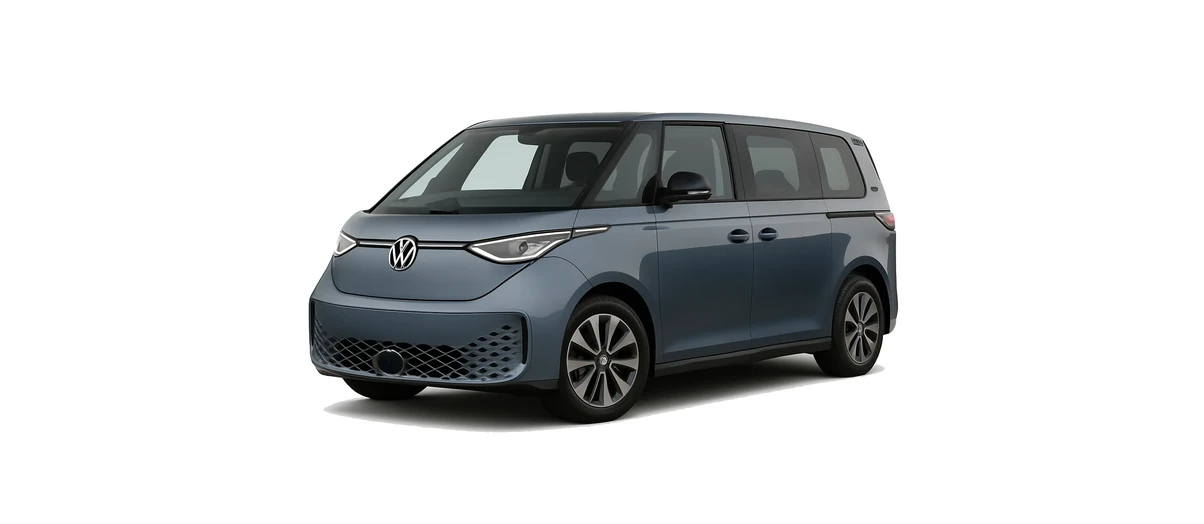
The VW ID Buzz is one of the most distinctive electric vehicles on UK roads: a battery-electric MPV with family, leisure and adventure appeal, plus a separate Cargo van version for commercial users. For passenger-car buyers, the current UK range includes standard-wheelbase and long-wheelbase versions, with 5-, 6- and 7-seat layouts depending on trim and configuration.
Charging the ID. Buzz is straightforward, but it is important to be variant-aware. Earlier UK ID. Buzz Pro models sold from 2022 to July 2024 used a 77 kWh usable battery, while current standard-wheelbase models use a 79 kWh usable battery and current long-wheelbase models use an 86 kWh usable battery. Those differences affect range, rapid charging performance and the figures you should expect in day-to-day use.
View VW ID Buzz Charging Cables
VW ID Buzz Battery and Charging Specifications
UK passenger versions of the Volkswagen ID. Buzz are fully electric vehicles, not plug-in hybrids or range-extender models. They use a Type 2 connection for AC charging and a CCS Combo 2 connection for DC rapid charging. The charge port is positioned at the right rear of the vehicle.
| Vehicle type | Battery-electric MPV / minibus |
|---|---|
| AC charging connection | Type 2 |
| DC rapid charging connection | CCS Combo 2 |
| Maximum AC charging | Up to 11 kW, where the supply supports it |
| Typical UK home charging | Usually up to 7.4 kW on a single-phase wallbox |
| Maximum DC rapid charging | Up to 185 kW, 200 kW or 175 kW depending on version |
| UK WLTP range | Varies by version; up to around 293 miles on selected current models |
Battery Options
The ID. Buzz should not be treated as a one-battery vehicle, especially if you are comparing new and used examples. Current UK passenger models are split mainly by wheelbase, while earlier cars used a different battery pack.
- Current standard-wheelbase Pro and GTX passenger models: 84 kWh gross, 79 kWh usable battery. Volkswagen UK generally describes this as the 79 kWh battery.
- Current long-wheelbase Pro and GTX passenger models: 91 kWh gross, 86 kWh usable battery. Volkswagen UK generally describes this as the 86 kWh battery.
- Earlier ID. Buzz Pro, 2022 to July 2024: 82 kWh gross, 77 kWh usable battery. This discontinued version is still relevant for used buyers and has different rapid-charging and preconditioning details.
Before relying on any charging time or range figure, check whether your vehicle is the earlier 77 kWh model, a current 79 kWh standard-wheelbase model, or a current 86 kWh long-wheelbase model.
AC Charging Speed
The VW ID. Buzz has an onboard AC charger rated at up to 11 kW on current UK models. This is useful if you have access to a three-phase workplace, commercial premises or certain destination chargers. However, most UK homes have a single-phase electrical supply, which means a dedicated home wallbox will usually charge at up to 7.4 kW rather than the car’s full 11 kW AC capability.
For cable selection, the ID. Buzz uses a Type 2 charging cable for AC charging. Volkswagen UK lists a Mode 3 Type 2 charging cable as standard equipment on current models, while a Mode 2 cable is listed as an option. If you regularly use untethered public AC charge points, workplace chargers or campsite-style destination charging where appropriate, keeping a suitable Type 2 cable in the vehicle is sensible.
A 32 amp Type 2 cable is the most flexible choice for many UK owners. If you use three-phase AC charging, you will need a three-phase cable to make use of 11 kW charging. If you only ever charge from a single-phase home wallbox, a single-phase cable may be sufficient, but a three-phase cable offers broader compatibility for future use.
DC Rapid Charging Speed
For longer trips, the ID. Buzz uses CCS rapid charging. The best way to think about rapid charging is the 10% to 80% window. This is where the car can usually charge fastest, assuming the battery is at a suitable temperature, the charger is working correctly and the charging station can deliver the required power. Charging beyond 80% is often much slower, so it is usually more efficient on a road trip to stop briefly and continue rather than wait for a full 100% charge.
- Current standard-wheelbase 79 kWh models: EV Database lists rapid charging at up to around 185 kW DC, with a 10% to 80% charge taking about 26 minutes in suitable conditions.
- Current long-wheelbase 86 kWh models: EV Database lists rapid charging at up to around 200 kW DC, also with a 10% to 80% charge time of about 26 minutes in suitable conditions.
- Earlier 77 kWh ID. Buzz Pro models: EV Database lists rapid charging at up to around 175 kW DC, with a 10% to 80% charge taking about 30 minutes.
These are peak-capable figures, not guarantees at every charger. Battery temperature, state of charge, charger output, site load and weather can all affect the actual charging speed.
Range and Efficiency
Volkswagen UK quotes WLTP combined range figures that vary across the ID. Buzz line-up. The current UK range reaches up to around 293 miles on selected long-wheelbase Life versions, while other variants, including some GTX and standard-wheelbase models, are lower. The exact figure depends on battery, wheelbase, trim, seating layout and equipment.
In real-world UK driving, it is sensible to expect less than the headline WLTP figure, particularly in winter or at motorway speeds. EV Database estimates around 225 miles for some current standard-wheelbase versions and around 240 miles for some current long-wheelbase versions, depending on specification. Your own range will vary with driving style, passenger load, outside temperature and route.
The ID. Buzz’s boxy shape is part of its appeal, but it also means aerodynamic drag becomes more noticeable at higher speeds. A full family load, roof accessories, cold weather heating and sustained motorway driving can all reduce efficiency. For touring, camping and holiday use, plan with a realistic buffer rather than assuming the maximum WLTP range will be available on every journey.
Charging at Home
For most ID. Buzz owners, home charging will be the cheapest and most convenient way to keep the vehicle ready. A dedicated 7.4 kW Type 2 wallbox is the usual UK benchmark, because most domestic properties have a single-phase supply. At that rate, overnight charging is generally enough to cover normal daily use, even if you do not charge from empty to full every time.
If you have a three-phase supply at home, work or a commercial property, the ID. Buzz can take advantage of up to 11 kW AC charging. This can be useful for fleet, hospitality, campsite or workplace settings where several hours of parking are available but DC rapid charging is not required.
Three-pin charging is generally best suited as a backup or occasional charging solution, but can be used regularly if a qualified electrician has confirmed the socket and electrical installation are suitable for sustained EV charging. Because the ID. Buzz has a large battery compared with many smaller EVs, a three-pin socket will be slow and is not the ideal everyday option for most owners.
Public Charging
Public charging for the ID. Buzz falls into two main categories: AC destination charging and DC rapid charging. AC destination charging is common at hotels, car parks, workplaces, leisure venues and some campsites. These chargers often require your own Type 2 cable, so carrying the correct cable is useful even if you primarily charge at home.
DC rapid and ultra-rapid chargers have tethered CCS cables attached to the charging unit. You do not use your own Type 2 cable for DC rapid charging. These are the chargers to prioritise on longer journeys, especially if you are travelling with passengers or luggage and want to keep stops efficient.
When route planning, aim to arrive at a rapid charger with a sensible reserve and charge to around 80% unless you genuinely need more. For current ID. Buzz models with battery preconditioning support, using the built-in navigation to route to a rapid charger can help the vehicle prepare the battery for faster charging where supported. This should not be assumed for the earlier 2022 to 2024 ID. Buzz Pro, as EV Database lists battery preconditioning as not possible on that older model.
Vehicle-Specific Features
The current ID. Buzz is based on Volkswagen’s MEB electric platform and uses a 400 V architecture according to EV Database. It is available in the UK as a passenger BEV with different seating configurations, and the long-wheelbase model is particularly relevant for buyers who need 6- or 7-seat practicality.
Volkswagen lists a heat pump as an option in the UK brochure, so it should not be assumed to be fitted to every vehicle. A heat pump can help improve cold-weather efficiency on vehicles equipped with it, but actual winter range will still depend on route, speed, cabin heating and payload.
Plug & Charge is listed within Volkswagen connected services, and EV Database shows ISO 15118-2 support. Where the charging network and account setup support it, this can simplify the charging process. V2L should not be assumed for the ID. Buzz; EV Database lists V2L as not supported, and an optional 230 V outlet should not be treated as full vehicle-to-load capability.
Charging Tips
- Identify your battery first: 77 kWh, 79 kWh and 86 kWh versions have different range and rapid-charging expectations.
- Use 7.4 kW as the home benchmark: the car may support 11 kW AC, but most UK homes will not provide three-phase charging.
- Carry a Type 2 cable: useful for untethered public AC chargers, workplace charging and many destination chargers.
- Rapid charge from 10% to 80% where practical: this usually gives the best balance of charging speed and journey time.
- Plan winter journeys with a buffer: cold weather, heating and motorway speeds can noticeably reduce range.
- Use built-in navigation on current models: routing to a rapid charger may help trigger battery preconditioning where supported.
Frequently Asked Questions
What charging cable does the VW ID Buzz use?
The VW ID Buzz uses a Type 2 cable for AC charging and a CCS Combo 2 connector for DC rapid charging. For untethered AC charge points, you will need a Type 2 cable.
Can the VW ID Buzz charge at 11 kW at home?
Only if the property has a suitable three-phase supply and compatible charging equipment. Most UK homes are single-phase, so the practical home charging maximum is usually 7.4 kW.
How fast can the VW ID Buzz rapid charge?
It depends on the version. Current standard-wheelbase models are listed at up to around 185 kW DC, current long-wheelbase models at up to around 200 kW DC, and earlier 77 kWh models at up to around 175 kW DC. In suitable conditions, 10% to 80% is around 26 minutes for current versions and around 30 minutes for the older 77 kWh model.
Does every VW ID Buzz have the same range?
No. UK WLTP range varies by battery, wheelbase, trim and seating layout. The current range reaches up to around 293 miles on selected versions, but other models are lower.
Is the VW ID Buzz a plug-in hybrid?
No. UK passenger ID. Buzz models listed by Volkswagen are battery-electric vehicles.
What This Means for Drivers
The VW ID Buzz is well suited to families, leisure users and drivers who want electric practicality with a large, versatile cabin. For daily ownership, a 7.4 kW home wallbox and the right Type 2 cable will cover most charging needs. For longer trips, CCS rapid charging is strong for a vehicle of this size, but the best experience comes from planning around the 10% to 80% window and understanding which battery version you drive.
If you are buying used, be especially careful with charging claims. The earlier 77 kWh ID. Buzz Pro has different rapid-charging figures and does not have the same preconditioning information as current models. If you are buying new, check the latest Volkswagen UK specification for your exact trim, wheelbase and options before comparing range or charging figures.
Looking for a Charging Cable for VW ID Buzz?
We offer VW ID Buzz charging cables suitable for Type 2 AC charging at home, work and public destination charge points. Choose the cable that matches your charging setup, especially if you want single-phase or three-phase compatibility.
View VW ID Buzz Charging Cables
Please note that this information is intended as a guide. Charging specifications may change due to model and year of manufacture. For precise information, always refer to your vehicle user manual.

