
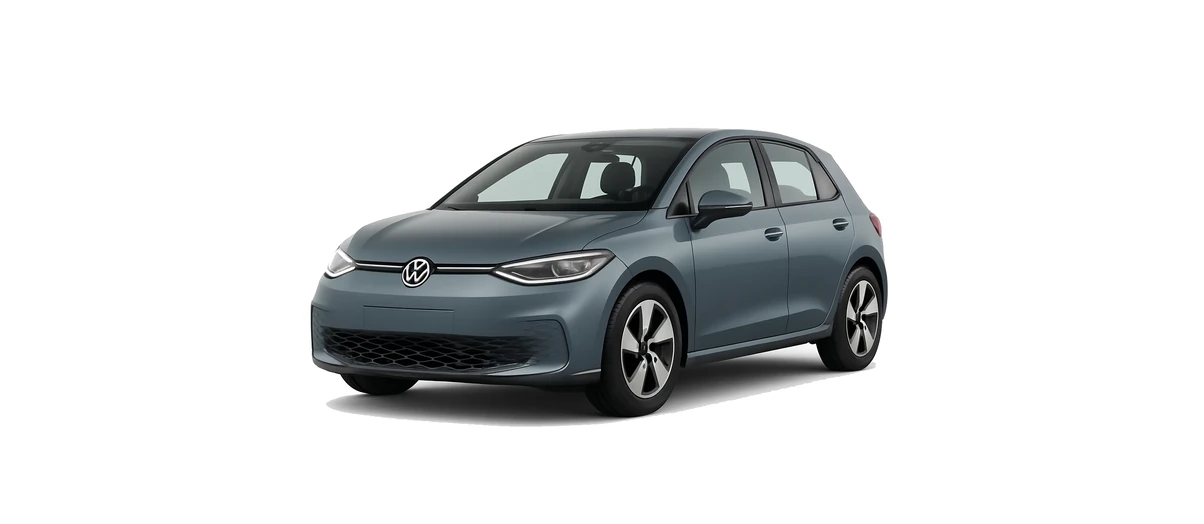
The VW ID.2 name has been widely used for Volkswagen’s forthcoming small electric hatchback, originally previewed through the ID.2all concept. For UK buyers, the production direction is now clearer: Volkswagen presents the car as the all-new Volkswagen ID. Polo. In practice, many drivers will still search for “VW ID.2 charging”, so this guide uses the familiar name while explaining the production ID. Polo context.
The important point for charging is that this is an all-electric Volkswagen supermini, not a plug-in hybrid or range-extender model. Current manufacturer information points to Type 2 AC charging, CCS rapid charging, two battery options, 11 kW AC capability where the supply supports it, and rapid charging of up to 105 kW on the larger battery version. However, Volkswagen UK states that finalised WLTP data is not yet available, so range and charging figures should be treated as provisional until UK homologation and customer cars confirm the final details.
VW ID.2 Battery and Charging Specifications
The VW ID.2 / ID. Polo is expected to use Volkswagen’s MEB+ front-wheel-drive electric platform. Official Volkswagen information lists two battery sizes: a 37 kWh net LFP battery and a 52 kWh net NMC battery. These are aimed at slightly different use cases: the smaller pack suits urban and shorter-distance driving, while the larger pack is designed for longer range and faster peak rapid charging.
For cable selection, the key confirmed details are straightforward. AC charging uses a Type 2 connection, which is the standard for modern electric cars in the UK and Europe. DC rapid charging uses the CCS Combo 2 connection. You normally need your own Type 2 charging cable for untethered home charge points and many AC public chargers, but you do not buy a separate CCS cable, because rapid chargers have their own tethered DC cable.
Battery Options
Volkswagen’s published data lists a 37 kWh net LFP battery with versions around 85 kW and 99 kW output. This smaller battery is quoted at up to 329 km WLTP, which is approximately 204 miles, although final UK WLTP figures are still to be confirmed. It supports DC rapid charging at up to 90 kW, with an indicative 10-80% charge time of about 23 minutes.
The larger battery is listed as a 52 kWh net NMC pack. Volkswagen has also referred to this battery in the context of the higher-output 155 kW version and future GTI-related information. Volkswagen quotes up to 454 km WLTP, around 282 miles, again subject to final UK data. EV Database UK lists the 52 kWh model at 56 kWh total and 51.7 kWh usable, which closely matches the manufacturer’s net-capacity figure.
For most UK drivers choosing between the two, the decision is likely to come down to mileage pattern. The 37 kWh version should suit local commuting, school runs and shorter daily use, especially where home charging is available. The 52 kWh version will be more appropriate for drivers who regularly travel longer distances or want more range between charges.
AC Charging Speed
Volkswagen lists 11 kW AC charging for the ID. Polo. In practical UK terms, this needs careful interpretation. Most UK homes have a single-phase electricity supply, and a typical home wallbox on single-phase power will charge at up to 7.4 kW, not 11 kW. To achieve 11 kW AC, you generally need a suitable three-phase supply and an appropriate three-phase charge point.
At home, a 7.4 kW wallbox will still be more than adequate for most drivers. As a rough guide, the 37 kWh battery could be replenished overnight from a low state of charge, while the larger 52 kWh battery should also comfortably suit overnight charging for typical day-to-day use. Actual charge time depends on temperature, starting battery percentage, the charge limit set in the car, charger output and household electrical capacity.
If you plan to use public AC chargers, a Type 2 cable is the item to keep in the boot. Many public AC posts are untethered, meaning they provide the socket but not the cable. A good-quality Type 2 cable lets you use workplace chargers, destination chargers, town-centre posts and many car-park chargers.
DC Rapid Charging Speed
DC rapid charging is where the two battery versions differ more clearly. The 37 kWh LFP battery is listed with DC charging at up to 90 kW and an approximate 10-80% charge time of 23 minutes. The 52 kWh NMC battery is listed with DC charging at up to 105 kW and an indicative 10-80% time of about 24 minutes.
These figures are peak or ideal-condition figures, not a promise that the car will hold the maximum rate throughout a charging session. Rapid charging speed varies depending on battery temperature, state of charge, charger capability, battery management and site conditions. As with most EVs, charging from 10-80% is usually much faster and more efficient than charging from 80-100% on a rapid charger.
For longer journeys, the practical strategy is to use rapid charging for shorter top-ups rather than waiting for a full battery. A stop that takes the car from around 15% to 70% or 80% will usually be more time-efficient than pushing beyond 80%, where charging speed typically slows.
Range and Efficiency
Volkswagen UK refers to a range of up to around 280 miles in the context of the larger-battery model, while Volkswagen Newsroom data lists up to 454 km WLTP for the 52 kWh battery and up to 329 km WLTP for the 37 kWh battery. Because finalised UK WLTP data is not yet available, it is best to treat these as manufacturer-claimed provisional figures.
EV Database UK estimates around 205 miles of real-world range for the 52 kWh version. That is not an official Volkswagen UK figure, but it is a useful reminder that real-world range is usually lower than WLTP in mixed driving. Motorway speeds, cold weather, rain, hills, tyre choice, cabin heating and heavy use of accessories can all reduce range.
For a small electric hatchback, efficiency should be one of the car’s strengths, particularly in urban and suburban driving where regenerative braking and lower average speeds help. Drivers doing mainly short trips may find the smaller battery perfectly practical, while those covering frequent motorway mileage are more likely to benefit from the larger pack.
Charging at Home
For most VW ID.2 / ID. Polo owners, home charging will be the cheapest and most convenient option. A dedicated home wallbox is usually preferable to relying on domestic sockets because it is faster, safer and designed for repeated EV charging. On a typical UK single-phase supply, expect a dedicated wallbox to charge at up to 7.4 kW, subject to installation limits and load management.
A 3-pin charger is generally best suited as a backup or occasional charging solution, but can be used regularly if a qualified electrician has confirmed the socket and electrical installation are suitable for sustained EV charging. Domestic sockets were not all installed with long-duration high-load charging in mind, so professional inspection is important if you intend to use one regularly.
Many owners will set a daily charging limit below 100%, particularly for routine commuting, and only charge to full before longer journeys. Final battery-care guidance should be checked in the owner’s manual when UK cars arrive, as recommendations can vary by battery chemistry and software settings.
Public Charging
Public charging for the VW ID.2 / ID. Polo will fall into two main categories: AC destination charging and DC rapid charging. AC chargers are commonly found at workplaces, hotels, supermarkets, gyms and public car parks. Many are untethered, so you connect using your own Type 2 cable.
DC rapid chargers are found at motorway services, charging hubs and high-traffic locations. These use CCS and have their own heavy tethered cable attached to the charger. You simply plug the charger’s CCS connector into the car; no personal rapid-charging cable is required.
If you rely on public charging, it is worth planning around both speed and convenience. A slower AC charger can be ideal while you are parked for several hours, while a rapid charger is better suited to a journey stop. For the larger 52 kWh version, the quoted 105 kW peak rapid charging should make longer trips practical, provided the charging network is available and working as expected.
Vehicle-Specific Features
Volkswagen confirms Vehicle-to-Load capability as standard, supplying external devices at up to 3.6 kW via an adapter. This can be useful for powering certain electrical equipment away from home, subject to the car’s limits and the correct accessories. This is different from Vehicle-to-Grid or Vehicle-to-Home capability, which has not been confirmed in the available data for the UK model.
A heat pump is confirmed as optional on an official Volkswagen Ireland ID. Polo page, but UK trim and option availability should be checked when the final configurator and specification guide are published. A heat pump can help improve winter efficiency by reducing the energy needed for cabin heating, but it should not be assumed to be standard on UK cars.
Volkswagen also lists one-pedal driving as standard and notes optional Connected Travel Assist with automatic traffic light recognition. These features are not directly about charging cables, but they contribute to the overall EV ownership experience.
Charging Tips
- Choose the right AC cable: A Type 2 cable is the correct format for AC charging. If you want maximum flexibility, consider a cable specification that suits both home wallboxes and public AC posts.
- Do not expect 11 kW at every home: The car may support 11 kW AC, but most UK homes will charge at up to 7.4 kW unless three-phase power is available.
- Use rapid charging strategically: On longer journeys, charging to around 80% is usually more time-efficient than waiting for 100%.
- Keep the cable accessible: If the car is used for commuting or public charging, store the Type 2 cable where it can be reached without unloading the boot.
- Check final UK specifications: Because the model is still in the announced or expected stage, confirm final battery, range and equipment details before ordering accessories.
Frequently Asked Questions
Is the VW ID.2 the same as the Volkswagen ID. Polo?
The ID.2 and ID.2all names were used during the concept and development phase of Volkswagen’s small EV. Volkswagen’s UK-facing production model is now presented as the all-new ID. Polo. Many drivers still use “ID.2” as the search name, but the production context is ID. Polo.
What charging cable does the VW ID.2 need?
For AC charging, it uses a Type 2 connection. This is the cable you are likely to use with untethered home chargers and many public AC charging posts.
Does the VW ID.2 need a separate CCS rapid-charging cable?
No. CCS rapid chargers have tethered DC cables attached to the charging unit. You do not buy or carry a separate CCS cable for rapid charging.
Can the VW ID.2 charge at 11 kW at home?
The car is listed with 11 kW AC capability, but most UK homes are single-phase and will usually charge at up to 7.4 kW. Charging at 11 kW normally requires suitable three-phase AC infrastructure.
What is the rapid-charging speed?
Current Volkswagen data lists up to 90 kW DC for the 37 kWh battery and up to 105 kW DC for the 52 kWh battery. Indicative 10-80% times are about 23 minutes and 24 minutes respectively, depending on conditions.
What This Means for Drivers
The VW ID.2 story is really the start of the Volkswagen ID. Polo story for UK buyers. Charging should be familiar and straightforward: Type 2 for AC charging, CCS for rapid charging, and a realistic expectation of 7.4 kW at many UK homes unless three-phase power is available.
The two-battery approach is also important. The 37 kWh LFP version looks well suited to city and suburban use, while the 52 kWh NMC version offers the longer claimed range and slightly higher rapid-charging peak. Until Volkswagen publishes final UK specifications, buyers should treat range and charging numbers as provisional, but the overall charging setup is already clear enough to plan home and public charging sensibly.
Looking for a Charging Cable for VW ID.2?
We offer VW ID.2 charging cables suitable for Type 2 AC charging, helping you prepare for home, workplace and public charging once final UK vehicles and specifications are confirmed.
Please note that this information is intended as a guide. Charging specifications may change due to model and year of manufacture. For precise information, always refer to your vehicle user manual.

