
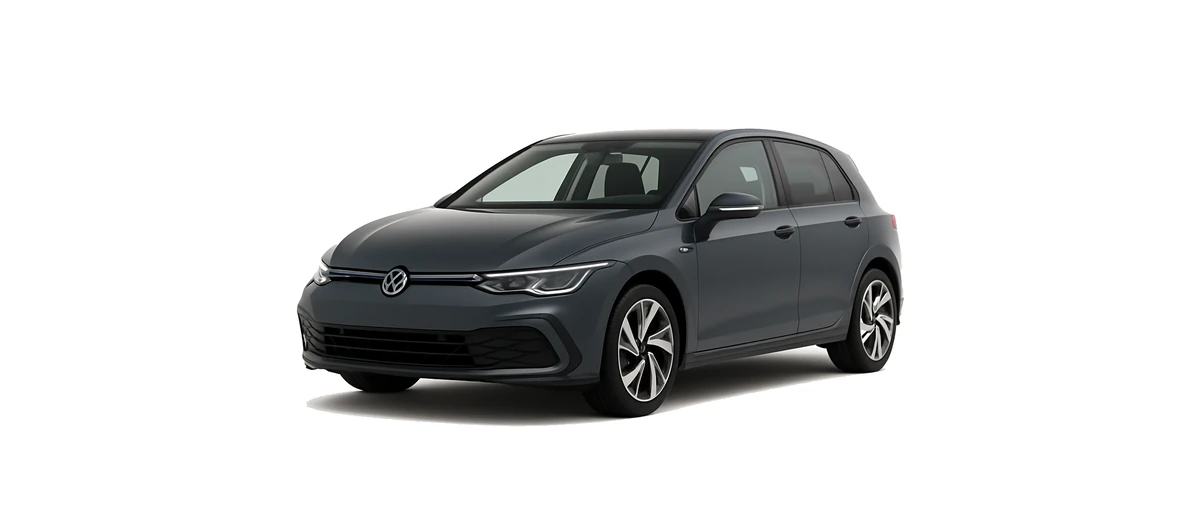
The VW Golf GTE is a plug-in hybrid hatchback rather than a fully electric car. That distinction matters when choosing a charging cable and planning your charging routine. The current UK facelifted Golf GTE has moved the model on significantly, with a larger plug-in hybrid battery, faster AC charging and, for the first time on UK Golf GTE models, DC rapid charging capability. Older Golf GTEs are quite different and should not be treated as if they have the same charging hardware.
This guide focuses on UK charging for the Volkswagen Golf GTE, with particular attention to model-year differences. If you own, are buying, or are checking a used Golf GTE, the first step is to identify whether it is an older Type 2-only car with around 3.6 kW AC charging, or the latest facelift model with 11 kW AC and CCS rapid charging. Once that is clear, cable choice and charging expectations become much simpler.
View VW Golf GTE Charging Cables
VW Golf GTE Battery and Charging Specifications
The current UK Volkswagen Golf GTE is the facelifted Mk8.5 model, listed for the UK market as a 272 PS plug-in hybrid. It combines a 1.5 TSI petrol engine with an electric motor and a rechargeable high-voltage battery. It is designed to cover many daily journeys on electric power, while still having the petrol engine available for longer trips.
For the current Golf GTE, Volkswagen UK technical data lists a plug-in hybrid battery capacity of 19.7 kWh. Independent technical reporting identifies this as the usable capacity from a larger gross battery pack, so 19.7 kWh is the most useful figure for charging and real-world ownership calculations.
The current model has a Type 2 connection for AC charging and a CCS2/Combo 2 connection for DC rapid charging. The charge port is positioned on the front wing area, rather than where the petrol filler cap is located. That can be useful to remember when positioning the car at a home wallbox or public charging bay.
Battery Options
The Golf GTE has been sold in several generations, and the battery size is one of the biggest differences between them:
- Current facelift Mk8.5 Golf GTE / UK MY2026: Volkswagen UK lists a 19.7 kWh plug-in hybrid battery capacity. This model has 11 kW AC charging and DC rapid charging.
- Pre-facelift Mk8 Golf GTE, approximately 2021 to 2024: this version used a 13.0 kWh battery and generally charged at up to around 3.6 kW on AC.
- Mk7 and Mk7.5 Golf GTE, approximately 2014 to 2020: these earlier cars used an 8.7 kWh battery and Type 2 AC charging at around 3.6 kW.
This is why a model-year check is so important. A current Golf GTE can make use of much faster charging equipment than older cars, but a high-rated cable or wallbox will not make an earlier car charge beyond the limit of its onboard charger.
AC Charging Speed
For the current UK Golf GTE, Volkswagen lists AC charging at up to 11 kW, with a 0 to 100% charging time of about 2 hours 30 minutes when the car is connected to a suitable supply. This is a major improvement over earlier Golf GTE models, which were generally limited to around 3.6 kW AC charging.
There is an important UK home-charging caveat: 11 kW AC charging normally requires a suitable three-phase electrical supply. Many UK domestic wallboxes are single-phase units rated at up to 7.4 kW. If you charge the current Golf GTE from a typical single-phase home wallbox, the real charging speed may be below the official 11 kW maximum, although it will still usually be more than adequate for a plug-in hybrid battery.
For older Golf GTEs, expect a full charge to take longer than the current model’s best-case AC figure. Depending on the generation and power source, full charging times can be around several hours, with earlier cars often quoted in the region of 3 hours 40 minutes to 5 hours from appropriate AC charging equipment.
DC Rapid Charging Speed
The current facelift VW Golf GTE supports DC rapid charging through a CCS2/Combo 2 connector. Volkswagen UK technical data lists a maximum DC charging power of 40 kW and a charging time of around 26 minutes from 5% to 80% state of charge. Some Volkswagen marketing and media material has referred to up to 50 kW, but for UK specification guidance, 40 kW is the safer figure to use.
DC rapid charging is useful if you need to add electric range during a longer journey, particularly because the latest Golf GTE has a much larger battery than previous versions. However, it is still a plug-in hybrid with a petrol engine, so the economics of regular rapid charging may not always be favourable compared with charging at home on a lower-cost electricity tariff.
Older Golf GTE models should not be assumed to have DC rapid charging. Mk7, Mk7.5 and pre-facelift Mk8 Golf GTEs are generally Type 2 AC-only cars, with no confirmed CCS rapid charging capability in the UK versions covered here.
Range and Efficiency
The current UK Golf GTE has a WLTP combined electric range of about 81 miles. Volkswagen also lists a higher city electric range, reflecting the fact that plug-in hybrids are often most efficient in urban and lower-speed driving. In real-world UK use, many drivers should expect less than the laboratory figure, with around 60 miles being a sensible planning estimate depending on weather, speed, terrain, driving style and cabin heating or air-conditioning use.
Older Golf GTEs have shorter electric ranges because they have smaller batteries. Early Mk8 cars are commonly associated with an electric range of around the high-30-mile region in typical review contexts, while Mk7 and Mk7.5 cars are shorter again by modern plug-in hybrid standards.
For ownership costs, the key habit is to charge regularly. A Golf GTE makes most sense when it is plugged in often enough to cover local journeys electrically. If it is rarely charged, it behaves more like a conventional petrol hybrid with extra battery weight, reducing the benefit of choosing the GTE in the first place.
Charging at Home
Home charging is usually the most convenient and cost-effective way to run a VW Golf GTE. Because the battery is much smaller than a full battery-electric vehicle’s battery, even a modest overnight charging session can restore a useful amount of electric range.
For most owners, a dedicated Type 2 home wallbox is the best day-to-day option. A tethered wallbox has its own attached cable, while an untethered wallbox requires you to use a separate Type 2 charging cable. If your wallbox is untethered, a good-quality Type 2 cable rated for 32 A is a practical general choice. It gives flexibility across home and public AC charging, even though older Golf GTEs will still only charge at the rate allowed by their onboard charger.
For the current Golf GTE, an 11 kW AC charge is possible only where the electrical installation and charging equipment support it. Many UK homes do not have a three-phase supply, so a standard 7.4 kW single-phase wallbox may be the realistic home setup. That should still comfortably suit regular overnight or evening charging for a plug-in hybrid.
A 3-pin EV charger can be useful, but it is generally best suited as a backup or occasional charging solution. It can be used regularly if a qualified electrician has confirmed the socket and electrical installation are suitable for sustained EV charging. Avoid using damaged sockets, unsuitable extension leads, multi-socket adapters or any arrangement that causes plugs or cables to become warm during charging.
Public Charging
Public charging for the VW Golf GTE depends heavily on which generation you have. For older cars, public charging normally means AC charging through a Type 2 post. Many public AC charge points are untethered, so you will need to carry your own Type 2 cable. The charge point may be rated at 7 kW, 11 kW or 22 kW, but the car will only draw what its onboard charger can accept.
For the current facelift Golf GTE, you can use public AC chargers and, where appropriate, CCS rapid chargers. The 40 kW UK technical-data figure means it does not need the fastest motorway chargers to reach its maximum charging rate. On a busy rapid charging network, it may be more considerate and cost-effective to use a lower-powered rapid unit if one is available, rather than occupying an ultra-rapid charger that the car cannot fully utilise.
Before connecting, always check whether the charger is tethered. DC rapid chargers almost always have their own cable attached, so you do not use your own cable for CCS rapid charging. Untethered AC posts, by contrast, require your own Type 2 cable.
Vehicle-Specific Features
The most important Golf GTE-specific feature for charging is the change introduced with the current facelift model. Volkswagen moved the car from the earlier 3.6 kW AC-only charging pattern to 11 kW AC charging and DC rapid charging. That makes the latest Golf GTE much more flexible for drivers who rely on electric running for longer daily routes.
The car’s charging port location is also worth noting. On plug-in hybrid Golfs, it is positioned around the front wing area, while the petrol filler is separate. At home, this may influence whether you reverse onto the drive or park nose-in to make the cable run shorter and safer.
Golf plug-in hybrid models also offer charging and cabin comfort functions through the vehicle systems and connected services, depending on specification and setup. These can help you plan charging around cheaper electricity periods and prepare the cabin before departure without needing to start every journey with a cold interior.
Charging Tips
- Identify the generation first: do not assume all Golf GTEs have 11 kW AC or CCS rapid charging. Older cars are usually Type 2 AC-only at around 3.6 kW.
- Choose a cable for flexibility: a 32 A Type 2 cable is a sensible general option for UK AC charging, but the car’s onboard charger still sets the actual charging speed.
- Use home charging where possible: regular low-cost home charging is usually cheaper than relying on public rapid charging.
- Do not idle the petrol engine just to charge the battery for economy: plugging in is normally cheaper and more efficient unless you have a specific journey reason.
- Keep the cable run safe: avoid trailing cables across public pavements or anywhere they could create a trip hazard.
- Check connector type when buying used: a current Golf GTE has Type 2 AC and CCS DC capability; older models are generally Type 2 AC only.
Frequently Asked Questions
Is the VW Golf GTE fully electric?
No. The VW Golf GTE is a plug-in hybrid. It can drive on electric power for many journeys when charged, but it also has a petrol engine for longer trips and when the battery is depleted.
What charging cable does a VW Golf GTE use?
For AC charging, the Golf GTE uses a Type 2 connection. Current facelift cars also have a CCS2/Combo 2 connection for DC rapid charging, but older Golf GTE models are generally Type 2 AC-only.
Can all VW Golf GTE models rapid charge?
No. DC rapid charging applies to the current facelift Golf GTE. Older Mk7, Mk7.5 and pre-facelift Mk8 Golf GTE models should be treated as AC-only unless you have specific evidence for your exact vehicle.
How long does the current VW Golf GTE take to charge?
Volkswagen UK lists around 2 hours 30 minutes for a 0 to 100% AC charge at up to 11 kW on a suitable supply. DC charging is listed at around 26 minutes from 5% to 80% at up to 40 kW. Home charging times may be longer if you are using a single-phase wallbox rather than a three-phase supply.
Is a 32 A Type 2 cable suitable?
For most UK AC charging situations, a 32 A Type 2 cable is a practical choice. It will not force the car to charge faster than it can accept, but it provides good compatibility with home wallboxes and public AC posts.
What This Means for Drivers
The VW Golf GTE is one of those cars where the badge alone does not tell the whole charging story. A current UK facelift model is a much more capable plug-in hybrid charger than earlier versions, with a 19.7 kWh practical battery capacity, 11 kW AC capability and CCS rapid charging. By contrast, older Golf GTEs have smaller batteries and are generally limited to Type 2 AC charging at around 3.6 kW.
For most owners, the best routine is simple: charge at home whenever possible, carry a suitable Type 2 cable for public AC posts, and use rapid charging on the current model only when it genuinely fits the journey. That approach gives the Golf GTE the best chance of delivering low-cost electric miles while preserving the convenience of a petrol engine for longer trips.
Looking for a Charging Cable for VW Golf GTE?
If you need a replacement, spare or public charging cable for your VW Golf GTE, We offer cables suitable for Golf GTE plug-in hybrid charging. Check your model year before ordering so you choose the right cable for your vehicle and charging setup.
View VW Golf GTE Charging Cables
Please note that this information is intended as a guide. Charging specifications may change due to model and year of manufacture. For precise information, always refer to your vehicle user manual.

