
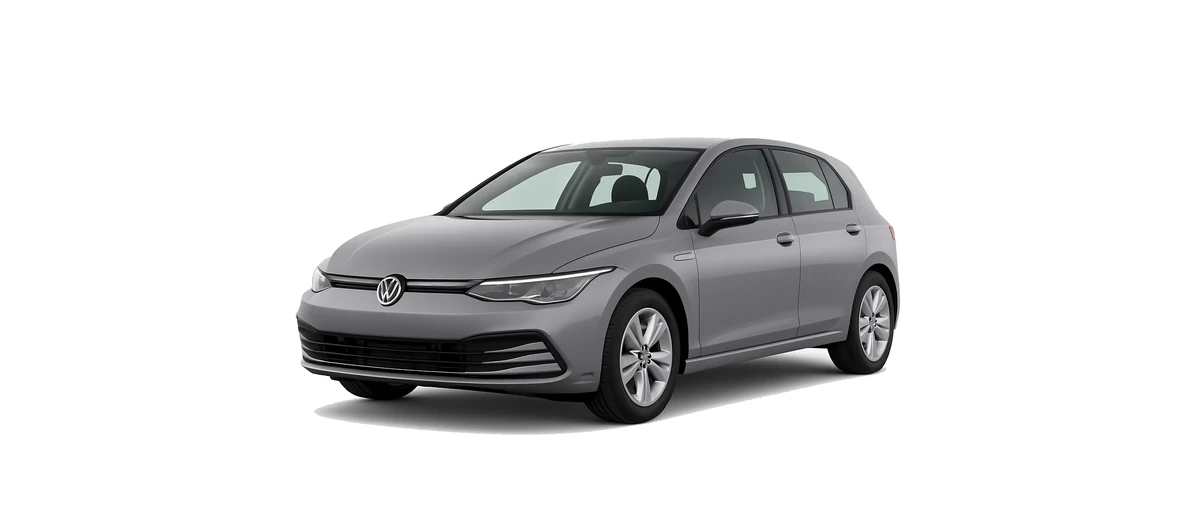
The VW Golf eHybrid is a plug-in hybrid hatchback, not a fully electric e-Golf. That distinction matters because its charging needs, battery size and cable requirements depend heavily on model year. Current facelifted UK Golf eHybrid and GTE models have a much larger plug-in hybrid battery, up to 11 kW AC charging and UK-listed DC rapid charging. Earlier Mk8 Golf eHybrid and GTE models are materially different, with a smaller battery and a lower AC charging limit.
This guide explains the key differences so UK drivers can choose the right charging cable, understand realistic charging times and avoid assuming that all Golf eHybrid models charge in the same way. If you are buying a used car, checking the model year, handbook and charging inlet is especially important before relying on rapid charging or buying accessories.
View VW Golf eHybrid Charging Cables
VW Golf eHybrid Battery and Charging Specifications
The current UK-market VW Golf eHybrid sits in the facelifted Mk8/8.5 Golf range and combines a 1.5 TSI petrol engine with an electric motor and an externally rechargeable traction battery. It is designed for electric driving on shorter journeys, with the petrol engine available for longer trips or when the battery is depleted.
For current UK cars, Volkswagen lists a 19.7 kWh plug-in hybrid battery capacity, up to 11 kW AC charging and a UK-listed maximum DC charging power of 40 kW. Volkswagen UK charging data gives a 0-100% AC charge time of 2 hours 30 minutes when using an 11 kW supply, and around 12 hours from a 2.3 kW domestic supply.
However, earlier Mk8 Golf eHybrid and GTE models, roughly around 2020-2024, used a smaller 13.0 kWh gross battery with 10.4 kWh net capacity. Those cars were listed with AC charging up to about 3.6 kW, so a higher-powered AC charge point would not make them charge at 7 kW or 11 kW. This model-year split is the most important point for owners to understand.
Battery Options
There are two main plug-in hybrid battery contexts to be aware of for the Golf eHybrid.
Current facelift Golf eHybrid and GTE: current UK plug-in hybrid Golf models use a much larger battery, listed by Volkswagen UK at 19.7 kWh. This supports a significantly longer electric-only range than the earlier car and changes how useful regular charging can be. For many drivers, the current Golf eHybrid can cover a large proportion of daily mileage electrically if it is charged frequently.
Earlier Mk8 Golf eHybrid and GTE: earlier cars used a 13.0 kWh gross battery with 10.4 kWh usable capacity. These models were still very useful for commuting and urban driving, but the electric range and charging hardware were more modest. They should not be assumed to have the same charging capability as the current facelift model.
AC Charging Speed
For most VW Golf eHybrid owners, AC charging will be the main method of charging. This includes home wallboxes, workplace chargers and many public destination chargers. The relevant cable for untethered AC chargers in the UK and Europe is typically a Type 2 to Type 2 cable.
On the current facelift Golf eHybrid, Volkswagen UK lists AC charging at up to 11 kW, with a 0-100% time of 2 hours 30 minutes when connected to a suitable 11 kW supply. This is quick for a plug-in hybrid and means a full battery can be restored during a longer workplace stay, a supermarket visit combined with other errands, or a short stop at a suitable destination charger.
There is an important UK caveat: many home wallboxes are single-phase units rated at around 7 kW. A 7 kW home charger will still be practical for the Golf eHybrid, but it may not deliver the car’s maximum 11 kW AC rate unless the property, charge point and vehicle charging setup support the required supply. In practice, overnight and regular top-up charging remain straightforward even when the full 11 kW is not available.
For earlier Mk8 Golf eHybrid models, the onboard AC charging limit is around 3.6 kW. Using a 7 kW, 11 kW or 22 kW AC charge point will not force the car to exceed that limit. The car takes only what its onboard charger can accept.
DC Rapid Charging Speed
DC rapid charging is one of the major differences between current and earlier Golf eHybrid models. Current facelift UK cars are listed with CCS2/Combo 2 DC rapid charging, with Volkswagen UK technical data quoting up to 40 kW maximum DC charging power and a 5-80% charge time of 26 minutes. A practical 10-80% rapid top-up can therefore be thought of as around half an hour in favourable conditions.
For a plug-in hybrid, DC charging should be seen as a convenience rather than the default way to run the car. It can be useful if you want to maximise electric driving during a long day, or if you are away from home and need a quick battery boost. However, public rapid charging can be more expensive than home charging, and the Golf eHybrid still has petrol backup, so it does not need to be rapid charged in the same way as a fully electric vehicle on a long motorway journey.
For older pre-facelift Golf eHybrid cars, verify the physical charging inlet and handbook before assuming CCS or DC capability. Many earlier references treat those cars as AC-charging plug-in hybrids, and they should not be described as DC rapid-charge compatible unless the specific vehicle confirms it.
Range and Efficiency
The current VW Golf eHybrid has an unusually long official electric range for a plug-in hybrid. Volkswagen material and UK road test coverage refer to an official range of around 88-89 miles WLTP for the current car. As always, WLTP range is a laboratory figure and real-world results depend on speed, weather, route, driving style, tyre condition and use of cabin heating or air conditioning.
Autocar recorded 66 miles of electric range in mixed UK use in the current Golf eHybrid. That is a useful real-world reference point because it suggests the car can cover many commutes and local journeys without using petrol, provided it is charged regularly.
Earlier Mk8 Golf eHybrid models had a shorter electric range, with Volkswagen data for the earlier car listing up to 71 km, or around 44 miles WLTP. This is still enough for many local trips, but it is a very different ownership pattern from the current 19.7 kWh car. If you are comparing used Golf eHybrid models, do not judge them all by the latest car’s electric range figures.
Charging at Home
Home charging is usually the cheapest and most convenient way to run a Golf eHybrid. A dedicated home wallbox is the preferred option for regular charging because it is designed for sustained EV and PHEV charging loads, can be installed in the most convenient location and may offer smart charging features depending on the unit and energy tariff.
If your wallbox is tethered, it has a cable attached. If it is untethered, you will need a Type 2 charging cable. A current Golf eHybrid can make good use of a more capable AC supply where available, while an earlier 3.6 kW car will simply charge at its own lower limit.
A 3-pin charger is generally best suited as a backup or occasional charging solution, but can be used regularly if a qualified electrician has confirmed the socket and electrical installation are suitable for sustained EV charging. Volkswagen UK lists around 12 hours for current Golf plug-in hybrid charging from a 2.3 kW domestic supply, so it is much slower than a suitable wallbox.
For the current 19.7 kWh car, regular overnight charging can make a meaningful difference to fuel use. For earlier 10.4 kWh usable cars, the battery is smaller, so charging from a wallbox is still convenient, but the car will reach full more quickly and have a shorter electric-only range.
Public Charging
For public AC charging, the Golf eHybrid will generally use Type 2 connectors. Many public AC posts are untethered, so carrying a Type 2 to Type 2 cable is useful for supermarkets, hotels, workplaces, town-centre car parks and leisure destinations.
Current facelift cars with CCS2/Combo 2 can also use compatible DC rapid chargers. The car’s UK-listed 40 kW DC maximum is modest compared with many fully electric vehicles, but fast for a plug-in hybrid. It is best used for short top-ups rather than as a routine substitute for cheaper home charging.
Owners of older Golf eHybrid cars should be cautious at public rapid chargers. Unless the vehicle has the correct CCS inlet and the handbook confirms DC rapid charging, treat it as an AC charging vehicle. Checking the socket shape is a simple but important step: Type 2 AC has the upper Type 2 section, while CCS2 adds the two larger DC pins below.
Vehicle-Specific Features
The most important vehicle-specific feature is the Golf eHybrid’s plug-in hybrid layout. It can be driven electrically when the battery has charge, but it is not dependent on charging infrastructure in the same way as a battery-electric vehicle. That makes it flexible, but it also means charging decisions should be based on cost, convenience and journey pattern.
The second key feature is the sharp difference between current and earlier versions. Current facelift cars have the larger 19.7 kWh battery, 11 kW AC charging and UK-listed DC rapid charging. Earlier Mk8 cars have the smaller battery and around 3.6 kW AC charging. This affects which charging speeds you can expect, how much value you get from public charging, and how often you may want to plug in.
Finally, do not confuse the Golf eHybrid with the discontinued VW e-Golf. The e-Golf was a fully electric model with different battery, charging and range characteristics. Cable compatibility may overlap in some areas, but the ownership experience and specifications are not the same.
Charging Tips
- Check the model year first: current and earlier Golf eHybrid models have different battery sizes and charging capabilities.
- Check the inlet on used cars: do not assume DC rapid charging unless the car has the correct CCS inlet and documentation.
- Carry a Type 2 cable: it is the most useful cable for untethered public AC charging in the UK and Europe.
- Do not overbuy for speed on older cars: a higher-powered AC post will not make an earlier 3.6 kW Golf eHybrid charge faster than its onboard limit.
- Use rapid charging selectively: on current cars, DC charging is handy for quick top-ups, but home charging is usually better value.
- Charge little and often: plug-in hybrids deliver their best fuel-saving potential when the battery is topped up regularly.
Frequently Asked Questions
Is the VW Golf eHybrid fully electric?
The VW Golf eHybrid is a plug-in hybrid, not a fully electric car. It combines a petrol engine with an electric motor and a rechargeable battery. It should not be confused with the discontinued VW e-Golf.
What charging cable does the VW Golf eHybrid use?
For AC charging, the Golf eHybrid uses Type 2 charging. For untethered home, workplace and public AC charge points, a Type 2 to Type 2 cable is the usual choice.
Can the VW Golf eHybrid rapid charge?
Current facelift UK Golf eHybrid and GTE models are listed with CCS2 DC rapid charging, with Volkswagen UK quoting up to 40 kW. Older pre-facelift cars should be checked individually, as they should not be assumed to support DC rapid charging.
How long does the VW Golf eHybrid take to charge at home?
Volkswagen UK lists 2 hours 30 minutes for a current Golf plug-in hybrid from a suitable 11 kW AC supply, and around 12 hours from a 2.3 kW domestic supply. Earlier Mk8 cars with the smaller battery and around 3.6 kW AC charging typically have different timings.
Will a 22 kW public AC charger make an older Golf eHybrid charge faster?
No. The car is limited by its onboard AC charger. An earlier Golf eHybrid with an approximate 3.6 kW AC limit will not charge at 7 kW, 11 kW or 22 kW just because the charge point can supply more.
What This Means for Drivers
The VW Golf eHybrid can be a very easy plug-in hybrid to live with, but the correct charging advice depends on the exact version. Current facelift cars are unusually capable for a PHEV, with a larger 19.7 kWh battery, strong electric range, 11 kW AC charging and UK-listed DC rapid charging. Earlier Mk8 cars are still useful plug-in hybrids, but they have a smaller battery and a lower AC charging ceiling.
For most owners, the best approach is simple: charge at home or work whenever convenient, carry a Type 2 cable for public AC posts, and only rely on DC rapid charging if your specific car supports it. If you are buying used, treat the charging inlet and handbook as the final authority.
Looking for a Charging Cable for VW Golf eHybrid?
We offer VW Golf eHybrid charging cables for home, workplace and public AC charging; before ordering, check whether your car is a current facelift model or an earlier Mk8 version so you choose a cable that matches your charging setup.
View VW Golf eHybrid Charging Cables
Please note that this information is intended as a guide. Charging specifications may change due to model and year of manufacture. For precise information, always refer to your vehicle user manual.

