
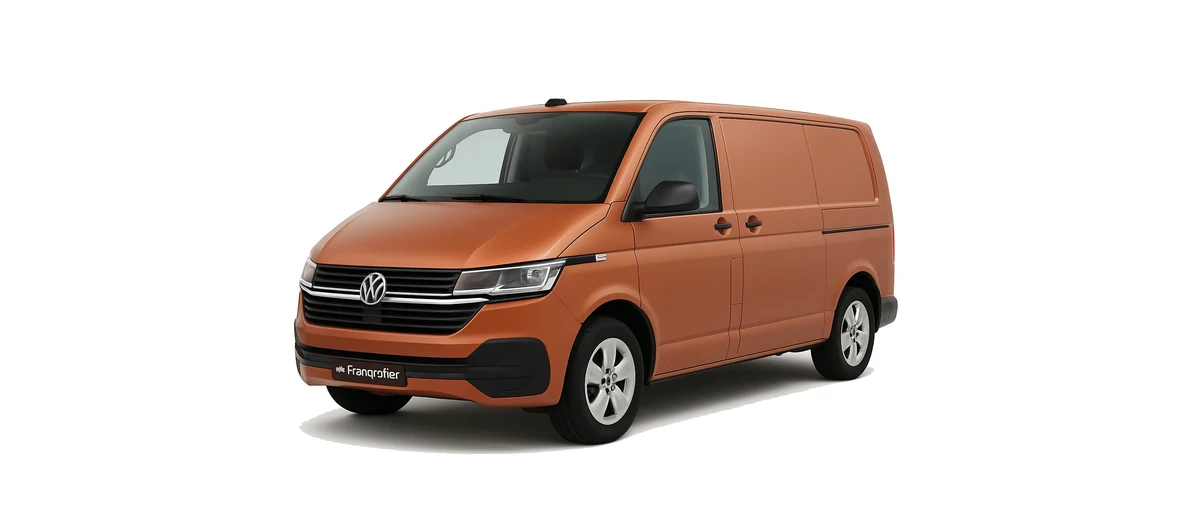
The VW e-Transporter is an important electric van for UK drivers, fleets and trades because it sits in the familiar Transporter class while moving to battery-electric power. However, charging advice for this vehicle needs a little care. There is more than one version of the electric Transporter, and the older ABT eTransporter 6.1 has very different battery and charging figures from the current new-generation VW e-Transporter.
This guide separates the main versions, explains Type 2 AC and CCS rapid charging, and gives realistic expectations for home, workplace and public charging in the UK. It is written for owners and operators who want to choose the right cable, understand charging times and avoid mixing up specifications between different e-Transporter generations.
View VW e-Transporter Charging Cables
VW e-Transporter Battery and Charging Specifications
The current UK VW e-Transporter is a battery-electric vehicle, not a plug-in hybrid. Volkswagen also references a Transporter eHybrid plug-in hybrid powertrain separately, so it is worth checking the badge and vehicle paperwork before ordering charging equipment or comparing range figures.
For the current new-generation e-Transporter, UK information lists a Type 2 AC charging connection and CCS DC rapid charging. The official UK brochure also confirms that a 5-metre Type 2 cable is standard equipment on current BEV trims. For many owners, a Type 2 charging cable will still be the key everyday accessory for home, workplace and public AC charging, while CCS charging is used for faster en-route top-ups.
The main current-model figures to be aware of are up to 11 kW AC charging and up to 125 kW DC rapid charging, with a 10-80% rapid charge taking around 30 minutes under suitable conditions. UK home charging is usually limited by the domestic supply and wallbox rather than the van, so most homes should expect around 7.4 kW single-phase charging rather than 11 kW.
Battery Options
The biggest source of confusion is that not every electric Transporter has the same battery. Current UK brochure and price-list information shows MY2026-onwards BEV models listed with a 70 kWh battery. Some MY2025 stock-only Commerce Pro S BEV variants are listed as 65 kWh Electric models, with industry updates describing the earlier usable capacity as around 64 kWh.
There is also the older ABT eTransporter 6.1, sold around the 2020-2021 period and now discontinued. That earlier T6.1-based electric conversion used a 37.3 kWh battery and had substantially lower charging performance. It should not be treated as the same vehicle as the current e-Transporter.
If you are buying a used van, managing a mixed fleet or replacing a cable, confirm whether you have the new-generation e-Transporter or the older ABT eTransporter 6.1. The easiest checks are the age of the vehicle, the model documentation, the battery information on the specification sheet and, where necessary, the VIN or dealer build data.
AC Charging Speed
The current VW e-Transporter supports Type 2 AC charging at up to 11 kW. Volkswagen’s UK brochure gives an approximate 0-100% AC charging time of about 7.1 hours on an 11 kW public AC charger. On a 7.4 kW home wallbox or public AC charger, the same brochure quotes about 10.5 hours for 0-100% charging.
In practical UK use, a 7.4 kW wallbox is the more common home charging setup because most domestic properties have single-phase electricity. An 11 kW AC charge normally requires a suitable three-phase supply and compatible charger. Some commercial premises, depots and workplaces may have this, but it should not be assumed for a normal home installation.
The older ABT eTransporter 6.1 also used Type 2 AC charging, but its AC charging capability was lower at up to about 7.2 kW. That means the charging cable connection may look familiar, but the battery size, charging rate and journey planning expectations are quite different from the current model.
DC Rapid Charging Speed
For longer journeys and busy working days, the current e-Transporter can use CCS DC rapid chargers. The UK brochure lists DC charging up to 125 kW and gives a 10-80% rapid charging time of about 29 minutes; VW’s UK online material and industry reports describe this as roughly 30 minutes.
It is better to think in terms of 10-80% rather than 0-100% on public rapid chargers. DC charging is fastest when the battery is lower and slows as the battery fills, particularly above 80%. Stopping at around 80% is often the best balance between charging speed and time on the road unless you genuinely need a fuller battery for the next leg.
The older ABT eTransporter 6.1 is different again. It supported CCS DC charging, but only up to around 50 kW, with a 0-80% rapid charge taking about 45 minutes in the official period information. Do not use the current 125 kW and 30-minute figures when planning charging for the earlier ABT model.
Range and Efficiency
Volkswagen UK’s current e-Transporter page quotes an official WLTP range of up to 225 miles. Some 2026 update reports refer to an increased usable battery capacity of around 70 kWh and range figures of up to about 236 miles or 380 km. Because UK brochure, stock and model-year information overlap, it is safest to treat range as variant and model-year dependent rather than applying one number to every van.
As with any electric van, real-world range can vary materially. Payload, body style, wheelbase, tyre choice, ambient temperature, heating and cooling use, road speed and motorway driving all make a difference. A lightly loaded van on slower mixed roads may get closer to the official figure than a fully laden vehicle covering winter motorway miles.
For fleet use, the best approach is to build a margin into route planning. If a daily route is close to the maximum quoted range, test it in representative conditions before relying on it. For trades and delivery work, the ability to charge overnight or at a depot often matters more than the headline range figure.
Charging at Home
For most UK owners, a dedicated 7.4 kW home wallbox is the most convenient way to charge the current VW e-Transporter. It allows the van to charge overnight, can usually be scheduled for cheaper off-peak electricity tariffs and is far more practical than relying on public charging for everyday use.
On the current model, a 0-100% charge on a 7.4 kW wallbox is quoted at around 10.5 hours. In everyday use, you will usually be topping up rather than charging from completely empty, so typical overnight charging sessions may be shorter. A Type 2 cable is the relevant cable for AC charging if the charger does not have a tethered lead.
A 3-pin charger is generally best suited as a backup or occasional charging solution, but can be used regularly if a qualified electrician has confirmed the socket and electrical installation are suitable for sustained EV charging. For a working electric van, a proper wallbox is normally the more robust and efficient solution.
If you have access to three-phase power at a business premises, the current e-Transporter’s 11 kW AC capability may reduce AC charging time compared with a 7.4 kW single-phase wallbox. Always confirm the site’s electrical capacity and have charging equipment installed by a qualified professional.
Public Charging
Public charging for the VW e-Transporter falls into two main categories: AC destination charging and DC rapid charging. AC public chargers usually use Type 2 and are suitable when the van will be parked for several hours, such as at a workplace, hotel, car park or customer site. Charging speed will depend on both the charger output and the van’s AC onboard charger limit.
DC rapid chargers use the CCS connector and are best for motorway services, trunk road stops and busy operating days where the van needs a meaningful top-up quickly. For the current e-Transporter, a suitable high-powered CCS charger can allow a 10-80% charge in around half an hour, although the actual speed will depend on charger availability, battery temperature, state of charge and network conditions.
Drivers of the older ABT eTransporter 6.1 should plan more conservatively. Its smaller 37.3 kWh battery and lower 50 kW DC charging capability make it better suited to shorter routes and predictable charging stops than long, rapid-charge-heavy days.
Vehicle-Specific Features
The current e-Transporter range is described with heat pump equipment, which can help manage cabin heating more efficiently than a simple resistive heater in suitable conditions. Volkswagen UK also describes scheduled departure preconditioning, including warming or cooling the cabin and battery while the van is plugged in. This is particularly useful for work vans because it can improve comfort before departure while using mains electricity rather than drawing solely from the battery once on the road.
Volkswagen also lists an optional 230 V power hub or inverter for eHybrid and e-Transporter variants. The brochure references 400 W and an inverter output of 2.3 kW, so it should be described carefully as onboard power rather than full bidirectional charging through the charge port. No reliable UK confirmation was found for vehicle-to-grid or vehicle-to-home export capability for the e-Transporter, so it should not be assumed.
The new-generation Transporter shares its base with the Ford Transit Custom and E-Transit Custom family. Electric versions are rear-wheel drive as standard, with 4Motion all-wheel drive introduced or announced for some 2026 markets and variants. Drivetrain and body configuration can affect efficiency, so always check the exact specification of the van you are operating.
Charging Tips
- Identify the generation first: current e-Transporter and older ABT eTransporter 6.1 figures are not interchangeable.
- Use Type 2 for AC charging: this covers most home, workplace and public destination charging.
- Use CCS for rapid charging: the current model supports up to 125 kW DC where charger and conditions allow.
- Do not assume 11 kW at home: most UK homes are single phase and typically charge at up to around 7.4 kW.
- Charge to 80% on rapid chargers when practical: it is usually faster and more efficient for journey planning.
- Precondition before departure: when available and plugged in, use scheduled departure settings to warm or cool the van and battery.
- Allow for payload and weather: van range is sensitive to load, speed and temperature.
Frequently Asked Questions
What charging cable does the VW e-Transporter use?
The current VW e-Transporter uses a Type 2 connection for AC charging and a CCS connection for DC rapid charging. A Type 2 cable is used for untethered home wallboxes, workplace chargers and many public AC charge points.
Can the VW e-Transporter charge at 11 kW at home?
The current van can support up to 11 kW AC charging, but most UK homes are limited to around 7.4 kW on a single-phase wallbox. To charge at 11 kW AC, you normally need a suitable three-phase supply and compatible charging equipment.
How long does the current VW e-Transporter take to charge?
Volkswagen’s UK brochure gives approximately 10.5 hours for 0-100% on a 7.4 kW wallbox and about 7.1 hours on an 11 kW AC charger. On a suitable CCS rapid charger, the current model is quoted at around 29-30 minutes for 10-80%.
Is the older ABT eTransporter 6.1 the same for charging?
No. The older ABT eTransporter 6.1 was a discontinued T6.1-based electric conversion with a 37.3 kWh battery, up to around 7.2 kW AC charging and up to around 50 kW DC charging. It should not be planned using the current model’s 70 kWh and 125 kW charging figures.
What is the official range of the VW e-Transporter?
Volkswagen UK quotes up to 225 miles WLTP for the current e-Transporter. Some 2026 update reports reference up to about 236 miles or 380 km for updated versions, so check the exact model year, trim and battery listing when precision matters.
What This Means for Drivers
For most UK drivers and fleets, the current VW e-Transporter is best treated as an overnight-charging electric van with rapid-charge support for longer days. A 7.4 kW home or depot wallbox should comfortably cover many daily duty cycles, while CCS rapid charging gives useful flexibility on longer routes.
The key is to avoid mixing specifications between versions. A current MY2026 70 kWh e-Transporter, a MY2025 stock-only 65 kWh variant and an older ABT eTransporter 6.1 are not the same from a charging or range perspective. If you know which van you have, cable selection is straightforward: Type 2 for AC charging and CCS for rapid charging, with charging times matched to the correct generation.
Looking for a Charging Cable for VW e-Transporter?
We offer VW e-Transporter charging cables for UK home, workplace and public AC charging, including Type 2 options suitable for the current e-Transporter and many compatible charging points.
View VW e-Transporter Charging Cables
Please note that this information is intended as a guide. Charging specifications may change due to model and year of manufacture. For precise information, always refer to your vehicle user manual.

