
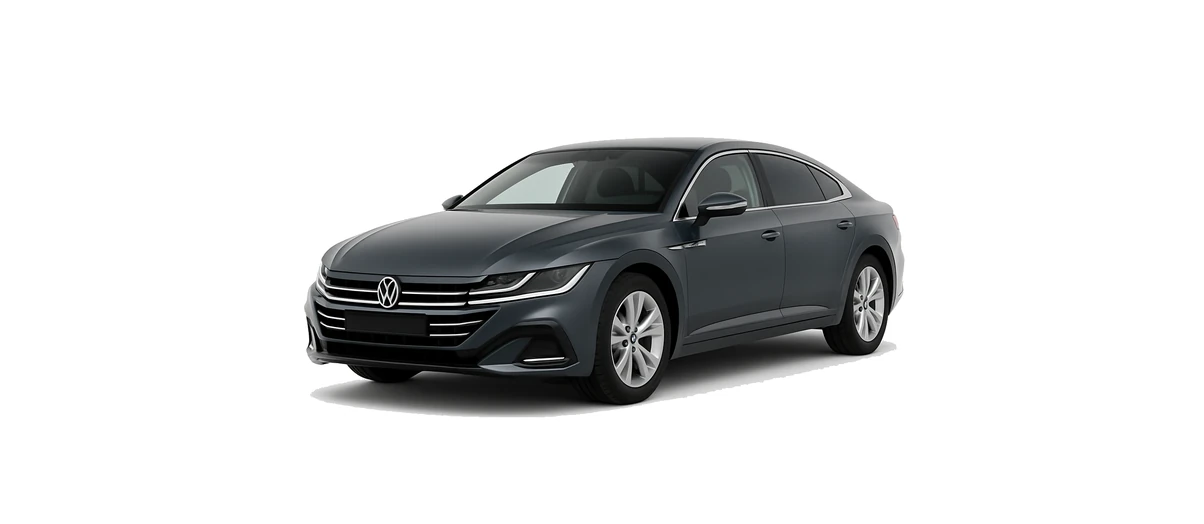
The VW Arteon eHybrid is a plug-in hybrid version of Volkswagen’s stylish Arteon, offered in the UK and Europe as both a 5-door fastback and a Shooting Brake estate. It is not a fully electric car: it combines a 1.4-litre TSI petrol engine with an electric motor and a plug-in lithium-ion battery, giving you useful electric-only driving for short journeys while retaining petrol power for longer trips.
For charging, the Arteon eHybrid is refreshingly simple. UK and EU data for the 1.4 TSI eHybrid 218 PS model points to Type 2 AC charging with a maximum charge rate of around 3.6 kW. That means owners do not need to think about DC rapid charging speeds, 10-80% rapid-charge times or high-power public chargers in the same way a fully electric vehicle owner would. The key is choosing the right Type 2 cable and building a regular top-up routine.
View VW Arteon eHybrid Charging Cables
VW Arteon eHybrid Battery and Charging Specifications
The UK/EU facelift VW Arteon eHybrid was introduced for the 2021 model year and is now generally seen on the used market rather than as a current new-car order. Professional UK listings describe the Arteon as a 2017-2024 model, and Volkswagen UK now presents the Arteon under Approved Used rather than as a current new-car range.
The relevant model for this guide is the 1.4 TSI eHybrid 218 PS / 160 kW plug-in hybrid. It uses a Type 2 charging connection and is designed for AC charging. The charging behaviour is typical of many earlier-generation plug-in hybrids: it has a modest battery compared with a full EV and a relatively low onboard AC charging limit, but it can still cover many daily journeys in electric mode when charged regularly.
- Vehicle type: Plug-in hybrid electric vehicle, not a battery electric vehicle
- Body styles: Arteon fastback and Arteon Shooting Brake estate
- Combined system output: 160 kW / 218 PS
- Charging connector: Type 2 AC
- Maximum AC charging rate: Around 3.6 kW
- Documented DC rapid charging: Not supported in the researched UK/EU data
Battery Options
The Arteon eHybrid was listed with a 13 kWh lithium-ion battery in official Volkswagen Ireland MY21 technical data. UK technical listing data for a Fastback 1.4 TSI eHybrid R-Line example gives 13 kWh gross and 10.4 kWh usable capacity.
That usable capacity is what matters most in everyday driving, because it is the portion of the battery the vehicle normally makes available for electric driving. As a plug-in hybrid, the Arteon eHybrid’s battery is much smaller than the battery in a fully electric car, but large enough to make short local journeys possible without using the petrol engine if it has been charged and conditions are suitable.
| Version | Gross battery capacity | Usable battery capacity | Charging connector |
|---|---|---|---|
| VW Arteon 1.4 TSI eHybrid 218 PS | 13 kWh | 10.4 kWh listed in UK technical data | Type 2 AC |
AC Charging Speed
The VW Arteon eHybrid’s maximum AC charging rate is around 3.6 kW. This is an important figure because it defines how quickly the car can charge from a home wallbox, workplace charger or public AC post. Even if you connect the car to a 7.4 kW, 11 kW or 22 kW AC charge point, the vehicle’s onboard charger will limit the rate to about 3.6 kW.
UK technical data lists a 0-100% charging time of approximately 213 minutes at 3.6 kW, which is around 3 hours and 33 minutes. At 2.3 kW, typical of a 10 amp Mode 2 portable charging lead, the listed 0-100% time is around 300 minutes, or about 5 hours.
For cable choice, a Type 2 to Type 2 cable is the standard option for untethered public AC charge points and many home or workplace wallboxes. Because the car’s maximum charging rate is 3.6 kW, a 16 amp Type 2 cable is sufficient for the Arteon eHybrid. A 32 amp cable is also safe to use and may be more future-proof if you later change to a vehicle with a faster onboard charger.
DC Rapid Charging Speed
Researched UK and EU data for this generation of VW Arteon eHybrid supports Type 2 AC charging only. It should not be treated like a fully electric car with CCS rapid charging, and there is no reliable basis here for quoting a DC charging speed or a 10-80% rapid-charge time.
In practical terms, this means the Arteon eHybrid is best charged at home, at work, or on standard public AC charge points where the car can be parked for a few hours. DC rapid chargers are designed primarily for battery electric vehicles and are not the routine charging solution for this plug-in hybrid.
Range and Efficiency
Official electric range varies by source, body style, trim and wheel configuration. Volkswagen Newsroom figures state up to 59 km for the Arteon Fastback and 57 km for the Arteon Shooting Brake, while Volkswagen Ireland MY21 data lists a range band of 56-61 km. UK technical listing data for an R-Line Fastback example gives a WLTP all-electric range of 35 miles.
As a simple guide for UK owners, a WLTP electric range of roughly 35-38 miles is a reasonable expectation depending on configuration. In mixed real-world use, around 30 miles is a sensible working estimate, though cold weather, motorway speeds, heating use, tyres, payload and driving style can all reduce the distance achieved from a charge.
The biggest efficiency gain comes from charging frequently. If the battery is topped up before regular short trips, the Arteon eHybrid can do much of its local running electrically. If the battery is empty, the car behaves much more like a conventional petrol hybrid, and fuel use will generally be higher.
Charging at Home
Home charging is usually the most convenient way to run a plug-in hybrid like the Arteon eHybrid. Because the battery is relatively small and the car’s AC charging limit is around 3.6 kW, a full charge can normally be completed in an evening or overnight using a suitable home charging arrangement.
A dedicated home wallbox is usually the neatest option. If the wallbox is tethered with a Type 2 lead, you can plug directly into the car. If it is untethered, you will need a Type 2 to Type 2 cable. A 16 amp cable matches the Arteon eHybrid’s charging capability, while a 32 amp cable gives extra flexibility for future vehicles and higher-rated charge points.
A 3-pin charger is generally best suited as a backup or occasional charging solution, but can be used regularly if a qualified electrician has confirmed the socket and electrical installation are suitable for sustained EV charging. This is especially important because EV charging places a continuous load on the circuit for several hours.
For day-to-day use, many owners will get the best results by plugging in when they return home, setting any available off-peak tariff schedule through the charger or vehicle systems where applicable, and starting the next day with a full battery.
Public Charging
Public charging for the VW Arteon eHybrid is mainly about access to Type 2 AC posts. Many UK public AC chargers are untethered, which means you need to bring your own Type 2 to Type 2 cable. This is the cable most Arteon eHybrid owners should keep in the boot for public charging, workplace charging and some destination chargers.
It is worth remembering that the number shown on the public charger is not necessarily the rate your car will receive. A 7 kW post, 11 kW post or 22 kW post may all be available, but the Arteon eHybrid will still charge at up to around 3.6 kW because that is the vehicle’s onboard AC charging limit.
Public charging can still be useful when you are parked for a few hours: at work, at a hotel, in a town-centre car park or during a longer shopping stop. Short stops of 10 or 15 minutes are less useful than they would be in a rapid-charging BEV, because the Arteon eHybrid is not designed around high-power DC charging.
Vehicle-Specific Features
The Arteon eHybrid’s most important charging-related feature is its straightforward plug-in hybrid setup. It combines petrol flexibility with enough battery capacity for useful electric-only driving on shorter journeys. The electric motor output is listed as 85 kW in Volkswagen Ireland technical data, with combined system output of 160 kW / 218 PS.
The model was offered in both Fastback and Shooting Brake forms, so range and efficiency can vary slightly between configurations. Trim level, wheel size and driving conditions can also affect how far the car travels on electric power.
UK technical listing data identifies the connector as Type 2 and describes the charging port location as at the front. As with any used vehicle, it is worth checking the car itself and its supplied equipment before buying additional cables, particularly if previous owners may have misplaced the original charging leads.
Charging Tips
- Charge little and often: Plug-in hybrids deliver their best economy when the battery is regularly topped up.
- Use a Type 2 cable for public AC posts: Many UK AC chargers are untethered, so carrying your own cable is useful.
- Do not overpay for speed you cannot use: The car is limited to around 3.6 kW AC, even on higher-rated charge points.
- Choose cable length carefully: A 5 metre cable suits many parking situations, while a longer cable can help with awkward driveways or public bays.
- Consider future-proofing: A 32 amp Type 2 cable will not make the Arteon charge faster, but it may be useful for a future EV or PHEV.
- Start short trips with a full battery: This gives the best chance of completing local driving in electric mode.
- Avoid relying on rapid chargers: This Arteon eHybrid generation is documented for Type 2 AC charging rather than CCS rapid charging.
Frequently Asked Questions
What charging cable does the VW Arteon eHybrid use?
The VW Arteon eHybrid uses a Type 2 charging connection for AC charging. For untethered public chargers and untethered wallboxes, you will typically need a Type 2 to Type 2 cable.
How fast can the VW Arteon eHybrid charge?
The maximum AC charging rate is around 3.6 kW. A full charge is listed at approximately 3 hours and 33 minutes at 3.6 kW, or about 5 hours at 2.3 kW.
Will a 7 kW or 22 kW charger make it charge faster?
No. A higher-rated AC charge point can be used, but the Arteon eHybrid’s onboard charger will limit charging to about 3.6 kW.
Does the VW Arteon eHybrid support DC rapid charging?
Reliable UK/EU data for this generation documents Type 2 AC charging and does not support quoting a CCS/DC rapid charging capability. Owners should plan around home, workplace and public AC charging instead.
What electric range should I expect?
Official figures vary by body style and specification, with sources indicating roughly 35-38 miles in WLTP terms. Around 30 miles is a sensible real-world guide for many drivers, depending on conditions and driving style.
Is a 16 amp or 32 amp cable better?
A 16 amp Type 2 cable is sufficient for the Arteon eHybrid’s 3.6 kW maximum charging rate. A 32 amp cable is also safe and may be a more flexible choice if you want a cable that can be used with a future vehicle.
What This Means for Drivers
The VW Arteon eHybrid is a premium-looking plug-in hybrid with simple charging needs. Its battery is large enough to make regular electric driving worthwhile, but its charging setup is not complicated: Type 2 AC charging, around 3.6 kW maximum, and no routine role for DC rapid charging.
For most owners, the best approach is to charge at home overnight or during off-peak periods, carry a Type 2 to Type 2 cable for public AC posts, and top up whenever the car will be parked for a few hours. You do not need to chase the most powerful chargers; you need a reliable charging routine and a cable that suits your parking arrangements.
Looking for a Charging Cable for VW Arteon eHybrid?
If you need a replacement or spare cable, choose a Type 2 charging cable suitable for the VW Arteon eHybrid’s AC charging setup, with the length and amp rating that best match your home, workplace and public charging needs.
View VW Arteon eHybrid Charging Cables
Please note that this information is intended as a guide. Charging specifications may change due to model and year of manufacture. For precise information, always refer to your vehicle user manual.

