
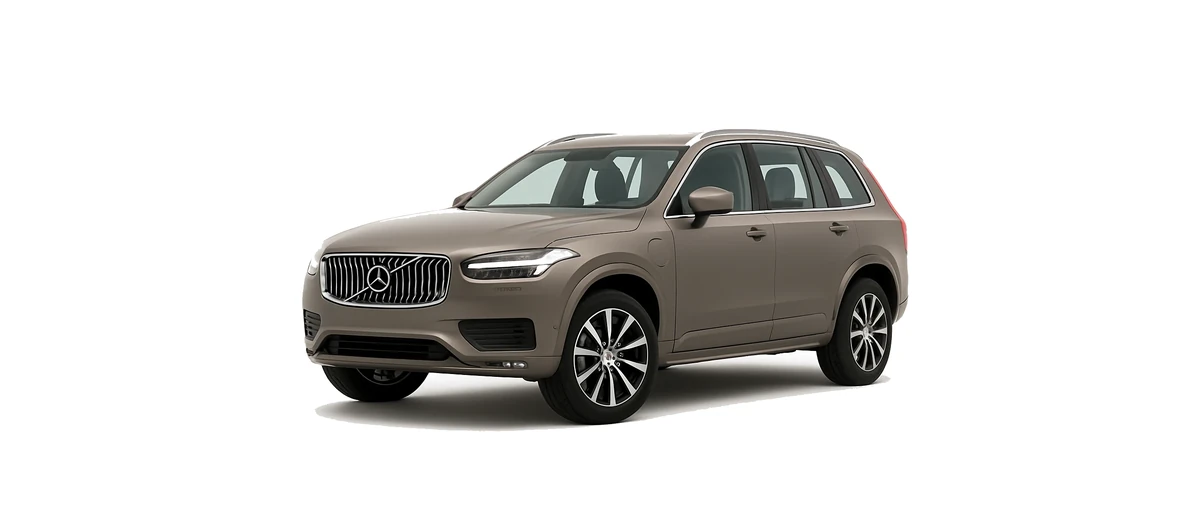
The Volvo XC90 Recharge PHEV is a large seven-seat plug-in hybrid SUV, combining petrol power with a rechargeable electric drive system. It is not a fully electric vehicle, and it should not be confused with the Volvo EX90. For many UK drivers, the XC90 Recharge PHEV makes most sense when it is charged regularly at home, at work or at destination AC chargers, allowing more short journeys to be completed using electric power.
Volvo’s current UK pages now generally refer to the model as the XC90 Plug-in hybrid rather than XC90 Recharge. That matters because older Recharge-branded XC90s can have different battery capacities, range figures and practical charging times. If you are buying a used XC90 Recharge PHEV, it is worth checking the exact model year, specification or VIN before relying on one set of figures.
For charging-cable purposes, the key point is straightforward: UK XC90 Plug-in Hybrid support information identifies a Type 2 AC charging inlet. This means the right cable choice is usually a Type 2 charging cable for untethered home charge points and UK/EU public AC charging posts.
View Volvo XC90 Recharge PHEV Charging Cables
Volvo XC90 Recharge PHEV Battery and Charging Specifications
The current UK Volvo XC90 T8 AWD Plug-in hybrid is listed by Volvo with a 19 kWh nominal battery and up to 42.9 miles WLTP combined electric range. Volvo also lists a higher WLTP city electric range figure, reflecting the fact that plug-in hybrids often perform best on lower-speed urban and suburban journeys where regenerative braking and electric running are more useful.
Recent technical data for XC90 Recharge or T8 Plug-in hybrid examples has also shown 18.8 kWh nominal and 14.9 kWh usable battery figures. This is not a contradiction so much as a reminder that the XC90 plug-in hybrid has evolved over time and that public-facing retail pages, technical data sheets and used-car specifications may not all describe exactly the same model year.
Charging is AC-only for this vehicle. Volvo UK support information identifies the charging port as AC Type 2, with no CCS/DC rapid-charging connector shown for the XC90 Plug-in Hybrid support data. In practical terms, XC90 PHEV drivers should think in terms of home charging, workplace charging and public AC destination charging, rather than motorway rapid-charging stops.
Battery Options
For current UK retail information, the XC90 T8 AWD Plug-in hybrid is listed with 19 kWh battery energy, nominal. This is the most relevant figure for a new UK XC90 Plug-in hybrid at the time of writing.
However, many UK drivers will encounter used cars still badged or advertised as the Volvo XC90 Recharge PHEV. Some recent XC90 plug-in hybrid technical data lists an 18.8 kWh nominal battery and a 14.9 kWh usable capacity. Older-generation cars may differ again. If you are comparing charging time or electric range between vehicles, make sure you are comparing the same model year and battery version.
This model-year caveat is especially important with plug-in hybrids because relatively small differences in usable battery capacity can noticeably affect electric-only range and charging time. The safest approach is to treat the figures in this guide as current UK reference points, then confirm the details for your exact vehicle through Volvo documentation, the vehicle handbook or a dealer check.
AC Charging Speed
Volvo UK support data lists charging at a charging station or home charge point at up to 6.4 kW / 16 A, with an approximate 0-100% charging time of around 3 hours. Volvo’s current UK retail specification also refers to 0-100% charging in around 3 hours where the appropriate 2-phase 16 A supply is available.
It is important not to assume that every UK home installation will deliver that exact result. UK domestic charging arrangements are commonly single-phase, and Volvo notes that maximum charging current can vary by region and charging equipment. Some home charge points, public posts or electrical configurations may therefore charge the XC90 Plug-in Hybrid more slowly than the headline 6.4 kW figure.
Volvo’s support information also gives household-socket examples at 200-240 V, including up to 3.6 kW with a charging time of about 5 hours. In the real world, the exact time will depend on battery state of charge, cable, charger, current limits, temperature and the vehicle’s own charging management.
DC Rapid Charging Speed
The Volvo XC90 Recharge PHEV does not use DC rapid charging in the way a fully electric car does. UK support information identifies the relevant charging compatibility as Type 2 AC, and no CCS/DC rapid-charging connector is shown for this PHEV support data.
As a result, there is no meaningful 10-80% DC rapid-charging time to quote for the XC90 Plug-in Hybrid. If you arrive at a public rapid-charging hub, the high-power CCS chargers designed for battery-electric cars will not be applicable to this vehicle. Instead, look for an AC post with a Type 2 socket if you want to charge the battery while parked.
This is normal for many plug-in hybrid SUVs. Because the battery is much smaller than a full EV battery and the car also has a petrol engine, the ownership pattern is different: charge regularly when parked, use electric power for shorter trips where possible, and rely on the hybrid system for longer journeys.
Range and Efficiency
The current UK XC90 T8 AWD Plug-in hybrid is listed with up to 42.9 miles WLTP combined electric range. Volvo also quotes a higher WLTP city electric range, which reflects the more favourable conditions of lower-speed driving.
As with any plug-in hybrid, real-world electric range will vary. Cold weather, motorway speeds, heavy loads, hills, roof boxes, tyre condition and cabin heating or cooling can all reduce how far the car travels before the petrol engine becomes more involved. A seven-seat SUV is also a large, heavy vehicle, so driving style has a meaningful effect on efficiency.
For many owners, the most useful way to think about range is not the maximum possible figure, but whether the car can cover regular local journeys on electric power. School runs, commuting, shopping trips and short urban journeys are where frequent charging can make the biggest difference. If the battery is left empty for long periods, the XC90 behaves more like a conventional hybrid SUV and loses much of the day-to-day benefit of being a plug-in hybrid.
Charging at Home
Home charging is usually the most convenient way to run a Volvo XC90 Recharge PHEV. Because the battery is smaller than a full EV battery, it is practical to recharge overnight or between journeys, even if your actual charging speed is below the maximum figure quoted in Volvo’s ideal charge-point scenario.
A dedicated home charge point is the recommended regular charging source. If the unit is untethered, you will need a compatible Type 2 charging cable. If the unit is tethered, it should already have the charging lead attached, but you may still want a separate Type 2 cable for public AC posts.
A 3-pin plug-in charger is generally best suited as a backup or occasional charging solution, but can be used regularly if a qualified electrician has confirmed the socket and electrical installation are suitable for sustained EV charging. Volvo also indicates that household-socket charging is more appropriate for occasional use, with a dedicated charging station or home charge point being the better everyday option.
For the best ownership experience, many XC90 PHEV drivers choose a routine: plug in when returning home, charge to full before the next day, and use the car’s hybrid settings sensibly. Little-and-often charging is usually more useful than waiting until the battery is completely empty.
Public Charging
Public charging for the Volvo XC90 Recharge PHEV is mainly about AC destination charging. Look for Type 2 socketed posts at workplaces, supermarkets, hotels, car parks, leisure centres and town-centre locations. These are often more relevant than high-power rapid chargers because the XC90 Plug-in Hybrid is AC-only for charging-guide purposes.
Many UK public AC posts are untethered, so you need to bring your own Type 2 cable. A Type 2 to Type 2 cable is the standard cable type for this use case. It connects the vehicle’s Type 2 inlet to the socket on the charging post.
Public AC charging is most useful when the car will be parked for a while. For example, a few hours at work, a long lunch stop, a hotel stay or a shopping trip can add a meaningful amount of electric range. By contrast, stopping specifically to charge for a short period on a long motorway journey is usually less beneficial than it would be in a fully electric vehicle with DC rapid-charging capability.
Vehicle-Specific Features
The XC90 Recharge PHEV’s most important charging-related feature is its role as a large family plug-in hybrid. It offers seven-seat practicality and the flexibility of petrol power, while still allowing many shorter journeys to be driven using stored electric energy when the battery has been charged.
The Type 2 AC inlet keeps cable selection relatively simple. For UK and European public AC posts, a Type 2 cable is the relevant choice. The main variables are cable length, current rating and whether you want a cable primarily for home use, public use or both.
The other vehicle-specific point is naming. New UK Volvo pages may describe the model as the XC90 Plug-in hybrid, while many used examples are advertised as XC90 Recharge PHEV or XC90 T8 Recharge. These names can overlap in the used market, but the exact battery and charging details may depend on year and specification. If in doubt, check the handbook or charging label on the vehicle.
Charging Tips
- Choose a Type 2 cable: The XC90 Plug-in Hybrid uses Type 2 AC charging, so a Type 2 to Type 2 cable is the usual choice for untethered home and public AC charging.
- Charge little and often: Plug-in hybrids work best when the battery is topped up regularly rather than treated as an occasional extra.
- Do not plan around rapid charging: CCS/DC rapid charging is not applicable to this vehicle.
- Check your model year: Battery size, range and charging times can vary between older Recharge-branded cars and current UK XC90 Plug-in hybrid models.
- Use a proper home charge point where possible: It is the most convenient regular charging method and avoids relying on a domestic socket for everyday use.
- Keep a public cable in the car: Many UK AC posts are socketed rather than tethered, so carrying your own cable gives you more charging options.
- Think in parking time, not rapid stops: The XC90 PHEV is well suited to charging while parked at home, work or a destination.
Frequently Asked Questions
What charging cable does the Volvo XC90 Recharge PHEV use?
It uses a Type 2 AC charging connection. For UK public AC charging posts and untethered home charge points, a Type 2 to Type 2 charging cable is usually required.
Is the Volvo XC90 Recharge PHEV a fully electric car?
No. It is a plug-in hybrid with both petrol and electric power. It can drive using electric energy when the battery is charged, but it is not a battery-electric vehicle.
How long does the Volvo XC90 Plug-in Hybrid take to charge?
Volvo UK support data lists around 3 hours from 0-100% at up to 6.4 kW / 16 A where suitable charging equipment is available. Some UK home installations or public AC posts may charge more slowly.
Can the XC90 Recharge PHEV use DC rapid chargers?
No. For UK charging-guide purposes, the XC90 Plug-in Hybrid is an AC Type 2 vehicle. CCS/DC rapid charging and 10-80% rapid-charge times are not applicable.
What is the electric range of the current UK XC90 Plug-in hybrid?
Volvo’s current UK specification lists up to 42.9 miles WLTP combined electric range for the T8 AWD Plug-in hybrid. Real-world range depends on conditions, driving style, load and temperature.
What This Means for Drivers
The Volvo XC90 Recharge PHEV is best understood as an AC-charged family plug-in hybrid rather than a rapid-charging electric SUV. The most important ownership habit is regular charging: plug in at home, use workplace or destination AC posts when convenient, and keep the battery topped up for everyday journeys.
For cable selection, the answer is refreshingly simple. A Type 2 charging cable is the key accessory for untethered AC charging. The exact charging time and range will depend on your model year and charging equipment, so avoid assuming that every XC90 Recharge PHEV has identical battery data. Once that caveat is understood, the car’s charging routine is straightforward and well suited to daily family use.
Looking for a Charging Cable for Volvo XC90 Recharge PHEV?
If you need a suitable Type 2 charging cable for your Volvo XC90 Recharge PHEV, choose a cable that matches how you charge most often, whether that is at home, at work or on public AC charging posts.
View Volvo XC90 Recharge PHEV Charging Cables
Please note that this information is intended as a guide. Charging specifications may change due to model and year of manufacture. For precise information, always refer to your vehicle user manual.

