
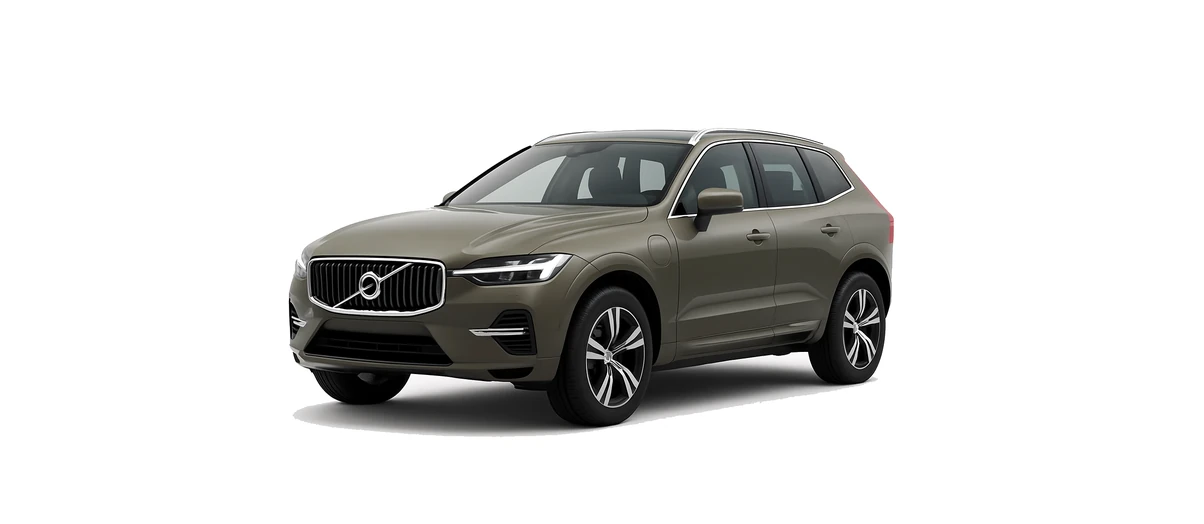
The Volvo XC60 Recharge PHEV is a mid-size plug-in hybrid SUV that combines petrol power with a usable electric driving range for everyday journeys. In current UK Volvo material, the XC60 Plug-in hybrid and XC60 Recharge refer to the same car, although the Recharge name can be confusing because Volvo has also used it for fully electric models. The XC60 Recharge PHEV covered here is not a battery-electric vehicle; it is an Electric/Petrol plug-in hybrid.
For owners, the most important charging point is simple: the Volvo XC60 Recharge PHEV uses AC charging through a Type 2 connection and is not compatible with DC rapid charging. That means cable choice and expectations around charging speed are different from a fully electric SUV. A Type 2 charging cable is the key cable for most home wallboxes and untethered public AC charge points, while CCS rapid chargers should not be part of your charging plan for this vehicle.
View Volvo XC60 Recharge PHEV Charging Cables
Volvo XC60 Recharge PHEV Battery and Charging Specifications
Current UK Volvo specifications list T6 AWD Plug-in hybrid and T8 AWD Plug-in hybrid versions of the XC60. Both are petrol/electric all-wheel-drive plug-in hybrids and, in current UK data, share the same plug-in battery and charging capability.
- Vehicle type: Petrol/electric plug-in hybrid SUV
- Charging port: Type 2 AC
- DC rapid charging: Not compatible
- Maximum AC charging: Up to 3.6 kW on single-phase AC, or up to 6.4 kW on a suitable two-phase AC supply
- Current UK variants: T6 AWD Plug-in hybrid and T8 AWD Plug-in hybrid
- Platform background: Volvo SPA / Scalable Product Architecture
Because this is a PHEV rather than a fully electric vehicle, the battery is much smaller than you would find in a BEV. The benefit is that a full battery can cover many local journeys on electric power, while the petrol engine remains available for longer trips.
Battery Options
For current UK XC60 Plug-in hybrid models, Volvo’s detailed UK specifications round the battery energy to 19 kWh nominal. Other Volvo price-list and media data for recent model years commonly quote 18.8 kWh nominal and around 14.7 kWh usable. These figures should be treated as the same rounded battery pack in the current model-year context, rather than as separate battery options.
It is worth being careful if comparing different used XC60 Recharge PHEV examples. Earlier pre-late-2021 versions used smaller batteries and had different charging performance, so the figures in this guide should not automatically be applied to every historical XC60 plug-in hybrid.
For current T6 and T8 plug-in hybrid versions, the practical owner experience is that regular charging is what unlocks the strongest benefits. If the car is not plugged in, it will still operate as a hybrid, but much of the value of the plug-in system is lost because more driving will be done using petrol.
AC Charging Speed
The Volvo XC60 Recharge PHEV is an AC-only plug-in hybrid. Volvo support information states a maximum of up to 3.6 kW on single-phase AC and up to 6.4 kW on two-phase AC. Volvo also quotes an approximate 0-100% charging time of around 3 hours when using the suitable 6.4 kW two-phase charging arrangement.
This distinction matters in the UK. Many domestic wallboxes are described as 7 kW units, but a typical UK home supply is single-phase. Volvo’s own guidance distinguishes between the single-phase rate and the faster two-phase rate, so owners should not assume that every 7 kW wallbox will charge the XC60 Recharge PHEV at 6.4 kW in about 3 hours. On a single-phase 16A supply, Volvo lists a time of about 5 hours, and lower-current charging will take longer.
For most owners, overnight home charging will still be more than adequate. Even at the lower single-phase rate, the battery can usually be refilled comfortably while the car is parked for the evening or overnight.
DC Rapid Charging Speed
The Volvo XC60 Recharge PHEV does not support DC rapid charging. Volvo support explicitly identifies the car as AC-only and not compatible with DC charging. There is therefore no CCS rapid charging connector to use, no DC charging rate to compare, and no meaningful 10-80% rapid-charge time.
This is one of the biggest differences between the XC60 Recharge PHEV and a fully electric SUV. If you pull into a motorway rapid charging hub, many of the chargers may be CCS DC rapid or ultra-rapid units designed for BEVs. The XC60 Recharge PHEV should instead be charged from AC charge points using its Type 2 connection. If the location only has DC rapid chargers, it will not be suitable for charging this vehicle.
Range and Efficiency
Current detailed Volvo UK specifications list WLTP electric range of up to 49.1 miles for the T6 AWD Plug-in hybrid and up to 47.2 miles for the T8 AWD Plug-in hybrid. Volvo overview material may also mention higher preliminary figures, but the detailed variant-specific figures are the safer reference for current UK cars.
In real driving, electric range depends on temperature, speed, terrain, wheel and tyre specification, traffic conditions, climate control use and how the car is driven. Independent review context suggests that around 30-35 miles can be a more realistic expectation for many drivers. Short urban and suburban trips are where the XC60 Recharge PHEV is most likely to make strong use of electric driving.
For a PHEV, efficiency is closely linked to charging habits. If you start each day with a full battery and your regular journeys are within the electric range, fuel use can be very low. If you regularly drive with an empty battery and rely on the petrol engine, fuel economy will be much closer to that of a conventional petrol SUV.
Charging at Home
Home charging is usually the most convenient way to run a plug-in hybrid. For the Volvo XC60 Recharge PHEV, a Type 2 connection is the normal home wallbox solution. If your wallbox is untethered, you will use a Type 2 to Type 2 Mode 3 charging cable. If your wallbox is tethered, the cable is permanently attached to the unit and should simply plug into the car’s Type 2 inlet.
The charging port is listed in UK material as being on the nearside front wing, which is useful to remember when choosing how to park near your home charger. Cable length can make a difference, particularly if you cannot always park in the same orientation.
A 3-pin domestic charging lead may be supplied or available for some cars, but it should be treated with care. 3-pin charging is generally best suited as a backup or occasional charging solution, but can be used regularly if a qualified electrician has confirmed the socket and electrical installation are suitable for sustained EV charging. Volvo’s own support guidance describes household socket charging as occasional rather than the preferred daily method.
If you want predictable charging, a professionally installed home wallbox is usually the better long-term option. It is safer, more convenient, and avoids relying on a standard household socket for repeated high-load use.
Public Charging
When charging in public, focus on AC charge points. The Volvo XC60 Recharge PHEV uses a Type 2 AC charging connection, so a Type 2 to Type 2 Mode 3 cable is the most useful public charging cable for untethered AC posts. Many destination chargers at supermarkets, hotels, workplaces, leisure centres and car parks are AC units and may be well suited to a PHEV battery.
Some public AC charge points have their own tethered cable. In those cases, you do not need to use your own cable. However, many slower and destination-style AC posts are untethered, so carrying the correct Type 2 cable helps avoid arriving at a suitable charger but being unable to connect.
It is also important not to plan around CCS/DC rapid chargers. Even if a charging app shows a fast charger nearby, the connector type matters. If the charger is DC-only, it will not charge the XC60 Recharge PHEV. Look for Type 2 AC availability instead.
Vehicle-Specific Features
The key vehicle-specific charging feature of the Volvo XC60 Recharge PHEV is its AC-only Type 2 charging setup. Volvo support identifies the charging compatibility label as C, which corresponds to AC charging with a Type 2 connection.
Current T6 AWD and T8 AWD plug-in hybrid versions share the same plug-in battery and charging capability in Volvo UK data. The difference between them is not a different charging cable requirement; both use the same Type 2 AC approach.
Because the XC60 Recharge PHEV has no DC rapid charging compatibility, cable selection is simpler than on many BEVs. You do not need a CCS cable, and you cannot add DC rapid charging capability with an accessory cable. The car’s onboard charger and charging inlet determine what it can accept.
Charging Tips
- Use a Type 2 cable for AC charging: A Type 2 to Type 2 Mode 3 cable is the right choice for untethered public AC posts and compatible untethered home wallboxes.
- Charge frequently: Plugging in at home or work helps you make the most of the electric range and reduces petrol use on short trips.
- Do not rely on rapid chargers: The XC60 Recharge PHEV is not compatible with DC rapid charging, so CCS charging hubs are not a charging solution for this car.
- Check the supply before expecting the fastest time: The quoted fastest 0-100% time depends on a suitable two-phase 6.4 kW AC setup. Single-phase AC will usually be slower.
- Choose cable length carefully: Consider where the charging port sits and how you park at home or at work.
- Keep the battery topped up: PHEVs work best when you start regular journeys with charge available rather than treating the plug-in battery as an occasional extra.
Frequently Asked Questions
Is the Volvo XC60 Recharge PHEV fully electric?
No. The XC60 Recharge PHEV is a petrol/electric plug-in hybrid. It can drive on electric power for shorter journeys when charged, but it also has a petrol engine.
What charging cable does the Volvo XC60 Recharge PHEV use?
It uses a Type 2 AC connection. For untethered AC charge points and untethered home wallboxes, the usual cable is a Type 2 to Type 2 Mode 3 charging cable.
Can the Volvo XC60 Recharge PHEV use CCS rapid chargers?
No. Volvo support states that the XC60 Plug-in hybrid is not compatible with DC charging. It should be charged using AC Type 2 charge points.
How long does it take to charge?
Volvo quotes around 3 hours from 0-100% when using a suitable 6.4 kW two-phase AC setup. On single-phase AC, Volvo lists a lower maximum rate of up to 3.6 kW, so charging can take longer, with around 5 hours referenced for a single-phase 16A supply.
What electric range should I expect?
Current detailed UK specifications list up to 49.1 miles WLTP for the T6 AWD Plug-in hybrid and up to 47.2 miles for the T8 AWD Plug-in hybrid. In everyday conditions, many drivers should expect less than the WLTP figure, with around 30-35 miles being a reasonable real-world guide depending on use.
What This Means for Drivers
The Volvo XC60 Recharge PHEV is best understood as an AC-only plug-in hybrid that rewards regular charging. It does not need the rapid charging strategy of a fully electric car, and it cannot use DC rapid chargers. Instead, the right approach is to charge at home, at work or at destination AC posts whenever convenient.
For cable selection, the answer is straightforward: a Type 2 to Type 2 cable is the important cable for most untethered AC charging situations. The main point to watch is charging speed. The fastest Volvo-quoted figure depends on a suitable two-phase 6.4 kW supply, while many UK domestic situations will charge at the lower single-phase rate. Even so, the battery size means overnight charging remains practical for most owners.
Looking for a Charging Cable for Volvo XC60 Recharge PHEV?
We offer compatible Type 2 charging cables for the Volvo XC60 Recharge PHEV, suitable for untethered AC home wallboxes and public Type 2 charge points.
View Volvo XC60 Recharge PHEV Charging Cables
Please note that this information is intended as a guide. Charging specifications may change due to model and year of manufacture. For precise information, always refer to your vehicle user manual.

