
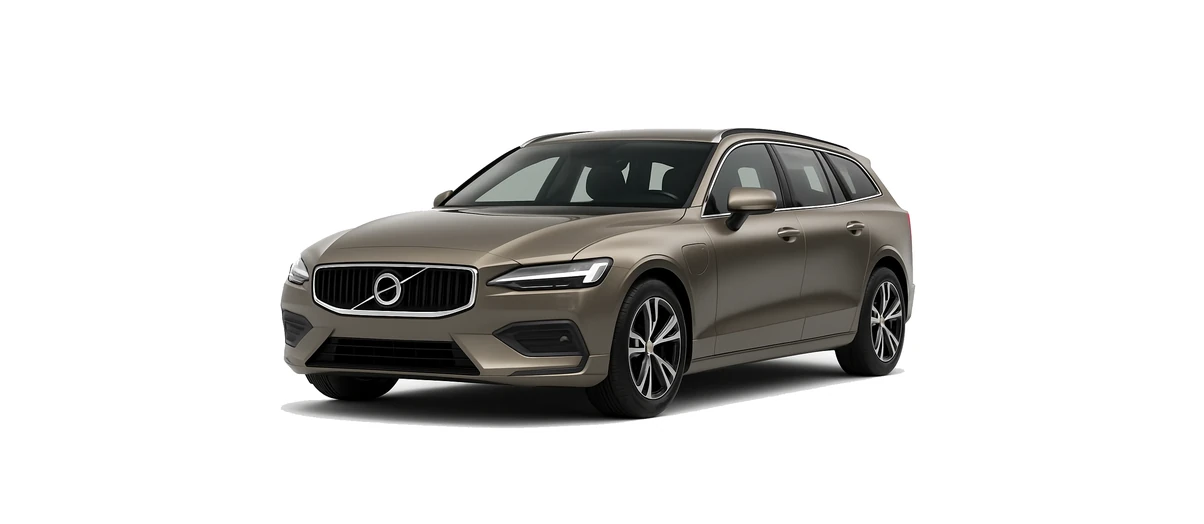
The Volvo V60 PHEV is a plug-in hybrid estate designed to combine everyday electric driving with the longer-distance flexibility of a petrol engine. In the UK, the current V60 Plug-in hybrid is listed by Volvo as an Electric/Petrol model, currently shown as the T6 AWD Plug-in hybrid. It is important to treat it as a plug-in hybrid rather than a fully electric vehicle: charging is centred on AC Type 2 use, not DC rapid charging.
For most owners, the practical charging routine will be simple: plug in at home overnight or during the evening, top up at work or on destination chargers when convenient, and use the petrol engine when journeys go beyond the available electric range. Cable choice is therefore mainly about choosing the right Type 2 cable for home, workplace and public AC charging, while understanding that different V60 PHEV model years have different battery sizes and charging expectations.
View Volvo V60 PHEV Charging Cables
Volvo V60 PHEV Battery and Charging Specifications
The current UK Volvo V60 Plug-in hybrid uses an AC Type 2 charging inlet. Volvo Support UK identifies the charging compatibility as AC Type 2, with EN 17186 identifier C. No UK source in the supplied research confirms a CCS inlet or DC rapid charging capability for the V60 PHEV, so owners should plan around AC charging points.
| Vehicle type | Petrol/electric plug-in hybrid estate |
|---|---|
| Charging connector | Type 2 AC inlet |
| Current UK battery figure | 19 kWh nominal battery energy, according to Volvo UK specifications |
| Maximum published AC charging | Up to 6.4 kW from a charging station or home charging point under Volvo’s specified conditions |
| Typical published 0-100% AC time | Around 3 hours for the current model, depending on supply and conditions |
| DC rapid charging | No confirmed UK DC rapid charging capability |
Volvo’s current UK pages also list the T6 AWD Plug-in hybrid at up to 60.9 miles of combined WLTP electric range, with city electric range quoted higher. Volvo notes that published figures may be preliminary or certification dependent, and real-world range will vary.
Battery Options
Battery size is one of the most important points for V60 PHEV buyers, particularly on the used market. The current UK V60 T6 AWD Plug-in hybrid is listed with 19 kWh nominal battery energy. This aligns with Volvo’s later Recharge plug-in hybrid powertrain family, where Volvo’s UK media information described an upgrade from 11.6 kWh to 18.8 kWh nominal energy for SPA-based 60 and 90 series models, including the V60.
However, not every V60 PHEV on UK roads has the same battery. Some earlier V60 Recharge Plug-in Hybrid support information lists an 11.6 kWh hybrid battery. Early first-generation V60 Plug-in Hybrid diesel models are different again and should not be assumed to match the current petrol/electric car.
If you are buying used, check the exact model year, build date, variant and owner’s manual information. A later 18.8/19 kWh V60 PHEV should offer materially different electric range from an earlier 11.6 kWh car, even though both may use AC Type 2 charging. Cable compatibility may be straightforward, but charging time and electric range expectations are not identical across all versions.
AC Charging Speed
The V60 PHEV’s charging is best understood as AC destination charging rather than rapid charging. Volvo Support UK gives a maximum AC charging figure of 6.4 kW at 16A from a charging station or home charging point, with an approximate 0-100% time of around 3 hours. Volvo’s current product information also refers to around 3 hours using a Volvo Cars home wallbox or standard public AC chargers, specified as AC two-phase 16A.
In everyday UK use, the actual rate can depend on the charging point, cable, current limit, installation, battery temperature, state of charge and the vehicle’s own charging management. A 7 kW home wallbox or public AC post does not necessarily mean the V60 PHEV will draw the full posted rating in every situation; Volvo’s own published figure for the current model is up to 6.4 kW under its specified conditions.
Volvo also lists household-socket charging at up to 3.6 kW from a 200-240 V socket at 16A, with an approximate 0-100% time of around 5 hours. In the UK, a dedicated home charge point is normally the more practical and robust regular charging option.
DC Rapid Charging Speed
There is no confirmed UK DC rapid charging speed for the Volvo V60 PHEV in the supplied Volvo UK sources. The charging information points to AC Type 2 use, with no confirmed CCS or DC inlet. As a result, it would be misleading to quote a 10-80% rapid-charge time or suggest that motorway DC rapid chargers are the normal way to charge this car.
This matters when planning longer journeys. With a battery-electric vehicle, drivers may plan around high-power DC charging stops. With the V60 PHEV, the realistic charging opportunities are home wallboxes, workplace chargers, hotel chargers, supermarket AC posts and other destination charging locations. For long-distance driving, the petrol engine provides the back-up once the usable electric range has been depleted.
Range and Efficiency
The current UK Volvo V60 T6 AWD Plug-in hybrid is listed with up to 60.9 miles of combined WLTP electric range. Volvo also quotes a higher city electric range figure, but all range figures should be treated as test-cycle values rather than guarantees.
In real driving, electric range can vary with temperature, route, speed, driving style, tyres, load, use of heating and how often the battery is charged. Short urban and suburban journeys are usually where a plug-in hybrid estate like the V60 PHEV can make the most of its battery. Higher-speed motorway running will generally use energy more quickly.
The key ownership habit is to charge frequently. A PHEV delivers its best fuel-saving potential when it starts routine journeys with a charged battery. If it is rarely plugged in, it effectively becomes a heavier petrol hybrid for much of the time, reducing the benefit of choosing a plug-in model.
Charging at Home
Home charging is likely to be the most convenient option for V60 PHEV owners. A dedicated home wallbox gives a neater, safer and more consistent charging routine than relying on a domestic socket. For the current car, Volvo’s published AC charging information indicates that a full charge can be achieved in around 3 hours under the specified charging-station or home-charge-point conditions.
For many drivers, that means the car can be recharged in an evening rather than needing to sit plugged in overnight. A home charger also makes it easier to use off-peak electricity tariffs where available, schedule charging, and avoid regular trips to public chargers.
A 3-pin charger is generally best suited as a backup or occasional charging solution, but can be used regularly if a qualified electrician has confirmed the socket and electrical installation are suitable for sustained EV charging. Volvo Support also recommends a charging point at home for regular charging. Avoid using extension leads, damaged sockets or unknown outdoor electrical supplies for EV charging.
Public Charging
For public charging, the Volvo V60 PHEV is mainly suited to AC posts with a Type 2 connection. Many UK public AC chargers require drivers to bring their own Type 2 to Type 2 cable, so having the correct cable in the boot is useful for supermarkets, town-centre car parks, workplaces, hotels and leisure destinations.
Because the car is a plug-in hybrid with AC Type 2 charging, public rapid charging should not be treated as a core part of ownership. DC-only rapid chargers are not the right match if the vehicle has no compatible DC inlet. Instead, look for standard AC destination chargers where the car can sit for an hour or more while you are parked anyway.
It is also worth checking tariff structures. Some public networks charge by kWh, some add connection fees, and some may apply overstay charges. Since the V60 PHEV has a smaller battery than a pure EV, convenience and parking time can matter as much as headline charging speed.
Vehicle-Specific Features
The most relevant vehicle-specific point is that the current V60 PHEV is an AWD petrol/electric plug-in hybrid estate, not a battery-electric car. Its charging system is designed around AC charging, and the car’s petrol engine remains part of the ownership experience.
The current UK T6 AWD Plug-in hybrid is listed by Volvo with 247 kW / 335 hp combined output and a 19 kWh nominal battery. The car’s Type 2 inlet and AC charging behaviour make it well suited to frequent top-ups at home and at destinations, rather than short high-power rapid-charging stops.
Used examples need extra care. A V60 Recharge Plug-in Hybrid from before the later battery upgrade may have the smaller 11.6 kWh pack and a shorter electric range. Early diesel V60 Plug-in Hybrid models are materially different from the current petrol/electric V60 Plug-in hybrid. Always confirm the exact vehicle before comparing charging times or range figures.
Charging Tips
- Use the right cable: for UK and European AC charging, the relevant cable is Type 2.
- Charge little and often: a PHEV works best when it begins regular journeys with a charged battery.
- Do not rely on rapid chargers: plan around home, workplace and destination AC charging instead.
- Check used-car details: older V60 PHEV and Recharge models may have smaller batteries and different range expectations.
- Understand the wallbox limit: a 7 kW post may not always mean the car draws 7 kW; Volvo publishes up to 6.4 kW AC for the current model under specified conditions.
- Keep the cable accessible: many public AC chargers are untethered, so storing a Type 2 cable in the boot avoids missed charging opportunities.
- Use safe domestic charging practices: only use a household socket where the installation is suitable, and avoid makeshift charging arrangements.
Frequently Asked Questions
What charging cable does the Volvo V60 PHEV use?
The Volvo V60 PHEV uses a Type 2 AC charging connection. For many UK public AC chargers, a Type 2 to Type 2 cable is the practical cable to carry.
Can the Volvo V60 PHEV use DC rapid chargers?
No confirmed UK information in the supplied Volvo sources shows DC rapid charging or a CCS inlet for the V60 PHEV. Owners should plan around AC Type 2 charging rather than DC rapid charging.
How long does the Volvo V60 PHEV take to charge?
For the current UK model, Volvo publishes around 3 hours from 0-100% using a suitable home charging point or standard public AC charger under specified conditions. From a suitable 200-240 V household socket at 16A, Volvo lists around 5 hours. Charging time varies with the supply, cable/current limit, temperature and battery condition.
Do all Volvo V60 PHEVs have the same battery?
No. The current UK model is listed with 19 kWh nominal battery energy, while Volvo information for earlier V60 Recharge Plug-in Hybrid models includes an 11.6 kWh battery. Later upgraded SPA plug-in hybrid models used an 18.8 kWh nominal pack. Used buyers should check the exact car.
Is the Volvo V60 PHEV a fully electric car?
No. It is a petrol/electric plug-in hybrid. It can drive on electric power when charged, but it also has a petrol engine and should not be treated like a battery-electric vehicle for charging planning.
What This Means for Drivers
The Volvo V60 PHEV is at its best when charging is built into your normal parking routine. If you can charge at home or at work, the current model’s published electric range and approximately 3-hour AC charging time make regular electric running realistic for many daily journeys.
The main thing to avoid is planning as though the car were a rapid-charging battery-electric vehicle. It is not. A Type 2 cable, a suitable home wallbox and access to AC destination chargers are the key ingredients. For used vehicles, battery size and model year matter, so check the exact version before relying on current-model figures.
Looking for a Charging Cable for Volvo V60 PHEV?
We offer Volvo V60 PHEV charging cables for UK home, workplace and public AC charging, helping you choose a suitable Type 2 cable for regular plug-in hybrid use.
View Volvo V60 PHEV Charging Cables
Please note that this information is intended as a guide. Charging specifications may change due to model and year of manufacture. For precise information, always refer to your vehicle user manual.

