
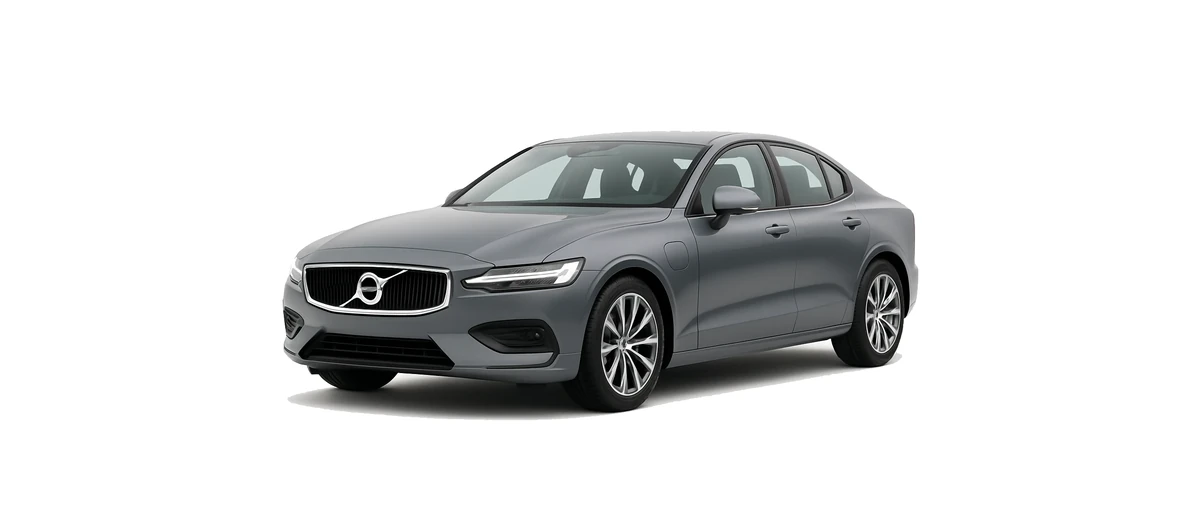
The Volvo S60 PHEV is a plug-in hybrid saloon, sold in the UK in forms such as the S60 T8 Twin Engine and later S60 Recharge T8. It is not a pure electric car: it combines a petrol engine with an externally rechargeable traction battery, allowing short journeys to be completed on electric power while retaining petrol flexibility for longer trips.
Volvo UK now lists the S60 as discontinued in the UK, so most buyers and owners will be dealing with used examples. That makes model-year identification especially important. Early UK S60 T8 plug-in hybrids used a smaller battery of around 11.6 to 11.8 kWh, while later S60 Recharge T8 cars used a larger 18.8 kWh nominal battery with 14.7 kWh usable capacity. Charging times, electric range and the best cable choice can therefore vary depending on the exact car.
For UK owners, the key point is simple: the S60 PHEV uses AC Type 2 charging. There is no confirmed CCS/DC rapid-charging capability for the UK/EU S60 PHEV, so cable choice is mainly about Type 2-to-Type 2 public and home charging, plus an occasional-use 3-pin charging option where appropriate.
View Volvo S60 PHEV Charging Cables
Volvo S60 PHEV Battery and Charging Specifications
The Volvo S60 PHEV’s charging specification depends heavily on model year. Later UK MY2024 specification data lists the S60 Recharge T8 with an 18.8 kWh nominal battery and 14.7 kWh usable battery. It also lists a Type 2 AC charging inlet and a 2-phase on-board charger rated up to 6.4 kW in compatible conditions.
However, typical UK home electrical supplies are single-phase. On that type of supply, the later S60 Recharge T8 will not usually charge at the full 6.4 kW figure. Volvo’s UK data indicates that home charging on single-phase infrastructure is generally closer to around 3.6 to 3.7 kW, even if the wallbox itself is rated at 7 kW.
| Item | Volvo S60 PHEV information |
|---|---|
| Vehicle type | Plug-in hybrid saloon, not a BEV |
| UK status | Discontinued in the UK |
| Charging connector | Type 2 AC |
| DC rapid charging | No confirmed CCS/DC rapid-charging capability for UK/EU S60 PHEV |
| Later battery | 18.8 kWh nominal / 14.7 kWh usable on MY2024-style S60 Recharge T8 |
| Earlier battery | Circa 11.6/11.8 kWh on early UK S60 T8 Twin Engine / Recharge models |
| Later AC charging | Up to 6.4 kW where compatible 2-phase charging is available; typically around 3.6/3.7 kW on UK single-phase home charging |
Battery Options
Because the S60 PHEV has been sold across several model years, it is worth checking your car’s registration year, VIN, handbook and specification before relying on any single range or charging-time figure.
Early UK S60 T8 Twin Engine and early Recharge models used a smaller battery. Volvo technical information for older cars lists 11.6 kWh total energy, while UK launch material also referred to an 11.8 kWh battery and up to 36 miles of electric-only range. These cars are still very usable as plug-in hybrids, but they will not match the later car’s electric range.
Later S60 Recharge T8 models, in MY2024 UK specification context, used a larger 18.8 kWh nominal battery with 14.7 kWh usable capacity. This larger battery is the reason later cars have a much higher official Equivalent All-Electric Range than early examples. If you are buying a used S60 PHEV, do not assume that every car has the larger battery simply because it is badged T8 or Recharge.
AC Charging Speed
AC charging is the main charging method for the Volvo S60 PHEV. The car uses a Type 2 AC connection, which is the standard connector used by most UK home wallboxes and many public destination charge points.
For later MY2024-style S60 Recharge T8 cars, Volvo lists a 2-phase on-board charger rated at up to 6.4 kW. In the right infrastructure conditions, this can give a 0-100% charging time of around 3 hours. On typical UK single-phase home charging, however, the car is more likely to be limited to around 3.6/3.7 kW. Volvo’s MY2024 data gives around 5 hours for a full charge at 16A/32A single-phase and around 7 hours at 10A single-phase.
Older smaller-battery S60 T8 models are generally quicker to fill because the battery is smaller. Volvo technical data for older cars lists charging times of approximately 3 hours at 16A, 4 hours at 10A and 8 hours at 6A. In practice, charging time can vary with battery temperature, ambient temperature, state of charge and the available current from the charge point.
DC Rapid Charging Speed
The Volvo S60 PHEV should not be treated like a full battery-electric car when planning public rapid charging. UK/EU S60 PHEV information confirms AC Type 2 charging, but does not confirm CCS or DC rapid-charging support.
That means there is no meaningful 10-80% DC rapid-charging time to quote for this model. If you stop at a motorway rapid-charging hub, the high-power CCS chargers are generally intended for fully electric vehicles and compatible plug-in vehicles with DC charging ports. For the S60 PHEV, look instead for AC Type 2 charging if you want to add electric range while parked.
Range and Efficiency
Official electric range varies significantly between early and later S60 PHEV models. Later UK MY2024 S60 Recharge T8 data lists a WLTP Equivalent All-Electric Range of 46.6 to 55.9 miles, depending on specification and wheels. The headline figure is often rounded to about 56 miles.
Earlier UK S60 T8 cars with the smaller battery were quoted with a lower electric-only range. Volvo UK launch information referred to up to 36 miles for the early plug-in hybrid powertrain. As with all plug-in hybrids, real-world electric range can be lower than the official figure, particularly in cold weather, at higher speeds, with heavy cabin heating or on hilly routes.
The advantage of the S60 PHEV is that shorter local journeys can be completed using electric power when the battery is charged, while the petrol engine remains available for longer trips. Owners who can charge regularly at home or work are likely to get the most benefit from the plug-in hybrid system.
Charging at Home
Home charging is usually the most convenient way to run a Volvo S60 PHEV. A dedicated home wallbox with a Type 2 connection will allow you to plug in overnight or between journeys, helping you start each day with as much electric range as the car can provide.
A common point of confusion is the difference between the wallbox rating and the car’s actual charging rate. Many UK home chargers are described as 7 kW units, but that does not mean the S60 PHEV will necessarily charge at 7 kW. Later S60 Recharge T8 data points to up to 6.4 kW only where compatible 2-phase charging is available, while typical UK single-phase home charging is more likely to be around 3.6/3.7 kW. Older S60 PHEV models are also typically in the 3.6/3.7 kW AC charging region.
A UK 3-pin charging cable can be useful, but it should be treated with care. A 3-pin charger is generally best suited as a backup or occasional charging solution, but can be used regularly if a qualified electrician has confirmed the socket and electrical installation are suitable for sustained EV charging. Avoid using damaged sockets, extension leads or unknown outdoor supplies.
Public Charging
For public charging, the most useful cable for the Volvo S60 PHEV is a Type 2-to-Type 2 cable. Many UK public AC charge points are untethered, meaning the charge point provides the socket and you bring the cable. This is common in town-centre car parks, workplace locations, hotels, gyms, supermarkets and railway station car parks.
Because the S60 PHEV has a relatively modest battery compared with a full electric car, public AC charging makes most sense when the car is going to be parked for a while. For example, adding charge while shopping, working, eating or staying overnight can be worthwhile. Short stops at high-power rapid-charging sites are less relevant because the S60 PHEV is not confirmed with DC rapid charging.
When using public AC charge points, the final charging speed will depend on the car, cable, charge point and local electrical supply. A higher-rated public AC post will not force the S60 PHEV to charge faster than its on-board charger and supply compatibility allow.
Vehicle-Specific Features
The Volvo S60 PHEV uses Volvo’s SPA-era plug-in hybrid layout, with a petrol engine and an electric rear axle drive arrangement on T8 Recharge AWD models. This gives the car its plug-in hybrid character: electric driving for shorter journeys, petrol power when needed and all-wheel-drive capability on relevant T8 versions.
UK MY2024 specification material places the charging port in the nearside/front wing area. Owners of used cars should still check the vehicle itself and handbook, particularly if the car has been imported or if there is any uncertainty over model year.
No reliable UK source in the supplied data confirms vehicle-to-load, vehicle-to-grid, vehicle-to-home, heat pump or battery preconditioning features for the S60 PHEV. For that reason, those features should not be assumed when choosing charging equipment or comparing the S60 PHEV with newer plug-in hybrids and electric vehicles.
Charging Tips
- Check the exact model year: Early 11.6/11.8 kWh cars and later 18.8 kWh Recharge T8 cars have different battery sizes and charging expectations.
- Use a Type 2 cable: Type 2 AC charging is the relevant charging standard for UK/EU S60 PHEV models.
- Do not plan around DC rapid charging: There is no confirmed CCS/DC rapid-charging support for the UK/EU S60 PHEV.
- Understand the 7 kW wallbox limitation: A 7 kW home charger will not necessarily make the S60 PHEV charge at 7 kW.
- Charge little and often: Plug-in hybrids are most effective when the battery is topped up regularly for local electric driving.
- Use public AC charging when parked for longer periods: Destination charging is more useful than rapid-hub charging for this car.
Frequently Asked Questions
What charging cable does the Volvo S60 PHEV use?
The Volvo S60 PHEV uses a Type 2 AC charging connection. For untethered public AC charge points, you will normally need a Type 2-to-Type 2 cable.
Can the Volvo S60 PHEV use DC rapid chargers?
UK/EU data confirms AC Type 2 charging for the S60 PHEV, but does not confirm CCS/DC rapid-charging capability. You should therefore plan around AC charging rather than DC rapid charging.
Will a 7 kW home charger charge the Volvo S60 PHEV at 7 kW?
Usually not on a typical UK single-phase home supply. Later S60 Recharge T8 data lists up to 6.4 kW in compatible 2-phase conditions, but typical single-phase home charging is around 3.6/3.7 kW.
How long does the Volvo S60 PHEV take to charge?
Later 18.8 kWh S60 Recharge T8 models take roughly 5 hours on typical 16A/32A single-phase charging, or around 3 hours where compatible 2-phase charging is available. Older smaller-battery cars can be closer to 3 hours at 16A.
Is every Volvo S60 PHEV the same?
No. Early UK cars used a smaller circa 11.6/11.8 kWh battery, while later S60 Recharge T8 models used an 18.8 kWh nominal battery. Check your exact car before comparing range or charging times.
What This Means for Drivers
The Volvo S60 PHEV is easiest to live with when you treat it as an AC-charged plug-in hybrid rather than a rapid-charging electric car. If you can charge at home, at work or at regular destination chargers, the car can cover many shorter trips on electric power while keeping the petrol engine available for longer journeys.
The main buying and ownership task is to identify which version you have. A later 18.8 kWh S60 Recharge T8 offers a much longer official electric range than an early 11.6/11.8 kWh T8, but both rely on Type 2 AC charging. A good Type 2 cable is therefore the most important charging accessory for everyday use.
Looking for a Charging Cable for Volvo S60 PHEV?
If you need a suitable cable for home wallboxes or public AC charge points, choose a Type 2 cable matched to how and where you charge your Volvo S60 PHEV.
View Volvo S60 PHEV Charging Cables
Please note that this information is intended as a guide. Charging specifications may change due to model and year of manufacture. For precise information, always refer to your vehicle user manual.

