
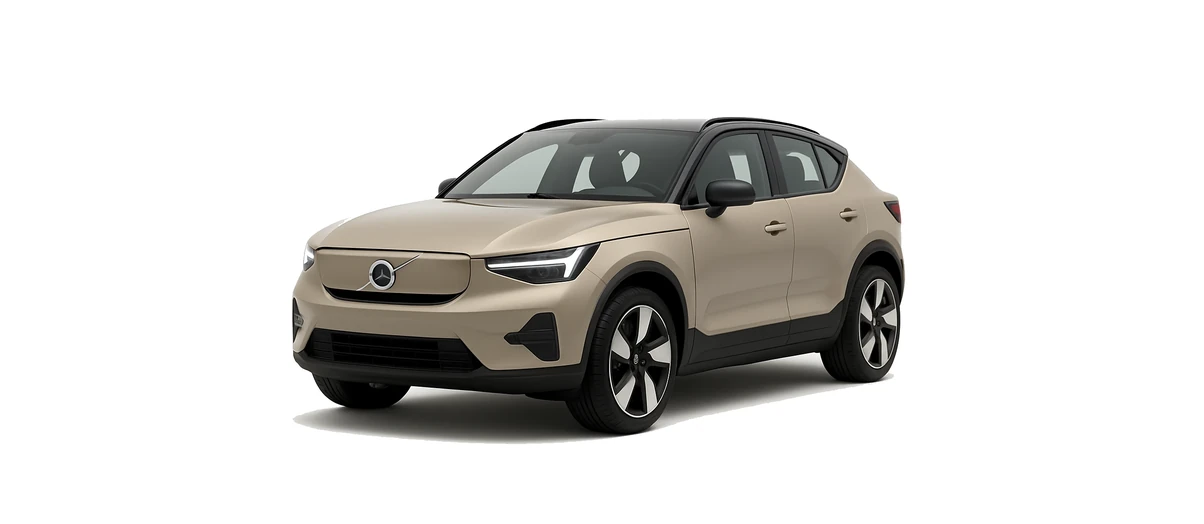
The Volvo EX40 is Volvo’s fully electric compact SUV for the UK market, replacing the former XC40 Recharge Pure Electric name. It is not a plug-in hybrid or mild hybrid: in current UK form, EX40 refers to the battery-electric model, while petrol and mild-hybrid versions use the XC40 name.
For charging, the EX40 is straightforward but variant-dependent. Current UK versions include a 70 kWh nominal battery in the Single Motor model and an 82 kWh nominal battery in the Single Motor Extended Range, Twin Motor and Twin Motor Performance models. That difference affects range, public rapid-charging expectations and how long a full charge may take.
This guide explains the key UK charging details for the Volvo EX40, including Type 2 AC charging, CCS rapid charging, home wallbox use, public charging and practical cable selection.
View Volvo EX40 Charging Cables
Volvo EX40 Battery and Charging Specifications
The Volvo EX40 uses a Type 2 charging inlet for AC charging and a CCS Combo 2 connection for DC rapid charging. The charge port is located at the left rear of the vehicle, which is useful to remember when positioning the car at home chargers or public rapid bays.
| Vehicle type | Fully electric compact SUV |
|---|---|
| UK powertrains | Single Motor, Single Motor Extended Range, Twin Motor, Twin Motor Performance |
| Battery sizes | 70 kWh nominal or 82 kWh nominal, depending on variant |
| AC charging | Type 2, up to 11 kW with a suitable three-phase supply |
| Typical UK home charging | Usually up to 7.4 kW on a single-phase wallbox |
| DC rapid charging | CCS, variant-dependent peak charging rate |
| Battery pre-conditioning | Supported when a charging station is selected as the navigation destination |
Battery Options
The most important charging distinction is whether your EX40 has the smaller battery or the larger battery. Current UK information shows the following broad setup:
- Single Motor: 70 kWh nominal battery, with EV Database listing around 67 kWh usable capacity.
- Single Motor Extended Range: 82 kWh nominal battery, with around 79 kWh usable capacity listed by EV Database.
- Twin Motor: 82 kWh nominal battery, again listed at around 79 kWh usable capacity.
- Twin Motor Performance: 82 kWh nominal battery, also listed at around 79 kWh usable capacity.
If you are unsure which version you have, check the original order paperwork, Volvo app, vehicle settings, registration documents or dealer handover information. The words “Extended Range”, “Twin Motor” or “Performance” are strong indicators that the car is likely to be one of the 82 kWh versions, while the standard Single Motor model uses the 70 kWh nominal pack in current UK specifications.
This matters because an 82 kWh EX40 stores more energy, usually travels further between charges and takes a little longer to fill from empty on AC power than the 70 kWh model.
AC Charging Speed
The Volvo EX40 has an 11 kW AC onboard charger according to EV Database data for current MY26 variants. That means the car can accept up to 11 kW from a suitable Type 2 AC supply. However, most UK homes are single-phase, where a dedicated home wallbox normally provides up to 7.4 kW rather than the full 11 kW.
Volvo UK quotes AC charging times using a three-phase 16A supply, with around 7 hours for the 70 kWh Single Motor and around 8 hours for the 82 kWh variants from 0-100%. In a typical UK home setting at 7.4 kW, a full charge will usually take longer, especially on the 82 kWh models. For everyday use, most owners do not charge from completely empty to completely full; charging overnight from, for example, 20% to 80% is usually much more realistic.
A Type 2 charging cable is the correct cable for AC charging the EX40 at untethered home wallboxes and many public AC charge points. If your home charger is tethered, the cable is already attached to the wallbox, but many public AC posts still require you to bring your own Type 2 cable.
DC Rapid Charging Speed
For long journeys, the Volvo EX40 uses CCS rapid charging. The exact charging rate depends on the variant, battery temperature, charger capability, state of charge and conditions on the day.
For the 70 kWh Single Motor, EV Database lists a peak DC charging rate of around 180 kW, with charging from 10-80% typically in the high-20-minute range under good conditions. For 82 kWh versions, Volvo quotes up to around 205 kW and around 28 minutes for 10-80% on suitable rapid chargers, while EV Database estimates can be closer to the low-to-mid 30-minute range depending on variant and conditions.
As with most EVs, the fastest charging usually happens at a lower state of charge, and the charging rate reduces as the battery fills. For this reason, it is usually quicker on a long trip to charge from around 10-80% and continue driving, rather than waiting for the final 20% unless you genuinely need the extra range.
Range and Efficiency
Official WLTP range varies by version. Volvo UK figures show the Single Motor at up to around 294.5 miles, the Single Motor Extended Range at up to around 356 miles, the Twin Motor at up to around 332.4 miles and the Twin Motor Performance at up to around 326.2 miles. These are laboratory-based combined figures and are useful for comparison, but real-world range will vary.
EV Database estimates real-world range at around 210 miles for the 70 kWh Single Motor and up to around 245 miles for the 82 kWh Single Motor Extended Range, with Twin Motor versions estimated slightly lower at around 235 miles. Your own result will depend on speed, weather, wheel size, road conditions, payload, cabin heating or cooling and driving style.
In winter, motorway driving at higher speeds can reduce range noticeably. Pre-heating the cabin while plugged in, keeping tyres correctly inflated and using navigation-based battery pre-conditioning before rapid charging can all help make journeys more predictable.
Charging at Home
For most UK EX40 owners, a dedicated Type 2 home wallbox is the most convenient charging option. It allows the car to charge safely overnight, use off-peak electricity tariffs where available and avoid frequent visits to public chargers.
Although the EX40 can accept up to 11 kW AC, most domestic properties in the UK have a single-phase electrical supply. In that situation, the usual maximum wallbox charging rate is 7.4 kW. Three-phase home supplies are less common, but where available and correctly installed, they may allow the EX40 to make use of its 11 kW AC capability.
A 3-pin portable charger is generally best suited as a backup or occasional charging solution, but can be used regularly if a qualified electrician has confirmed the socket and electrical installation are suitable for sustained EV charging. Standard household sockets were not primarily designed for long, repeated high-load charging sessions, so professional checking is important before relying on this method.
For battery longevity and convenience, many drivers set a daily charge limit rather than charging to 100% every night. A full charge can be useful before a long journey, but for normal commuting and local trips, charging to a lower limit is often enough.
Public Charging
When using public charging, it helps to understand the difference between AC and DC chargers. Public AC chargers usually use Type 2 and may be found in car parks, hotels, workplaces and town centres. These are useful for longer stops, but the EX40 will still be limited by its onboard AC charging capability.
DC rapid and ultra-rapid chargers use CCS and are the best choice for motorway and long-distance journeys. The cable is attached to the charger, so you do not use your own cable for CCS rapid charging. To get the best performance, aim to arrive at the rapid charger with a reasonably low state of charge and use the car’s navigation system to select the charging station before arrival.
Some MY26 EX40 data also lists Plug & Charge and Autocharge support. Availability can depend on the charging network, account setup and vehicle software, so it is sensible to have the relevant charging apps, RFID cards or contactless payment options available as a backup.
Vehicle-Specific Features
Battery pre-conditioning is an important EX40 charging feature. Volvo states that when a charging station is selected as the navigation destination, the car can prepare the battery to reach a more suitable temperature before rapid charging. This can make a meaningful difference in cold weather or when the battery is outside its ideal charging temperature window.
The EX40 is based on Volvo’s compact SUV platform and uses the CMA architecture co-developed within the Geely Group. Current UK powertrains include rear-wheel-drive Single Motor versions and all-wheel-drive Twin Motor versions.
A heat pump is available on some EX40 specifications, but it should be treated as trim-dependent rather than universal. If this feature matters to you, check the exact trim and model-year specification for the vehicle you are buying or driving.
Vehicle-to-load, vehicle-to-home and vehicle-to-grid functionality should not be assumed for the EX40. Current research data does not support claiming V2L, V2H or V2G capability for this model.
Charging Tips
- Know your variant: check whether you have the 70 kWh Single Motor or an 82 kWh Extended Range/Twin Motor model before planning range and charging stops.
- Use Type 2 for AC charging: this is the correct connection for home wallboxes and most public AC posts.
- Use CCS for rapid charging: motorway rapid chargers and high-power hubs use the CCS connection, with the cable attached to the charger.
- Pre-condition before rapid charging: select the charger in the car’s navigation system before arrival so the battery can prepare where supported.
- Avoid unnecessary rapid charging to 100%: above about 80%, DC charging usually slows significantly.
- Plan for winter range: cold weather, wet roads and motorway speeds can reduce real-world range.
- Choose the right cable length: the charge port is at the left rear, so consider driveway layout and public charging bay positioning.
Frequently Asked Questions
What charging cable does the Volvo EX40 use?
The Volvo EX40 uses a Type 2 cable for AC charging and a CCS Combo 2 connector for DC rapid charging. For public rapid charging, the CCS cable is attached to the charger.
Can the Volvo EX40 charge at 22 kW AC?
No. Current data lists the EX40 with an 11 kW AC onboard charger, so it should not be described as a 22 kW AC charging vehicle.
How fast will the EX40 charge at home?
Most UK homes with a single-phase wallbox will charge at up to 7.4 kW. The EX40’s 11 kW AC capability is more relevant where a suitable three-phase supply is available.
How long does rapid charging take?
Under suitable conditions, a 10-80% rapid charge is typically around 26-30 minutes for the 70 kWh Single Motor and around 28 minutes by Volvo’s figures for 82 kWh variants, though independent estimates can be closer to 32-35 minutes depending on conditions.
Is the Volvo EX40 a plug-in hybrid?
No. In the UK, the EX40 is a fully electric vehicle. Petrol and mild-hybrid versions are associated with the XC40 name, not the EX40.
What This Means for Drivers
The Volvo EX40 is easy to live with if you match your charging habits to your version of the car. The 70 kWh Single Motor offers a lower-capacity battery with solid everyday range, while the 82 kWh Extended Range and Twin Motor versions are better suited to drivers who want more range or all-wheel-drive performance.
For day-to-day use, a Type 2 home wallbox will be the most convenient solution for many owners, even though typical UK homes will usually charge at 7.4 kW rather than the car’s full 11 kW AC capability. On longer trips, CCS rapid charging and navigation-based pre-conditioning help the EX40 make efficient use of high-power public chargers.
Looking for a Charging Cable for Volvo EX40?
If you need a suitable Type 2 cable for home or public AC charging, We offer Volvo EX40 charging cable options for UK drivers.
View Volvo EX40 Charging Cables
Please note that this information is intended as a guide. Charging specifications may change due to model and year of manufacture. For precise information, always refer to your vehicle user manual.

