
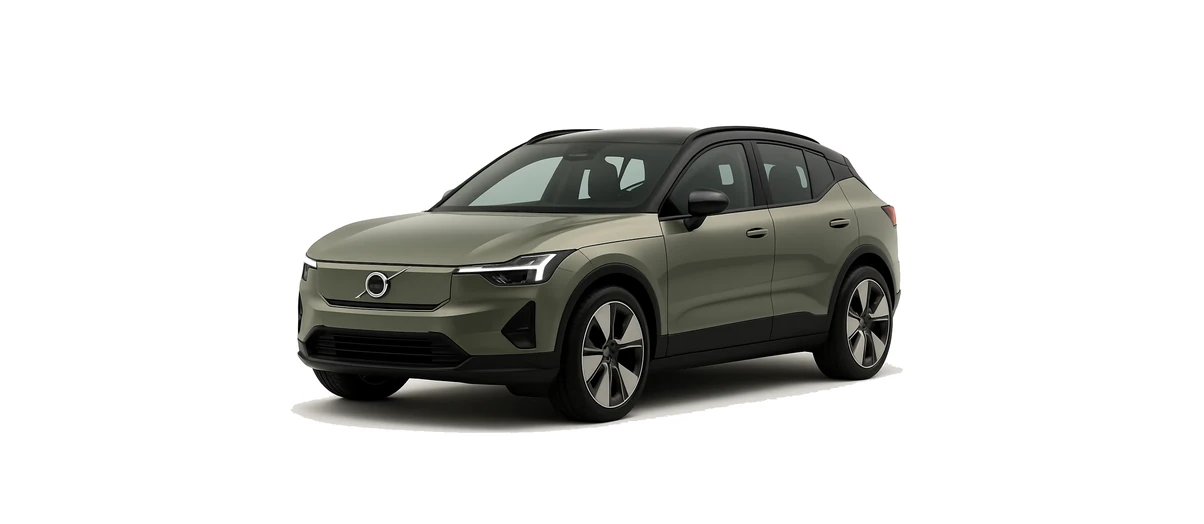
The Volvo EX30 is a fully electric 5-door compact SUV and one of Volvo’s most accessible EVs in the UK. Current UK Volvo information lists the standard EX30 passenger-car range as P5 Electric, P5 Long Range Electric and P8 AWD Electric, although earlier model-year material used Single Motor, Single Motor Extended Range and Twin Motor Performance naming. Whichever naming system you come across, the key charging point is that the EX30 is a battery-electric vehicle using a Type 2 connector for AC charging and CCS Combo 2 for DC rapid charging.
For most UK drivers, the practical charging choice is straightforward: a Type 2-to-Type 2 cable for home wallboxes and untethered public AC charge points. The detail comes in choosing whether a single-phase cable is enough, or whether a three-phase cable makes sense for your EX30 and the places you charge. This guide explains the differences between the 51 kWh and 69 kWh cars, what to expect from home and public charging, and how to choose a cable without assuming every EX30 charges at the same rate.
View Volvo EX30 Charging Cables
Volvo EX30 Battery and Charging Specifications
The UK-market Volvo EX30 passenger SUV is fully electric, with two main battery sizes across the current range. The charging inlet is positioned on the rear passenger-side flank and supports Type 2 AC charging and CCS Combo 2 DC rapid charging. DC rapid chargers in the UK are normally tethered, so you do not need to carry a separate cable for rapid charging. For AC charging, however, many home wallboxes and public destination chargers require your own Type 2 cable.
| EX30 version | Battery | WLTP combined range | DC rapid charging | AC charging notes |
|---|---|---|---|---|
| P5 Electric / former Single Motor | 51 kWh nominal, around 49 kWh usable | Up to 209.4 miles | Up to 134 kW; around 26 minutes 10-80% | Check vehicle specification for onboard AC charger details |
| P5 Long Range Electric / former Single Motor Extended Range | 69 kWh nominal, around 65 kWh usable | Up to 295.2 miles | Up to 153 kW; around 28 minutes 10-80% | Some specifications support higher three-phase AC charging |
| P8 AWD Electric / former Twin Motor Performance | 69 kWh nominal, around 65 kWh usable | Up to 279.6 miles | Up to 153 kW; around 28 minutes 10-80% | Check trim, model year and onboard charger before assuming 22 kW AC |
These figures apply to the standard EX30 passenger SUV range. Cross Country, Cargo and later announced variants may have their own specifications, so they should be checked separately rather than treated as identical to the regular EX30.
Battery Options
The EX30 range is split between a smaller 51 kWh nominal battery and a larger 69 kWh nominal battery. Volvo UK material for the 51 kWh version gives a usable capacity of around 49 kWh, while the 69 kWh versions are listed at around 65 kWh usable. The smaller-battery P5 Electric is aimed at drivers who want a compact EV for everyday journeys, commuting and local use. The 69 kWh P5 Long Range Electric and P8 AWD Electric are better suited to drivers who want more range between charges or more flexibility for longer trips.
It is important not to quote one range or one rapid-charging speed for every EX30. The 51 kWh car and 69 kWh cars have different battery capacities and different peak DC charging figures. In day-to-day use, this means the smaller-battery car may need more frequent charging on longer journeys, while the long-range versions can go further between stops.
AC Charging Speed
AC charging is the type of charging used by home wallboxes, workplace chargers and many destination charge points. The Volvo EX30 uses a Type 2 connector for AC charging. Volvo support material references AC charging at 6.8 kW, 11 kW and 22 kW, while UK specification information has varied by trim, option and model year. For that reason, it is best to check the exact onboard charger fitted to your car rather than assuming every EX30 can use 22 kW AC.
For most UK homes, the limiting factor is the electricity supply rather than the car. A typical single-phase 7 kW home wallbox will usually charge at around 7.2-7.4 kW when conditions allow. Even if your EX30 has a higher-capacity onboard AC charger, a single-phase home charger will not deliver 11 kW or 22 kW. Those higher AC speeds generally require a three-phase supply, which is more common at workplaces, commercial premises and some public destination chargers.
For cable selection, a 32A single-phase Type 2-to-Type 2 cable is suitable for typical UK 7.4 kW home charging. If you regularly use 11 kW or 22 kW three-phase public or workplace AC chargers, a 32A three-phase Type 2 cable is the more future-proof option, provided your specific EX30 can take advantage of the higher AC rate.
DC Rapid Charging Speed
DC rapid charging is used for longer journeys and motorway stops. The EX30 uses its CCS Combo 2 connection for DC charging, and UK rapid chargers are normally fitted with their own tethered cable. The 51 kWh EX30 is quoted at up to 134 kW DC and around 26 minutes for a 10-80% charge. The 69 kWh EX30 versions are quoted at up to 153 kW DC and around 28 minutes for a 10-80% charge.
As with all EVs, the maximum rapid-charging power is not held throughout the whole session. Charging is usually fastest at a lower state of charge and slows as the battery fills. Planning a stop from around 10% to 80% is normally more time-efficient than charging from nearly empty to 100% on a rapid charger. For the final 20%, the car reduces charging power to protect the battery and manage temperature.
Range and Efficiency
Current UK Volvo figures list the P5 Electric at up to 209.4 miles WLTP combined, the P5 Long Range Electric at up to 295.2 miles, and the P8 AWD Electric at up to 279.6 miles. WLTP figures are useful for comparison, but real-world range depends on temperature, speed, wheel and tyre choice, driving style, load, terrain and climate control use. A cautious real-world planning figure for the longer-range EX30 is around 225 miles, although individual journeys can be higher or lower.
In winter, motorway driving and cold starts can reduce range. The EX30’s standard heat pump can help reduce the energy needed for cabin heating compared with relying solely on resistive heating, but it does not remove the usual winter range effect entirely. For longer journeys, using the built-in route planning and preconditioning features can make charging stops more predictable.
Charging at Home
Home charging is where the EX30 will be easiest and cheapest for many UK owners. With a 7.4 kW home wallbox, overnight charging is usually enough to refill the battery for everyday use. Volvo’s current UK information quotes 0-100% AC charging times using three-phase 16A charging of around 6 hours for the 51 kWh version and around 8 hours for the 69 kWh versions, but single-phase home charging will typically take longer than three-phase charging at the same stated current.
If your home wallbox is untethered, you will need a Type 2-to-Type 2 charging cable. A 5 metre cable is often convenient for driveway use, while a longer cable can be useful if the charge point is not directly beside the charging port. The EX30’s inlet location on the rear passenger-side flank is convenient for many UK kerbside and driveway layouts, but cable length is still worth considering before buying.
A 3-pin charger is generally best suited as a backup or occasional charging solution, but can be used regularly if a qualified electrician has confirmed the socket and electrical installation are suitable for sustained EV charging. A dedicated wallbox is normally the preferred home solution because it is faster, safer for regular use and can offer smart charging features such as off-peak scheduling.
Public Charging
Public charging falls into two main categories: AC destination charging and DC rapid charging. AC destination chargers are common in car parks, hotels, workplaces, leisure locations and town centres. Many are untethered, so you need your own Type 2 cable. Speeds vary widely, but common UK public AC posts include 7 kW single-phase units and 11 kW or 22 kW three-phase units.
If your EX30 supports only 11 kW AC, using a 22 kW post will not make the car charge at 22 kW. If your EX30 has a 22 kW onboard charger and you connect to a suitable three-phase AC post with a suitable cable, you may be able to benefit from the higher AC rate. This is why checking the car’s trim, model year and onboard charger is especially important for used EX30 buyers.
For motorway and long-distance journeys, DC rapid charging is the key tool. You do not need to supply your own cable for CCS rapid chargers because the cable is attached to the charger. The EX30 also supports Volvo’s charging-station route planning functions, and Plug & Charge is listed by Volvo subject to activation and a compatible charging account and network.
Vehicle-Specific Features
The EX30 includes battery preconditioning, and Volvo confirms that Google Maps route planning can prepare the battery when a compatible fast-charging station is set as the destination. Preconditioning is particularly useful in cold weather because rapid charging works best when the battery is within an appropriate temperature range. If you simply arrive at a charger without navigation guidance, the battery may not be at the ideal temperature for the fastest charging session.
A heat pump is also confirmed as standard in the EX30. This can improve energy efficiency when heating the cabin, especially in cooler conditions, although real-world benefit depends on the journey and outside temperature.
Volvo UK also describes vehicle-to-load capability for the EX30, using additional equipment such as a Volvo V2L adapter. This can allow the car to power certain devices or appliances, depending on market, variant, software timing and compatible equipment. It should not be confused with confirmed vehicle-to-grid or vehicle-to-home operation; reliable UK confirmation of V2G or V2H capability for the standard EX30 was not found in the supplied data.
Charging Tips
- Use a Type 2-to-Type 2 cable for home and public AC charging where the charger is untethered.
- Choose a 32A single-phase cable if you mainly charge from a typical UK 7.4 kW home wallbox.
- Consider a 32A three-phase Type 2 cable if you regularly use 11 kW or 22 kW public or workplace AC chargers.
- Check your exact EX30 specification before assuming it can charge at 22 kW AC.
- For DC rapid charging, use the tethered CCS cable on the charger; no separate cable is required.
- Plan rapid-charge stops around 10-80% for better time efficiency.
- Set a compatible rapid charger as the destination in Google Maps to help trigger battery preconditioning before arrival.
- For used cars, check the original specification sheet or vehicle settings because EX30 charging capability can vary by trim and model year.
Frequently Asked Questions
What charging cable does the Volvo EX30 use?
The Volvo EX30 uses a Type 2 cable for AC charging. For DC rapid charging, it uses CCS Combo 2, and rapid chargers normally have the cable permanently attached.
Do I need a single-phase or three-phase cable for the EX30?
For typical UK home charging at around 7.4 kW, a 32A single-phase Type 2 cable is sufficient. If you often use three-phase workplace or public AC charging, a 32A three-phase cable is the more flexible choice, but your EX30 must support the higher AC rate to benefit.
Can every Volvo EX30 charge at 22 kW AC?
No. Volvo support information references up to 22 kW AC charging, but UK specifications have varied by trim, option and model year. Check the exact onboard charger fitted to your car before relying on 22 kW AC charging.
How long does rapid charging take?
Volvo quotes around 26 minutes for a 10-80% DC charge on the 51 kWh version and around 28 minutes for the 69 kWh versions, under suitable conditions.
Where is the charging port?
The EX30’s charging inlet is on the rear passenger-side flank.
What This Means for Drivers
The Volvo EX30 is simple to live with as an EV, but the right charging setup depends on your specific version and where you charge most often. For many UK owners, a home wallbox and a 32A single-phase Type 2 cable will cover daily use. Drivers who regularly use three-phase AC chargers may prefer a 32A three-phase cable, especially if their EX30 is equipped to use 11 kW or 22 kW AC charging. For rapid charging, the main habit is to plan around 10-80% stops and use the car’s route planning to precondition the battery before arrival.
Looking for a Charging Cable for Volvo EX30?
We offer Volvo EX30 charging cables for UK home, workplace and public AC charging, including Type 2 options for different charging setups.
View Volvo EX30 Charging Cables
Please note that this information is intended as a guide. Charging specifications may change due to model and year of manufacture. For precise information, always refer to your vehicle user manual.

