
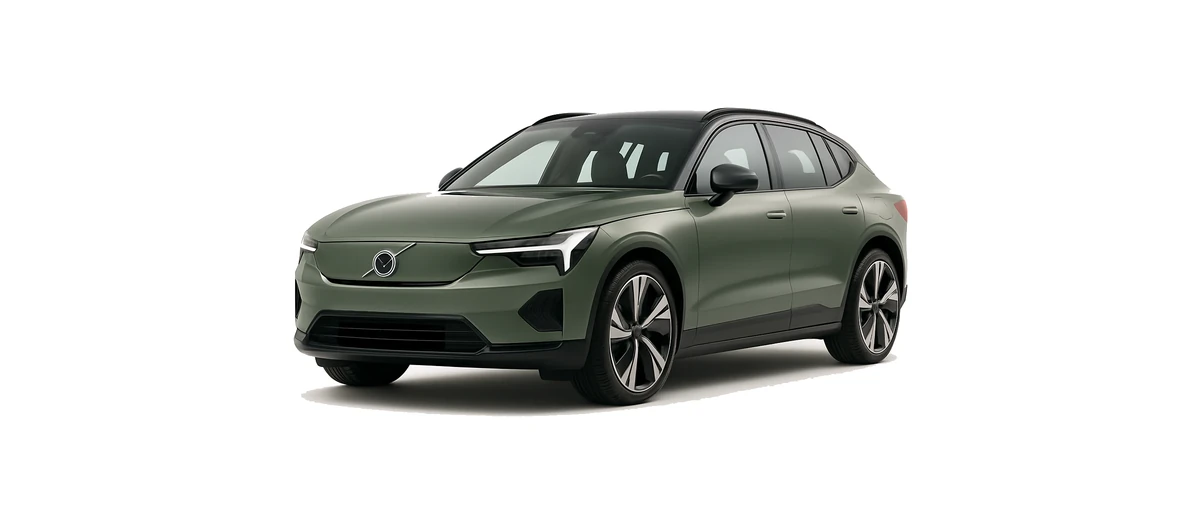
The Volvo ES90 is a fully electric large saloon with a fastback-style hatchback body, aimed at drivers who want executive-car comfort with long-distance EV capability. For UK owners, the most important charging points are straightforward: the ES90 uses a Type 2 connection for AC charging, CCS Combo 2 for DC rapid charging, and has an 11 kW AC onboard charger. It also uses an 800 V electrical architecture, which helps it achieve very fast DC charging when the right charger and conditions are available.
This guide focuses on what matters in day-to-day ownership: which cable you need, how long charging is likely to take at home, what to expect from public rapid chargers, and how the ES90’s battery options affect range and charging behaviour. The ES90 is battery-electric only in the UK; it is not a plug-in hybrid or mild hybrid.
View Volvo ES90 Charging Cables
Volvo ES90 Battery and Charging Specifications
UK Volvo information lists the ES90 Electric as a new, configurable fully electric model. Depending on version, it is offered with either a 92 kWh nominal battery or a 106 kWh nominal battery. Official Volvo UK figures quote WLTP combined range up to 412.6 miles for the Single Motor Extended Range and up to 431.9 miles for the Twin Motor versions, although real-world range will vary with speed, temperature, terrain, wheel choice, load and driving style.
For charging, the ES90 has a Type 2 AC inlet and CCS Combo 2 DC connection. AC charging is rated at up to 11 kW, which is particularly useful for owners with three-phase charging at home or work. On typical UK domestic single-phase supplies, most dedicated home charge points provide up to 7.4 kW, so overnight charging is still practical but slower than Volvo’s three-phase figures.
- Vehicle type: fully electric BEV
- AC charging connector: Type 2
- DC rapid charging connector: CCS Combo 2
- Maximum AC charging: up to 11 kW
- DC rapid charging: variant and charger dependent, with Volvo quoting 10-80% in 22 minutes at a suitable high-power charger
- Electrical architecture: 800 V system
Battery Options
The ES90 battery choice depends on the powertrain. The Single Motor Extended Range uses a 92 kWh nominal battery. Volvo UK lists a WLTP combined range of up to 412.6 miles for this version. EV Database estimates around 88 kWh usable capacity and around 310 miles of real-world range, but this usable figure is an independent estimate rather than an official Volvo UK specification.
The Twin Motor and Twin Motor Performance versions use a larger 106 kWh nominal battery. Volvo UK lists WLTP combined range up to 431.9 miles for these variants. EV Database estimates around 102 kWh usable capacity and around 345 miles of real-world range for the Twin Motor, again as an estimate rather than an official Volvo usable-capacity figure.
These differences matter when choosing charging habits. A larger battery can travel further between charges, but it also needs more energy to refill from a low state of charge. If two ES90s are charged at the same AC power from the same starting percentage, the 106 kWh versions will generally take longer to reach 100% than the 92 kWh model.
AC Charging Speed
The ES90’s onboard AC charger is rated at up to 11 kW. This is a three-phase AC figure and is especially relevant for homes, workplaces or destination chargers with three-phase power. Volvo UK quotes 0-100% AC charging on three-phase 16A at around 10 hours for the Single Motor Extended Range and Twin Motor, and around 11 hours for the Twin Motor Performance. EV Database gives broadly similar figures, with around 9 hours 30 minutes for the 92 kWh model and around 11 hours for the 106 kWh versions at 11 kW.
Many UK homes, however, have single-phase electricity. A typical dedicated home wallbox on single-phase supply will charge at up to 7.4 kW if the installation supports it. At that speed, a full charge will take longer than the official 11 kW three-phase figures. In real ownership, this is rarely a problem because most drivers top up from a partial state of charge rather than charging from 0-100% every night.
For cable selection, a Type 2 Mode 3 charging cable is the correct choice for untethered AC charge points. A 32A single-phase Type 2 cable is suitable for common 7.4 kW UK home and public AC charging. A three-phase Type 2 cable can also be useful if you regularly use 11 kW or 22 kW AC charge points, although the ES90 will limit AC charging to its own 11 kW maximum.
DC Rapid Charging Speed
The ES90’s 800 V architecture is one of its most important long-distance charging features. On a suitable high-power DC charger, Volvo quotes a 10-80% charge time of 22 minutes. This is the sort of charging window many drivers use on motorway journeys, because charging beyond 80% on DC often slows as the battery fills.
It is worth being precise about peak power. Volvo UK refers to charging at a 350 kW DC charger, while EV Database lists the Single Motor version at around 310 kW maximum DC charging and the Twin Motor versions at up to 350 kW. In practice, you should not expect a single peak power number to apply at all times. Charging speed depends on charger capability, battery temperature, battery state of charge, how busy the site is, and whether the charger can properly support the vehicle’s higher-voltage system.
Volvo support information also notes that DC charging may be limited on lower-voltage 400 V chargers. The ES90 can still use CCS public rapid chargers, but the fastest results are more likely at modern high-power units designed to support 800 V vehicles.
Range and Efficiency
The headline WLTP range for the ES90 reaches up to 431.9 miles, depending on variant and specification. WLTP is useful for comparing vehicles on a standardised basis, but real-world range is normally lower. Motorway speeds, cold weather, heavy rain, roof loads and repeated hard acceleration all increase consumption. Urban and mixed driving in mild conditions may be more efficient.
For UK drivers, the practical approach is to think in terms of usable journey planning rather than chasing the maximum possible figure. A long-range ES90 should comfortably cover many daily and weekly driving patterns without needing a public charger. For longer journeys, planning stops around reliable high-power chargers and arriving with the battery warm can make a noticeable difference to the charging experience.
Charging at Home
For most ES90 owners, home charging will be the cheapest and most convenient way to run the car. A dedicated home wallbox is normally the best solution, connected through a properly installed circuit and managed by a smart charger. If you have a tethered wallbox, the cable is built in. If you have an untethered wallbox, you will need a compatible Type 2 charging cable.
Because the ES90 can accept up to 11 kW AC, owners with three-phase supply may be able to make better use of the onboard charger. Most UK domestic installations are single-phase, so charging will typically be up to 7.4 kW. That is still enough for regular overnight charging, especially if you plug in when the car is at 20-50% rather than nearly empty.
A 3-pin domestic charger is generally best suited as a backup or occasional charging solution, but can be used regularly if a qualified electrician has confirmed the socket and electrical installation are suitable for sustained EV charging. Household sockets charge much more slowly than a dedicated wallbox, and sustained high loads on unsuitable sockets can be unsafe.
Public Charging
Public charging for the ES90 falls into two main categories: AC destination charging and DC rapid charging. AC destination chargers are commonly found at hotels, workplaces, car parks and leisure venues. Many are untethered, so you use your own Type 2 cable. These are useful when the car is parked for several hours.
DC rapid and ultra-rapid chargers use the CCS Combo 2 connector. These chargers are usually tethered, meaning the heavy DC cable is attached to the unit, so you do not use your own cable. For the ES90, the fastest charging will be available from high-power chargers capable of supporting its 800 V architecture. A charger may advertise a high peak output, but actual charging power will still depend on the car, the charger, temperature and battery state of charge.
The ES90 supports Plug & Charge according to Volvo UK feature information, with EV Database also listing Autocharge support. Availability can vary by charging network and account setup, but when supported, these features can reduce the need to manually start a session through an app or card.
Vehicle-Specific Features
The ES90 has several features that are particularly relevant to charging. Battery pre-conditioning is confirmed and can activate automatically when navigating to a fast charger using Google Maps. This helps bring the battery closer to an ideal temperature before arrival, improving the chance of a strong rapid-charging session. Volvo also indicates that pre-conditioning can be started manually from the centre display.
A heat pump is confirmed in Volvo UK feature information and is listed as standard equipment by independent equipment data for Plus and Ultra trims. A heat pump can help improve efficiency in cooler weather by reducing the energy required for cabin heating compared with less efficient heating methods.
Volvo also describes bidirectional charging capability for the ES90, with potential use as an extra power supply for a home and possible grid-balancing applications. This should not be treated as a plug-and-play feature for every UK owner. Volvo says it requires a bidirectional Volvo wallbox, and availability or functionality can depend on the market, local grid arrangements and operator approval. V2L-style use through an external 230 V outlet is not confirmed in the supplied UK information, so owners should not assume the ES90 provides that function.
Charging Tips
- Use Type 2 for AC charging: the ES90 uses a Type 2 connector for home, workplace and destination AC charging.
- Choose the right cable for your charging pattern: a 32A single-phase Type 2 cable suits typical 7.4 kW UK charging, while a three-phase cable is useful if you regularly access 11 kW AC charging.
- Use Google Maps routing for rapid stops: navigating to a fast charger can allow battery pre-conditioning to prepare the battery before arrival.
- Aim for 10-80% on long journeys: this is usually the most efficient rapid-charging window, and it aligns with Volvo’s headline 22-minute DC figure.
- Do not rely on peak power alone: a 350 kW charger does not guarantee 350 kW charging throughout the session.
- Check charger voltage capability: the ES90’s fastest charging is more likely on modern high-power chargers suited to 800 V vehicles.
- Use a wallbox for routine home charging: it is faster, safer and more convenient than relying on a domestic socket.
Frequently Asked Questions
What charging cable does the Volvo ES90 use?
The Volvo ES90 uses a Type 2 cable for AC charging. For DC rapid charging, it uses the CCS Combo 2 connector, and the cable is normally attached to the rapid charger.
Is the Volvo ES90 a plug-in hybrid?
No. The UK-market Volvo ES90 is listed as a fully electric battery-electric vehicle. It is not a plug-in hybrid.
How fast can the Volvo ES90 charge at home?
The ES90 can charge at up to 11 kW AC where a suitable three-phase supply and charger are available. On many UK home wallboxes, charging will typically be up to 7.4 kW on single-phase power.
Can the Volvo ES90 use a 22 kW AC charger?
Yes, it can connect to a compatible Type 2 AC charger, but the car’s onboard AC charger is rated at up to 11 kW, so it will not take the full 22 kW.
How long does rapid charging take?
Volvo quotes 10-80% DC charging in 22 minutes at a suitable high-power charger. The actual time will depend on the charger, battery temperature, state of charge and vehicle variant.
Does the ES90 support battery pre-conditioning?
Yes. Battery pre-conditioning is confirmed and can activate automatically when navigating to a fast charger with Google Maps. It can also be started manually from the centre display.
What This Means for Drivers
The Volvo ES90 is well suited to drivers who want a long-range electric car with strong rapid-charging potential. Its 800 V system, CCS rapid charging and confirmed pre-conditioning make it a capable long-distance EV, while Type 2 AC charging keeps day-to-day home and destination charging simple.
For most UK owners, the practical setup will be a dedicated home wallbox and a Type 2 cable for untethered AC charging. If you mainly charge at home on single-phase power, expect 7.4 kW rather than the car’s 11 kW maximum. If you have access to three-phase charging, the ES90 can make better use of its onboard AC capability. On the public network, use CCS rapid chargers for long journeys and choose high-power 800 V-compatible sites where possible.
Looking for a Charging Cable for Volvo ES90?
If you need a compatible Type 2 cable for home, workplace or public AC charging, We offer Volvo ES90 charging cables suitable for UK charging setups.
View Volvo ES90 Charging Cables
Please note that this information is intended as a guide. Charging specifications may change due to model and year of manufacture. For precise information, always refer to your vehicle user manual.

