
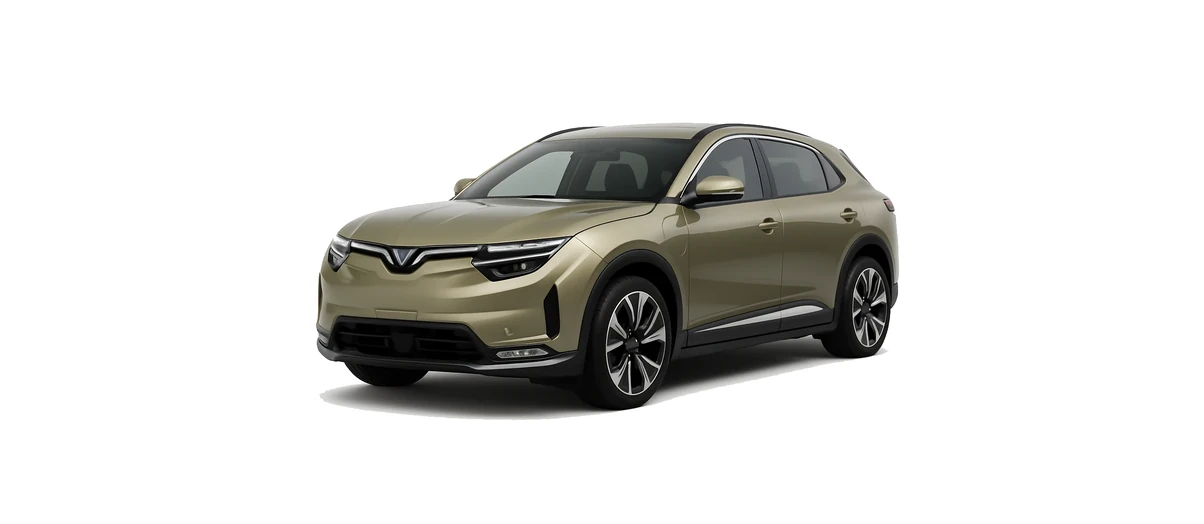
The Vinfast VF 8 is a mid-size all-electric SUV, but UK drivers should approach it with an important caveat: it is not a current UK-market model. VinFast had previously been linked with plans to introduce models including the VF 8 to the UK, but Fleet News reported in May 2025 that the company had cancelled its UK expansion plans. As a result, this guide is aimed mainly at owners, importers, fleet operators or prospective buyers dealing with rare European-market VF 8 examples rather than a normal UK dealer-supplied car.
For European VF 8 Eco and Plus Extended Range models, the available charging information points to a Type 2 AC inlet and CCS Combo 2 DC rapid charging, which are the standard connector types used across most UK and European public charging networks. However, because UK availability was not officially established, owners should always check the charge flap, vehicle handbook and import documentation before buying a replacement or spare charging cable.
View Vinfast VF 8 Charging Cables
Vinfast VF 8 Battery and Charging Specifications
The European-market Vinfast VF 8 is listed as a battery-electric vehicle rather than a plug-in hybrid or range-extender model. The Eco and Plus Extended Range versions are dual-motor all-wheel-drive SUVs, using a large battery pack and supporting both AC charging for home and destination use and DC rapid charging for longer journeys.
Based on European specification data, the VF 8 uses a Type 2 connector for AC charging and a CCS Combo 2 connector for DC rapid charging. EV Database lists the charge port location as the left-front side of the vehicle. It also lists a 400 V electrical architecture, an 11 kW maximum AC charging rate and up to 150 kW DC rapid charging under suitable conditions.
Because this is not a mainstream UK-supplied model, the practical advice is to treat the published European figures as a guide and confirm your specific vehicle’s details before purchasing cables or planning regular charging routines.
Battery Options
For the European VF 8 Eco Extended Range and VF 8 Plus Extended Range, VinFast’s European information lists an 87.7 kWh usable battery capacity. EV Database lists a 90.0 kWh nominal battery capacity as an estimated value, with the same 87.7 kWh usable capacity.
Both the Eco and Plus Extended Range versions use the same usable battery capacity in the sources checked. The main point for charging is that this is a relatively large battery, so charging times will vary significantly depending on whether you are using a home wallbox, an AC public post or a DC rapid charger.
A large usable battery is useful for range, but it also means that low-power charging can take a long time from a low state of charge. In day-to-day use, most owners will not charge from empty to full. Instead, a more typical routine is to plug in at home overnight, top up during the week and use rapid charging mainly on longer trips.
AC Charging Speed
EV Database lists the Vinfast VF 8 with Type 2 AC charging at up to 11 kW. This is a three-phase AC figure, which is more common at some workplace, commercial and European public charge points than at typical UK homes.
In the UK, most domestic EV chargers are single-phase units rated at up to 7.4 kW. On that kind of home wallbox, the VF 8 should charge below its 11 kW onboard AC maximum because the supply is the limiting factor. This is still a practical home charging speed for overnight charging, especially if you are topping up rather than charging the entire battery from a very low level.
At an untethered home charger or public AC post, the VF 8 will need a suitable Type 2 charging cable. A 22 kW AC public charge point will not make the VF 8 charge at 22 kW, because the car’s onboard AC charger is listed as limited to 11 kW. In that situation, the charging post may be capable of more, but the vehicle controls the maximum AC rate it can accept.
DC Rapid Charging Speed
For rapid charging, the European VF 8 is listed with CCS Combo 2 DC charging at up to 150 kW. EV Database estimates a 10-80% rapid charging time of about 37 minutes. As with all EVs, this figure depends on charger capability, battery temperature, state of charge, site load sharing and the vehicle’s charging curve.
VinFast has also published manufacturer charging information for European models, but some figures refer to different charging windows, such as 10-70%, rather than 10-80%. For UK journey planning, it is important to compare like with like. A 10-80% stop is commonly used when discussing motorway rapid charging because charging often slows as the battery becomes fuller.
On longer trips, the fastest strategy is usually to arrive at a rapid charger with a lower state of charge, charge to around 70-80% if practical, and continue rather than waiting for the final 20% unless you need the extra range. Above roughly 80%, most EVs reduce charging power, so the last part of a charge can take disproportionately longer.
Range and Efficiency
Range figures for the VF 8 vary by version and source, so they should not be treated as one universal number. VinFast’s current European page lists a WLTP range of 471 km for the Eco and 457 km for the Plus, equivalent to around 293 miles and 284 miles respectively. EV Database gives real-world estimates of about 405 km for the Eco and 400 km for the Plus, equivalent to around 252 miles and 249 miles.
WLTP figures are useful for comparing vehicles under standardised test conditions, but real UK range will depend on speed, temperature, tyres, driving style, terrain, payload and use of heating or air conditioning. A tall mid-size SUV travelling at motorway speeds in cold, wet weather will generally use more energy than the same car driven gently in mild conditions around town.
For planning purposes, UK drivers should use a conservative range estimate when travelling between rapid chargers, especially because the VF 8 is likely to be an import or rare vehicle in the UK. Leaving a sensible buffer helps avoid relying on a single charger being available, working and suitable when you arrive.
Charging at Home
For most EV owners, home charging is the most convenient and cost-effective way to run the vehicle. If you have off-street parking, a dedicated 7.4 kW wallbox will usually be the preferred UK solution. It can add a substantial amount of range overnight and can often be paired with an off-peak electricity tariff to reduce running costs.
If your wallbox is untethered, you will need a Type 2 to Type 2 charging cable suitable for the VF 8’s European charging inlet. A tethered wallbox has its own cable attached, so you would not normally need a separate cable for home use, though many drivers still keep one in the boot for public AC charging.
A domestic 3-pin charger is generally best suited as a backup or occasional charging solution, but can be used regularly if a qualified electrician has confirmed the socket and electrical installation are suitable for sustained EV charging. Because the VF 8 has a large battery, a 3-pin charge will be slow and is unlikely to be the most practical option for routine charging unless your daily mileage is very low.
Public Charging
For public AC charging in the UK, the VF 8’s Type 2 compatibility should make it suitable for the many untethered destination chargers found in car parks, hotels, supermarkets, leisure sites and workplaces. At these chargers, you typically use your own Type 2 cable. Charging speed will depend on the post, the site supply and the vehicle’s onboard AC limit.
For faster journey charging, use CCS rapid or ultra-rapid chargers. Most UK motorway and major-route rapid chargers have tethered CCS cables attached to the unit, so you do not need to bring a separate DC cable. The VF 8’s listed 150 kW DC maximum means it can make use of higher-powered chargers, although it will not necessarily hold peak power for the whole session.
EV Database lists Autocharge support for the European VF 8, but not Plug & Charge. Network features vary by provider and country, so UK owners should not assume automatic authentication will work on every charger. It is sensible to have a mix of payment options available, such as contactless bank card access, network apps and RFID cards where required.
Vehicle-Specific Features
The key vehicle-specific point is the VF 8’s unusual UK status. It should not be treated like a regular UK-market model with widely available dealer guidance and standardised UK specification. If you are buying a cable for a VF 8 in Britain, confirm that your car is a European CCS Combo 2 vehicle and not a vehicle imported from a market with different charging hardware.
European Eco and Plus Extended Range versions are listed as dual-motor all-wheel-drive battery-electric SUVs with an 87.7 kWh usable battery. EV Database lists Type 2 AC and CCS Combo 2 DC charging, with AC charging up to 11 kW and DC charging up to 150 kW. It also lists bidirectional functions such as V2L, V2H and V2G as not supported.
Specification differences can exist between countries, model years and launch editions. Where there is any uncertainty, the most reliable references are the vehicle handbook, labels near the charge port, the infotainment charging menu and documentation supplied with the car.
Charging Tips
- Check the inlet before buying: because the VF 8 was not officially launched as a normal UK-market model, confirm your vehicle has Type 2 AC and CCS Combo 2 DC connectors.
- Use the right AC cable: for untethered UK and European AC charge points, a Type 2 cable is the appropriate format for European VF 8 specifications.
- Do not expect 22 kW AC charging: a 22 kW post can still be useful, but the car is listed with an 11 kW onboard AC limit.
- Use CCS for long journeys: rapid and ultra-rapid CCS chargers are the practical choice for motorway and intercity trips.
- Plan with a buffer: use conservative real-world range assumptions, especially in winter or when travelling at motorway speeds.
- Keep a public charging cable in the car: many destination chargers are untethered, so a Type 2 cable is useful away from home.
Frequently Asked Questions
Is the Vinfast VF 8 available to order in the UK?
Based on the sources checked, the VF 8 is not available to order as a current UK-market model. Fleet News reported in May 2025 that VinFast had cancelled its UK expansion plans, so UK examples are likely to be rare, imported or connected to earlier planned listings.
What charging cable does the Vinfast VF 8 use?
European VF 8 specifications list Type 2 AC charging and CCS Combo 2 DC rapid charging. For untethered home and public AC charge points, a Type 2 charging cable is the relevant cable type. Always confirm your specific vehicle’s inlet before buying.
Can the Vinfast VF 8 charge at 22 kW AC?
No. EV Database lists the VF 8’s maximum AC charging rate as 11 kW. A 22 kW AC post may be compatible, but the vehicle will still be limited by its onboard AC charger.
How fast can the Vinfast VF 8 rapid charge?
EV Database lists DC rapid charging at up to 150 kW and estimates around 37 minutes for a 10-80% charge under suitable conditions. Real charging time can vary depending on the charger, temperature and battery state of charge.
Is the Vinfast VF 8 a plug-in hybrid?
No. The European VF 8 sources checked describe it as a battery-electric vehicle. No plug-in hybrid or range-extender version was confirmed for the UK or European sources used for this guide.
What This Means for Drivers
For UK drivers, the Vinfast VF 8 is best understood as a caveat-first EV ownership case. The charging hardware listed for European models is familiar and practical: Type 2 for AC charging, CCS Combo 2 for DC rapid charging, up to 11 kW AC and up to 150 kW DC. That means the car should fit naturally into the UK’s home, destination and rapid charging ecosystem if it is a European-specification vehicle.
The main difference is support and certainty. Because VinFast cancelled its UK launch plans, owners should take extra care when checking specification details, cable requirements and software/network features. If you have a confirmed European VF 8 Eco or Plus Extended Range, the charging approach is straightforward: use a Type 2 cable for AC charging, rely on a dedicated wallbox at home where possible, and use CCS rapid chargers for longer journeys.
Looking for a Charging Cable for Vinfast VF 8?
If you own or are importing a European-specification Vinfast VF 8, We can help you choose a suitable Type 2 charging cable for home and public AC charging. Please confirm your vehicle’s charging inlet and specification before ordering, especially for imported examples.
View Vinfast VF 8 Charging Cables
Please note that this information is intended as a guide. Charging specifications may change due to model and year of manufacture. For precise information, always refer to your vehicle user manual.

