
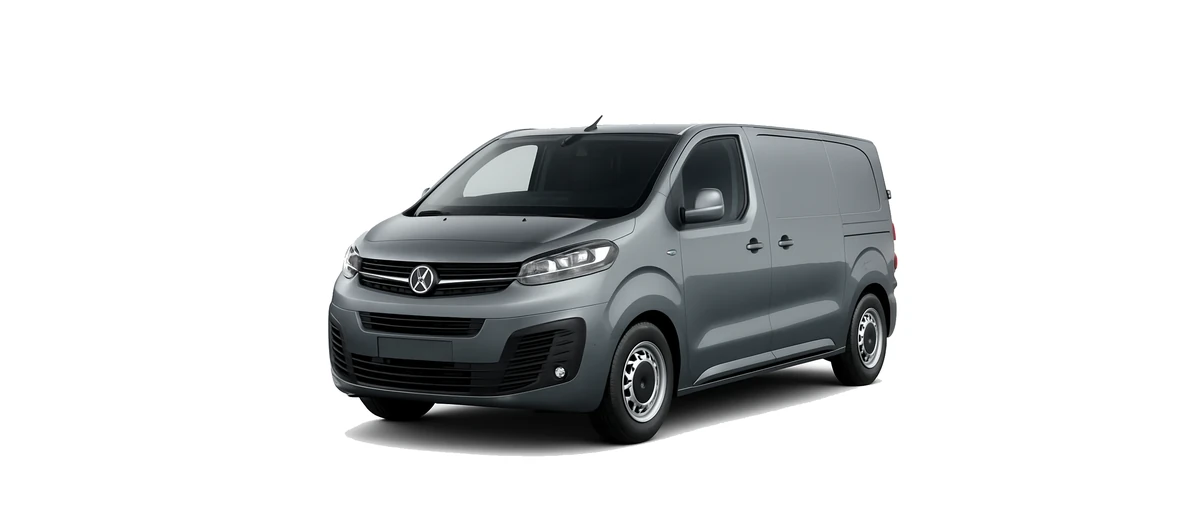
The Vauxhall Vivaro E, now generally presented by Vauxhall UK as the Vivaro Electric, is the battery-electric version of Vauxhall’s medium van. It is aimed at trades, fleets and businesses that need van practicality with the ability to charge at home, at a depot or on the public charging network. The key point for charging is that not every Vivaro-e or Vivaro Electric has the same battery and onboard AC charger, so it is worth checking the exact model year and specification before choosing a charging routine or cable.
Current UK Vivaro Electric van specifications list a 75kWh gross battery, 11kW AC onboard charging and CCS rapid charging up to 100kW. Earlier Vivaro-e vans may have either a 50kWh or 75kWh battery and many were listed with 7.4kW AC charging as standard, with 11kW available as an option. This guide explains what that means in practical UK use, including home wallboxes, three-phase AC posts, rapid chargers and Type 2 cable selection.
View Vauxhall Vivaro E Charging Cables
Vauxhall Vivaro E Battery and Charging Specifications
The Vauxhall Vivaro E is a fully electric van, not a plug-in hybrid. It uses a Type 2 inlet for AC charging and a CCS connection for DC rapid charging on UK and European models. AC charging is what you use from a home wallbox, workplace charger, depot charger or many destination charging posts. DC rapid charging is used at motorway services, charging hubs and higher-powered public rapid chargers.
For the current UK Vivaro Electric van, Vauxhall’s MY2026A price and specification guide lists an 11kW onboard AC charger as standard and a 75kWh gross battery with 69kWh usable capacity. Official charging information gives a 0-100% time of around 7 hours 30 minutes on an 11kW AC supply, and around 11 hours 20 minutes from a 7.4kW wallbox. For rapid charging, the official figure is up to 100kW DC, with a rapid charge to 80% taking about 45 minutes for the 75kWh battery under suitable conditions.
Earlier Vivaro-e information is different, so used buyers should be careful. Older vans may be fitted with a 50kWh or 75kWh battery, and many were specified with a 7.4kW AC onboard charger as standard. Some older vans may have the optional 11kW AC charger, but this should be confirmed from the vehicle’s specification, original order information, VIN check or retailer documentation.
Battery Options
The current UK Vivaro Electric van range is listed with the larger 75kWh gross battery, with 69kWh usable capacity. This battery is used across current electric panel van, XL panel van, doublecab and platform cab variants listed in the Vauxhall UK guide. Official combined WLTP range varies by variant and equipment, with current figures quoted up to around 194-230 miles depending on version.
Older Vivaro-e and earlier Vivaro Electric vans may have different battery options. The 75kWh version has commonly been associated with longer range and a 100kW DC rapid charging capability. Earlier 50kWh vans were also offered, with shorter official range but lower battery capacity to recharge. If you are buying a used Vivaro-e, do not assume it has the larger battery simply because it is electric. Check the vehicle documents, dashboard information, original sales specification or a Vauxhall retailer if range and charging time are important to your work schedule.
This matters for cable and charging expectations. A Type 2 cable may physically fit both versions, but the time needed to recharge overnight or between jobs will depend on battery size, onboard charger capability, starting state of charge and the power available from the charger.
AC Charging Speed
AC charging speed is controlled by two main factors: the charge point output and the van’s onboard AC charger. A current Vivaro Electric with the standard 11kW onboard charger can make use of an 11kW three-phase AC supply, where available. Vauxhall lists around 7 hours 30 minutes for a 0-100% charge from an 11kW public AC supply. On a typical UK 7.4kW single-phase home wallbox, the same current 75kWh van is listed at around 11 hours 20 minutes from 0-100%.
For many UK homes, 7.4kW is the normal maximum for a single-phase dedicated wallbox. That is still a practical solution for many van users because the vehicle can be charged overnight or during downtime. However, it will not be as quick as 11kW three-phase AC. If your business premises or depot has three-phase electricity, an 11kW AC charge point can be useful for a current Vivaro Electric, especially where vans return to base between shifts.
For older Vivaro-e vans, the onboard charger may be limited to 7.4kW unless the optional 11kW unit was fitted. Plugging a 7.4kW-limited van into an 11kW or 22kW AC post will not make it charge at 11kW or 22kW. The vehicle will only accept what its onboard charger allows. No reliable UK information confirms 22kW AC onboard charging for the Vivaro-e or Vivaro Electric van, so it is best not to plan around 22kW AC charging speeds.
DC Rapid Charging Speed
For longer journeys or busy working days, the Vivaro E uses its CCS inlet for DC rapid charging. Current UK information lists up to 100kW DC rapid charging, with the 75kWh battery reaching 80% in about 45 minutes in suitable conditions. Earlier 50kWh information commonly gives a shorter time to 80%, reflecting the smaller battery capacity.
Rapid charging times are always approximate. Charger output, battery temperature, starting charge level, charger sharing, route conditions and the vehicle’s charging curve can all affect the result. The fastest part of a rapid charge is usually at lower to mid battery percentages; charging from 80% to 100% can take disproportionately longer. For business use, it is often more efficient to rapid charge to around 80% and continue the journey rather than waiting for a full charge, unless the extra range is genuinely needed.
You do not need your own cable for most UK DC rapid chargers because the CCS cable is normally tethered to the charging unit. You will, however, need access to the correct charging network, payment method or fleet account.
Range and Efficiency
Official WLTP range for the current 75kWh Vivaro Electric van is listed at up to around 194-230 miles depending on variant and equipment. This is a laboratory-based comparison figure and should not be treated as a guaranteed daily working range. In a van, real-world efficiency can vary significantly because payload, roof racks, tools, refrigeration equipment, motorway speed, stop-start urban work, winter temperatures and cabin heating or cooling all make a difference.
A lightly loaded van on urban and suburban routes may perform differently from a fully laden van covering fast A-road or motorway miles. Cold weather can also reduce range, especially if the van is parked outside overnight and the cabin needs heating at the start of the day. The Vivaro Electric does support cabin pre-conditioning when plugged in, which can help make the van more comfortable before departure without taking as much energy from the battery once on the road.
For fleets, the safest approach is to build a range buffer into route planning rather than using the headline WLTP figure as the full daily allowance. If a route is close to the van’s realistic limit, identify rapid charging stops or depot top-up opportunities before the vehicle is dispatched.
Charging at Home
A dedicated home wallbox is the most convenient charging option for many sole traders and owner-drivers. On a typical UK 7.4kW wallbox, the current 75kWh Vivaro Electric is officially listed at around 11 hours 20 minutes from empty to full. In normal use, you may not be charging from 0%, so overnight charging can still be suitable for many routines.
If you have access to three-phase power at home or at business premises, an 11kW AC charger can reduce charging time on current 11kW-equipped vans. For older vans, check whether the vehicle has the 7.4kW or optional 11kW onboard charger before investing in three-phase AC infrastructure specifically for faster charging.
A 3-pin charger is generally best suited as a backup or occasional charging solution, but can be used regularly if a qualified electrician has confirmed the socket and electrical installation are suitable for sustained EV charging. For a working van with a large battery, a domestic socket will be much slower than a dedicated wallbox and may not replenish enough range overnight for daily commercial use.
For regular home or depot charging, a properly installed Type 2 wallbox is the better long-term solution. It can be safer, neater and faster than relying on a standard socket, and it is easier to integrate with off-peak tariffs or workplace charging schedules.
Public Charging
For public AC charging, the Vivaro E uses a Type 2 cable. Many destination chargers at supermarkets, hotels, town centres and workplaces are untethered, so you need to carry your own Type 2 charging cable. A 22kW AC post can still be useful, but the van will not charge at 22kW unless it has a 22kW onboard charger, which is not confirmed for UK Vivaro Electric vans. Current vans with 11kW AC charging can use up to 11kW on a suitable three-phase post; older 7.4kW vans will typically be limited to around 7.4kW.
For DC rapid charging, use a CCS rapid or ultra-rapid charger. The charger’s tethered CCS cable plugs into the lower section of the van’s combined charging inlet. A charger rated above 100kW will not necessarily charge the Vivaro Electric faster than 100kW, because the vehicle’s maximum DC acceptance is the limiting factor.
For van operators, public charging planning should consider access as well as power. Some charging bays may be tight for a commercial vehicle, especially if the van is long-wheelbase or carrying rear-mounted equipment. Where possible, check site photos, bay layout and charger reliability before depending on a stop for work-critical journeys.
Vehicle-Specific Features
The Vivaro Electric is based on Stellantis medium-van architecture and is offered in commercial body styles such as panel van, doublecab and platform cab, depending on model year and specification. It should not be confused with the Vivaro Life Electric passenger vehicle, as passenger-car specifications do not always transfer directly to the commercial van.
UK specifications list a 100kW electric motor rated at 136PS. Current 75kWh van information also lists a braked towing capacity of 1,000kg, although towing will reduce driving range and should be factored into charging plans. The battery warranty is listed as 8 years or 100,000 miles with a 70% capacity threshold, giving useful context for used buyers and fleet operators assessing battery condition.
Cabin pre-conditioning can be scheduled from the infotainment climate screen or via the MyVauxhall app when the vehicle is plugged in. This is useful for comfort and can help reduce the initial heating or cooling load once driving, particularly in winter mornings or hot summer conditions.
Charging Tips
- Check the exact van specification. Current UK vans list 75kWh and 11kW AC charging, but older Vivaro-e vans may be 50kWh or 75kWh and may have 7.4kW AC charging.
- Use a Type 2 cable for AC posts. Keep a suitable Type 2 cable in the van for workplace, depot and destination charging.
- Do not expect 22kW AC charging. A 22kW post will not override the van’s onboard charger limit.
- Use CCS for rapid charging. The van can rapid charge at up to 100kW DC where conditions and charger capability allow.
- Plan around real use, not just WLTP. Payload, speed, weather and route profile can all reduce range.
- Pre-condition the cabin while plugged in. This can improve comfort before departure and help preserve driving energy.
- For fleets, build in charging buffers. Allow extra time for queues, charger faults, cold weather and heavier-than-usual loads.
Frequently Asked Questions
What charging cable does the Vauxhall Vivaro E use?
For AC charging, the Vauxhall Vivaro E uses a Type 2 connection. For DC rapid charging, it uses a CCS connection. Public rapid chargers normally have the CCS cable attached, while many AC posts require you to bring your own Type 2 cable.
Is the Vauxhall Vivaro E 7.4kW or 11kW on AC?
Current UK Vivaro Electric van specifications list an 11kW onboard AC charger as standard. Earlier Vivaro-e vans were commonly listed with 7.4kW AC charging as standard, with 11kW optional. Check the individual van before assuming its maximum AC charging speed.
Can the Vauxhall Vivaro E charge at 22kW AC?
No reliable UK specification confirms 22kW onboard AC charging for the Vivaro-e or Vivaro Electric van. Even if you plug into a 22kW AC post, the van will charge only up to the limit of its onboard AC charger.
How long does the 75kWh Vivaro Electric take to charge?
For the current 75kWh van, Vauxhall lists around 11 hours 20 minutes from a 7.4kW wallbox and around 7 hours 30 minutes from an 11kW AC supply. DC rapid charging to 80% is listed at about 45 minutes on a suitable rapid charger.
Do all Vivaro-e vans have the same battery?
No. Current UK Vivaro Electric van specifications list a 75kWh gross battery, but earlier Vivaro-e vans may have 50kWh or 75kWh batteries. Used buyers should verify the exact battery fitted.
What This Means for Drivers
The most important charging decision for a Vauxhall Vivaro E owner is to match expectations to the actual vehicle. A current Vivaro Electric with the 75kWh battery and 11kW AC charger can benefit from three-phase 11kW AC charging at a depot or suitable public post, while still working well with a 7.4kW home wallbox for overnight charging. An older Vivaro-e with a 7.4kW onboard charger will not charge faster on AC unless it has the optional 11kW unit.
For daily business use, a Type 2 wallbox or depot charger should be the foundation of your charging routine, with CCS rapid charging reserved for longer days, unexpected mileage or intercity work. Carrying the right Type 2 cable keeps public AC charging options open, while understanding the van’s onboard charger prevents disappointment when using higher-rated AC posts.
Looking for a Charging Cable for Vauxhall Vivaro E?
We offer Vauxhall Vivaro E charging cables for home, workplace and public AC charging, helping you choose a suitable Type 2 cable for your van’s charging setup.
View Vauxhall Vivaro E Charging Cables
Please note that this information is intended as a guide. Charging specifications may change due to model and year of manufacture. For precise information, always refer to your vehicle user manual.

