
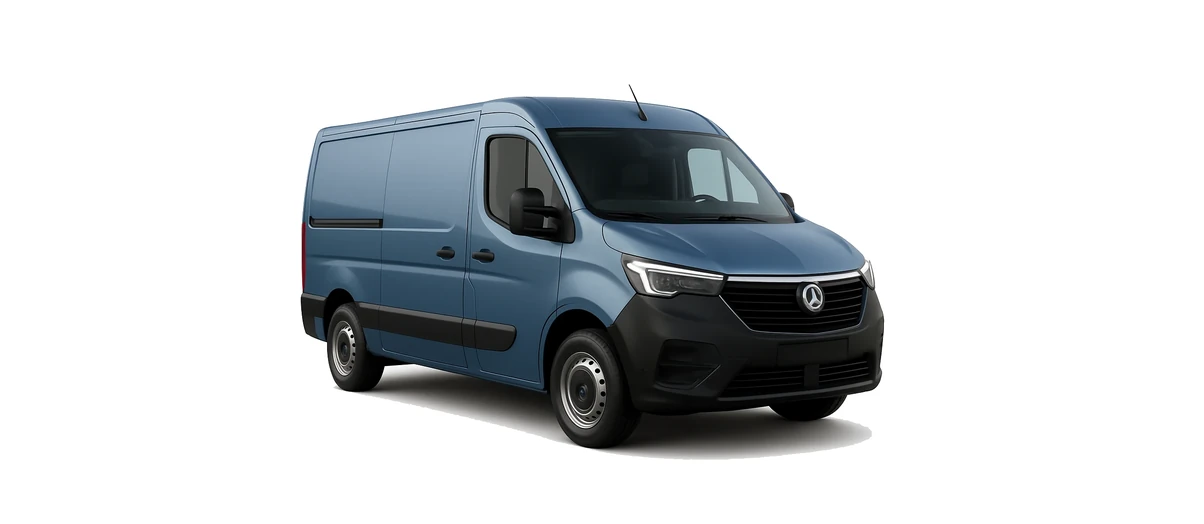
The Vauxhall Movano E, also referred to in current Vauxhall material as the Movano Electric, is a battery electric large van designed for operators who need load space without diesel tailpipe emissions. In the UK, the current electric Movano range includes panel van, glazed van and chassis cab configurations depending on variant, making charging planning particularly important for fleets, trades and conversion users.
The key point with the Movano E is that model year matters. Current Model Year 2026 information lists a 110 kWh gross battery, 97.8 kWh net capacity, a 22 kW AC on-board charger and up to 150 kW DC rapid charging. Older Movano-e and earlier Movano Electric versions used different specifications, including a 75 kWh battery in previous-generation models and, in some later pre-MY2026 material, 11 kW AC charging. This guide focuses on the latest UK MY2026 data for new vehicles while explaining what to check if you are operating or buying a used van.
View Vauxhall Movano E Charging Cables
Vauxhall Movano E Battery and Charging Specifications
For current MY2026 Movano Electric models, Vauxhall lists a 270 hp / 205 kW electric motor and a lithium-ion battery with 110 kWh gross capacity and 97.8 kWh net capacity. AC charging uses the Type 2 connection common across UK and European electric vehicles, while DC rapid charging uses the CCS connector. For most day-to-day charging, drivers and fleet managers will be dealing with Type 2 AC charging at a home, workplace or depot wallbox. For faster charging during operating hours or on longer routes, CCS rapid charging is the relevant public charging standard.
Vauxhall’s MY2026 charging table gives a full AC charge time of around 16 hours 40 minutes from a 7.4 kW single-phase wallbox and around 6 hours 05 minutes from a 22 kW three-phase AC wallbox. DC charging is listed at up to 150 kW, with a 5-80% charge taking about 55 minutes where conditions and charger capability allow. As with all EVs, actual charging speed depends on factors including charger output, battery temperature, state of charge and site conditions.
Battery Options
The current UK Movano Electric specification should not be confused with earlier Movano-e models. For new MY2026 vehicles, the important battery figure is 110 kWh gross and 97.8 kWh usable/net capacity. This is a large battery by van standards and is one of the reasons that full AC charging from a standard single-phase wallbox takes much longer than it would in a small electric car.
Earlier used Movano-e versions have been listed with a 75 kWh battery and a lower official range figure. If you are buying used, managing a mixed fleet, or creating internal driver guidance, check the vehicle’s registration date, specification sheet, VIN-linked build information or handbook. It is not safe to assume that every Movano E has the same battery, AC charging speed or range.
AC Charging Speed
AC charging is the best fit for overnight, depot and scheduled workplace charging. The current MY2026 Movano Electric is listed with a 22 kW on-board AC charger, which is useful for businesses with three-phase electrical supply. On a 22 kW three-phase wallbox, Vauxhall quotes around 6 hours 05 minutes to charge to 100%.
Many UK homes and some smaller business premises have single-phase electrical supplies, where a typical dedicated EV wallbox is 7.4 kW. On this type of charger, the current MY2026 Movano Electric takes around 16 hours 40 minutes for a full charge. That is still workable for many operators if the van returns to base early enough and does not need a full 0-100% charge every day, but it requires more planning than a smaller EV.
For cable selection, a Type 2 charging cable is the relevant cable for untethered AC charging points. If you use a tethered wallbox, the cable is permanently attached to the charger. If you use untethered workplace or public AC posts, you will need to carry a suitable Type 2 cable rated appropriately for the charger and the van’s AC capability.
DC Rapid Charging Speed
For rapid charging, the Movano E uses CCS. Public DC rapid chargers normally have a tethered CCS cable attached to the unit, so drivers do not usually use their own charging cable for DC charging. Vauxhall’s current MY2026 data lists up to 150 kW DC charging, with a 5-80% charge taking around 55 minutes on a suitable 150 kW-capable charger.
That figure should be treated as a best-case planning reference rather than a guaranteed time on every charger. A 150 kW charger may not always deliver 150 kW to the vehicle, and charge speed can reduce as the battery fills. Cold weather, a very low or high state of charge, charger sharing and site limitations can all affect the session. For fleet scheduling, it is sensible to build in a buffer rather than assuming the minimum quoted time every time.
Range and Efficiency
Vauxhall’s current MY2026 material gives calculated combined range figures that vary by body and weight. Listed panel and glazed van versions range from around 235 miles to 263 miles depending on configuration, while chassis cab range depends on the conversion fitted. The highest combined figure in the current data is 263 miles, but that should not be presented as the range for every Movano Electric.
Large electric vans are particularly sensitive to use case. Payload, roof height, conversion weight, motorway speed, ambient temperature, tyre condition and route profile can all have a noticeable effect. Urban work with regular stops may be more favourable than long high-speed motorway journeys, while winter operation and heavy loads can reduce achievable range. Fleet users should therefore create guidance by van type and duty cycle, not just by quoting one headline figure.
Charging at Home
Home charging may suit owner-drivers, small businesses and vans that return to the same address each night. A dedicated 7.4 kW wallbox is usually the most practical home charging solution on a typical UK single-phase supply. With the current large-battery Movano Electric, a full charge from low to 100% can take around 16 hours 40 minutes at 7.4 kW, so overnight charging is most effective when the van only needs a top-up rather than a complete recharge.
Because the Movano E is a large commercial vehicle, it is worth thinking carefully about where it will be parked, whether the cable can be routed safely, and whether the charger location avoids trip hazards or obstruction. If several vans need to charge at the same premises, load management and scheduled charging can help avoid overloading the electrical supply.
A 3-pin charger is generally best suited as a backup or occasional charging solution, but can be used regularly if a qualified electrician has confirmed the socket and electrical installation are suitable for sustained EV charging. For a van with a battery of this size, a 3-pin socket will be very slow and is unlikely to be the preferred regular charging method for most operators.
Public Charging
Public charging for the Vauxhall Movano E falls into two main categories: AC destination charging and DC rapid charging. AC destination charging is useful when the van is parked for several hours, for example at a workplace, hotel, council site, customer location or depot with shared posts. Untethered AC posts require a Type 2 cable.
DC rapid charging is the better option when the van needs to get back on the road during the working day. A suitable CCS rapid or ultra-rapid charger can add a substantial amount of charge during a driver break, but planning is important. Large vans may need more space around the charger than cars, and not every public charging bay is easy to access in a long or high-roof vehicle. Fleets should identify reliable rapid chargers with suitable bay layouts on regular routes.
Vehicle-Specific Features
The current Movano Electric is available in several body and weight configurations, so charging and range planning should match the specific van rather than the badge alone. Vauxhall lists four selectable E-Coasting regenerative-braking modes in the MY2026 guide, allowing drivers to adjust the level of deceleration and energy recovery to suit the route and driving style.
Current Vauxhall material also refers to connected services including public charging information, EV trip planning or routing and MyVauxhall remote functions. Availability and functionality can depend on specification, subscriptions, connectivity and market details, so operators should confirm what is active on the individual vehicle.
Charging Tips
- Check the model year first: current MY2026 vans list 22 kW AC charging, but older Movano Electric vehicles may differ.
- Match charging to duty cycle: a 7.4 kW wallbox may be enough for predictable overnight top-ups, while high-mileage fleet work may justify three-phase 22 kW AC or regular CCS charging.
- Use Type 2 for AC: carry a suitable Type 2 cable for untethered workplace and public AC charge points.
- Use CCS for rapid charging: public DC chargers usually have their own tethered CCS cable.
- Avoid relying on one range figure: body size, weight, payload, weather and speed all matter.
- Plan access as well as power: check charger bay length, height restrictions and turning space for large vans.
Frequently Asked Questions
What charging connector does the Vauxhall Movano E use?
For UK and European specification vehicles, the Movano E uses Type 2 for AC charging and CCS for DC rapid charging.
How long does the Vauxhall Movano E take to charge at home?
Using current MY2026 figures, a 7.4 kW single-phase wallbox takes around 16 hours 40 minutes for a full charge. In daily use, many drivers will be topping up rather than charging from empty to full.
Does every Vauxhall Movano E have 22 kW AC charging?
No. Current MY2026 data lists a 22 kW AC on-board charger, but earlier Movano Electric material listed 11 kW AC and older used vans may have different specifications. Always check the exact vehicle.
Can the Vauxhall Movano E rapid charge?
Yes. Current MY2026 Movano Electric models are listed with up to 150 kW DC CCS rapid charging, with a 5-80% charge taking around 55 minutes under suitable conditions.
What range does the Vauxhall Movano E offer?
Current MY2026 calculated combined range varies by body and weight, with listed panel and glazed van versions ranging from around 235 to 263 miles. Chassis cab range depends on the conversion.
What This Means for Drivers
The Vauxhall Movano E is best approached as a working vehicle that needs a charging plan, not just a cable in the load bay. For lower-mileage routes and predictable overnight parking, a 7.4 kW wallbox may be sufficient, although the large battery means full charges take time. For busy depot operations, three-phase 22 kW AC charging can make a major difference on current MY2026 vehicles. For long routes or unexpected extra mileage, CCS rapid charging is the key back-up.
The most important practical advice is to identify the exact van specification before planning infrastructure. A current 110 kWh, 22 kW AC Movano Electric has different charging behaviour from an older 75 kWh or 11 kW-era vehicle. Once that is clear, operators can choose the right mix of Type 2 AC charging, depot scheduling and CCS rapid charging to keep the van productive.
Looking for a Charging Cable for Vauxhall Movano E?
We can help you choose a suitable Type 2 charging cable for AC charging your Vauxhall Movano E at compatible home, workplace and public charge points.
View Vauxhall Movano E Charging Cables
Please note that this information is intended as a guide. Charging specifications may change due to model and year of manufacture. For precise information, always refer to your vehicle user manual.

