
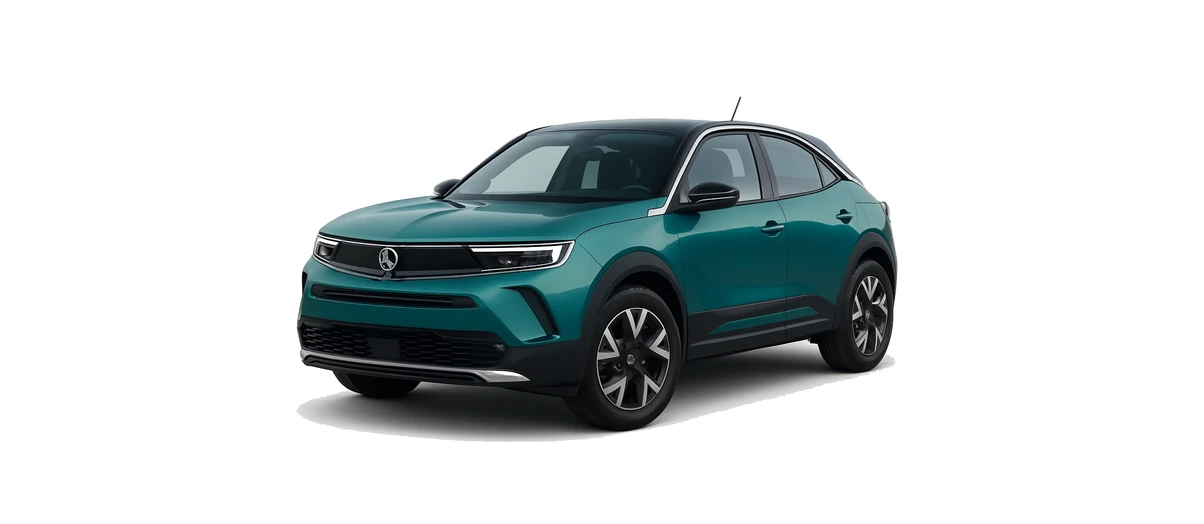
The Vauxhall Mokka E, also seen as the Mokka-e and now more commonly called the Vauxhall Mokka Electric in current UK material, is the battery-electric version of Vauxhall’s compact SUV. It is not a plug-in hybrid: it uses a fully electric drivetrain and is charged from an external power source using a Type 2 AC connection or a CCS rapid charging connection.
One important point for owners is that not every Mokka E has the same battery or range. Early UK Mokka-e models used a 50kWh battery, while later and current mainstream Mokka Electric models use a 54kWh battery. The newer Mokka Electric GSE also uses a 54kWh pack, but its performance focus means range expectations are different. The charging connector is the same across these versions, but range and charge-time expectations vary by model year and variant.
View Vauxhall Mokka E Charging Cables
Vauxhall Mokka E Battery and Charging Specifications
UK Vauxhall Mokka E and Mokka Electric models use a Type 2 socket for AC charging and a CCS Combo 2 connection for DC rapid charging. This is the standard arrangement for most modern European-market electric cars: the upper Type 2 section is used for home and destination AC charging, while the additional lower CCS pins are used at rapid and ultra-rapid DC chargers.
| Item | Vauxhall Mokka E / Mokka Electric |
|---|---|
| Vehicle type | Battery-electric compact SUV |
| AC charging connector | Type 2 |
| DC rapid charging connector | CCS Combo 2 |
| Maximum AC charging | Up to 11kW, where a suitable three-phase AC supply is available |
| Typical UK home wallbox charging | Around 7.4kW on most single-phase home installations |
| Maximum DC rapid charging | Vauxhall quotes up to 100kW; independent data lists a similar peak depending on version |
| Rapid charge time | Approximately 10-80% or 0-80% in around 30 minutes, depending on source and conditions |
Battery Options
The main thing to check before estimating range or charging time is which version of the electric Mokka you have.
Earlier Mokka-e 50kWh models, broadly 2021-2024: these cars used a 50kWh gross battery, with independent data listing around 46.3kWh usable capacity. WLTP figures were commonly around the low 200-mile mark depending on model year and trim. These cars are now common on the used market, so owners should avoid relying on the later 250-mile figures unless they have confirmed they own the 54kWh version.
Later and current Mokka Electric 54kWh models: the current mainstream 156PS Mokka Electric uses a 54kWh total battery, with independent data listing around 50.8kWh usable capacity. Vauxhall quotes up to 250 miles WLTP for the long-range mainstream version, although real-world range will depend on weather, speed, route and driving style.
Mokka Electric GSE: the GSE is a higher-performance derivative. It also uses a 54kWh battery, but its official range is lower than the standard 156PS Mokka Electric. Vauxhall quotes up to 209 miles WLTP for the GSE, so it should not be compared directly with the most efficient 250-mile Mokka Electric figure.
AC Charging Speed
The Mokka E and Mokka Electric are listed with an 11kW on-board AC charger. This means the car can accept up to 11kW from a suitable AC charge point, typically a three-phase workplace, commercial or public AC charger.
For most UK home charging, however, the practical maximum is usually around 7.4kW from a single-phase wallbox. This is an important distinction: the car may be capable of 11kW AC, but a normal UK single-phase home supply will not usually provide 11kW to the vehicle.
As a guide, Vauxhall has quoted around 7 hours 30 minutes from a 7kW charger for current official data, and around 5 hours from an 11kW AC charger. Independent estimates for the later 54kWh pack are broadly in the same range, with three-phase 11kW charging taking roughly five to five-and-a-half hours under suitable conditions.
For cable choice, a Type 2 to Type 2 cable is the relevant AC charging cable. A 32A single-phase Type 2 cable is suitable for most UK home wallboxes and many public AC posts. A three-phase 11kW-capable Type 2 cable is worth considering if you regularly use three-phase workplace or public AC charge points.
DC Rapid Charging Speed
For longer journeys, the Vauxhall Mokka E uses CCS rapid charging. Vauxhall quotes up to 100kW DC rapid charging, with a typical rapid charge to 80% taking around 30 minutes in favourable conditions. Independent data lists very similar peak figures, varying slightly by version.
It is important to treat 100kW as a peak rather than a constant speed. Like most EVs, the Mokka Electric charges fastest when the battery is at a lower state of charge and gradually slows as the battery fills. This tapering is normal and protects the battery.
In practice, a 100kW or faster rapid charger is enough to access the car’s peak charging capability. Plugging into a 150kW or 350kW ultra-rapid charger will not make the Mokka charge at those higher rates, because the car’s own charging system sets the limit. It may still be convenient to use a higher-rated charger if that is the available unit, but drivers should not expect a major speed increase beyond the vehicle’s capability.
Range and Efficiency
The official WLTP range depends heavily on which Mokka Electric you are driving. Earlier 50kWh Mokka-e models were typically quoted at around 203-213 miles WLTP depending on specification and model year. Later mainstream 54kWh Mokka Electric versions are quoted at up to 250 miles WLTP, while the GSE performance version is quoted at up to 209 miles WLTP.
Real-world range will usually be lower than the best WLTP figure, especially in winter or at motorway speeds. Independent data suggests around 175 miles of real-world range for the current mainstream 54kWh Mokka Electric, and around 170 miles for the GSE. Earlier 50kWh cars should generally be expected to travel less far than the current 54kWh model on a full charge.
Efficiency is affected by temperature, tyre condition, wheel size, payload, use of heating or air conditioning, and sustained high-speed driving. A gentle urban and mixed-road commute will normally be more efficient than a cold motorway journey at higher speeds.
Charging at Home
For most UK owners, a dedicated 7kW home wallbox is the most convenient charging solution. It allows the Mokka E to be charged overnight, supports scheduled charging where available, and is safer and more practical than relying on a standard domestic socket as the main charging method.
A tethered wallbox has a cable permanently attached, which is convenient if you mainly charge one EV at home. An untethered wallbox has a socket, so you use your own Type 2 cable. Untethered units can look tidier and may be more flexible if you change vehicle in future, but you will need to keep a cable available.
A 3-pin charger is generally best suited as a backup or occasional charging solution, but can be used regularly if a qualified electrician has confirmed the socket and electrical installation are suitable for sustained EV charging. Domestic sockets were not originally designed for repeated high-load EV charging over many hours, so professional electrical advice is strongly recommended before relying on one.
If you have access to a three-phase home supply, an 11kW wallbox may allow the Mokka Electric to use its higher AC charging capability. Most UK homes are single-phase, so this is not the typical domestic setup.
Public Charging
At public AC chargers, the Mokka E uses a Type 2 cable. Many destination chargers at supermarkets, hotels, car parks and leisure locations are untethered, meaning you need to bring your own Type 2 to Type 2 cable. Charging speed will depend on the charge point and whether the supply is single-phase or three-phase.
At rapid and ultra-rapid chargers, you normally do not need your own cable because CCS rapid chargers have a tethered cable attached to the unit. You simply plug the CCS connector into the vehicle’s charging port and follow the charger network’s payment or app process.
For journey planning, it is usually better to plan rapid charging stops in the lower-to-mid battery range rather than waiting until the battery is nearly full. Charging from around 10% to 80% is normally the quickest and most efficient use of a rapid charger. Above 80%, charging speed can reduce significantly, so continuing to 100% is usually best reserved for situations where you genuinely need the extra range.
Vehicle-Specific Features
The Mokka Electric’s charging flap is positioned on the passenger-side rear quarter, and Vauxhall describes a charging-status LED at the flap on relevant models. This can help you check whether the car is charging, finished or waiting for a scheduled charge.
Cabin pre-conditioning and delayed charging are available via the MyVauxhall app or infotainment system on relevant models. This is useful for warming or cooling the cabin before departure and for taking advantage of off-peak electricity tariffs. It should not be confused with battery preconditioning for rapid charging, which is not listed as available for the Mokka Electric in the research data.
Heat pump equipment varies by model year and source. Some data lists a heat pump on earlier versions, while current Vauxhall material describes it as optional on some specifications. If this matters to you, check the exact vehicle specification rather than assuming every Mokka E has the same equipment.
Vehicle-to-load, vehicle-to-grid and vehicle-to-home functionality are not promoted for the Mokka Electric in UK material and are listed as not supported in the referenced data.
Charging Tips
- Identify your version first: check whether you have an early 50kWh Mokka-e, a later 54kWh Mokka Electric or the GSE, as range expectations differ.
- Use a 7kW wallbox at home: for most UK households, this is the practical everyday charging speed.
- Choose the right Type 2 cable: a 32A single-phase cable suits most home and public AC use; a three-phase cable is useful if you often use 11kW AC charge points.
- Use CCS for rapid charging: public rapid charging is via the CCS connector, normally using the cable attached to the rapid charger.
- Rapid charge to 80% when practical: charging slows above 80%, so shorter 10-80% stops are often quicker on long journeys.
- Pre-condition the cabin while plugged in: where available, warming or cooling the cabin before departure can help preserve driving range.
Frequently Asked Questions
Is the Vauxhall Mokka E a plug-in hybrid?
No. The Mokka-e and Mokka Electric are fully battery-electric vehicles. The wider Mokka range includes petrol and petrol-hybrid models, but the Mokka E is the electric version.
What charging cable does the Vauxhall Mokka E use?
For AC charging, it uses a Type 2 to Type 2 cable. For DC rapid charging, it uses the CCS connector, and the rapid charger normally has its own tethered cable.
Can the Mokka E charge at 11kW at home?
Only if you have a suitable three-phase supply and an appropriate 11kW charge point. Most UK homes are single-phase and will charge at around 7.4kW from a typical home wallbox.
How fast can the Vauxhall Mokka Electric rapid charge?
Vauxhall quotes up to 100kW DC rapid charging, with charging to around 80% taking about 30 minutes in suitable conditions. The rate will taper as the battery fills.
Do all Mokka E models have the same range?
No. Earlier 50kWh Mokka-e models have a shorter official range than later mainstream 54kWh Mokka Electric models. The GSE performance version also has a lower quoted range than the standard 156PS 54kWh car.
What This Means for Drivers
The Vauxhall Mokka E is straightforward to charge once you understand which version you own. The connector setup is consistent: Type 2 for AC and CCS for rapid charging. The main differences are battery size, official range and real-world expectations.
For day-to-day use, a 7kW home wallbox and a suitable Type 2 cable will cover most charging needs. For longer journeys, CCS rapid charging at a 100kW or faster charger gives access to the car’s peak charging capability, with the most time-efficient stops usually planned around the 10-80% range.
Looking for a Charging Cable for Vauxhall Mokka E?
If you need a compatible Type 2 cable for home, workplace or public AC charging, We offer Vauxhall Mokka E charging cables suitable for UK charging points.
View Vauxhall Mokka E Charging Cables
Please note that this information is intended as a guide. Charging specifications may change due to model and year of manufacture. For precise information, always refer to your vehicle user manual.

