
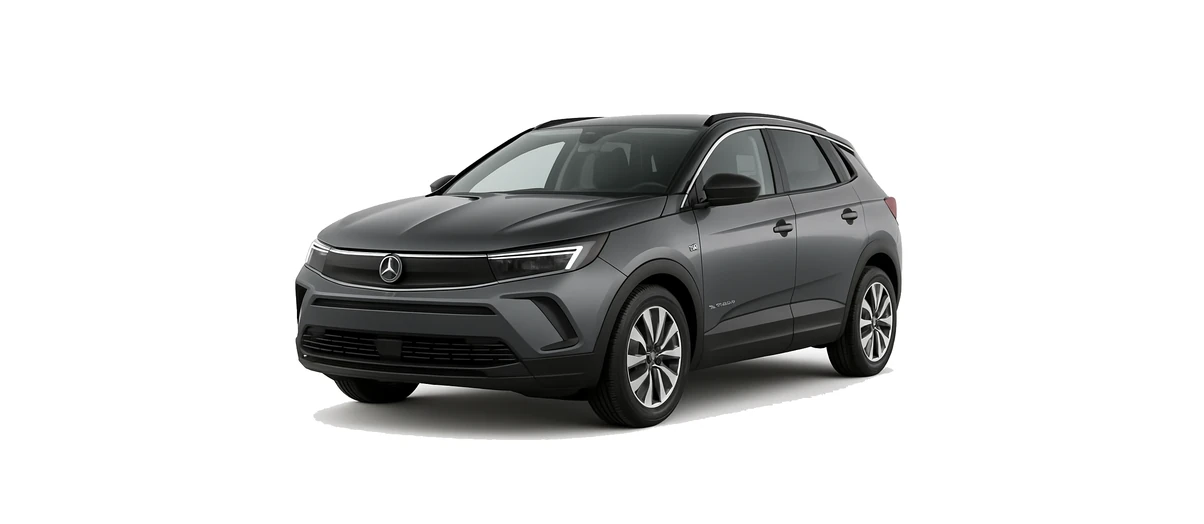
The Vauxhall Grandland X Hybrid and Grandland X Hybrid4 are plug-in hybrid compact SUVs, not fully electric vehicles. That distinction matters when planning charging, because these models use a relatively small high-voltage battery for electric driving while retaining a petrol engine for longer journeys. They are best thought of as cars that benefit from regular AC top-ups at home, work or destination chargers, rather than vehicles built around long DC rapid-charging stops.
UK Grandland X plug-in hybrid models were sold around 2019 to 2021, before the facelifted Vauxhall Grandland dropped the “X” name. The key ownership point is that charging speed can vary depending on the specific car. Some cars have the standard on-board charger, commonly referenced as 3.7kW in 2020 Vauxhall material and 3.3kW in some later model-year wording, while others have the optional 7.4kW on-board charger. A 7kW wallbox or 32A cable is still a sensible choice, but the car will only charge at the rate its on-board charger allows.
View Vauxhall Grandland X Charging Cables
Vauxhall Grandland X Battery and Charging Specifications
The Grandland X plug-in hybrid range used a 13.2kWh battery according to Vauxhall UK price and specification material. Third-party charging data commonly reports usable capacity at around 11.2kWh, but that figure should be treated as a reported usable value rather than an official Vauxhall specification.
Charging is via a Type 2 AC connection. For most UK owners, that means a Type 2 to Type 2 cable for untethered public charge points and many home charge points, or a tethered Type 2 wallbox if the cable is built into the charger. The Grandland X PHEV is not the same as the later Vauxhall Grandland Electric battery-electric model, so its charging expectations are very different.
- Vehicle type: Plug-in hybrid electric vehicle (PHEV)
- Body style: Compact SUV
- UK PHEV variants: Hybrid 225hp front-wheel drive and Hybrid4 300hp all-wheel drive
- Battery capacity: 13.2kWh gross
- Charging port: Type 2 AC
- Typical AC charging capability: Standard 3.3/3.7kW or optional 7.4kW, depending on specification and model year
Battery Options
The UK Grandland X PHEV line-up was offered in two main plug-in hybrid powertrain contexts. The front-wheel-drive Grandland X Hybrid produced 225hp, while the all-wheel-drive Grandland X Hybrid4 produced 300hp using additional electric drive capability. Both versions are listed with a 13.2kWh battery in Vauxhall UK material.
Because both versions use a much smaller battery than a full battery-electric SUV, charging habits are different. The aim is usually to start everyday local trips with a charged battery so that short journeys can be completed with maximum electric assistance. If the battery is depleted, the petrol engine remains available, so the car is not dependent on the public rapid-charging network in the way a pure EV would be.
AC Charging Speed
AC charging speed is the most important charging topic for the Vauxhall Grandland X PHEV. Vauxhall UK material for 2020 models refers to a 3.7kW on-board charger as standard, with an optional 7.4kW on-board charger. Some later MY2021B price-guide wording refers to 3.3kW as standard and 7.4kW as optional. In practical terms, used buyers should check the exact vehicle rather than assuming every Grandland X charges at 7kW.
Official Vauxhall charging-time figures commonly quote around 3 hours 30 minutes for a full charge with the standard on-board charger and around 1 hour 45 minutes when the optional 7.4kW charger is fitted and the car is connected to a suitable 7kW wallbox. Third-party data gives broadly similar figures, though some timings vary slightly by source.
This is where cable selection can be misunderstood. A 32A Type 2 to Type 2 cable is a good UK choice because it supports up to 7.4kW single-phase AC charging and is useful for future vehicles too. However, if your Grandland X has the standard 3.3/3.7kW on-board charger, it will not charge at 7.4kW simply because it is connected to a 7kW charger or a 32A cable. The car controls the maximum AC draw.
DC Rapid Charging Speed
The Vauxhall Grandland X Hybrid and Hybrid4 should not be treated like modern battery-electric vehicles with CCS rapid charging. Reliable charging data for the Grandland X PHEV lists Type 2 AC charging and no DC fast-charge port. Vauxhall’s UK charging-time information also focuses on AC charging rather than DC rapid charging.
That means you should not plan for 10–80% rapid-charge stops or expect to use ultra-rapid motorway chargers in the same way as a BEV driver. In everyday use, the Grandland X PHEV is better suited to overnight home charging, workplace charging and slower destination charging while parked.
Range and Efficiency
Vauxhall’s June 2020 UK price and specification guide listed a WLTP electric-only range of 34 miles for the front-wheel-drive Grandland X Hybrid and 35 miles for the all-wheel-drive Hybrid4. These figures are laboratory-based and are useful for comparison, but day-to-day electric range will depend on temperature, route, driving style, use of heating or air conditioning, tyre condition and how much motorway driving is involved.
For many owners, the most valuable use case is repeated short trips: school runs, commuting, local errands and town driving. If those journeys fit within the available electric range and the car is charged regularly, fuel use can be reduced significantly. On longer journeys, once the usable battery charge has been depleted, the petrol engine continues the trip like a conventional hybridised petrol SUV.
Charging at Home
Home charging is usually the most convenient way to run a Grandland X PHEV. A dedicated 7kW home wallbox with a Type 2 connector is the ideal setup for most UK households with off-street parking, provided the property’s electrical installation is suitable. If the car has the optional 7.4kW on-board charger, a full charge can take around 1 hour 45 minutes under suitable conditions. If it has the standard charger, expect a longer charging session of around 3 hours 30 minutes, depending on the exact model-year specification and conditions.
If you use an untethered wallbox, a Type 2 to Type 2 cable is required. A 32A cable is the most sensible choice, even for a standard-charger car, because it covers the optional 7.4kW version and is more future-proof for later EVs or PHEVs. A lower-rated cable may still work in some cases, but it can limit charging on vehicles capable of drawing more current.
A domestic 3-pin Mode 2 charging cable is slower and should be approached carefully. A 3-pin charger is generally best suited as a backup or occasional charging solution, but can be used regularly if a qualified electrician has confirmed the socket and electrical installation are suitable for sustained EV charging. Any socket used for EV charging should be in good condition, correctly protected and appropriate for the load.
Public Charging
Public charging for the Grandland X PHEV is mainly about AC destination charging. Examples include supermarket chargers, hotel chargers, workplace charge points, car parks and town-centre AC posts. Many of these are untethered, so you will need your own Type 2 to Type 2 cable.
Because the battery is relatively small, short top-ups can be genuinely useful. If you park for a meal, shopping trip or work appointment, even a partial AC charge can add meaningful electric driving for the next local journey. However, it is usually not worth waiting specifically for a full charge during a long-distance trip, because the petrol engine provides flexibility once the battery is depleted.
It is also worth remembering that some public bays are designed for longer-stay AC charging and others are intended for rapid-charging BEVs. Since the Grandland X PHEV is not a DC rapid-charging vehicle, it is usually better etiquette and more practical to use AC bays rather than occupying high-power rapid-charging spaces.
Vehicle-Specific Features
The Grandland X Hybrid and Hybrid4 sit on the PSA/Stellantis EMP2-based platform used by related plug-in hybrid SUVs of the period. The charge socket was described by Vauxhall as being positioned on the opposite side of the vehicle to the fuel filler, which helps distinguish the electric charging inlet from the petrol refuelling point.
The key vehicle-specific ownership issue is specification checking. On the used market, two cars that look very similar may have different on-board charging capability. If fast home AC charging matters to you, check the original specification, build sheet, handbook information or charging behaviour on a known 7kW charge point. A seller may describe the car as having a supplied 7.4kW Mode 3 cable, but the supplied cable does not necessarily prove that the car itself has the optional 7.4kW on-board charger.
Charging Tips
- Check the on-board charger: Confirm whether the car has the standard 3.3/3.7kW charger or optional 7.4kW charger before relying on a specific charging time.
- Choose a 32A Type 2 cable: It supports the Grandland X’s maximum AC capability where fitted and remains useful for future vehicles.
- Charge little and often: A PHEV battery is small enough that regular top-ups can make a noticeable difference to fuel use.
- Use AC posts, not rapid chargers: The Grandland X PHEV is an AC Type 2 charging vehicle and should not be planned around CCS/DC rapid charging.
- Keep the cable accessible: Frequent destination charging is easier if your Type 2 cable is stored neatly in the boot and ready to use.
Frequently Asked Questions
Is the Vauxhall Grandland X a fully electric car?
No. The Grandland X Hybrid and Hybrid4 are plug-in hybrids with a petrol engine and electric motor system. They can drive on electric power for shorter journeys, but they are not pure battery-electric vehicles.
What charging cable does the Vauxhall Grandland X use?
For normal UK AC charging, the Grandland X PHEV uses a Type 2 connection. A Type 2 to Type 2 cable is needed for untethered wallboxes and many public AC charge points.
Does the Grandland X PHEV have rapid charging?
Available charging data indicates Type 2 AC charging and no DC fast-charge port for the Grandland X PHEV. It should not be planned around CCS rapid charging or 10–80% rapid-charge sessions.
Will a 7kW wallbox charge every Grandland X at 7kW?
No. Some cars have the standard 3.3/3.7kW on-board charger, while others have the optional 7.4kW charger. A 7kW wallbox can only deliver what the car is capable of accepting.
What is the electric range?
Vauxhall UK material listed WLTP electric-only range at around 34 miles for the front-wheel-drive Hybrid and 35 miles for the Hybrid4. Real-world range varies with conditions and driving style.
What This Means for Drivers
The Vauxhall Grandland X PHEV is at its best when charged regularly and used for everyday short journeys where electric driving can do the most work. It does not need the rapid-charging strategy of a full EV, and it should not be compared with the later Grandland Electric BEV. For most owners, the right approach is simple: install or use a suitable Type 2 AC charging setup, keep a Type 2 cable in the car, and check whether your specific vehicle has the standard or optional on-board charger.
If you are buying used, the charging hardware is worth confirming before purchase. The optional 7.4kW charger is useful if you want shorter home charging sessions, but even the standard charger can work well because the battery is relatively small. What matters most is having a safe, convenient charging routine.
Looking for a Charging Cable for Vauxhall Grandland X?
If you need a suitable cable for home, workplace or public AC charging, choose a Type 2 cable matched to UK charging needs and your vehicle’s on-board charger specification.
View Vauxhall Grandland X Charging Cables
Please note that this information is intended as a guide. Charging specifications may change due to model and year of manufacture. For precise information, always refer to your vehicle user manual.

