
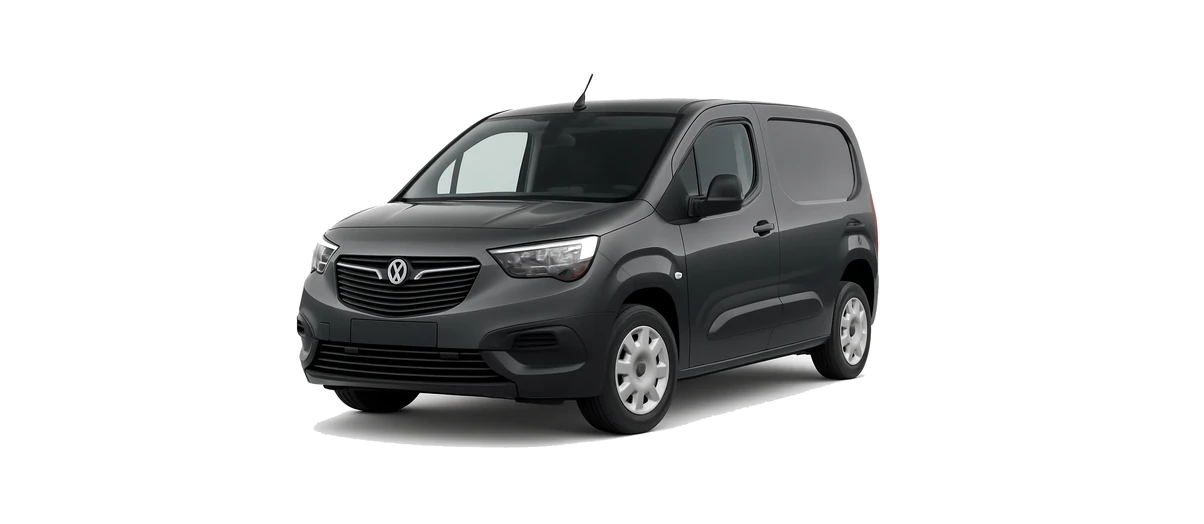
The Vauxhall Combo E name can cause a little confusion in the UK, because older vans were often referred to as Combo-e or Combo E, while the current commercial model is branded Vauxhall Combo Electric. There is also a related Combo Life Electric passenger MPV, but this guide focuses on the compact electric van in panel van and crew van forms.
For charging purposes, the key point is simple: the Vauxhall Combo E / Combo Electric is a battery electric vehicle, not a plug-in hybrid. It uses a Type 2 connection for AC charging and a CCS connection for DC rapid charging. Current UK commercial van data lists a 7.4kW onboard AC charger as standard, with an optional 11kW three-phase onboard charger, while public rapid charging can be carried out at up to 100kW DC where conditions allow.
View Vauxhall Combo E Charging Cables
Vauxhall Combo E Battery and Charging Specifications
The current UK Vauxhall Combo Electric van is listed in Vauxhall’s Model Year 2026.5 commercial price guide with a 52kWh gross battery capacity and 50.7kWh net capacity. Vauxhall identifies this battery as an LFP lithium-ion battery. The current electric van is rated at up to 213 miles WLTP combined, although real-world range will vary with payload, weather, speed, route, tyre condition and heating or air-conditioning use.
Older UK Combo-e and Combo Electric vans, particularly those from around 2021 to 2023, were generally described with a 50kWh battery and quoted at around 150 to 175 miles WLTP combined depending on version and specification. If you are buying a used van or choosing a cable for a vehicle already on your fleet, it is worth checking the model year, battery size and whether the van has the optional 11kW AC charger.
Across the van range covered here, the AC charging standard is Type 2 and the DC rapid charging standard is CCS. A Type 2 cable is used for many home and destination AC charge points, while CCS rapid chargers have their own tethered cable attached to the charging unit.
Battery Options
For the current UK Combo Electric commercial van, the headline battery figure is 52kWh gross and 50.7kWh usable/net capacity. This is the most relevant figure for new van buyers looking at the latest Vauxhall UK information.
For earlier Combo-e and Combo Electric vans, Vauxhall commonly referred to a 50kWh battery. The usable capacity was not always stated clearly in older Vauxhall material, so it is better not to assume it is identical to the latest 50.7kWh net figure. These earlier vans can still use Type 2 AC charging and CCS rapid charging, but their official range figures differ from the current model.
The Combo Life Electric passenger MPV is closely related, but it is not the same as the commercial van. Its specifications, body style, load use and range context can differ. If your vehicle is a Combo Life Electric rather than a Combo Electric van, check the exact model details before relying on van-specific range or charging-time figures.
AC Charging Speed
The current UK Vauxhall Combo Electric van comes with a 7.4kW onboard AC charger as standard. On a suitable 7.4kW single-phase home wallbox, Vauxhall lists a charge to 100% in around 6 hours 43 minutes for the current 52kWh battery version. This makes overnight charging practical for most business and domestic use patterns.
An 11kW three-phase onboard AC charger is optional on the current van. With this option fitted and a suitable three-phase AC charge point available, Vauxhall lists a full AC charge time of around 4 hours 50 minutes. This can be useful at depots, workshops and workplaces with three-phase electrical infrastructure.
For older 50kWh Combo-e vans, typical Vauxhall figures were around 7 hours 30 minutes on a 7kW charger and around 5 hours on optional 11kW AC charging. These figures are close enough to show the same general pattern: 7.4kW is the important figure for most UK home charging, while 11kW matters mainly where both the van and the site support three-phase AC.
When choosing a cable, this distinction matters. A UK single-phase home wallbox will not make the van charge at 11kW simply because you buy an 11kW cable. To benefit from 11kW AC charging, you need the optional 11kW onboard charger fitted to the van and access to a compatible three-phase charge point.
DC Rapid Charging Speed
The Vauxhall Combo E / Combo Electric van supports CCS DC rapid charging at up to 100kW. Vauxhall’s current data indicates a rapid charge from 0-80% in around 30 minutes under suitable conditions. Treat this as an ideal or best-case rapid-charge figure rather than a guaranteed time on every charger.
Rapid charging speed depends on the charger’s output, the van’s state of charge, battery temperature, charging conditions and the charging curve. In practice, the fastest charging usually occurs at lower states of charge, and the vehicle will slow the rate as the battery fills. For long journeys, it is often quicker to stop for a shorter 10-80% style top-up than to charge all the way to 100% on a rapid charger.
You do not use your own Type 2 cable for CCS rapid charging. Public DC rapid chargers have a thick tethered CCS cable attached to the unit. Your own Type 2 cable is mainly for untethered AC public chargers, workplace chargers and some home wallboxes.
Range and Efficiency
The current MY2026.5 UK Vauxhall Combo Electric van is listed with up to 213 miles WLTP combined range. This figure should not be mixed up with older 50kWh van figures, which were often quoted at around 150 to 175 miles WLTP combined, or with city-only figures that may be higher than combined range.
Electric vans can be more sensitive to use case than many passenger cars. A lightly loaded van used on local urban routes may achieve a better range than a heavily loaded van running at motorway speeds in cold weather. Roof racks, ladders, shelving, tools and frequent door opening can all affect efficiency. Heating demand in winter can also reduce range, particularly on short journeys where the cabin needs warming repeatedly.
For fleet planning, it is sensible to work from your own daily mileage and charging opportunities rather than relying only on the official range. If the van returns to base overnight, a 7.4kW charger will usually be the most important charging solution. If it covers unpredictable routes or long-distance work, access to reliable CCS rapid charging becomes more important.
Charging at Home
For most UK owners and small businesses, a dedicated 7.4kW home or workplace wallbox is the most convenient way to charge the Vauxhall Combo E. It uses the van’s standard AC charging capability efficiently and can usually replenish the battery overnight. A tethered wallbox has a cable permanently attached, while an untethered wallbox requires you to plug in your own Type 2 charging cable.
If you use an untethered charger, choose a Type 2 to Type 2 cable suitable for the charge point and the vehicle. For a standard single-phase home installation, a 7.4kW / 32A single-phase cable is typically the relevant match. If your van has the optional 11kW onboard charger and you regularly use three-phase AC charge points, an 11kW three-phase Type 2 cable may be more appropriate.
A 3-pin charger is generally best suited as a backup or occasional charging solution, but can be used regularly if a qualified electrician has confirmed the socket and electrical installation are suitable for sustained EV charging. Charging from a domestic socket is much slower than using a wallbox, so it is not usually the best solution for a working van that needs predictable daily range.
Public Charging
Public charging for the Vauxhall Combo E falls into two main categories: AC destination charging and DC rapid charging. AC destination chargers are often found in car parks, hotels, workplaces and town centres. Many are untethered, so you need your own Type 2 cable. These chargers are useful when the van will be parked for a few hours.
DC rapid chargers are the better option for longer trips or quick turnaround charging. The Combo Electric’s CCS inlet allows it to connect to rapid and ultra-rapid chargers, though the van itself is listed at up to 100kW DC. Using a charger rated above 100kW will not necessarily make the van charge faster than its own limit, but it may still be convenient if that is the available charger.
For business use, consider where the van is parked during the working day. A Type 2 cable can be valuable for opportunity charging at customer sites, public car parks and depots. For motorway or A-road travel, plan around CCS rapid charging stops and allow for charging speed to taper as the battery fills.
Vehicle-Specific Features
The most important vehicle-specific detail is the difference between current and older UK versions. The current Combo Electric van is officially listed with a 52kWh gross / 50.7kWh net LFP battery and up to 213 miles WLTP combined range. Older Combo-e vans used a 50kWh battery and have different official range figures.
The second key feature is the AC charging arrangement. Vauxhall lists 7.4kW AC charging as standard and 11kW AC charging as optional for the van. This means not every Combo E or Combo Electric will charge at 11kW on AC. If you are using workplace three-phase charging, confirm whether your van has the optional 11kW onboard charger before choosing cables or planning charge times around 11kW speeds.
The van also supports delayed charging and vehicle pre-conditioning functions through Vauxhall systems, depending on version and set-up. These can help owners schedule charging around tariffs or prepare the vehicle before a journey, but availability and operation should be checked against the exact vehicle and model year.
Charging Tips
- Confirm your exact model: check whether you have an older 50kWh Combo-e or a newer 52/50.7kWh Combo Electric van.
- Check the onboard AC charger: 7.4kW is standard on current UK van data; 11kW is optional and requires suitable three-phase charging to be useful.
- Use Type 2 for AC charging: this applies to most home, workplace and destination charging in the UK.
- Use CCS for rapid charging: DC rapid chargers have their own tethered CCS cable, so you do not need a separate Type 2 cable for rapid charging.
- Do not over-plan around peak rapid speeds: the van may accept up to 100kW DC, but speed varies with conditions and state of charge.
- Charge to suit the job: for local routes, overnight charging may be enough; for longer routes, plan reliable rapid-charging stops in advance.
Frequently Asked Questions
What charging cable does the Vauxhall Combo E use?
For AC charging, the Vauxhall Combo E / Combo Electric uses a Type 2 connection. A Type 2 to Type 2 cable is suitable for untethered home, workplace and public AC charge points. For DC rapid charging, the van uses a CCS connection and the rapid charger provides the cable.
Is the Vauxhall Combo E a plug-in hybrid?
No. The Combo E / Combo Electric van is a battery electric vehicle. It runs on electricity from its battery and is charged from the mains or public charging network.
Can the Vauxhall Combo Electric charge at 11kW?
Some vans can, but not all. Current UK Vauxhall data lists 7.4kW AC charging as standard and 11kW three-phase AC charging as optional. To charge at 11kW, the van needs the optional onboard charger and access to a compatible three-phase AC charge point.
How long does the Vauxhall Combo E take to charge at home?
For the current 52kWh UK van, Vauxhall lists around 6 hours 43 minutes to charge to 100% on a 7.4kW wallbox. Older 50kWh versions were commonly quoted at around 7 hours 30 minutes on a 7kW charger. Actual times vary depending on starting charge level and conditions.
How fast is Vauxhall Combo E rapid charging?
The Combo Electric van is listed with CCS rapid charging at up to 100kW, with an ideal 0-80% rapid charge taking around 30 minutes. The actual time will depend on charger power, battery temperature, state of charge and other conditions.
What This Means for Drivers
For most UK drivers, the practical charging set-up for a Vauxhall Combo E is straightforward: use a 7.4kW home or workplace wallbox for regular charging and keep a Type 2 cable available for untethered AC charge points. This matches the standard onboard charger fitted to current UK Combo Electric vans and is usually enough for overnight charging.
The optional 11kW AC charger is useful, but only in the right circumstances. It matters most for vans that regularly use three-phase AC chargers at depots or workplaces. If you only charge from a typical UK single-phase home wallbox, the optional 11kW capability and an 11kW cable will not turn that charger into an 11kW supply.
Used owners should be especially careful with specifications. The Combo-e, Combo Electric and Combo Life Electric names can overlap in everyday conversation, but battery size, body style and range figures are not always the same. Before buying a cable or planning fleet charging, confirm the exact van version and onboard charger specification.
Looking for a Charging Cable for Vauxhall Combo E?
If you need a suitable Type 2 cable for a Vauxhall Combo E or Combo Electric van, We offer charging cables for home, workplace and public AC charging, including options for different power ratings and cable lengths.
View Vauxhall Combo E Charging Cables
Please note that this information is intended as a guide. Charging specifications may change due to model and year of manufacture. For precise information, always refer to your vehicle user manual.

