
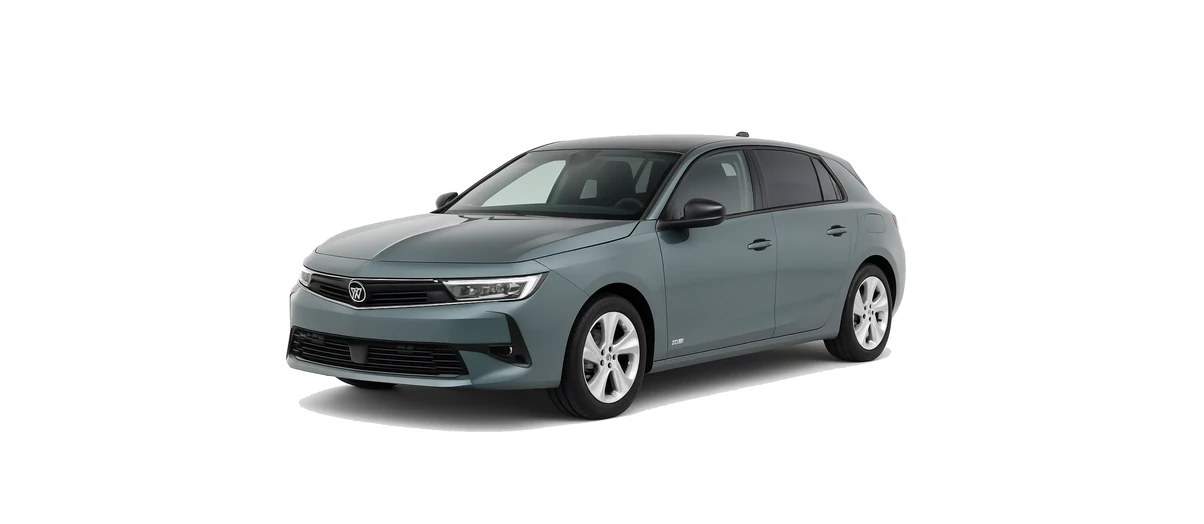
The Vauxhall Astra Hybrid name can be confusing because it is used around several different versions of the Astra family. For charging-cable purposes, the important model is the Astra Plug-in Hybrid, sometimes described as the Astra PHEV. This is the version that can be plugged in and charged from mains electricity.
It should not be confused with the non-plug-in 48V Astra Hybrid, which does not use a charging cable, or with the separate Astra Electric, which is a full battery-electric car with different charging hardware and charging speeds. There are also differences between earlier Astra Plug-in Hybrid models and the latest MY2025C / 2026 cars, so it is worth checking which version you own before choosing charging equipment or comparing charging times.
For UK Astra Plug-in Hybrid drivers, the key point is simple: the PHEV uses a Type 2 AC charging connection. It is designed mainly for home charging, workplace charging and public AC charging rather than DC rapid charging.
View Vauxhall Astra Hybrid Charging Cables
Vauxhall Astra Hybrid Battery and Charging Specifications
The current UK Astra Plug-in Hybrid range is available as a 5-door hatchback and Sports Tourer estate. In the latest MY2025C / 2026 specification, Vauxhall lists a 17.2kWh battery for both the standard Astra Plug-in Hybrid 1.6 195PS and the Astra GSe Plug-in Hybrid 1.6 225PS.
Charging is AC only via a Type 2 socket. The standard onboard charger is rated at 3.7kW. Vauxhall also lists an optional 7kW onboard charger, which reduces charging time when the car is connected to a suitable 7.4kW AC home or public charge point.
| Item | Current Astra Plug-in Hybrid information |
|---|---|
| Vehicle type | Plug-in hybrid electric vehicle, with petrol engine and rechargeable battery |
| Charging connection | Type 2 AC |
| Current battery capacity | 17.2kWh gross, usable capacity not clearly published |
| Standard AC charging | 3.7kW onboard charger |
| Optional AC charging | 7kW onboard charger, where specified |
| DC rapid charging | Not listed for the Astra Plug-in Hybrid in the UK data used for this guide |
Battery Options
The most important buying and ownership detail is the model-year difference. Earlier UK Astra Plug-in Hybrid models used a smaller 12.4kWh battery, while the later MY2025C / 2026 update moved to a 17.2kWh battery. These cars can look similar and may share the Astra Plug-in Hybrid name, but they do not have identical electric range or charging times.
For the current updated car, Vauxhall states a 17.2kWh battery. The standard 195PS plug-in hybrid has an official electric range of up to 52 miles EAER WLTP, while the GSe 225PS plug-in hybrid is listed at up to 50 miles EAER WLTP. Earlier 12.4kWh Astra Plug-in Hybrid models were typically quoted with lower official electric range figures, around the mid-30-mile mark depending on version and specification.
If you are buying a used Astra Plug-in Hybrid, do not assume the newest figures apply. Check the registration year, build information, trim and original specification. If in doubt, the vehicle handbook, Vauxhall dealer records or VIN-specific build data are the safest references.
AC Charging Speed
The Astra Plug-in Hybrid charges using AC power through a Type 2 inlet. On current MY2025C / 2026 models, the standard onboard charger is 3.7kW. Vauxhall lists a 20-100% charging time of around 4 hours 6 minutes from a 3.7kW wallbox or public AC charger.
Some cars may have the optional 7kW onboard charger. With that option, Vauxhall lists a 20-100% charge time of around 2 hours 53 minutes when using a suitable 7.4kW AC charge point. This difference matters because a 7kW home wallbox will not automatically make every Astra Plug-in Hybrid charge at 7kW. The car can only accept what its onboard charger allows.
In practical terms, a 7kW home wallbox is still a sensible charging setup for many UK households. If your Astra has the standard 3.7kW onboard charger, the wallbox will supply power within the car’s limit. If your Astra has the optional 7kW onboard charger, you can benefit from the faster AC charging time.
DC Rapid Charging Speed
The Astra Plug-in Hybrid should not be treated like the Astra Electric when it comes to rapid charging. The PHEV charging information used for this guide lists Type 2 AC charging, not CCS DC rapid charging. There is no reliable UK specification in the supplied data showing DC rapid charging support or a 10-80% rapid-charge time for the Astra Plug-in Hybrid.
This is normal for many plug-in hybrids. The battery is much smaller than in a full electric car, and the vehicle also has a petrol engine for longer journeys. For day-to-day ownership, the most useful charging pattern is to charge at home, at work or at public AC posts whenever convenient, then use petrol when the battery is depleted or for longer trips.
Range and Efficiency
The current 17.2kWh Astra Plug-in Hybrid is officially capable of up to 52 miles EAER WLTP in the 195PS version, with the GSe 225PS version listed at up to 50 miles. In real UK driving, around 40 miles of electric running is a reasonable expectation for many drivers, although this depends on route, speed, temperature, driving style, load and use of heating or air conditioning.
A plug-in hybrid delivers its best economy when it is charged regularly. If most of your journeys are short commutes, school runs or local errands, you may be able to complete a high proportion of driving on electric power. If you rarely plug in, the car will behave more like a petrol hybrid carrying a larger battery, and fuel economy will be less impressive.
For motorway journeys, expect the electric range to fall more quickly than it would around town. The petrol engine is there for exactly this use case, but for the lowest running costs it makes sense to begin longer journeys with a full battery whenever possible.
Charging at Home
Home charging is usually the most convenient way to run an Astra Plug-in Hybrid. A dedicated home wallbox can charge the car safely and consistently, and it is often easier to take advantage of off-peak electricity tariffs overnight. Even with the standard 3.7kW onboard charger, the current 17.2kWh Astra Plug-in Hybrid can be replenished comfortably within a typical evening or overnight parking period.
If you have a socketed wallbox rather than a tethered unit, you will need a Type 2-to-Type 2 charging cable. If you have a tethered wallbox with a Type 2 connector attached, you may not need a separate cable at home, but you will still usually want one for untethered public AC chargers.
A 3-pin charger is generally best suited as a backup or occasional charging solution, but can be used regularly if a qualified electrician has confirmed the socket and electrical installation are suitable for sustained EV charging. Avoid relying on old, damaged or heavily shared sockets, and do not use unsuitable extension leads for EV charging.
Public Charging
For public charging, Astra Plug-in Hybrid owners should focus on AC charge points with Type 2 connections. Many UK public AC posts are untethered, meaning you bring your own Type 2-to-Type 2 cable. The post may be capable of 7kW, 11kW or 22kW, but the Astra Plug-in Hybrid will charge only up to the limit of its onboard charger.
This means a current car with the standard 3.7kW onboard charger will not charge faster simply because it is connected to a higher-powered AC post. A car fitted with the optional 7kW onboard charger can make better use of a 7.4kW AC post, but it still will not behave like a full electric car on a rapid charger.
Because the PHEV battery is relatively small, short top-ups can be worthwhile. Charging while parked at work, at a supermarket, at a gym or in a town centre can add useful electric mileage without needing a long stop.
Vehicle-Specific Features
The main Astra-specific point is identification. The Astra range includes the non-plug-in 48V Hybrid, the Plug-in Hybrid, the sportier GSe Plug-in Hybrid and the separate Astra Electric. Only the plug-in versions covered here require an AC charging cable, and the cable requirement is Type 2 for UK and European AC charging.
The current Astra Plug-in Hybrid’s larger 17.2kWh battery gives it a stronger electric-only range than earlier 12.4kWh versions, but the onboard charger specification still has a major effect on how quickly it charges. If you are comparing two used Astras, a car with the optional 7kW onboard charger may be more convenient for frequent public AC top-ups than a standard 3.7kW car.
The Astra Plug-in Hybrid is also available in hatchback and Sports Tourer estate body styles, so charging behaviour is broadly about the drivetrain and onboard charger rather than the body shape. Always check your exact car’s handbook or build specification before relying on a quoted time.
Charging Tips
- Check which Astra you own: the 48V Astra Hybrid does not plug in, the Astra Plug-in Hybrid uses Type 2 AC, and the Astra Electric is a different vehicle with different charging capability.
- Confirm the onboard charger: current cars have 3.7kW as standard, while some may have the optional 7kW onboard charger.
- Use a Type 2-to-Type 2 cable for public AC posts: many UK destination chargers require you to bring your own cable.
- Do not expect rapid charging: the Astra Plug-in Hybrid is best charged from home, workplace and public AC points.
- Charge little and often: regular charging is the easiest way to maximise electric miles and reduce petrol use.
- Choose cable rating sensibly: a higher-rated Type 2 cable will not make a 3.7kW car charge faster, but it may be useful for compatibility with other vehicles or future ownership.
Frequently Asked Questions
Does the Vauxhall Astra Hybrid need a charging cable?
If it is the Astra Plug-in Hybrid, yes. It uses a Type 2 AC connection. If it is the non-plug-in 48V Astra Hybrid, no charging cable is required because that version is not charged from an external socket.
What cable does the Vauxhall Astra Plug-in Hybrid use?
For UK and European AC charging, the Astra Plug-in Hybrid uses a Type 2 connection. A Type 2-to-Type 2 cable is the relevant cable for socketed home wallboxes and many public AC charge points.
Can the Astra Plug-in Hybrid use DC rapid chargers?
The UK plug-in hybrid data used for this guide lists AC Type 2 charging only. Do not use Astra Electric rapid-charging figures for the Astra Plug-in Hybrid, as they refer to a different vehicle.
How long does it take to charge?
For current MY2025C / 2026 cars with the 17.2kWh battery, Vauxhall lists around 4 hours 6 minutes from 20-100% using the standard 3.7kW onboard charger. With the optional 7kW onboard charger, the listed 20-100% time is around 2 hours 53 minutes from a suitable 7.4kW AC charge point.
Why do some Astra Plug-in Hybrid figures differ?
Earlier UK Astra Plug-in Hybrid models used a 12.4kWh battery and had different official range and charging-time figures. The later MY2025C / 2026 update uses a 17.2kWh battery, so it is important not to mix the two sets of data.
Is a 7kW wallbox worth it for the Astra Plug-in Hybrid?
Yes, it can still be a good home charging choice. However, if your car has the standard 3.7kW onboard charger, it will charge at up to that rate. If your car has the optional 7kW onboard charger, it can take better advantage of a 7.4kW home charge point.
What This Means for Drivers
The Vauxhall Astra Plug-in Hybrid is best understood as a car for regular AC charging and efficient short-distance electric driving, backed up by a petrol engine for longer journeys. The latest 17.2kWh version offers a useful official electric range, but the real ownership benefit comes from plugging in frequently.
When choosing a cable, do not base your decision on Astra Electric specifications or generic Astra Hybrid wording. For the Astra Plug-in Hybrid, look for Type 2 AC compatibility and check whether your car has the standard 3.7kW or optional 7kW onboard charger. That will tell you what charging speed to expect at home and on public AC posts.
Looking for a Charging Cable for Vauxhall Astra Hybrid?
You can find Type 2 charging cables suitable for the Vauxhall Astra Plug-in Hybrid, helping you charge from compatible socketed home wallboxes and public AC charge points.
View Vauxhall Astra Hybrid Charging Cables
Please note that this information is intended as a guide. Charging specifications may change due to model and year of manufacture. For precise information, always refer to your vehicle user manual.

