
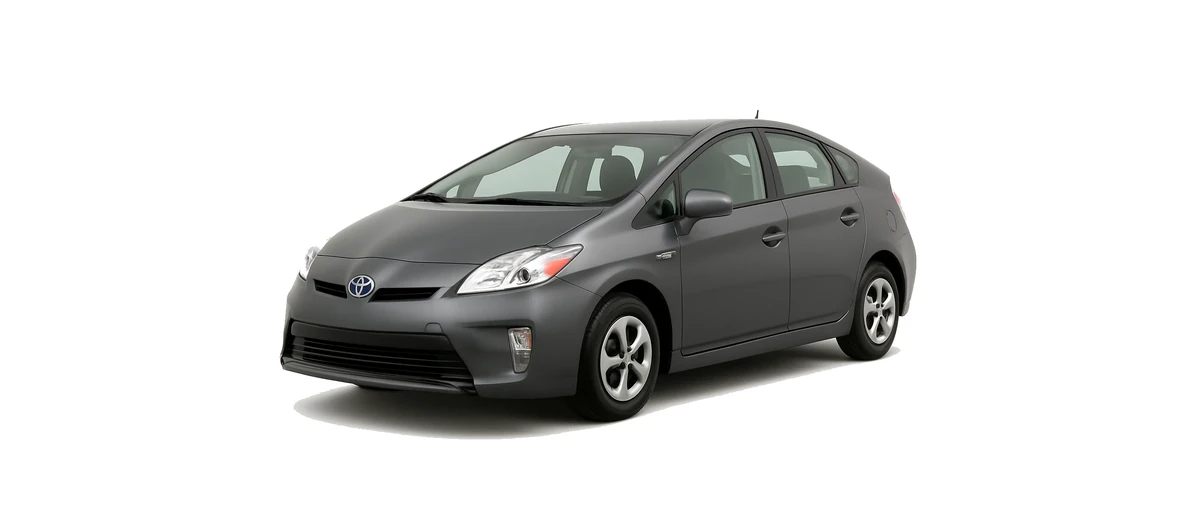
The Toyota Prius Plug-in Hybrid sold in the UK before the 2017 replacement is a slightly unusual car in today’s charging landscape. It is not a full battery electric vehicle, and it should not be confused with the later 2017-on Prius Plug-in, which used different charging hardware and a larger battery. The pre-2017 Prius Plug-in is a plug-in hybrid based on Toyota’s third-generation Prius platform, combining a 1.8-litre petrol hybrid system with a small lithium-ion battery that can be charged from an external power supply.
For owners, the most important point is cable compatibility. UK-market first-generation Prius Plug-in Hybrid models up to 2016 are generally treated as Type 1 AC vehicles, so they usually require a Type 2-to-Type 1 charging cable for untethered UK public AC charge points. They also charge at a relatively low AC rate of around 2 kW, so using a higher-rated public post or wallbox will not make the car charge like a modern 7 kW EV or PHEV.
View Toyota Prius Charging Cables – Models Up To 2016 Charging Cables
Toyota Prius Charging Cables – Models Up To 2016 Battery and Charging Specifications
This guide applies to the first-generation Toyota Prius Plug-in Hybrid sold in the UK from around 2012 and replaced by the second-generation Prius Plug-in in 2017. It is aimed at drivers checking which cable they need for a pre-2017 Prius Plug-in, rather than owners of a standard non-plug-in Prius hybrid. Most Toyota Prius models from this era do not plug in at all and therefore do not use a charging cable.
| Vehicle type | Plug-in hybrid electric vehicle (PHEV), not a pure EV |
|---|---|
| Body style | 5-door hatchback |
| Battery | 4.4 kWh lithium-ion battery |
| Charging connection | Type 1 / SAE J1772 AC vehicle inlet on pre-2017 UK/EU Prius Plug-in models |
| Typical public cable | Type 2-to-Type 1 cable for untethered UK AC charge points |
| AC charging capability | Approximately 2.0 kW maximum from the vehicle’s onboard charger |
| DC rapid charging | Not supported |
| Official electric range | Up to about 25 km / 15.5 miles under pre-WLTP testing |
The key practical message is simple: if your Prius Plug-in is the pre-2017 model, do not buy a cable intended for the 2017-on Type 2 Prius Plug-in without checking your car first. The two generations are commonly mixed up, but their charging arrangements are not the same.
Battery Options
The first-generation Toyota Prius Plug-in Hybrid used a 4.4 kWh lithium-ion traction battery. Toyota Europe stated this total capacity for the original model, with the car using a managed state-of-charge window rather than the full gross capacity. A precise usable kWh figure is not normally published in owner-facing material, so it is best to think of this as a small plug-in hybrid battery rather than compare it directly with modern PHEVs using larger packs.
Once the externally charged portion of the battery is depleted, the car continues to operate as a regular Toyota full hybrid. That means the petrol engine, electric motor and regenerative braking system continue to work together, but the car no longer offers the same degree of electric-only driving until it is plugged in again.
Because the battery is small, frequent top-ups make more sense than waiting for long charging sessions. For drivers with short commutes or local journeys, plugging in whenever convenient can help maximise electric running around town.
AC Charging Speed
The pre-2017 Prius Plug-in is an AC-only plug-in hybrid with a relatively low onboard charging limit. Toyota quoted a full recharge in about 90 minutes from a 230 V supply, and later Toyota material for the 2017 successor noted that charging power increased from 2.0 kW to 3.3 kW. For the up-to-2016 model, around 2.0 kW is therefore the sensible practical maximum to use when planning charging.
This matters when choosing a cable. A 16 amp Type 2-to-Type 1 cable is generally sufficient for this vehicle’s own charging capability. A 32 amp cable may be physically compatible where the connectors match, but it will not make the Prius charge faster because the limiting factor is the car’s onboard charger, not the rating of the charge point.
Likewise, plugging into a 7 kW public AC post or a home wallbox does not turn the car into a 7 kW charging vehicle. The charge point offers power; the car decides how much it can accept.
DC Rapid Charging Speed
There is no DC rapid charging capability on the first-generation Toyota Prius Plug-in Hybrid. It does not have CCS or CHAdeMO rapid charging, and there is no meaningful 10-80% rapid charging time to quote for this model.
This is not a disadvantage in the same way it might be for a full EV with a large battery. The Prius Plug-in’s battery is small, and the car can continue in hybrid mode when the plug-in charge is depleted. Its charging routine is therefore based around short AC top-ups at home, at work or at slower public AC posts, rather than motorway rapid charging stops.
Range and Efficiency
The official electric driving range for the first-generation Prius Plug-in was quoted at up to 25 km, or around 15.5 miles, under the pre-WLTP test cycle used at the time. This should not be described as a WLTP range figure, and real-world electric range will vary with temperature, speed, driving style, traffic conditions and use of cabin heating or air conditioning.
In practice, the car is best suited to drivers who can make repeated short electric trips and then rely on the hybrid system for longer journeys. For example, local errands, school runs or part of a commute may be covered with plug-in charge available, while motorway or longer-distance driving will use the petrol hybrid system more heavily.
Efficiency depends strongly on how often the car is charged. A Prius Plug-in that is topped up regularly can use its electric range more frequently. A car that is rarely plugged in will behave much more like a conventional Prius hybrid, carrying the extra plug-in hardware without gaining as much benefit from it.
Charging at Home
Home charging is the most convenient way to use a pre-2017 Prius Plug-in. Because the battery is small and the onboard charger is around 2 kW, the car does not need high charging power to be useful. A full recharge can typically be completed in around an hour and a half from a suitable 230 V supply, making overnight charging straightforward and daytime top-ups realistic.
If you have a tethered home charge point, check the connector fitted to the lead. Many modern UK home chargers are Type 2 tethered units, which will not plug directly into a pre-2017 Type 1 Prius Plug-in. An untethered wallbox with a Type 2 socket is often more flexible, as the driver can use a Type 2-to-Type 1 cable for this Prius and a different cable for another vehicle if needed.
A 3-pin charger is generally best suited as a backup or occasional charging solution, but can be used regularly if a qualified electrician has confirmed the socket and electrical installation are suitable for sustained EV charging. Avoid using damaged sockets, lightweight extension leads or unknown electrical outlets for repeated charging.
The car’s charging timer is useful if you have an off-peak electricity tariff. Setting the vehicle to charge during cheaper overnight periods can reduce running costs, even though the amount of electricity used per full charge is modest compared with a modern full EV.
Public Charging
For most untethered UK public AC charge points, a pre-2017 Prius Plug-in owner will typically need a Type 2-to-Type 1 cable. The charge point side is Type 2, while the car side connects to the vehicle’s Type 1 inlet. This is the common source of confusion, because newer cars and the later Prius Plug-in generation use Type 2 at the vehicle end.
When using public charging, remember that the post’s advertised rating is not the speed your car will necessarily charge at. A 7 kW, 11 kW or 22 kW AC post can still be useful, but the Prius Plug-in will only draw roughly what its own onboard charger allows. You should expect slow AC charging, not modern rapid or fast-charging performance.
Because the battery is small, public charging can still be worthwhile during a short stop if the bay is convenient and the tariff makes sense. However, it may not be cost-effective to pay high session fees for such a small amount of energy. Check network pricing before plugging in, particularly where there are connection fees, minimum charges or parking restrictions.
Vehicle-Specific Features
The most important vehicle-specific feature for charging is the pre-2017 Type 1 inlet. This separates the first-generation UK Prius Plug-in from the 2017-on model, which moved to different charging hardware. If you have recently bought a used Prius, check the charge port before ordering a cable. Registration year can help, but it is not a substitute for confirming the actual connector on the car.
The Prius Plug-in also has a charging timer function, allowing owners to schedule charging rather than starting immediately when plugged in. This is particularly useful for overnight charging at home or for making use of lower-cost electricity periods.
Another defining feature is how seamlessly the car returns to hybrid operation. Unlike a pure EV, it does not need a public charger to continue a long journey. Charging improves electric running and fuel economy, but the car remains usable as a petrol hybrid when the plug-in battery window has been used.
Charging Tips
- Check the generation before buying a cable. Pre-2017 Prius Plug-in models are associated with Type 1 charging, while the 2017-on Prius Plug-in uses different hardware.
- Use a Type 2-to-Type 1 cable for most UK public AC posts. This is the usual cable arrangement for untethered public charging with this model.
- Do not expect faster charging from a higher-rated post. The car’s onboard charger is around 2 kW, so a 7 kW or 22 kW post will not significantly shorten the session.
- A 16 amp cable is generally enough. A higher-rated cable may work where compatible, but it will not increase the car’s charging limit.
- Top up little and often. The small battery is well suited to regular short charges rather than occasional long public charging stops.
- Avoid rapid chargers. This Prius Plug-in is AC-only and does not support CCS or CHAdeMO DC charging.
- Use the charging timer. Scheduling charging can help with off-peak tariffs and regular daily routines.
Frequently Asked Questions
Is the Toyota Prius Plug-in up to 2016 a full electric car?
No. It is a plug-in hybrid. It can drive for a short distance using externally charged electricity, but once that charge is depleted it operates as a Toyota full hybrid with a petrol engine and electric motor working together.
What charging cable does a pre-2017 Toyota Prius Plug-in need?
For most untethered UK public AC charge points, it typically needs a Type 2-to-Type 1 cable. The Type 2 end connects to the charge point, and the Type 1 end connects to the car.
Will a 32 amp cable make the Prius Plug-in charge faster?
No. A 32 amp cable may be compatible if the connectors are correct, but the car’s onboard charger is only around 2 kW. A 16 amp cable is generally sufficient for the vehicle’s charging capability.
Can the first-generation Prius Plug-in use rapid chargers?
No. The pre-2017 Prius Plug-in is AC-only and does not support DC rapid charging. It does not have CCS or CHAdeMO charging.
What is the electric range?
The official figure was up to about 25 km, or 15.5 miles, under the pre-WLTP test cycle. Real-world range can be lower depending on conditions and driving style.
Are all Toyota Prius models up to 2016 plug-in hybrids?
No. Many Prius models from this period are standard hybrids and do not plug in. This guide is only for the Prius Plug-in Hybrid version.
What This Means for Drivers
The pre-2017 Toyota Prius Plug-in Hybrid is straightforward to charge once you understand its limits. It has a small 4.4 kWh battery, AC-only charging and an onboard charger of around 2 kW. That makes it very different from both modern full EVs and the later 2017-on Prius Plug-in.
For day-to-day use, the best approach is to charge at home or at work whenever convenient, use the timer where helpful, and treat public charging as a useful top-up rather than an essential part of every journey. The most important purchase decision is choosing the correct Type 2-to-Type 1 cable for the pre-2017 car and not accidentally buying for the later Type 2 model.
Looking for a Charging Cable for Toyota Prius Charging Cables – Models Up To 2016?
If you need a compatible cable for a pre-2017 Toyota Prius Plug-in Hybrid, We sell charging cables for Toyota Prius models up to 2016 so you can choose the correct Type 1 cable for home and public AC charging.
View Toyota Prius Charging Cables – Models Up To 2016 Charging Cables
Please note that this information is intended as a guide. Charging specifications may change due to model and year of manufacture. For precise information, always refer to your vehicle user manual.

