
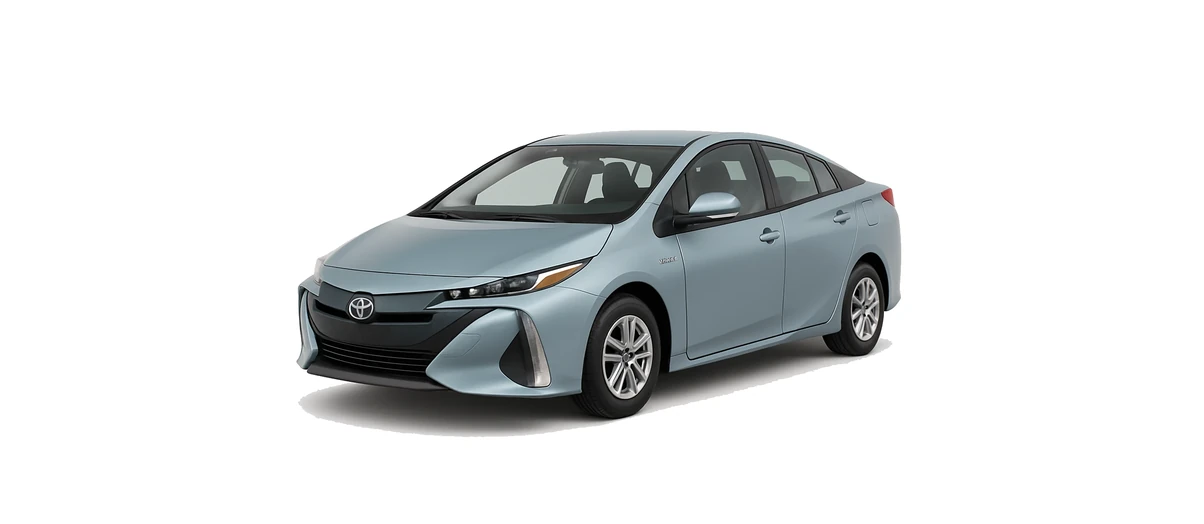
The Toyota Prius name has been used for several different types of hybrid car, so it is important to be precise when choosing a charging cable. This guide covers UK-market Toyota Prius models with a plug from 2017 onwards: the 2017-2022 Prius Plug-in Hybrid and the 2024-current Prius Plug-in. These cars are plug-in hybrids, not fully electric vehicles, and they combine a petrol hybrid drivetrain with a rechargeable lithium-ion traction battery for electric-only driving over shorter journeys.
The key cable point is simple: UK and European Prius Plug-in models from 2017 use Type 2 AC charging. However, the battery size, electric range and charge time differ noticeably between generations. A cable that is rated above the car’s charging limit is still usable, but it will not make the Prius charge faster than its onboard charger allows.
View Toyota Prius Charging Cables – Models From 2017 Charging Cables
Toyota Prius Charging Cables – Models From 2017 Battery and Charging Specifications
For UK buyers, the main distinction is between the 2017-2022 Prius Plug-in and the 2024-current Prius Plug-in. Both are PHEVs and both use AC charging through a Type 2/Mennekes inlet, but they are not identical from a charging perspective.
- Vehicle type: Plug-in hybrid electric vehicle (PHEV), not a battery-electric vehicle.
- Charging connector: Type 2 / Mennekes AC for UK and European charging.
- Maximum AC charging power: around 3.3 kW, according to Toyota UK information.
- DC rapid charging: no confirmed CCS/DC rapid-charging inlet for these UK Prius Plug-in models.
- Body style: 5-door hatchback.
- Platform context: Toyota New Global Architecture / GA-C family, with the current model using Toyota’s fifth-generation hybrid electric technology.
This means the Prius Plug-in is best thought of as a car you charge at home, at work or from slower public AC posts. It is not intended to be used like a long-range BEV that regularly relies on motorway rapid chargers.
Battery Options
The Prius Plug-in battery specification depends on generation. Avoid assuming that every plug-in Prius from 2017 onwards has the same battery capacity or electric range.
2017-2022 Toyota Prius Plug-in, 1.8 Plug-in Hybrid: Toyota UK media information lists an 8.8 kWh lithium-ion hybrid battery. The quoted maximum EV range was up to 39 miles under official testing. Usable battery capacity was not confirmed in the Toyota UK sources used for this guide, so it is safest to refer to the 8.8 kWh figure as the listed battery capacity rather than making assumptions about usable capacity.
2024-current Toyota Prius Plug-in, 2.0 Plug-in Hybrid: Toyota UK information lists a 13.6 kWh usable battery capacity for the current model. Toyota’s launch information also described a 13.6 kWh lithium-ion battery and quoted up to 53.4 miles of EV driving range, while brochure figures vary by grade and wheel size. This is one reason current Prius Plug-in models can cover more local driving on electricity than the earlier 2017-2022 car.
AC Charging Speed
Both important UK generations of Prius Plug-in are limited by the car’s onboard AC charger rather than by the rating of most wallboxes or public posts. Toyota quotes 3.3 kW maximum charging power for the 2017-2022 car and lists a standard 3.3 kW charger for the 2024-current model.
For the 2017-2022 Prius Plug-in, Toyota quoted around two hours for a full charge using a suitable Type 2 Mode 3 Mennekes connection. Toyota also quoted around 3 hours 10 minutes from a standard household plug.
For the 2024-current Prius Plug-in, Toyota UK lists an AC charging time of approximately four hours for a 0-100% charge. The longer time is expected because the current model has a larger battery, even though the AC charger rating remains modest.
A 7 kW home wallbox or a 22 kW public AC post can still be used if the connector and cable are suitable, but the Prius will only draw what its onboard charger permits. In practical terms, a higher-rated Type 2 cable is useful for compatibility and future-proofing, not because it turns the Prius Plug-in into a faster-charging car.
DC Rapid Charging Speed
No reliable UK Toyota source confirmed CCS/DC rapid charging for the Prius Plug-in models covered here. These UK PHEV models should therefore be treated as AC-charging vehicles for cable-selection purposes.
Some specification tables can be confusing where charging-time terminology is concerned, but the wider Toyota UK documentation and the normal PHEV context point towards Type 2 AC charging rather than CCS rapid charging. Do not buy a cable or plan journeys on the assumption that a Prius Plug-in can use DC rapid chargers like a full battery-electric car.
Range and Efficiency
The Prius Plug-in is designed to reduce petrol use by allowing many short journeys to be completed using electric power. The earlier 2017-2022 model was quoted at up to 39 miles of EV range, while the 2024-current car has a larger battery and official electric range figures that vary depending on grade and wheel size. Toyota’s launch material quoted up to 53.4 miles, while UK brochure figures may be lower for some versions.
As with any PHEV, real-world electric range depends on temperature, driving speed, tyre choice, use of heating and air conditioning, route profile and how often the car is charged. Regular charging is the key to getting the best from a Prius Plug-in. If the battery is left empty, the car still works as a petrol hybrid, but you will not benefit fully from the plug-in capability.
Charging at Home
Home charging is usually the most convenient way to run a Prius Plug-in. Because the onboard charger is around 3.3 kW, the car does not need a very high-powered charging point to refill the battery overnight or between journeys. A dedicated home wallbox with a Type 2 socket or tethered Type 2 lead is generally the neatest long-term solution.
For 2017-2022 cars, a suitable Type 2 home charger can typically fill the battery in about two hours. For the 2024-current car, Toyota quotes around four hours for a 0-100% AC charge. Many owners will not be charging from completely empty every time, so typical top-ups may be shorter.
A 3-pin charger is generally best suited as a backup or occasional charging solution, but can be used regularly if a qualified electrician has confirmed the socket and electrical installation are suitable for sustained EV charging. Avoid using worn sockets, damaged extension leads or improvised outdoor arrangements. EV charging is a long-duration electrical load, even when the car’s battery is relatively small.
Public Charging
For public charging, look for AC charge points with Type 2 sockets. Many UK public AC posts are untethered, which means you need to bring your own Type 2 cable. A 32 amp Type 2 cable is electrically suitable for many public posts, but the Prius Plug-in will still charge at approximately its own 3.3 kW limit.
Public rapid chargers are usually aimed at BEVs with CCS connectors. Since no CCS rapid-charging capability is confirmed for these UK Prius Plug-in models, Prius drivers should plan around AC posts rather than rapid-charging hubs. This is rarely a major issue for a PHEV because the petrol hybrid system remains available for longer journeys.
If you use workplace or destination charging, a Type 2 cable is often the most useful accessory. Charging while parked for a few hours can be enough to recover a full or substantial battery charge, particularly on the 2017-2022 model.
Vehicle-Specific Features
The Prius Plug-in includes several efficiency-focused features, but some are generation-specific. The 2017-2022 Prius Plug-in was available with an optional solar roof on Business Edition Plus models, designed to add energy to support EV range when parked and not plugged in. Toyota also confirmed a Battery Warming System for the 2017-generation Prius Plug-in to reduce the impact of cold weather on EV range during charging. This should not be confused with modern route-based rapid-charge battery preconditioning.
The 2024-current Prius Plug-in is listed by Toyota UK with a heat pump system with humidifier as standard on Design and Excel grades. Toyota UK brochure information also lists a 230V power outlet in the boot, but this should not be described as full vehicle-to-load functionality unless Toyota explicitly confirms the V2L capability and power rating for the UK model.
Most importantly, many Prius cars on UK roads are conventional self-charging hybrids with no external charge port. Before ordering a cable, check that your car is specifically a Prius Plug-in or Prius Plug-in Hybrid.
Charging Tips
- Choose Type 2 for UK/EU AC charging: this is the correct connector type for Prius Plug-in models from 2017 onwards.
- Do not expect rapid charging: these cars are PHEVs with modest AC charging capability, not CCS rapid-charging BEVs.
- Charge little and often: regular top-ups help maximise electric running and reduce petrol use on short trips.
- Use scheduled charging where available: charging overnight can be convenient and may align with cheaper electricity tariffs.
- Check the car before buying: standard Prius hybrids do not have a plug and do not need an EV charging cable.
- Consider future use: a 32 amp Type 2 cable may be more versatile for other EVs, even though the Prius itself will not use the full rating.
Frequently Asked Questions
What charging cable does a Toyota Prius Plug-in from 2017 use?
The UK and European Prius Plug-in models covered here use a Type 2 / Mennekes AC charging connection.
Is the Toyota Prius Plug-in a fully electric car?
No. It is a plug-in hybrid with a petrol engine, hybrid system and rechargeable traction battery. It can drive on electric power for shorter journeys, but it is not a BEV.
Will a 7 kW or 22 kW cable make the Prius charge faster?
No. A higher-rated cable or charge point will not make the car exceed its onboard AC charging limit, which Toyota lists at around 3.3 kW. The car controls how much power it draws.
Can the Prius Plug-in use DC rapid chargers?
No confirmed CCS/DC rapid-charging capability was found for the UK Prius Plug-in models covered in this guide. Plan to use Type 2 AC charging.
How long does a full charge take?
For the 2017-2022 Prius Plug-in, Toyota quoted around two hours from a suitable Type 2 AC connection. For the 2024-current Prius Plug-in, Toyota UK quotes approximately four hours for a 0-100% AC charge.
Do all Toyota Prius models from 2017 have a charge port?
No. Many Prius models are conventional hybrids and cannot be plugged in. This guide applies to Prius Plug-in and Prius Plug-in Hybrid models only.
What This Means for Drivers
For Toyota Prius Plug-in drivers, cable selection is straightforward once the vehicle is correctly identified. The correct public and home AC charging standard is Type 2, and the car’s charging speed is limited to around 3.3 kW. The 2017-2022 model has a smaller 8.8 kWh battery and shorter quoted charge time, while the 2024-current car has a larger 13.6 kWh usable battery and takes longer to charge from empty.
The Prius Plug-in makes most sense when it is charged regularly, especially for commuting, school runs and local journeys. It does not need rapid charging to be useful, because the petrol hybrid system remains available when the battery is depleted or when travelling longer distances.
Looking for a Charging Cable for Toyota Prius Charging Cables – Models From 2017?
If you need a suitable Type 2 cable for a Toyota Prius Plug-in or Prius Plug-in Hybrid from 2017 onwards, We sell compatible options for UK home, workplace and public AC charging.
View Toyota Prius Charging Cables – Models From 2017 Charging Cables
Please note that this information is intended as a guide. Charging specifications may change due to model and year of manufacture. For precise information, always refer to your vehicle user manual.

