
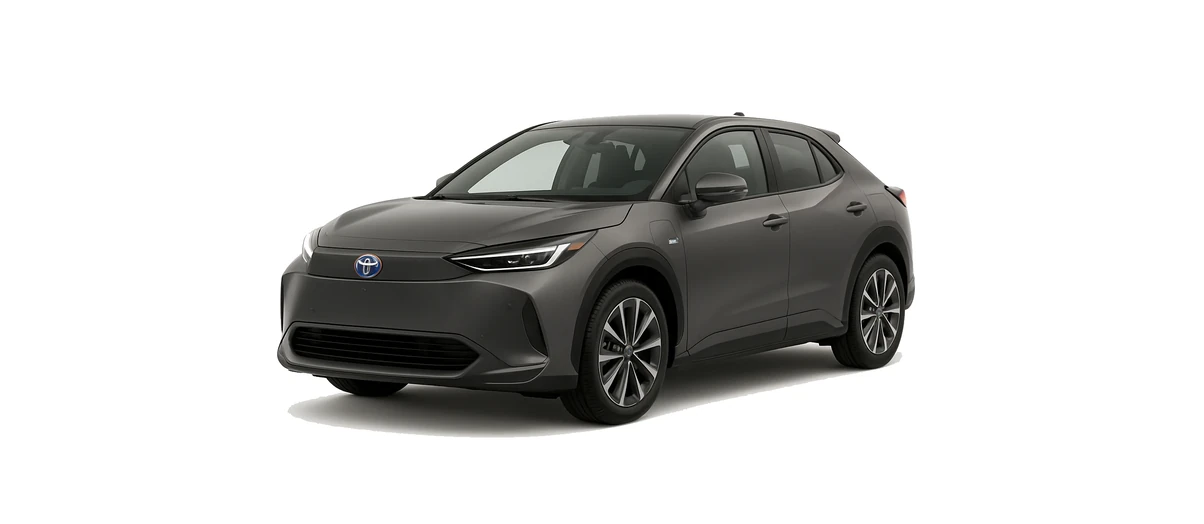
The Toyota C-HR name can be confusing when it comes to charging. In the current UK range, there are self-charging Hybrid versions, a 2.0 Plug-in Hybrid version, and Toyota also lists the separate all-electric Toyota C-HR+ model. This guide is specifically for the Toyota C-HR Plug-in Hybrid, not the standard C-HR Hybrid and not the C-HR+ battery-electric vehicle.
If you own a normal Toyota C-HR Hybrid, you do not need a charging cable because the car does not plug in. If you own the C-HR Plug-in Hybrid, you can charge the battery from an external power supply using AC charging. The Plug-in Hybrid uses a petrol engine and hybrid system as well as a larger rechargeable battery, giving useful electric-only driving for local journeys while still allowing longer trips without planning around public chargers.
View Toyota C-HR Charging Cables
Toyota C-HR Battery and Charging Specifications
The UK Toyota C-HR Plug-in Hybrid pairs a 2.0-litre petrol engine with an electric motor and a lithium-ion battery. Toyota UK media information describes the battery as a high-output 13.6 kWh unit. Public UK sources do not consistently confirm a separate usable battery capacity figure, so it is best to use Toyota’s published gross battery capacity when comparing the car with other plug-in hybrids.
For charging, the C-HR Plug-in Hybrid is an AC-charging plug-in hybrid rather than a rapid-charging battery-electric car. Toyota quotes a full charge in around 2.5 hours from a dedicated wallbox and around 6.5 hours from a domestic 3-pin supply. Independent UK review sources report AC charging at up to around 6.6 kW, which matches the kind of charging time Toyota quotes from a 7 kW home charger.
The key point for cable selection is that the C-HR Plug-in Hybrid is associated with Type 2 AC charging in the UK and Europe. There is no confirmed CCS DC rapid-charging capability for the C-HR Plug-in Hybrid, so the rapid-charging figures for the separate C-HR+ electric SUV should not be used for this model.
Battery Options
The current UK C-HR Plug-in Hybrid is offered with a 2.0-litre plug-in hybrid powertrain producing a combined 223 hp in front-wheel-drive form. The plug-in battery capacity published by Toyota is 13.6 kWh.
This battery is much larger than the battery fitted to Toyota’s non-plug-in hybrid models, which is why the Plug-in Hybrid can complete a meaningful number of short journeys on electric power when charged regularly. However, it is also far smaller than a full battery-electric vehicle battery, so charging behaviour is different from an EV such as the separate Toyota C-HR+.
For many owners, the benefit of the plug-in hybrid layout is flexibility. You can charge at home for local electric driving, but when the plug-in battery is depleted the car continues as a Toyota hybrid using petrol and regenerative braking. That means you do not need to stop at a charger simply to continue a journey.
AC Charging Speed
AC charging is the main charging method for the Toyota C-HR Plug-in Hybrid. A dedicated 7 kW home wallbox is the most practical option for regular charging, with Toyota quoting a full charge in approximately 2.5 hours. In day-to-day use, this means the car can often be recharged during an evening, between trips, or overnight.
For untethered home chargers and many UK public AC charge points, you will typically need a Type 2 to Type 2 charging cable. Some home chargers are tethered, meaning the cable is permanently attached to the unit. If you have a tethered Type 2 wallbox, you may not need to plug in your own cable at home, but you may still want one for public AC charging.
There is some variation in how sources describe whether a Type 2 public charging cable is supplied with the vehicle, and this can also vary by model year, grade, dealer package or used-car history. Before buying a replacement or additional cable, check the car’s boot storage area, handbook, original order specification or dealer information.
DC Rapid Charging Speed
There is no reliable UK confirmation that the Toyota C-HR Plug-in Hybrid supports DC rapid charging. It should therefore be treated as an AC-only plug-in hybrid for charging-cable and journey-planning purposes.
This is an important distinction because many motorway rapid chargers use tethered CCS connectors and advertise 10-80% charging times. Those figures are relevant to many battery-electric vehicles, and to Toyota’s separate all-electric C-HR+ model, but they should not be applied to the C-HR Plug-in Hybrid.
In practical terms, C-HR Plug-in Hybrid owners should focus on home charging, workplace charging, destination charging and slower public AC posts. If the battery runs low during a long trip, the car can operate as a hybrid rather than needing a rapid charger.
Range and Efficiency
Toyota quotes an official WLTP electric range of up to 41 miles for the C-HR Plug-in Hybrid. As with all WLTP figures, this is a standardised laboratory-based measure rather than a guaranteed real-world result. Actual electric range can vary depending on temperature, road speed, terrain, driving style, tyre condition, cabin heating or cooling use, accessories and passenger or luggage load.
For many UK drivers, a fully charged C-HR Plug-in Hybrid may cover typical school runs, commuting, shopping or local errands with limited petrol use. The strongest ownership pattern is usually simple: charge at home frequently and use electric power for shorter journeys, while relying on the hybrid petrol-electric system for longer days.
The C-HR Plug-in Hybrid also includes Toyota energy-management technology designed to make efficient use of the battery. Toyota describes predictive and geofencing-related functions intended to help manage EV driving in suitable areas, such as urban or low-emission zones. These systems can support efficiency, but they do not remove the need to charge regularly if you want to maximise electric driving.
Charging at Home
Home charging is likely to be the most convenient and cost-effective way to run the Toyota C-HR Plug-in Hybrid. With a 7 kW wallbox, Toyota’s quoted charging time of around 2.5 hours makes it easy to restore the battery after daily use. Many owners will simply plug in when they get home, set any off-peak charging schedule if available, and start the next day with a full plug-in battery.
A socketed home wallbox will normally require a Type 2 to Type 2 cable. A tethered wallbox already has a cable attached, so you only need to connect the vehicle end. If you regularly use both a home charger and public AC chargers, keeping a separate Type 2 cable in the boot can be useful.
A domestic 3-pin charger can be used with the C-HR Plug-in Hybrid, and Toyota quotes around 6.5 hours for a full charge from this type of supply. However, a 3-pin charger is generally best suited as a backup or occasional charging solution, but can be used regularly if a qualified electrician has confirmed the socket and electrical installation are suitable for sustained EV charging.
A dedicated wallbox is usually preferable because it is designed for repeated EV charging, may offer faster charging, and can include safety and smart-charging features. If you are installing a new unit, use a qualified installer and make sure the installation is appropriate for your property and parking arrangement.
Public Charging
Public charging for the Toyota C-HR Plug-in Hybrid mainly means AC charging at destinations such as supermarkets, hotels, leisure centres, town-centre car parks, workplaces and long-stay parking locations. These chargers may be socketed, in which case you need your own Type 2 to Type 2 cable, or tethered, in which case the cable is attached to the charging unit.
Because the C-HR Plug-in Hybrid has a relatively modest plug-in battery compared with a full EV, public charging is often most useful when the car will be parked for a couple of hours. A public AC charger can help you recover electric miles while shopping, working or having a meal, but it is not the same as a rapid-charging stop in a battery-electric car.
When using public chargers, check the operator’s app or screen for pricing, parking restrictions, overstay fees and charger type. Some public AC points are rated higher than the C-HR Plug-in Hybrid can accept, but the car will only draw power up to its own onboard AC charging limit.
Vehicle-Specific Features
The C-HR Plug-in Hybrid uses Toyota’s fifth-generation hybrid technology within the second-generation C-HR family. Its plug-in hybrid system is designed to provide electric driving for shorter trips, with the petrol engine and hybrid system available for longer journeys or when battery charge is low.
Toyota has confirmed heat-pump air conditioning for the C-HR Plug-in Hybrid. A heat pump can help reduce the impact of cabin heating on electric range compared with less efficient heating methods, particularly in cooler conditions. Real-world benefit will still depend on outside temperature, journey length and how the climate control is used.
The model also has energy-management features that Toyota describes as predictive or geofencing-related. These are intended to help reserve or prioritise electric driving where it is most useful. For example, the vehicle may use route or location information to help manage battery use in urban areas. Owners should check the handbook and infotainment settings to understand how these systems operate on their specific car.
Charging Tips
- Confirm your model first: only the Toyota C-HR Plug-in Hybrid needs a charging cable. Standard C-HR Hybrid versions do not plug in.
- Do not mix up C-HR and C-HR+ figures: the all-electric C-HR+ has different charging specifications and should be treated as a separate vehicle.
- Use AC charging expectations: plan around wallbox, workplace and public AC charging rather than CCS rapid charging.
- Choose the right cable: for socketed home wallboxes and untethered public AC posts, a Type 2 to Type 2 cable is the relevant cable type.
- Check what came with the car: cable supply can vary, especially with used vehicles, so check before buying another cable.
- Charge little and often: plug-in hybrids deliver their best fuel-saving benefits when the battery is topped up regularly.
- Use scheduled charging where available: charging overnight on a suitable tariff may reduce running costs.
Frequently Asked Questions
Does every Toyota C-HR need a charging cable?
No. The standard Toyota C-HR Hybrid is a self-charging hybrid and does not plug in. Only the Toyota C-HR Plug-in Hybrid uses an external charging cable. The separate Toyota C-HR+ is a full electric vehicle with different charging requirements.
What cable does the Toyota C-HR Plug-in Hybrid use?
For UK and European AC charging, the C-HR Plug-in Hybrid is associated with Type 2 charging. For socketed public AC chargers and untethered home wallboxes, owners will typically use a Type 2 to Type 2 cable.
How long does the Toyota C-HR Plug-in Hybrid take to charge?
Toyota quotes around 2.5 hours from a dedicated wallbox and around 6.5 hours from a domestic 3-pin supply. Actual times can vary with charging equipment, battery state of charge, temperature and vehicle settings.
Can the Toyota C-HR Plug-in Hybrid use rapid chargers?
There is no confirmed DC rapid-charging capability for the C-HR Plug-in Hybrid. It should be planned around AC charging. CCS rapid-charging figures for the all-electric Toyota C-HR+ should not be used for this plug-in hybrid.
Is a Type 2 cable included with the car?
This is worth checking. Sources differ on cable-inclusion wording, and what you receive may depend on model year, trim, dealer supply or whether the vehicle is new or used. Check the boot, handbook, order paperwork or ask a Toyota dealer.
What This Means for Drivers
The Toyota C-HR Plug-in Hybrid is best understood as a flexible plug-in hybrid rather than a small electric SUV. Its 13.6 kWh battery and up to 41 miles WLTP electric range make regular home charging worthwhile, especially for drivers with predictable local journeys. A 7 kW wallbox is the most convenient charging method, while a Type 2 to Type 2 cable is the key accessory for socketed AC charging points.
The main thing is to avoid confusing the different C-HR models. The self-charging Hybrid does not need a cable, the Plug-in Hybrid uses AC charging, and the all-electric C-HR+ has separate rapid-charging specifications. Once you have confirmed that your car is the Plug-in Hybrid, cable choice is straightforward: focus on Type 2 AC charging and do not plan around CCS rapid charging.
Looking for a Charging Cable for Toyota C-HR?
If you have confirmed that your vehicle is the Toyota C-HR Plug-in Hybrid, We offer compatible Toyota C-HR charging cables for home wallboxes and public AC charge points.
View Toyota C-HR Charging Cables
Please note that this information is intended as a guide. Charging specifications may change due to model and year of manufacture. For precise information, always refer to your vehicle user manual.

