
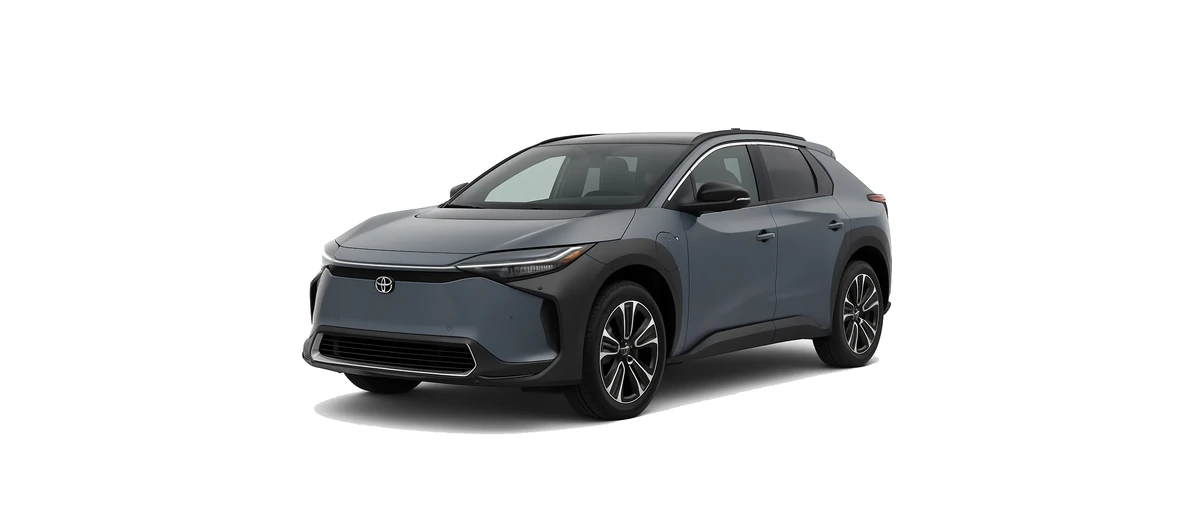
The Toyota bZ4X is Toyota’s current all-electric 5-door crossover SUV for the UK market. It is a battery-electric vehicle, not a plug-in hybrid or self-charging hybrid, so charging is a core part of ownership. For drivers choosing a home charging cable or planning public charging, the most important point is that current UK bZ4X specifications vary by battery, drivetrain and grade.
This guide focuses on the refreshed UK Toyota bZ4X shown in current Toyota UK material. Older UK bZ4X models used different specifications, and the bZ4X Touring is a separate extended-body model, so it should not be treated as the same vehicle for charging accessories or range expectations. Before buying a cable or comparing charging times, check your exact model year and grade.
View Toyota bZ4X Charging Cables
Toyota bZ4X Battery and Charging Specifications
The current UK Toyota bZ4X uses a Type 2 connector for AC charging and a CCS Combo 2 connector for DC rapid charging. In everyday terms, that means you use a Type 2 cable for untethered home wallboxes and many public AC charge points, while motorway and rapid charging hubs normally have their own tethered CCS cable attached to the charger.
Toyota UK lists two battery sizes for the refreshed bZ4X range: a 57.7 kWh gross battery with 54 kWh usable capacity, and a 73.1 kWh gross battery with 69 kWh usable capacity. DC rapid charging is listed at up to 150 kW, with Toyota quoting around 30 minutes for a 10-80% rapid charge in favourable conditions. AC charging depends on grade, with 11 kW AC listed for Icon and Design, and 22 kW AC listed for Excel in the current UK brochure.
For UK owners, it is important to separate the vehicle’s maximum AC capability from the charging supply available. Many UK homes have single-phase electricity and a typical dedicated home wallbox rated at up to 7.4 kW, so home charging will often be below the car’s 11 kW or 22 kW AC capability.
Battery Options
The current UK bZ4X range is listed with two main battery capacities. Entry versions such as Icon are associated with the 57.7 kWh gross battery, with Toyota listing 54 kWh usable capacity. Higher versions use a 73.1 kWh gross battery, with Toyota listing 69 kWh usable capacity. The larger battery is available in front-wheel-drive form, and there is also an all-wheel-drive version.
Because range varies by battery, drivetrain, wheel size and grade, it is best not to rely on a single universal bZ4X range figure. Toyota’s live UK model information advertises up to 352 miles for the current range, while Toyota’s detailed brochure and independent databases show variant-dependent figures. In practical use, motorway speed, weather, tyre choice, payload and driving style can all make a noticeable difference.
AC Charging Speed
AC charging is the type used by most home wallboxes, workplace chargers, destination chargers and slower public posts. The Toyota bZ4X uses Type 2 AC charging in the UK and Europe.
According to Toyota UK’s current brochure, Icon and Design grades have 11 kW AC charging, while Excel has 22 kW AC charging. These higher AC speeds are most useful where a suitable three-phase supply is available. In the UK, that is more common at workplaces and some public AC charge points than at private homes.
On a typical 7.4 kW single-phase home wallbox, the smaller 54 kWh usable battery may take roughly a working day or overnight period to charge from low to full once charging losses are included. The larger 69 kWh usable battery will usually take longer, often comfortably overnight from a low state of charge. Most owners will not regularly charge from 0-100%, so real everyday top-ups are usually much shorter.
If you use public AC charging, a 22 kW post will only deliver the car’s maximum accepted AC rate if your bZ4X grade supports it and the charger, cable and supply are suitable. A bZ4X with 11 kW AC capability will not charge at 22 kW simply because it is connected to a 22 kW post.
DC Rapid Charging Speed
For longer journeys, the Toyota bZ4X can use CCS Combo 2 DC rapid chargers. Toyota lists up to 150 kW DC charging for the current UK bZ4X range and quotes approximately 30 minutes for a 10-80% charge under suitable conditions.
The “up to” part matters. A rapid charger’s advertised power is a peak capability, not a constant charging rate. The actual charging curve depends on state of charge, battery temperature, charger output, site load and vehicle conditions. In general, the 10-80% window is the most useful part of a rapid-charging stop: charging beyond 80% often slows down significantly, so it can be quicker on a long trip to stop again later rather than wait for a very high state of charge.
The refreshed bZ4X includes battery preconditioning, which is designed to help improve charging performance, particularly in colder conditions. To get the best results, use the vehicle’s route planning and charging functions correctly where available, and allow the car to prepare the battery before arriving at a rapid charger.
Range and Efficiency
Range expectations for the Toyota bZ4X should be tied to the specific version. The 57.7 kWh battery versions are listed by Toyota with a lower range than the 73.1 kWh versions, while the all-wheel-drive 73.1 kWh model is typically less efficient than the front-wheel-drive version. Toyota’s headline UK range figure for the current bZ4X is up to 352 miles, but that does not apply equally to every grade and drivetrain.
Independent real-world estimates suggest that a 73.1 kWh front-wheel-drive bZ4X may achieve around the mid-200-mile range in mixed use, with the smaller battery and all-wheel-drive versions differing accordingly. These figures should be treated as estimates rather than guarantees. Cold weather, high-speed motorway driving, heavy rain, strong winds, roof boxes and full loads can reduce range.
Toyota lists an Energy Saving Heat Pump as standard across current UK Icon, Design and Excel grades. A heat pump can help reduce the energy used for cabin heating compared with relying solely on resistive heating, although winter range will still usually be lower than summer range.
Charging at Home
For most bZ4X owners, home charging is the simplest and cheapest way to run the car day to day. A dedicated home wallbox provides faster, safer and more convenient charging than a domestic socket, and it can often be paired with an off-peak electricity tariff to reduce running costs.
If your home wallbox is untethered, you will need a Type 2 charging cable. A tethered wallbox has its own cable permanently attached, but many owners still keep a separate Type 2 cable in the boot for public AC charging. For a current bZ4X, a Type 2 cable is the correct AC cable type.
Many UK homes are single-phase, so a 7.4 kW wallbox is common. Even if your bZ4X has 11 kW or 22 kW AC capability, the car can only charge as quickly as the wallbox and electrical supply allow. If you have access to three-phase charging, such as at a workplace or some commercial premises, the 11 kW or 22 kW onboard charger specification becomes more relevant.
A 3-pin domestic charger is generally best suited as a backup or occasional charging solution, but can be used regularly if a qualified electrician has confirmed the socket and electrical installation are suitable for sustained EV charging. Charging from a standard plug is much slower than using a wallbox, so it is not usually the most convenient option for replenishing a large EV battery.
Public Charging
Public charging for the bZ4X falls into two broad categories: AC destination charging and DC rapid charging. AC destination charging is commonly found in car parks, hotels, retail parks and workplaces. Some of these chargers are untethered, so you need your own Type 2 cable. Charging speed will depend on the charger, your cable, the supply and the onboard AC charger fitted to your bZ4X grade.
DC rapid charging is used for longer journeys and quick top-ups. These chargers normally have a tethered CCS cable, so you do not use your own Type 2 cable. For efficient journey planning, aim to arrive with a sensible buffer, charge in the faster 10-80% window where practical, and move on when the charging rate drops rather than waiting unnecessarily for 100%.
In busy periods, charging reliability can depend on charger availability and site condition. It is sensible to check live charger status in a charging app before relying on a particular location, especially on long motorway trips or in rural areas.
Vehicle-Specific Features
The current Toyota bZ4X sits on Toyota’s dedicated e-TNGA electric vehicle platform. UK material for the refreshed model highlights two battery sizes, front-wheel-drive and all-wheel-drive versions, up to 150 kW DC charging, and grade-dependent AC charging.
Two features are especially relevant to UK charging. First, the standard heat pump can help with winter efficiency by reducing the energy needed for cabin heating. Second, battery preconditioning is included on the refreshed model to support better charging performance when conditions are cold or the battery is outside its ideal temperature range.
Bidirectional charging features such as vehicle-to-load, vehicle-to-grid or vehicle-to-home are not currently confirmed as available for the UK bZ4X in the research data, so they should not be assumed when choosing the car or buying accessories.
Charging Tips
- Check your exact grade: Icon and Design are listed with 11 kW AC charging, while Excel is listed with 22 kW AC charging in current Toyota UK material.
- Use the right AC cable: The bZ4X uses a Type 2 cable for home and public AC charging.
- Do not buy based only on the model name: Older bZ4X versions and the bZ4X Touring have different specifications.
- Plan rapid charging around 10-80%: Toyota quotes around 30 minutes for this window, but weather, charger output and battery temperature affect results.
- Use preconditioning when appropriate: In colder weather, battery preconditioning can help the car charge more effectively at a rapid charger.
- Remember the home limit: A typical UK 7.4 kW wallbox will not charge at 11 kW or 22 kW unless the property and charger support higher power.
Frequently Asked Questions
What charging cable does the Toyota bZ4X use?
The Toyota bZ4X uses a Type 2 cable for AC charging. This is the cable used with untethered home wallboxes and many public AC charge points. DC rapid chargers use the CCS Combo 2 port and normally have their own tethered cable.
Can the Toyota bZ4X charge at 22 kW AC?
Some current UK bZ4X grades can. Toyota UK lists 22 kW AC charging for Excel, while Icon and Design are listed with 11 kW AC charging. You also need a suitable three-phase charger and supply to achieve higher AC speeds.
How fast can the Toyota bZ4X rapid charge?
Toyota lists up to 150 kW DC rapid charging and quotes approximately 30 minutes for a 10-80% charge. This is not guaranteed in all conditions, because rapid charging speed depends on temperature, state of charge, charger performance and battery preparation.
Is the Toyota bZ4X a plug-in hybrid?
No. The UK Toyota bZ4X is a battery-electric vehicle. It does not have a petrol engine and is charged from an external power source.
Should I choose a 7 kW, 11 kW or 22 kW cable?
For many UK owners, the best choice depends on where they charge. A typical home wallbox is often up to 7.4 kW single-phase, but public and workplace AC chargers may offer 11 kW or 22 kW. Because bZ4X AC capability varies by grade, check your vehicle specification before choosing a cable.
What This Means for Drivers
The Toyota bZ4X is straightforward to charge once you match expectations to the exact version. The key points are that current UK models use Type 2 AC and CCS Combo 2 DC charging, battery capacity varies between 57.7 kWh and 73.1 kWh gross, and AC charging is grade-dependent. A home wallbox will usually be the most convenient daily charging method, while DC rapid charging is best reserved for longer journeys and quick top-ups.
The main area to avoid is specification confusion. Do not assume that all bZ4X models have the same battery, range or AC charging speed, and do not mix current UK figures with older pre-facelift models or the separate bZ4X Touring. If you confirm your model year, battery and grade first, choosing the right Type 2 cable and planning realistic charging times becomes much easier.
Looking for a Charging Cable for Toyota bZ4X?
We offer Toyota bZ4X charging cables for home and public AC charging, including Type 2 options suitable for UK charging points.
View Toyota bZ4X Charging Cables
Please note that this information is intended as a guide. Charging specifications may change due to model and year of manufacture. For precise information, always refer to your vehicle user manual.

