
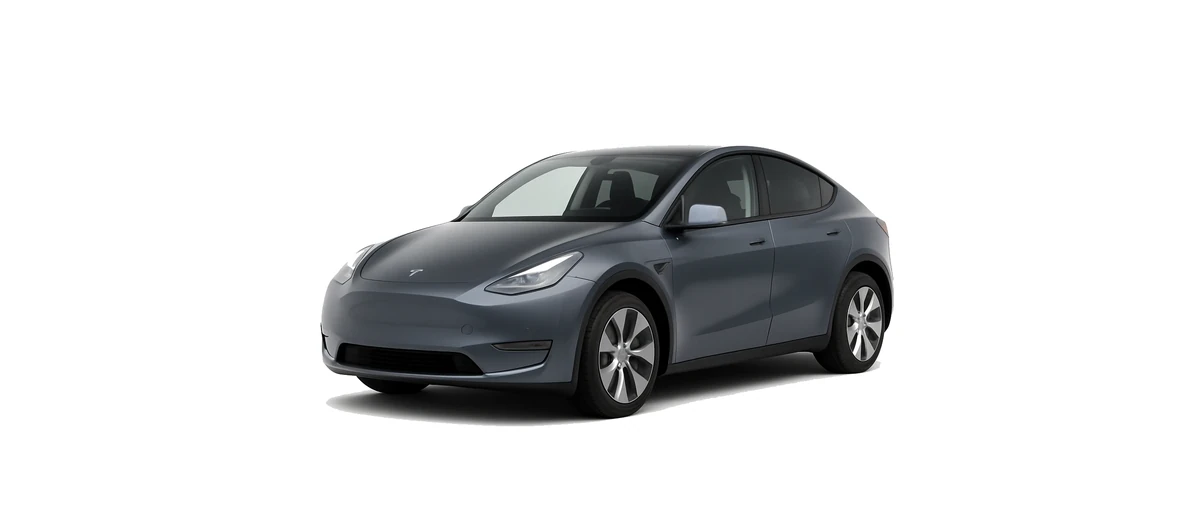
The Tesla Model Y is one of the UK’s most popular battery-electric SUVs, combining long-distance usability with a practical crossover body style. For charging, however, it is important to be variant-aware. A current UK-market Model Y RWD, Long Range or Premium RWD, Premium AWD and Performance do not all have identical battery sizes, DC rapid charging peaks or range figures. Many UK owners also have the earlier 2022-2025 Model Y, so it is worth checking your exact vehicle specification before relying on a single published figure.
For UK owners, the key point is simple: the Tesla Model Y uses a Type 2 connection for AC charging and a CCS Combo 2 connection for DC rapid charging. At home, most drivers will charge from a 7.4 kW single-phase wallbox, even though the car’s onboard AC charger can accept up to 11 kW where a three-phase supply is available. On the road, Tesla Superchargers and other CCS rapid chargers provide the fastest charging, with maximum speeds depending on the Model Y variant and battery pack.
View Tesla Model Y Charging Cables
Tesla Model Y Battery and Charging Specifications
The UK Tesla Model Y is a full battery-electric vehicle, not a hybrid, plug-in hybrid or range-extender. UK and European cars use a charging inlet on the left rear of the vehicle, with the upper Type 2 section used for AC charging and the full CCS Combo 2 connector used for DC rapid charging.
Current UK Model Y specifications vary by version. Recent data for the 2025+ facelift, often referred to as the Juniper model, lists AC charging at up to 11 kW across current variants. DC charging varies more significantly: the RWD version is listed at about 175 kW maximum DC, while longer-range AWD and Performance-type versions can peak at up to 250 kW under suitable conditions. Actual charging power will vary with battery temperature, state of charge, charger capability and route planning.
Battery Options
There is no single battery size that applies to every UK Tesla Model Y. Current UK-market versions and published independent data indicate several different battery configurations:
- Model Y RWD: recent UK 2025-2026 data lists around 60 kWh usable capacity from a nominal 64 kWh pack. This version is typically associated with a lower DC rapid charging peak than the longer-range models.
- Model Y Long Range RWD / Premium RWD: current listings vary by exact build and naming. Some data shows around 74 kWh usable capacity from a nominal 79 kWh pack, with WLTP figures varying according to wheel, seat and configuration choices.
- Model Y Premium AWD: current listings show around 79 kWh usable capacity from a nominal 82 kWh pack, with up to 250 kW DC charging under suitable conditions.
- Model Y Performance: current UK Performance data also lists around 79 kWh usable capacity from a nominal 82 kWh pack, with Tesla UK listing 360 miles WLTP and up to 250 kW maximum Supercharging for the displayed Performance configuration.
If you are unsure which Model Y you have, check the vehicle details in the touchscreen, your Tesla account, the V5C registration document, purchase invoice or insurance documentation. Wheel size, seating configuration, model year and battery supply can all affect published range and charging estimates.
AC Charging Speed
For everyday UK charging, AC charging is the most relevant. The current Model Y’s onboard AC charger is listed at up to 11 kW, but that figure only applies where a suitable three-phase AC supply is available. Most UK homes have single-phase electricity, so a typical home wallbox will charge a Model Y at up to 7.4 kW.
This means a Type 2 home wallbox is usually the most convenient solution for Model Y ownership. If your wallbox is untethered, you will need a Type 2 to Type 2 charging cable. If your wallbox is tethered, the cable is already attached to the charger, provided it has the correct Type 2 connector.
A 22 kW three-phase Type 2 cable can be used with the Tesla Model Y, but the vehicle will still only draw up to its onboard AC limit of 11 kW on three-phase AC. At most UK homes, the same cable will usually support up to 7.4 kW because the limiting factor is the single-phase supply and wallbox, not the cable’s headline rating.
DC Rapid Charging Speed
For motorway trips and long-distance driving, the Model Y uses CCS Combo 2 rapid charging. Tesla Superchargers are the most integrated option because the car’s navigation can route you to compatible chargers and prepare the battery before arrival. Many non-Tesla public rapid and ultra-rapid chargers with CCS connectors can also be used.
Charging speed depends heavily on the variant. Current Model Y RWD data lists a maximum DC charging rate of about 175 kW, while Premium AWD and Performance versions are commonly listed at up to 250 kW. Long Range or Premium RWD figures can depend on exact battery pack and source, so it is best not to assume every long-range rear-wheel-drive car behaves identically.
Rapid charging times should also be treated as variant-specific. Recent RWD data indicates roughly 24 minutes for a 10-80% rapid charge in suitable conditions, while current AWD and Performance data is closer to about 28 minutes. Some Premium or 4680-pack RWD estimates are longer, potentially around the mid-30s to 40 minutes depending on source, pack and conditions. Cold weather, a very busy charger site, a high starting state of charge or lack of battery preconditioning can all reduce charging speed.
Range and Efficiency
Model Y range varies by battery, drivetrain, wheels, tyres, temperature and driving style. Current UK RWD figures have been published at more than 300 miles WLTP in some configurations, while Long Range/Premium RWD versions can be listed higher, depending on exact specification. Premium AWD and Performance models trade some efficiency for all-wheel-drive capability and higher performance, with Performance versions generally showing lower WLTP range than the most efficient long-range rear-wheel-drive variants.
WLTP figures are useful for comparing vehicles, but real-world range is usually lower. EV Database UK lists real-world estimates such as around 235 miles for a current RWD and roughly 285-295 miles for current AWD or Performance-type variants, though these are estimates rather than guarantees. In everyday use, expect winter motorway journeys to be less efficient than summer urban and mixed driving.
The Model Y’s heat pump is a useful feature for UK conditions, helping improve cabin heating efficiency compared with a simple resistance-heater-only approach. Even so, cold weather still affects battery performance and energy consumption, especially on short journeys where the car and battery start cold.
Charging at Home
Home charging is where most Model Y owners will cover the majority of their mileage. A dedicated 7.4 kW Type 2 wallbox on a suitable single-phase domestic supply is typically the best balance of speed, convenience and electrical safety. Many drivers plug in overnight and set scheduled charging to make use of off-peak electricity tariffs where available.
As a rough guide, charging from low to full on a 7.4 kW wallbox will take several hours and is usually an overnight task. The exact time depends on battery size, starting state of charge, charging losses and whether the vehicle is using energy for battery or cabin temperature management. A three-phase 11 kW AC supply can reduce AC charging time, but this is more common at workplaces, commercial premises and some public AC posts than at typical UK homes.
A 3-pin charger is generally best suited as a backup or occasional charging solution, but can be used regularly if a qualified electrician has confirmed the socket and electrical installation are suitable for sustained EV charging. Because a domestic 3-pin socket charges much more slowly than a wallbox, it is usually better for topping up over long periods rather than replenishing a large battery quickly.
Public Charging
When charging in public, you will encounter two main types of charging for the Model Y: AC destination charging and DC rapid charging. AC destination chargers are often found at hotels, car parks, workplaces and leisure venues. These usually require your own Type 2 cable unless the charger is tethered. The car will draw up to its AC limit, which may be 7 kW, 11 kW or lower depending on the charger and supply.
DC rapid chargers are different because the cable is attached to the charging unit. For these, you do not need your own cable. Simply use the CCS connector, follow the charger’s instructions and ensure the vehicle is positioned so the left-rear charge port can be reached comfortably.
For longer trips, it is sensible to plan charging stops around reliable high-power sites rather than simply choosing the charger with the largest headline number. A 250 kW charger will not make an RWD Model Y charge at 250 kW if that variant is capped lower, and even a 250 kW-capable Model Y will only hit peak power for part of the charging curve.
Vehicle-Specific Features
Battery preconditioning is one of the most useful Model Y charging features. When you route to a Tesla Supercharger, and in some cases a suitable fast charger, the navigation system can automatically prepare the battery before arrival. This helps the car reach stronger rapid charging performance, particularly in cold weather.
The Model Y also has a heat pump on current UK variants, supporting efficient cabin heating. For charging, the practical benefit is that the vehicle is designed to manage battery and cabin temperature intelligently, although drivers should still allow extra charging and journey time in winter.
Current UK data lists V2L, V2H and V2G as not supported on the Tesla Model Y. Tesla’s owner information also cautions against using the high-voltage battery as a stationary power source, so owners should not plan to use a UK Model Y as a home backup battery or external power supply.
Charging Tips
- Use Tesla navigation for rapid charging: routing to a charger allows battery preconditioning to begin automatically where supported.
- Do not chase peak kW alone: maximum charging power is brief and depends on battery temperature and state of charge.
- Charge little and often at home: regular overnight top-ups are usually easier than waiting for the battery to become very low.
- Choose the right cable rating: a 7.4 kW cable suits many home setups, while an 11 kW or 22 kW Type 2 cable can be useful for three-phase AC posts, even though the Model Y will not exceed 11 kW AC.
- Check your exact variant: RWD, Long Range/Premium RWD, AWD and Performance versions have different expectations for range and rapid charging.
- Leave a buffer on long trips: weather, speed, roof loads and charger availability can all affect the practical range between stops.
Frequently Asked Questions
What charging cable does a Tesla Model Y use in the UK?
A UK Tesla Model Y uses Type 2 for AC charging. For an untethered home wallbox or public AC post, you need a Type 2 to Type 2 cable. For DC rapid charging, the car uses CCS Combo 2 and the rapid charger provides the cable.
Can the Tesla Model Y charge at 22 kW AC?
No, current UK Model Y variants are listed with up to 11 kW AC charging. A 22 kW Type 2 cable can still be used, but the car will only draw up to its onboard AC charging limit and the capability of the charger supply.
How fast does the Tesla Model Y rapid charge?
It depends on the variant. Current RWD data lists a maximum of about 175 kW DC, while Premium AWD and Performance versions can peak at up to 250 kW. Charging speed is also affected by battery temperature, state of charge and charger output.
Where is the Tesla Model Y charge port?
The charge port is on the left rear of the vehicle, integrated into the rear light area. This position is helpful to remember when choosing a parking bay or deciding what cable length is convenient for home charging.
Does the Tesla Model Y support vehicle-to-load or vehicle-to-grid?
Current UK data lists V2L, V2H and V2G as not supported for the Model Y. Owners should not assume the vehicle can power external equipment or a home.
What This Means for Drivers
For most UK Tesla Model Y owners, the ideal setup is straightforward: a dedicated Type 2 home wallbox for everyday charging, a suitable Type 2 cable for untethered AC chargers, and CCS rapid charging for longer journeys. The main detail is understanding your exact variant. A current RWD, Long Range or Premium RWD, Premium AWD and Performance will not all deliver the same range or rapid charging peak, even though they share the same UK connector standard.
If you mostly charge at home, focus on convenience and cable suitability rather than maximum public charging figures. If you cover frequent motorway miles, learn how your Model Y behaves on rapid chargers, use the built-in navigation to trigger battery preconditioning, and plan stops around reliable CCS charging locations.
Looking for a Charging Cable for Tesla Model Y?
We offer Tesla Model Y charging cables for UK home and public AC charging, including Type 2 options suitable for untethered wallboxes and destination chargers.
View Tesla Model Y Charging Cables
Please note that this information is intended as a guide. Charging specifications may change due to model and year of manufacture. For precise information, always refer to your vehicle user manual.

