
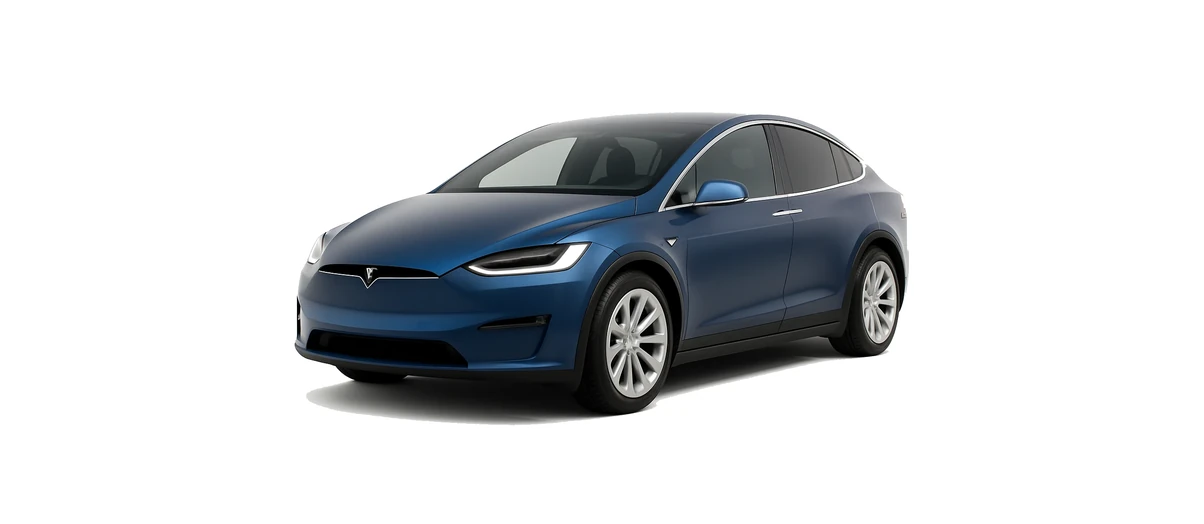
The Tesla Model X is a large all-electric SUV/crossover, known for its long range, Falcon-wing rear doors and flexible 5, 6 or 7-seat layouts depending on variant and model year. For UK drivers, however, Model X charging needs a little more care than some newer electric cars because charging hardware and UK availability have changed over time.
Right-hand-drive UK Model X orders were stopped for the foreseeable future in 2023. More recent UK information points to left-hand-drive availability or inventory rather than normal new right-hand-drive supply, while many Model X cars on UK roads are earlier right-hand-drive used examples. That matters because older UK Model X vehicles may not have exactly the same rapid-charging connector setup as later/refreshed cars.
This guide explains how to identify the likely charging setup, what cable is needed for UK public AC charging, what to expect from home charging, and how rapid charging differs between older and later Model X versions.
View Tesla Model X Charging Cables
Tesla Model X Battery and Charging Specifications
The Tesla Model X is a battery-electric vehicle only. It is not a plug-in hybrid and does not use a petrol engine as a range extender. Charging is therefore central to everyday ownership, whether you rely mainly on a home wallbox, workplace charging, Tesla Superchargers or public rapid chargers.
For later/refreshed UK and European Model X Dual Motor and Plaid entries, EV Database lists a 100 kWh gross battery with around 95 kWh usable capacity. These cars are listed with Type 2 AC charging and CCS Combo 2 DC rapid charging, with the charge port located on the left rear side of the vehicle.
Older UK Model X examples need more careful checking. Some earlier cars use Tesla’s earlier modified Type 2 arrangement for AC and Tesla DC charging. Depending on the vehicle, they may need a CCS adapter or retrofit to use many non-Tesla CCS rapid chargers. If you are buying a used Model X, it is worth checking the actual inlet, vehicle settings and service history rather than relying on the model name alone.
Battery Options
Battery capacity varies by model year and variant, and published figures are often estimates rather than owner-facing Tesla specifications. For the 2024-2025 UK/EU context, the Model X Dual Motor is commonly listed with a 100 kWh gross battery and around 95 kWh usable capacity. EV Database UK lists a WLTP range of up to 358 miles for this version, with a real-world estimate of around 300 miles.
The Model X Plaid is also listed with a 100 kWh gross and approximately 95 kWh usable battery. Its WLTP range varies by specification, including wheel and equipment differences, and is listed at roughly 337 miles or 328 miles depending on configuration, with a real-world estimate of about 289 miles.
For older UK cars, such as the Model X Long Range Plus from around 2020-2021, EV Database lists a larger estimated gross capacity of 103 kWh and around 98 kWh usable. These older vehicles can also differ in onboard AC charging capability, so it is important not to assume that all Model X versions have identical charging specifications.
AC Charging Speed
AC charging is what you use at most home wallboxes, workplace chargers and many slower public posts. For later/refreshed Model X Dual Motor and Plaid entries, EV Database lists 11 kW AC charging via Type 2. To reach 11 kW, the property or charge point normally needs a three-phase supply. Most UK homes have single-phase electricity, so the practical maximum from a typical home wallbox is usually 7.4 kW.
At 7.4 kW, a large-battery Model X will not recharge from very low to full as quickly as a smaller EV, but it is still convenient for overnight charging. Adding 40-60% overnight is usually more relevant than charging from empty to full, because many drivers plug in before the battery is extremely low.
Older UK Model X variants, including some Long Range Plus examples, are commonly listed with a 16.5 kW onboard AC charger. That does not mean every owner will see 16.5 kW in practice. It requires a suitable three-phase AC charge point and compatible supply. On a normal single-phase UK home wallbox, these cars are still usually limited to around 7.4 kW.
DC Rapid Charging Speed
DC rapid charging is used for longer journeys and motorway stops. Later/refreshed Model X versions are listed with up to 250 kW peak DC charging and a 10-80% estimate of around 30 minutes in favourable conditions. This is best treated as an ideal peak capability rather than a guaranteed charging speed.
Several factors affect rapid charging: charger power, battery temperature, state of charge, route planning, vehicle hardware and how busy the charging site is. A Model X may only hold its peak charging rate briefly, with the rate tapering as the battery fills. For journey planning, the 10-80% window is often more useful than thinking in terms of 0-100% charging.
Later/refreshed cars with CCS Combo 2 can use tethered CCS rapid chargers. Public rapid and ultra-rapid chargers have their own cable attached, so you do not use your Type 2 cable for DC rapid charging. Older Model X vehicles should be checked for CCS compatibility before you rely on third-party CCS charging, particularly if the car predates widespread CCS support on Tesla vehicles in Europe.
Range and Efficiency
The Model X is a large, heavy, powerful electric SUV, so its efficiency will vary noticeably with speed, weather and wheel choice. The later Dual Motor version is listed by EV Database UK with up to 358 miles WLTP and an estimated real-world range of around 300 miles. The Plaid is more performance-focused and is listed with lower real-world range estimates.
In everyday UK driving, you should expect motorway use, cold weather, roof boxes, heavy loads and repeated high-speed driving to reduce range. Urban and mixed driving in mild weather is usually more efficient. Because Model X has a large battery, small changes in efficiency can make a meaningful difference to cost and charging frequency.
For daily use, many owners set a charge limit in the car or app and avoid routinely charging to 100% unless preparing for a longer trip. This is common EV practice and helps reduce time spent charging beyond the slower upper part of the battery. When maximum range is needed, charging higher before departure is reasonable, especially if the car will be driven soon afterwards.
Charging at Home
For most UK Model X owners, a dedicated Type 2 home wallbox is the most convenient charging solution. You can use either a tethered wallbox with a cable permanently attached or an untethered unit used with your own Type 2-to-Type 2 cable. A tethered wallbox is convenient at home, while an untethered wallbox keeps the installation neater and lets you use your own cable.
On a typical single-phase home supply, expect up to 7.4 kW if the installation and charger support it. This is slower than the maximum AC capability of some Model X versions, but it is usually enough for overnight replenishment. If you have access to three-phase power, a suitable wallbox may allow higher AC charging on compatible variants, such as 11 kW on later cars or higher on some older models.
A 3-pin charger is generally best suited as a backup or occasional charging solution, but can be used regularly if a qualified electrician has confirmed the socket and electrical installation are suitable for sustained EV charging. Because the Model X has a large battery, a domestic 3-pin socket will add range slowly and is not the most practical main charging method for many owners.
Public Charging
For public AC charging in the UK and Europe, the correct cable for the Model X is generally a Type 2-to-Type 2 cable. This applies to later Type 2 AC/CCS cars and to older UK cars using Type 2 AC charging. Many public AC posts are untethered, meaning you must bring your own cable.
When choosing a cable, consider the car, your likely charge points and the maximum AC charging you can realistically use. A 32 amp Type 2 cable is a common choice for UK public charging and home use with untethered wallboxes. If you regularly use three-phase public AC charging and your Model X can accept more than single-phase power, a three-phase Type 2 cable may be useful.
For rapid charging, later/refreshed CCS-equipped Model X vehicles use the tethered CCS Combo 2 connector at the charging station. Older Model X cars are the main area where owners need to be careful: the presence of a Type 2-style inlet does not automatically mean the car can use all modern CCS rapid chargers without the correct hardware, adapter or retrofit.
Vehicle-Specific Features
The Model X supports Tesla route planning through the in-car navigation. When you navigate to a Supercharger or a supported fast charger, the car can automatically precondition the battery before arrival. This helps bring the battery closer to an ideal temperature for rapid charging, which can improve charging speed, especially in colder weather.
Later/refreshed Model X entries are also listed with a heat pump, which can help improve cold-weather efficiency compared with less efficient cabin heating systems. As with any EV, winter range will still be lower than in mild conditions, particularly on faster roads.
Vehicle-to-load, vehicle-to-grid and vehicle-to-home functions are not listed as supported for the 2024-2025 Model X Dual Motor and Plaid entries. Owners should therefore not assume the Model X can power external appliances or a home in the way some newer EVs with dedicated bidirectional charging features can.
Charging Tips
- Check your charging inlet: especially on older UK Model X cars, confirm whether the vehicle has CCS capability before relying on non-Tesla rapid chargers.
- Use navigation before rapid charging: route to a Supercharger or compatible fast charger so the battery can precondition before arrival.
- Do not chase 250 kW every time: peak rapid-charging speeds depend on conditions and are usually only seen briefly.
- Charge in the efficient window: on long trips, charging from roughly 10-80% is usually quicker than waiting for the final 20%.
- Set a daily charge limit: reserve very high charge levels for long journeys rather than using 100% as a daily target.
- Carry the right AC cable: a Type 2-to-Type 2 cable is essential for many untethered UK public AC posts.
Frequently Asked Questions
What charging cable does a Tesla Model X need in the UK?
For public AC charging, the Model X generally uses a Type 2-to-Type 2 cable. Later/refreshed cars use Type 2 for AC and CCS Combo 2 for DC rapid charging. Older UK cars may have earlier Tesla charging hardware, so check the exact vehicle before assuming CCS compatibility.
Can a Tesla Model X charge at 7 kW at home?
Yes, most UK home wallboxes provide up to around 7.4 kW on a single-phase supply, and this is a normal home charging rate for the Model X. Some variants can accept higher AC charging on three-phase supplies, but most UK homes will not provide that without a suitable electrical setup.
Can every Tesla Model X use CCS rapid chargers?
Not necessarily. Later/refreshed UK/EU cars with CCS Combo 2 are designed for CCS rapid charging. Some older UK Model X examples may need a CCS adapter or retrofit for third-party CCS chargers. Owners should confirm the vehicle’s hardware and compatibility.
How long does a Model X take to rapid charge?
For later 100 kWh refreshed cars, around 30 minutes from 10-80% is a useful estimate in favourable conditions. Actual charging time depends on charger speed, battery temperature, state of charge and vehicle hardware.
Is the Tesla Model X still sold new in the UK?
UK availability needs careful interpretation. Right-hand-drive Model S and Model X orders were stopped for the foreseeable future in 2023. Tesla UK has continued to host Model X pages and inventory routes with left-hand-drive context, while some data sources list recent versions as no longer available to order. For UK buyers, the used market and any left-hand-drive inventory are particularly relevant.
What This Means for Drivers
The key to Model X charging is identifying which version you have. If it is a later/refreshed CCS-equipped car, charging is straightforward: Type 2 for home and public AC charging, and tethered CCS Combo 2 for rapid charging. If it is an older UK right-hand-drive car, check the inlet and CCS retrofit status before planning journeys around non-Tesla rapid chargers.
For home charging, a 7.4 kW Type 2 wallbox suits most UK households, even where the car can accept a higher AC rate on three-phase. For longer trips, Tesla navigation, Supercharger access and battery preconditioning make the Model X a capable long-distance EV, provided you plan around real-world charging speeds rather than headline peaks.
Looking for a Charging Cable for Tesla Model X?
If you need a compatible Type 2 cable for home or public AC charging, We offer Tesla Model X charging cables suitable for UK charging points. Always check your vehicle’s model year and charging inlet if you own an older Model X.
View Tesla Model X Charging Cables
Please note that this information is intended as a guide. Charging specifications may change due to model and year of manufacture. For precise information, always refer to your vehicle user manual.

