
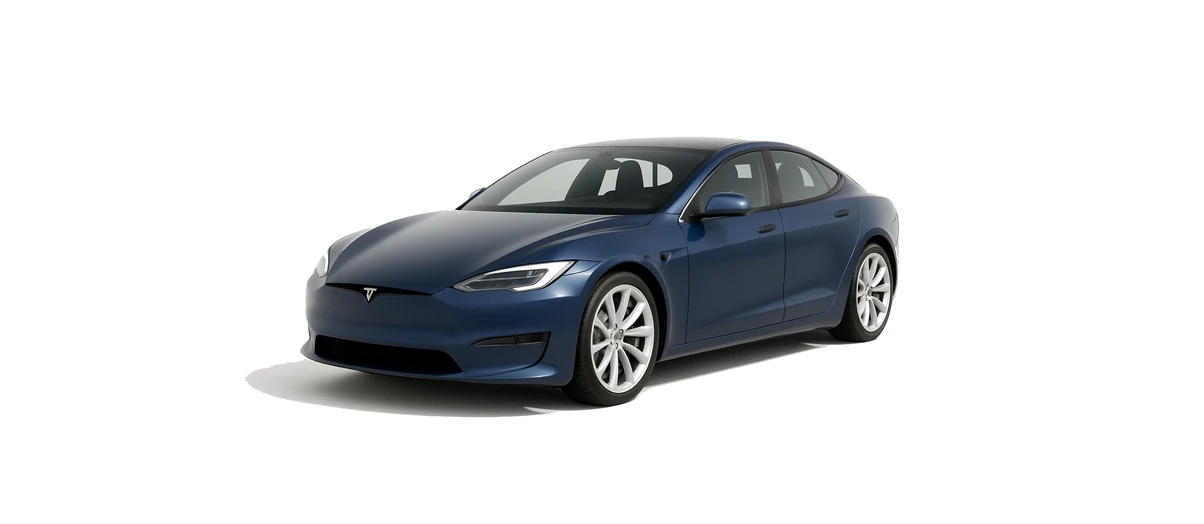
The Tesla Model S is one of the best-known long-range electric cars on UK roads, but it is also one of the models where charging advice depends heavily on the exact year and specification. UK-market Model S examples are now mainly used or legacy cars: Tesla stopped right-hand-drive Model S and Model X production for the UK in 2023, and recent European Model S variants are not currently available to factory-order new in the UK. However, many Model S cars remain in daily use, from earlier 75D and 100D models to later Long Range, Performance and Plaid variants.
This guide focuses on the question many owners need answered first: which Tesla Model S charging port do I have? Later European refresh cars use Type 2 for AC charging and CCS Combo 2 for DC rapid charging, while older UK cars may use Tesla’s Type 2-based charging inlet and may need a CCS retrofit or adapter to access many modern rapid chargers. Once you understand that difference, choosing the right home charging cable, public AC cable and rapid charging approach becomes much simpler.
View Tesla Model S Charging Cables
Tesla Model S Battery and Charging Specifications
The Tesla Model S is a battery-electric vehicle only; there is no plug-in hybrid or petrol-electric version. It was designed as a dedicated electric liftback saloon, with large battery packs and strong long-distance capability compared with many EVs of its era.
For the latest European refresh specification, EV Database lists a 100 kWh nominal battery with around 95 kWh usable capacity, 11 kW AC charging and DC rapid charging at up to 250 kW where the charger and vehicle conditions allow. Tesla UK also quotes a maximum Supercharging rate of 250 kW for current Model S information. These headline figures are useful, but they should not be applied to every used UK car because older Model S versions can differ significantly.
The key charging distinction is between three broad groups:
- Older UK Model S cars with Tesla Type 2-based charging: these use a Type 2-style inlet for AC and older Tesla Supercharging, but may not have native CCS Combo 2 support.
- CCS-upgraded older Model S cars: some cars have had Tesla CCS hardware work and use an adapter for CCS rapid charging.
- Later European refresh Model S cars: these use Type 2 for AC and CCS Combo 2 for DC rapid charging directly.
Battery Options
Because the Model S has been sold over many years, battery size varies by model year and trim. Common UK used examples include 75D, 100D, Long Range, Performance and Plaid versions. As a guide, EV Database lists the 2016-2019 Model S 75D at 75 kWh nominal and around 72.5 kWh usable. The 100D and later 100 kWh-pack cars are commonly shown at around 100 kWh nominal and roughly 95 kWh usable, although sources can define gross and usable capacity differently.
That means a used Model S advert should always be checked carefully. A 75D will not have the same motorway range as a later Long Range or Plaid, and charging hardware may also vary. If you are buying used, ask for the exact model year, variant, service history and whether any CCS upgrade has been completed.
AC Charging Speed
AC charging is the type of charging used by most home wallboxes and many destination chargers. Later refresh Model S cars are commonly listed with an 11 kW onboard AC charger via Type 2. To reach 11 kW, the charger normally needs a three-phase AC supply. Most UK homes are single-phase, so a typical 7.4 kW home wallbox will usually be the practical limit, even if the car can accept more on the right supply.
Older UK Model S cars can be different. Many 2016-2019 cars are listed with 16.5 kW AC charging, while some earlier cars may have 11 kW or optional 22 kW AC capability depending on build and specification. In practice, this higher AC capability is most useful at three-phase workplace, destination or public AC chargers. It does not mean every UK home can charge a Model S at 11 kW, 16.5 kW or 22 kW.
For an untethered home wallbox or untethered public AC charger, Model S owners will generally need a Type 2 to Type 2 charging cable. If your home wallbox is tethered, the cable is already attached to the charger.
DC Rapid Charging Speed
DC rapid charging is used for long journeys and faster top-ups. Later Model S cars with CCS Combo 2 can use compatible CCS rapid chargers and Tesla Superchargers that support the vehicle. EV Database estimates up to 250 kW DC and around 30 minutes for a 10-80% charge on recent 100 kWh-pack cars in suitable conditions.
However, 250 kW is a peak figure, not a speed the car will hold from empty to full. Real-world charging speed depends on battery temperature, starting state of charge, charger output, site load and the car’s charging curve. Like most EVs, the Model S usually charges fastest at lower states of charge and slows as the battery fills.
Older Model S rapid charging needs closer attention. Some older cars use Tesla’s earlier Type 2-based Supercharger connection rather than native CCS Combo 2. To use many modern CCS rapid chargers, they may need a Tesla CCS retrofit and adapter. If you are unsure, check the physical charge port, vehicle information in the Tesla screen, service records, or speak to Tesla before relying on a non-Tesla CCS rapid charger for a journey.
Range and Efficiency
Recent Model S figures show why the car remains popular as a long-distance EV. Tesla UK has quoted up to 462 miles WLTP for the latest Model S AWD, while EV Database estimates real-world range at around 367 miles for comparable recent European specifications. Plaid versions typically prioritise performance and may have a lower official range than the longest-range AWD version.
For used UK cars, range can vary widely. Battery size, wheel size, tyre choice, temperature, driving speed and battery condition all matter. A 75D will usually cover less distance than a 100D or later Long Range, and older cars may not match the newest efficiency figures. In winter motorway use, expect range to be lower than official WLTP figures, especially at higher speeds or in poor weather.
Charging at Home
For most Model S drivers, home charging is the simplest and most cost-effective way to keep the car ready. A 7.4 kW single-phase wallbox is the common UK domestic setup and is usually sufficient for overnight charging, even with the Model S’s large battery. If you plug in after normal daily driving, you are generally replacing the miles used that day rather than charging from empty to full.
On an untethered wallbox, use a suitable Type 2 to Type 2 cable. If your Model S supports higher AC charging and you have access to a three-phase supply, a three-phase Type 2 cable may be appropriate. For many UK homes, though, the limiting factor will be the household electrical supply and wallbox rating rather than the car.
A 3-pin charger is generally best suited as a backup or occasional charging solution, but can be used regularly if a qualified electrician has confirmed the socket and electrical installation are suitable for sustained EV charging. Because the Model S has a large battery, a 3-pin connection will add range slowly and is not ideal as the main charging method for most owners.
For daily use, follow the charging recommendations shown in the Tesla screen or app. Many owners set a daily charge limit below 100% and reserve a higher charge limit for long journeys, where leaving shortly after reaching a high state of charge is usually preferable.
Public Charging
Public AC charging is straightforward if you have the right cable. Most untethered UK AC charge points use a Type 2 socket, so a Type 2 to Type 2 cable is the standard cable for destination charging, workplace charging and many town-centre chargers. Your actual charging speed will depend on the charger output, whether the supply is single-phase or three-phase, and the onboard charger fitted to your Model S.
Rapid charging is where Model S owners need to be more careful. Later CCS-equipped cars can connect directly to CCS Combo 2 rapid chargers. Older cars may only work with older Tesla Supercharger connectors unless they have been upgraded for CCS use. If your car needs a CCS adapter, keep it with the vehicle and confirm compatibility before setting off on a route that depends on third-party rapid chargers.
When using Tesla Superchargers or compatible fast chargers, enter the charger as a destination in the Tesla navigation system. This allows the car to prepare the battery for faster charging where conditions allow.
Vehicle-Specific Features
Recent Model S entries support battery preconditioning when navigating to fast chargers or Superchargers. This helps bring the battery closer to an ideal temperature before arrival, improving the chance of a strong rapid-charging session. It is especially useful in colder weather or when the car has been parked for a while.
A heat pump is confirmed on later 2021-on refresh Model S cars, helping improve efficiency in suitable conditions. It should not be assumed on older pre-refresh Model S examples.
Vehicle-to-load, vehicle-to-home and vehicle-to-grid capability are not confirmed for current or recent Model S entries, so owners should not plan to use a Model S as a power source for tools, appliances or a home backup system.
Charging Tips
- Identify your port first: check whether your Model S has native CCS Combo 2, an older Type 2-based Tesla inlet, or CCS adapter support.
- Use Type 2 for AC charging: a Type 2 to Type 2 cable is the usual choice for untethered home and public AC chargers.
- Do not assume maximum AC speed at home: most UK homes are single-phase and typically charge at up to around 7.4 kW with a suitable wallbox.
- Precondition before rapid charging: navigate to the charger in the Tesla system before arrival.
- Avoid relying on peak rapid speeds: 250 kW is possible only in the right circumstances and will taper as the battery fills.
- Follow the car’s daily charging guidance: use higher charge limits mainly when you need the extra range for a long trip.
Frequently Asked Questions
Does the Tesla Model S use a Type 2 cable?
Yes, for AC charging a Type 2 connection is the normal arrangement. For untethered home wallboxes and public AC charge points, a Type 2 to Type 2 cable is generally the cable Model S owners need.
Does every UK Tesla Model S have CCS?
No. Later European refresh cars use CCS Combo 2 for DC rapid charging, but older UK cars may have Tesla’s earlier Type 2-based Supercharger connection. Some older cars have been upgraded for CCS use and may require an adapter.
Can a Tesla Model S charge at 11 kW at home?
Later cars may support 11 kW AC charging, but reaching that normally requires a three-phase supply. On a typical UK single-phase home wallbox, around 7.4 kW is usually the practical maximum.
How long does rapid charging take?
For recent 100 kWh-pack CCS-equipped Model S cars, EV Database estimates around 30 minutes for 10-80% on a suitable high-power rapid charger. Older cars, different battery sizes and non-ideal conditions can change this significantly.
Is the Tesla Model S a plug-in hybrid?
No. The Tesla Model S is a full battery-electric vehicle and does not have a petrol or diesel engine.
What This Means for Drivers
The Tesla Model S can be an excellent long-distance EV, but charging advice must be matched to the exact car. If you own a later CCS-equipped Model S, home AC charging and rapid charging are relatively simple: use Type 2 for AC and CCS for DC rapid charging. If you own an older UK Model S, confirm whether your car has CCS support before planning journeys around modern rapid chargers.
For everyday use, a 7.4 kW home wallbox and a suitable Type 2 cable will meet the needs of many UK owners. The larger battery means charging from very low to full takes time, but normal daily top-ups are usually manageable overnight. For long journeys, use Tesla navigation, precondition the battery and expect rapid charging speed to taper as the battery fills.
Looking for a Charging Cable for Tesla Model S?
You can browse charging cables suitable for Tesla Model S home and public AC charging, including Type 2 options for untethered chargers. Check your exact Model S year, charging port and wallbox type before ordering.
View Tesla Model S Charging Cables
Please note that this information is intended as a guide. Charging specifications may change due to model and year of manufacture. For precise information, always refer to your vehicle user manual.

