
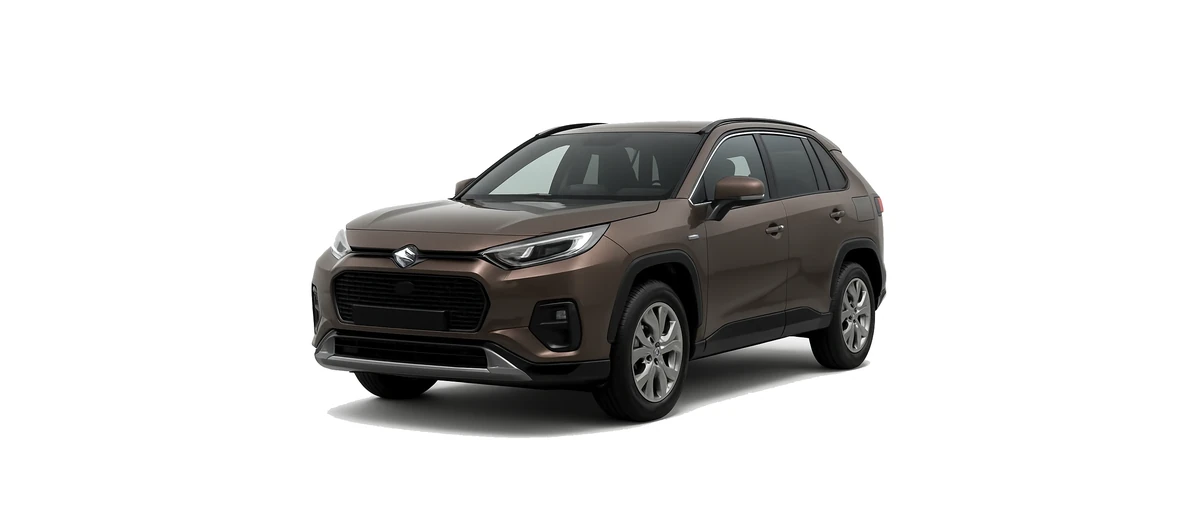
The Suzuki Across is a large plug-in hybrid SUV designed to cover many everyday journeys on electric power while still offering the flexibility of a petrol engine for longer trips. It is important to treat it as a PHEV rather than a fully electric car: the Across has a Type 2 AC charging inlet, an 18.1 kWh traction battery, a petrol engine and electric all-wheel drive, but it does not have CCS rapid charging.
For UK owners, the most important charging detail is the build date. Early Suzuki Across models used a lower-power AC onboard charger, while an April 2022 update introduced a faster 6 kW AC onboard charger. That means two cars that look very similar can have noticeably different charging times on the same home wallbox or public AC charge point.
This guide explains how the Suzuki Across charges in the UK, which cable type is suitable, what to expect from home and public charging, and how to make best use of its electric-only range.
View Suzuki Across Charging Cables
Suzuki Across Battery and Charging Specifications
The Suzuki Across Plug-in Hybrid uses a lithium-ion traction battery with a listed capacity of 18.1 kWh. Suzuki UK quotes an electric-only range of up to 46 miles, which is relatively long for a plug-in hybrid SUV and makes the Across well suited to regular local driving on electric power when charged frequently.
In the UK and wider European market, the Across uses a Type 2 AC charging connection. This is the standard connector for most UK home wallboxes and public AC charging posts. The car charges using single-phase AC power, so a suitable Type 2 to Type 2 cable is the key accessory for untethered home, workplace and destination chargers.
The Across does not have confirmed CCS/DC rapid-charging capability. Unlike many fully electric cars, it is not intended for motorway rapid charging stops. Instead, the best ownership experience comes from charging at home, at work, or at longer-stay public AC locations whenever convenient.
Battery Options
The UK Suzuki Across line-up is centred on the Across 2.5 Plug-in Hybrid E-Four. Available technical information lists the traction battery capacity as 18.1 kWh. A clearly published usable battery capacity is not consistently available from the UK/EU sources checked, so it is safest to refer to the published 18.1 kWh battery capacity rather than assuming a usable figure.
Because the Across is a plug-in hybrid, the battery is smaller than the packs found in most fully electric SUVs but larger than those in many older PHEVs. This is what allows the Across to offer a meaningful electric-only driving range for commuting, school runs, shopping trips and other local journeys, provided it is plugged in regularly.
AC Charging Speed
AC charging speed is the area where Suzuki Across owners need to be most careful, because charge times vary materially by build date.
Current and post-April-2022 UK cars use an upgraded 6 kW AC onboard charger. On a suitable 7.2 kW or 7.4 kW home wallbox, these later cars can complete a full charge in around 2 hours 45 minutes, depending on conditions and the state of charge when plugged in.
Earlier Suzuki Across models used a lower-power AC onboard charger, commonly reported at around 3 kW to 3.3 kW. These pre-update cars will not charge at the later 6 kW rate, even when connected to a 7.4 kW wallbox. For these vehicles, a full charge from empty can take roughly six hours on a 7.4 kW home charger.
This difference matters when choosing a cable and setting expectations. A 32 amp single-phase Type 2 cable is the appropriate maximum-capability choice for the Suzuki Across, because it supports the later car’s faster AC charging and will also work safely with earlier cars. However, the vehicle’s onboard charger always sets the limit: a higher-rated cable or charge point will not make an early Across charge faster than its onboard charger allows.
DC Rapid Charging Speed
The Suzuki Across does not have confirmed CCS/DC rapid charging capability in UK/EU form. That means there is no meaningful 10–80% rapid-charge time to quote, and drivers should not expect to use rapid motorway chargers in the same way as a battery-electric vehicle.
This is not unusual for a plug-in hybrid. The intended charging pattern is different: rather than stopping for rapid charges on long trips, Across owners normally charge from AC power at home, at work, or while parked for longer periods. On longer journeys, the petrol engine provides the flexibility that a PHEV is designed to offer.
Range and Efficiency
Suzuki UK quotes up to 46 miles of electric-only driving range for the Across Plug-in Hybrid. As with all WLTP figures, real-world range will vary with temperature, road speed, driving style, load, route and use of cabin heating or air conditioning.
For many UK drivers, the quoted electric range is enough to cover a large proportion of weekday mileage if the car is charged regularly. Short local journeys are where the Across can make best use of its plug-in hybrid system. If you only charge occasionally and mainly drive with the battery depleted, it will behave more like a conventional hybrid SUV and you will miss much of the benefit of the larger plug-in battery.
The key efficiency habit is simple: plug in whenever it is convenient. A full or nearly full battery at the start of the day gives the car the best chance of completing local trips on electric power before the petrol engine is needed.
Charging at Home
Home charging is the most convenient way to run a Suzuki Across. A dedicated 7 kW home wallbox is the best practical option for most owners, particularly for post-April-2022 cars with the upgraded 6 kW onboard charger. It allows the Across to recharge comfortably during an evening, between journeys, or overnight.
If you have an untethered wallbox, you will need a Type 2 to Type 2 cable. A 32 amp single-phase cable is the sensible choice because it is compatible with the Across and gives enough capacity for later cars with the faster onboard charger. It will also work with earlier vehicles, even though those cars will charge at their lower onboard limit.
A 3-pin portable charger is generally best suited as a backup or occasional charging solution, but can be used regularly if a qualified electrician has confirmed the socket and electrical installation are suitable for sustained EV charging. Standard domestic sockets were not originally designed with repeated long-duration EV charging in mind, so socket condition, circuit suitability and safe use are important.
When charging at home, it is worth using scheduled charging if your wallbox or energy tariff supports it. Charging during cheaper overnight periods can reduce running costs, and the Across battery is small enough compared with a BEV that even the slower early cars can usually be replenished overnight.
Public Charging
For public charging, the Suzuki Across is best matched with AC destination chargers rather than rapid chargers. Look for Type 2 AC posts at supermarkets, hotels, leisure centres, town-centre car parks, workplaces and long-stay parking locations.
Many public AC posts in the UK are untethered, meaning you bring your own cable. A Type 2 to Type 2 cable is therefore essential if you want to make regular use of public AC charging. A 32 amp single-phase cable is sufficient for the Across; buying a cable with higher three-phase capability will not make the car charge at 22 kW, because the Across is limited by its single-phase onboard charger.
Public AC charging can be particularly useful if you park for a few hours. Later cars with the 6 kW onboard charger can gain a full charge during many shopping, work or leisure stops. Earlier cars need longer, but can still add useful electric range while parked.
Because the Across does not use DC rapid charging, route planning is different from a fully electric SUV. On long motorway journeys, you would generally rely on the petrol engine rather than planning rapid charging stops. Public AC charging is most valuable at your destination or during longer breaks.
Vehicle-Specific Features
The Across uses Suzuki’s E-Four plug-in hybrid system, combining a 2.5-litre petrol engine with front and rear electric motors. The rear motor provides electric all-wheel-drive assistance, giving the SUV additional traction without a conventional mechanical propshaft arrangement.
Suzuki also references a Battery Charger Mode, which can use the petrol engine to add charge to the traction battery while driving. This may be useful in certain circumstances, such as preparing for low-emission urban driving later in a journey, although charging from the mains is typically the more efficient and cost-effective way to replenish the battery.
The Across shares much of its underlying plug-in hybrid technology with the Toyota RAV4 Plug-in Hybrid as part of the Suzuki-Toyota collaboration. For charging purposes, however, owners should focus on the Across-specific connector and onboard charger details: Type 2 AC charging, no confirmed DC rapid charging, and different AC speeds depending on build date.
Charging Tips
- Check your build date: If your Across was built before the April 2022 charging update, expect slower AC charging than later cars.
- Choose the right cable: A Type 2 to Type 2, 32 amp single-phase cable is a practical match for UK home and public AC charging.
- Do not expect DC rapid charging: The Across is a plug-in hybrid without confirmed CCS rapid-charging capability.
- Charge little and often: Frequent AC top-ups help you make the most of the 46-mile quoted electric-only range.
- Use destination charging: Public AC posts are most useful when the car will be parked for a few hours.
- Avoid overbuying for speed: A three-phase 22 kW cable or charger will not make the Across charge at 22 kW.
- Use a wallbox where possible: A dedicated home charger is usually faster, safer and more convenient than relying on a domestic socket.
Frequently Asked Questions
Is the Suzuki Across fully electric?
No. The Suzuki Across is a plug-in hybrid electric vehicle. It has a petrol engine, electric motors and a rechargeable traction battery, so it can drive on electric power for local journeys but is not a battery-electric vehicle.
What charging cable does the Suzuki Across use?
The Suzuki Across uses a Type 2 AC charging connection in the UK and Europe. For untethered home wallboxes and public AC charging posts, a Type 2 to Type 2 cable is the correct cable type.
Should I buy a 16 amp or 32 amp cable for a Suzuki Across?
A 32 amp single-phase Type 2 cable is the best all-round choice. It supports the later 6 kW AC onboard charger and remains compatible with earlier cars that charge at around 3 kW to 3.3 kW.
How long does the Suzuki Across take to charge?
It depends on the build date. Post-April-2022 cars with the upgraded 6 kW AC onboard charger can take about 2 hours 45 minutes on a suitable 7.2 kW or 7.4 kW wallbox. Earlier cars can take around six hours from empty on a 7.4 kW wallbox because their onboard charger is slower.
Can the Suzuki Across use rapid chargers?
The Across does not have confirmed CCS/DC rapid-charging capability, so rapid charging is not part of its normal charging use. It is designed around AC charging at home, work and destination locations.
What is the electric range of the Suzuki Across?
Suzuki UK quotes up to 46 miles of electric-only range. Real-world range will vary depending on driving conditions, weather, road speed and how the car is used.
What This Means for Drivers
The Suzuki Across is at its best when it is treated as a high-electric-range plug-in hybrid rather than a conventional hybrid or a fully electric SUV. If you charge it regularly, the 18.1 kWh battery and quoted 46-mile electric range can cover many daily journeys without using much petrol. If you rarely plug it in, you will not get the full benefit of the plug-in hybrid system.
The main ownership point is to know which onboard charger your car has. Later Across models can make good use of a 7 kW home wallbox and charge in under three hours in favourable conditions. Earlier cars are slower, but still easy to charge overnight or during a working day. In both cases, a Type 2 to Type 2 cable is the cable you will need for untethered AC charging.
Because there is no DC rapid charging, the Across charging routine should be built around home charging, workplace charging and destination AC top-ups. That approach keeps the battery ready for local electric driving and allows the petrol engine to do what it is there for: providing long-distance flexibility when charging is not practical.
Looking for a Charging Cable for Suzuki Across?
Our website offers charging cables suitable for the Suzuki Across, including Type 2 options for UK home wallboxes and public AC charging posts.
View Suzuki Across Charging Cables
Please note that this information is intended as a guide. Charging specifications may change due to model and year of manufacture. For precise information, always refer to your vehicle user manual.

