
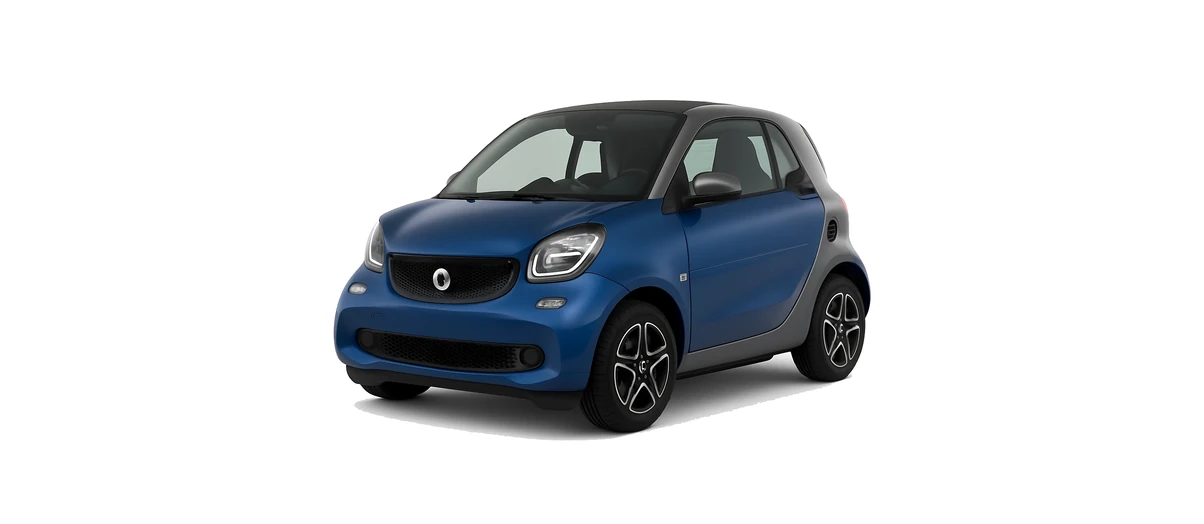
The Smart EQ fortwo is a compact two-seat battery-electric city car, sold in the UK and Europe in coupé and cabrio body styles. It is now discontinued, with Smart UK listing the fortwo as no longer in production, but it remains a popular used EV for drivers who want a very small urban car with low running costs and easy parking.
Charging the Smart EQ fortwo is slightly different from many modern electric cars. It uses a Type 2 AC charging inlet and, for 2020-2023 UK/EU EQ-badged models, is commonly listed with up to 22 kW AC charging. However, it does not have CCS DC rapid charging, so motorway-style rapid and ultra-rapid chargers are not suitable. Used buyers should also be aware that earlier EQ/ED cars can have different onboard charger specifications, often around 4.6 kW or 7 kW, with 22 kW available only on certain vehicles or as an option.
View Smart EQ fortwo Charging Cables
Smart EQ fortwo Battery and Charging Specifications
The Smart EQ fortwo is a battery-electric vehicle only. It is not a plug-in hybrid and it does not use a petrol range-extender. UK/EU EQ-badged fortwo models from 2020 to 2023 are listed with a 17.6 kWh gross battery capacity and an estimated usable capacity of around 16.7 kWh for both the coupé and cabrio.
The charging port is a Type 2 / Mennekes AC inlet, positioned behind the right-side rear charge flap. This is the connection used for home wallboxes, workplace chargers and public AC charging posts. There is no confirmed CCS/DC rapid charging port for the UK/EU Smart EQ fortwo, so the car cannot plug into standard CCS rapid chargers.
- Vehicle type: battery-electric vehicle
- Body styles: two-seat coupé and cabrio
- Battery: 17.6 kWh gross, around 16.7 kWh usable
- AC charging connector: Type 2
- Maximum AC charging: up to 22 kW on suitable versions and infrastructure
- DC rapid charging: not supported
Battery Options
For the 2020-2023 Smart EQ fortwo coupé and cabrio, the key battery figure is the 17.6 kWh nominal pack, with an estimated usable capacity of about 16.7 kWh. Unlike many larger EVs, there are not multiple long-range battery options to choose from in this model family.
This relatively small battery is central to the character of the car. The Smart EQ fortwo is designed primarily for urban and short-distance driving rather than long motorway journeys. The benefit is that the battery can be replenished quickly on the right AC charger, especially if the car has the 22 kW onboard charger and is connected to a suitable three-phase AC charge point.
AC Charging Speed
AC charging is the most important part of Smart EQ fortwo ownership. The 2020-2023 UK/EU coupé and cabrio are commonly listed at up to 22 kW AC charging through the Type 2 inlet. That is unusually high AC charging capability for a small EV of this age, but there are two important qualifications.
First, 22 kW charging requires a suitable three-phase AC charge point. Many UK home charge points are single-phase and will usually be limited to around 7.4 kW, even if the car itself is capable of more. Secondly, not every used Smart EQ fortwo should be assumed to have the 22 kW onboard charger. Owner manual information and UK charging guides indicate that some vehicles use 4.6 kW or 7 kW onboard chargers, while 22 kW may be fitted on certain versions or as an option, particularly on earlier EQ/ED examples.
Where a Smart EQ fortwo has the 22 kW onboard charger and is connected to a three-phase 22 kW AC post, charging can be very quick. Smart owner manual data gives a 10-80% charging time of around 40 minutes when using 3×32 A with the 22 kW charger. That makes a 22 kW AC public post especially useful for city top-ups, shopping trips and short stops.
For cable selection, a Type 2 to Type 2 cable is the normal choice for public AC charging and untethered home or workplace chargers. If your car has the 22 kW onboard charger and you want to use 22 kW public AC posts, choose a three-phase 22 kW-rated Type 2 cable. If the car is limited to 4.6 kW or 7 kW, a 22 kW cable will still work, but it will not make the car charge faster than its onboard charger allows.
DC Rapid Charging Speed
The Smart EQ fortwo does not support DC rapid charging. This is one of the most important points for route planning. Public rapid and ultra-rapid chargers in the UK generally use CCS for DC charging, but the Smart EQ fortwo uses a Type 2 AC inlet only and has no CCS rapid charging connection.
That means a Smart EQ fortwo driver should not plan journeys around CCS rapid chargers. Instead, look for public AC Type 2 charging posts. If your vehicle has the 22 kW onboard charger, a 22 kW AC post can provide a fast top-up for such a small battery. If your vehicle has a lower-power onboard charger, the car will charge at that lower AC rate even when plugged into a higher-rated AC post.
Range and Efficiency
The Smart EQ fortwo’s official and real-world range reflects its city-car purpose. EV Database lists the 2020-2023 coupé with a WLTP range of 83 miles, while the cabrio is listed slightly lower at 81 miles. Real-world estimates are around 60 miles for the coupé and around 55 miles for the cabrio, depending on weather, driving style, speed, terrain and use of heating or air conditioning.
In city driving, where speeds are lower and regenerative braking can help recover energy, the Smart EQ fortwo can be very efficient. On faster roads, especially in cold weather, range will typically reduce. This is worth considering if you regularly drive beyond urban areas or need to complete multiple trips before recharging.
Because the battery is small, the difference between a full battery and a low battery can arrive sooner than it would in a larger EV. The upside is that even modest AC charging sessions can add a meaningful amount of range. A short stop at a suitable AC post may be enough to cover the rest of a day’s urban driving.
Charging at Home
For most owners, home charging is the simplest way to run a Smart EQ fortwo. A dedicated home EV charge point with a Type 2 connection will usually be the most convenient option. In many UK homes, the electrical supply is single-phase, so charging is typically limited to around 7.4 kW. That is still more than enough for overnight charging and is well matched to the car’s small battery.
If you have an untethered home charger, you will need a Type 2 to Type 2 cable. If your charger is tethered, the cable is permanently attached and you simply plug it into the car’s Type 2 inlet. Owners who also use public AC posts often keep a separate Type 2 cable in the vehicle.
A 3-pin portable charger is generally best suited as a backup or occasional charging solution, but can be used regularly if a qualified electrician has confirmed the socket and electrical installation are suitable for sustained EV charging. Avoid using damaged sockets, extension leads or multi-socket adaptors, and follow the vehicle and charger manufacturer’s instructions.
Public Charging
Public charging for the Smart EQ fortwo is all about finding the right AC posts. Standard Type 2 public chargers, including many 7 kW and 22 kW destination chargers, can be useful. This includes chargers at supermarkets, car parks, workplaces, hotels, leisure centres and city-centre parking locations.
If your car has the 22 kW onboard charger, prioritising 22 kW AC posts can make a big difference. The Smart’s small battery means a compatible 22 kW post can add range quickly while you shop, work or stop for a coffee. If your car has a 7 kW or 4.6 kW onboard charger, you can still use many AC posts, but the charging session will be limited by the car rather than the post.
When using public chargers, remember that a Type 2 AC post is not the same as a CCS rapid charger. Some charging hubs have both AC and DC units on site, so check the connector type in the charging app before arriving. For the Smart EQ fortwo, you are looking for Type 2 AC charging.
Vehicle-Specific Features
The Smart EQ fortwo’s most distinctive charging feature is its AC-only approach. It cannot use DC rapid charging, but a 22 kW-equipped example can make very good use of three-phase Type 2 AC infrastructure. This makes it particularly well suited to towns and cities where 22 kW AC posts are available.
For 2020-2023 models, heat pump, battery preconditioning, vehicle-to-load, vehicle-to-home and vehicle-to-grid support are not listed as supported. In practical terms, owners should not rely on those features when planning charging or winter range. Cold weather can still affect range and charging behaviour, so it is sensible to charge with a margin during winter.
The charge flap is at the right-side rear of the car. When choosing a parking space at a public charger, allow for the cable route to that corner of the vehicle, especially in tight city parking bays.
Charging Tips
- Confirm the onboard charger before buying a cable. Do not assume every used Smart EQ fortwo has 22 kW AC charging.
- Check the vehicle documentation. The handbook, build specification, dealer records or diagnostic information may help confirm whether the car has a 4.6 kW, 7 kW or 22 kW onboard charger.
- Match the cable to your use. A three-phase 22 kW Type 2 cable is the right choice if your car supports 22 kW and you regularly use 22 kW AC posts.
- Do not expect DC rapid charging. CCS rapid chargers are not suitable for the Smart EQ fortwo.
- Use public AC mapping filters. Filter for Type 2 AC chargers, and for 22 kW AC where relevant.
- Charge little and often. With a small battery, regular top-ups are often more practical than waiting until the battery is very low.
Frequently Asked Questions
What charging cable does the Smart EQ fortwo use?
The Smart EQ fortwo uses a Type 2 AC charging inlet. For public AC posts and untethered home or workplace chargers, you normally need a Type 2 to Type 2 charging cable.
Can the Smart EQ fortwo use rapid chargers?
No. The UK/EU Smart EQ fortwo does not support CCS/DC rapid charging. It charges using Type 2 AC only.
Does every Smart EQ fortwo charge at 22 kW?
No. Later 2020-2023 UK/EU cars are commonly listed with up to 22 kW AC charging, but earlier EQ/ED vehicles and some used examples may have 4.6 kW or 7 kW onboard chargers. Always confirm the individual car’s specification.
Will a 22 kW cable make a 7 kW Smart charge faster?
No. A 22 kW cable can be used on lower-power cars, but charging speed is limited by the car’s onboard charger, the charge point and the electrical supply.
How far can the Smart EQ fortwo go on a charge?
For 2020-2023 models, the coupé is listed with an 83-mile WLTP range and the cabrio with an 81-mile WLTP range. Real-world estimates are closer to around 60 miles for the coupé and 55 miles for the cabrio.
What This Means for Drivers
The Smart EQ fortwo is best understood as a compact urban EV rather than a long-distance electric car. Its small battery, short city-focused range and lack of DC rapid charging mean it is not ideal for frequent motorway travel. However, for commuting, city errands and local driving, it can be very convenient and inexpensive to run.
The key is understanding its AC charging setup. A 22 kW-equipped Smart EQ fortwo can make excellent use of three-phase Type 2 AC posts, while a lower-power version will still be simple to charge at home and on public AC chargers, just at a slower rate. Before choosing a cable, especially for a used car, confirm the onboard charger specification so that the cable matches the car and the charging locations you actually use.
Looking for a Charging Cable for Smart EQ fortwo?
We offer Smart EQ fortwo charging cables for home, workplace and public Type 2 AC charging, including options suitable for drivers who need a cable for regular public charging.
View Smart EQ fortwo Charging Cables
Please note that this information is intended as a guide. Charging specifications may change due to model and year of manufacture. For precise information, always refer to your vehicle user manual.

