
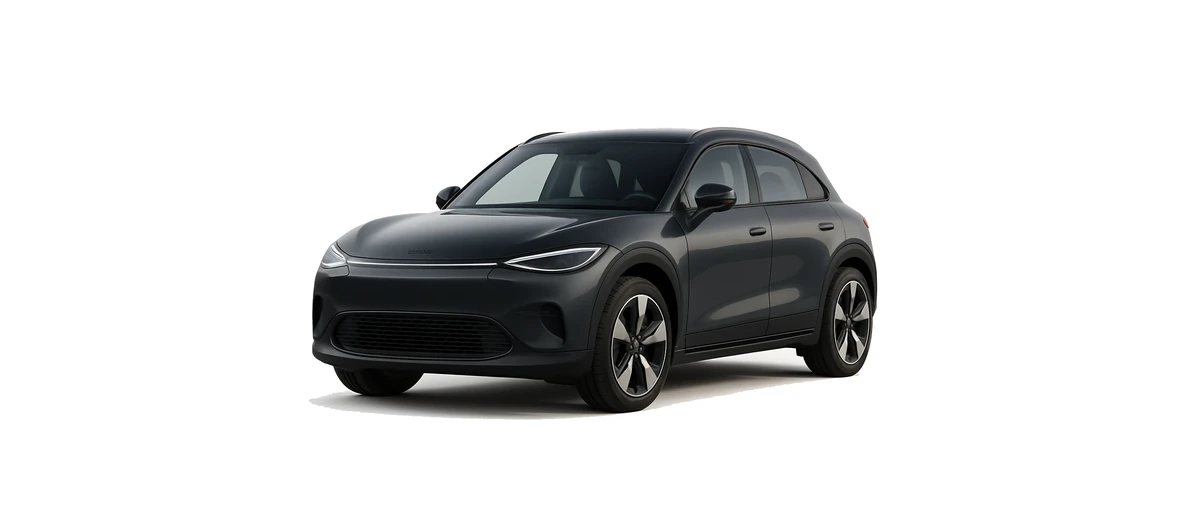
The Smart #3 is a compact electric SUV coupé and one of smart’s current UK battery-electric models. It is available in several trims, including Pro, Pro+, Premium and BRABUS, and that trim detail matters when you are planning home charging, public charging and cable selection. The UK Smart #3 range includes more than one battery size and not every version has the same AC charging capability.
For most owners, the day-to-day charging experience will be straightforward: use a Type 2 cable for AC charging at home or at public destination chargers, and use CCS rapid chargers for longer journeys. However, headline figures such as “up to 22 kW AC” and “up to 150 kW DC” should be read carefully, because the Smart #3 Pro, Pro+, Premium and BRABUS have different published charging specifications.
Smart #3 Battery and Charging Specifications
The UK-market Smart #3 is a battery-electric vehicle only. No plug-in hybrid, range-extender or petrol-assisted version is listed for the current UK range. It uses a Type 2 connector for AC charging and a CCS Combo 2 connector for DC rapid charging, which is the standard arrangement for most modern European-market electric cars.
Published figures vary by trim. As a guide, the Smart #3 range includes a smaller 49 kWh gross battery in the Pro and a larger 66 kWh gross battery in the Pro+, Premium and BRABUS. The longest official WLTP range is quoted for the Premium version at up to 283 miles, while the Pro+, BRABUS and Pro have different official range figures.
| Version | Battery | WLTP range | AC charging | DC rapid charging |
|---|---|---|---|---|
| Smart #3 Pro | 49 kWh gross / around 47 kWh usable | Up to 202 miles | Listed at 7.4 kW AC | Up to 130 kW DC |
| Smart #3 Pro+ | 66 kWh gross / around 62 kWh usable | Up to 270 miles | Listed at 7.4 kW AC by EV Database UK; check latest UK specification | Up to 150 kW DC |
| Smart #3 Premium | 66 kWh gross / around 62 kWh usable | Up to 283 miles | Up to 22 kW AC where specified | Up to 150 kW DC |
| Smart #3 BRABUS | 66 kWh gross / around 62 kWh usable | Up to 258 miles | Up to 22 kW AC where specified | Up to 150 kW DC |
Battery Options
The Smart #3 is best understood as having two main battery groups in the UK. The Pro uses the smaller pack, listed at 49 kWh gross and around 47 kWh usable. It is the entry version and has an official WLTP range of up to 202 miles. Independent data sources suggest a real-world range of around 160 miles, although actual results will depend heavily on speed, weather, road type, tyre choice and driving style.
The Pro+, Premium and BRABUS use the larger 66 kWh gross pack, with around 62 kWh usable capacity listed by EV Database UK. The Premium is the longest-range version in the published UK figures, at up to 283 miles WLTP. The Pro+ is quoted at up to 270 miles, while the BRABUS performance version is quoted at up to 258 miles. In typical mixed use, a real-world figure around the low-200-mile mark is a reasonable expectation for the larger-battery versions, but motorway driving in winter can reduce that.
Because battery size affects charging time, range between stops and how often you need to plug in, it is worth confirming your exact trim before comparing figures or choosing charging equipment.
AC Charging Speed
AC charging is what you use at home, at many workplaces and at destination chargers such as hotels, car parks and shopping centres. The Smart #3 uses a Type 2 connection for AC charging.
The important point is that the Smart #3 should not be treated as having one universal AC charging speed. Current data indicates that the Pro is listed at 7.4 kW AC, and EV Database UK also lists the Pro+ at 7.4 kW AC. The Premium and BRABUS are listed with up to 22 kW AC capability. smart UK’s public material also refers to up to 22 kW AC in its general technical and Premium-focused information, so owners should check their own vehicle specification if 22 kW three-phase charging is important.
In the UK, most domestic wallboxes are single-phase units rated at up to 7.4 kW. That means even a Smart #3 with 22 kW AC capability will normally charge at up to around 7.4 kW at a typical home, unless the property has a suitable three-phase supply and a compatible three-phase charger. A 22 kW-capable car can be useful if you regularly use three-phase workplace or public AC chargers, but it will not automatically make a normal single-phase home charger faster.
DC Rapid Charging Speed
For longer journeys, the Smart #3 uses the CCS Combo 2 connector for DC rapid charging. With DC charging, the cable is attached to the charger, so you do not need to use your own Type 2 cable at motorway rapid chargers.
The smaller-battery Smart #3 Pro is listed with a DC peak of up to 130 kW and a 10-80% charging time of around 32 minutes. The larger-battery Pro+, Premium and BRABUS are listed with up to 150 kW DC and a 10-80% time of around 30 minutes. smart’s UK information also refers to sub-30-minute rapid charging in suitable conditions.
As with all EVs, the maximum DC charging figure is a peak rather than a constant speed. Charging power will taper as the battery fills, and the rate you see at the charger can be affected by battery temperature, starting state of charge, charger output, site load and the vehicle’s own charging curve. For the quickest journey stops, it is usually better to arrive with a lower state of charge and charge to around 80%, rather than waiting for the final 20% to complete.
Range and Efficiency
The headline range figure for the Smart #3 is up to 283 miles WLTP, but this applies to the Premium version rather than every trim. The Pro is quoted at up to 202 miles WLTP, the Pro+ at up to 270 miles and the BRABUS at up to 258 miles. The BRABUS has more performance and all-wheel drive, which helps explain why its official range is lower than the Premium despite using the same gross battery size.
Real-world range will vary. In warm weather, on slower A-roads and in urban driving, many EVs get closer to their official figures. On cold, wet motorway journeys, energy use rises and range falls. Cabin heating, higher cruising speeds, roof accessories, tyre pressure and frequent acceleration all make a difference.
For planning purposes, owners of the larger-battery Smart #3 versions may find it more useful to think in terms of roughly 200 miles or a little more between longer stops in favourable mixed driving, rather than assuming the full WLTP figure will always be available. Pro drivers should plan around the smaller battery and shorter official range, particularly on winter motorway trips.
Charging at Home
Home charging is usually the most convenient and cost-effective way to run a Smart #3. A dedicated 7.4 kW home wallbox will suit most UK households with a single-phase electricity supply. Depending on battery size and starting charge level, the car can typically be replenished overnight, making daily use simple if you have off-street parking.
If your Smart #3 is a Premium or BRABUS with up to 22 kW AC capability, that does not necessarily mean you can charge at 22 kW at home. Three-phase domestic supplies are less common in the UK. To use the maximum AC rate, you would need a compatible three-phase electrical supply, a three-phase charger and a vehicle specification that supports 22 kW AC.
A 3-pin charger is generally best suited as a backup or occasional charging solution, but can be used regularly if a qualified electrician has confirmed the socket and electrical installation are suitable for sustained EV charging. A normal domestic socket is much slower than a wallbox, and long charging sessions put sustained load on the circuit, so professional electrical advice is important.
Public Charging
For public AC charging, carry a suitable Type 2 cable. Many public AC posts are untethered, meaning the driver supplies the cable. These chargers are common in town centres, car parks, leisure destinations, hotels and workplaces. The actual charging speed will be limited by the charger, your cable, the car’s onboard AC charger and the site’s electrical supply.
For rapid and ultra-rapid public charging, use CCS chargers. These have their own attached cable and are found at motorway services, charging hubs and many larger public charging locations. The Smart #3’s 130 kW or 150 kW peak capability means it can make good use of many modern rapid chargers, but choosing an ultra-rapid unit does not guarantee the car will take the charger’s full advertised output.
On long trips, plan stops around the 10-80% window where charging is usually most efficient. If your route includes multiple charging options, it can be quicker to do two shorter rapid-charge stops than one long session to 100%.
Vehicle-Specific Features
The Smart #3 is based on Geely’s SEA2 dedicated EV platform and is listed by EV Database UK as using a 400 V electrical architecture. It also supports battery preconditioning, with available data indicating automatic preconditioning using navigation. In practice, this can help prepare the battery for rapid charging, especially in colder weather, if the car knows you are heading to a suitable charger.
Heat pump availability should be treated as trim-dependent. Reliable UK information clearly associates it with the Premium trim, while wider data sources indicate that availability can vary by version. If a heat pump is important to you for winter efficiency, confirm the exact specification of your vehicle.
Vehicle-to-load is also listed as available, with data sources indicating support up to 3.7 kW AC where fitted or enabled. This can allow the car to power external electrical equipment using a suitable adapter. Treat this as specification-dependent rather than assuming every Smart #3 has it. Vehicle-to-grid and vehicle-to-home capability are not listed as available for the Smart #3 in the current data.
Charging Tips
- Check whether your car is Pro, Pro+, Premium or BRABUS before relying on published charging figures.
- Use a Type 2 cable for home, workplace and public AC charging.
- Use CCS rapid chargers for motorway and long-distance charging; the charger provides the cable.
- Do not assume every Smart #3 can charge at 22 kW AC. Current data points to this being trim-dependent.
- For most UK homes, expect a maximum of around 7.4 kW from a single-phase wallbox.
- On long journeys, aim for rapid charging sessions from around 10% to 80% where practical.
- Use navigation to a rapid charger where battery preconditioning is supported, especially in cold weather.
- If using V2L, check your vehicle specification and use compatible equipment only.
Frequently Asked Questions
What charging cable does the Smart #3 use?
The Smart #3 uses a Type 2 connection for AC charging. For DC rapid charging it uses CCS Combo 2, with the rapid charger’s tethered cable plugged into the vehicle.
Can every Smart #3 charge at 22 kW AC?
No. Current trim-level data suggests that the Premium and BRABUS are the key UK versions with up to 22 kW AC capability, while the Pro and Pro+ are listed at 7.4 kW AC by EV Database UK. Check the latest UK specification for your exact car before buying hardware specifically for 22 kW charging.
How fast does the Smart #3 rapid charge?
The Pro is listed at up to 130 kW DC and around 32 minutes from 10-80%. The larger-battery versions are listed at up to 150 kW DC and around 30 minutes from 10-80%, depending on conditions.
What is the longest-range Smart #3?
The Premium has the highest published UK WLTP figure at up to 283 miles. The Pro+ is quoted at up to 270 miles, the BRABUS at up to 258 miles and the Pro at up to 202 miles.
Do I need a three-phase charger for the Smart #3?
Not for normal home charging. Most UK owners will use a single-phase 7.4 kW wallbox. A three-phase charger is only useful if your property or workplace has a compatible three-phase supply and your specific Smart #3 supports higher AC charging rates.
What This Means for Drivers
The Smart #3 is easy to live with as an EV, but it rewards a trim-aware approach. If you have a Pro, your car has the smaller battery and lower published rapid-charging peak. If you have a Pro+, Premium or BRABUS, you get the larger battery, but AC charging capability still appears to vary by version. For most UK owners, a Type 2 cable and a 7.4 kW home wallbox will cover everyday charging needs, while CCS rapid charging will handle longer trips.
The main advice is simple: confirm your exact trim, choose a suitable Type 2 cable, and understand the difference between home AC charging and public DC rapid charging. That will help you avoid overpaying for capability you cannot use, while still getting the best from the Smart #3’s available charging performance.
Looking for a Charging Cable for Smart #3?
We offer Smart #3 charging cables for UK owners who need a Type 2 cable for home, workplace or public AC charging. Choose a cable that suits your charging setup and your vehicle’s trim-specific capability.
Please note that this information is intended as a guide. Charging specifications may change due to model and year of manufacture. For precise information, always refer to your vehicle user manual.

