
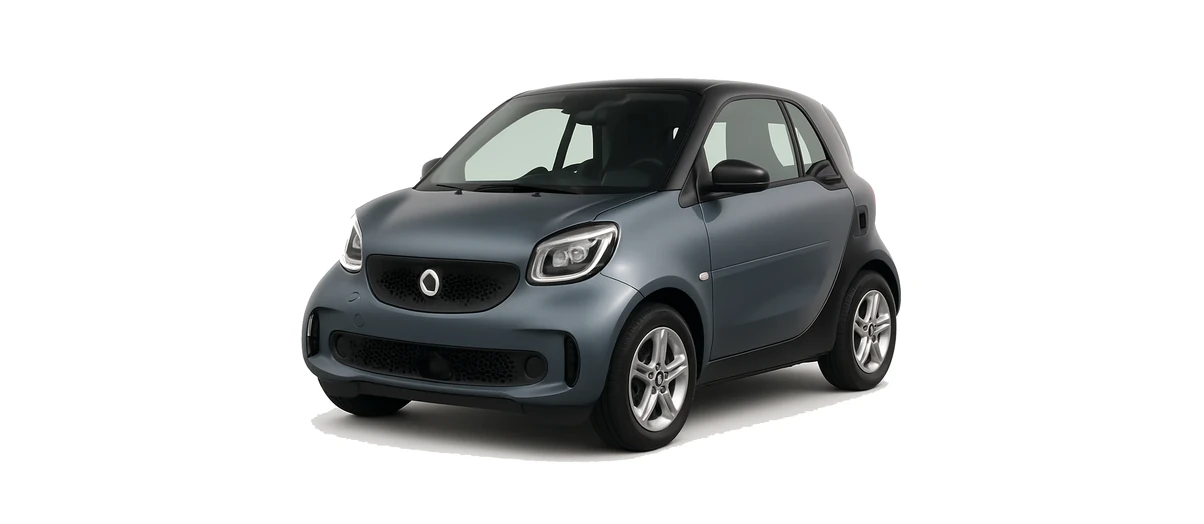
The Smart #1 is a compact electric SUV/crossover and one of the more interesting small EVs on sale in the UK because its charging specification depends heavily on the trim. UK deliveries began in 2023, and current cars include 49 kWh Pure and Pro versions alongside 66 kWh Pro+, Premium and BRABUS models. That means the right charging advice starts with identifying which Smart #1 you own or are considering.
All UK Smart #1 models are battery-electric vehicles with a Type 2 connection for AC charging and a CCS Combo 2 connection for DC rapid charging. However, not every version has the same onboard AC charger. Pure and Pro models are generally listed with 7.4 kW AC charging, while Premium and BRABUS models are associated with 22 kW three-phase AC charging. Pro+ is the one to check carefully, as UK sources differ on whether it has 7.4 kW or 22 kW AC capability.
Smart #1 Battery and Charging Specifications
The Smart #1 uses the Geely SEA2 dedicated EV platform and is sold in the UK as a BEV only. There is no plug-in hybrid or range-extender version identified for the UK market. Charging is via a Type 2 inlet for home and public AC charging, with CCS Combo 2 used for rapid and ultra-rapid DC charging.
| Specification | Smart #1 UK guidance |
|---|---|
| Vehicle type | Battery-electric compact SUV / crossover |
| AC charging port | Type 2 |
| DC rapid charging port | CCS Combo 2 |
| Battery options | 49 kWh gross / 47 kWh usable or 66 kWh gross / 62 kWh usable |
| AC charging | 7.4 kW on Pure/Pro; 22 kW on Premium/BRABUS; Pro+ requires specification check |
| DC rapid charging | Up to around 130 kW on 49 kWh versions; up to 150 kW on 66 kWh versions |
| Typical 10-80% DC rapid charge | About 30 minutes in suitable conditions, with the 49 kWh version sometimes estimated slightly longer |
Battery Options
The current UK Smart #1 range is split between two battery sizes. Pure and Pro models use a 49 kWh gross battery, with usable capacity listed at around 47 kWh. This pack is an LFP battery and is associated with a WLTP range of 193 miles. These versions are the main outliers for charging guidance because they are typically listed with 7.4 kW AC charging and a lower DC peak of around 130 kW.
The Pro+, Premium and BRABUS versions use a larger 66 kWh gross battery, with usable capacity listed at around 62 kWh. Pro+ is quoted at roughly 260-261 miles WLTP, Premium at up to 273 miles WLTP, and BRABUS at around 248-249 miles depending on source and rounding. The BRABUS is the performance-focused all-wheel-drive version, so its official range is lower than the Premium despite using the same overall battery size.
Because the Smart #1 line-up has changed and expanded since launch, it is worth checking your car’s exact trim, model year and build specification rather than relying on a single headline figure.
AC Charging Speed
AC charging is where Smart #1 owners need to pay the most attention. A 32A single-phase Type 2 cable is the most broadly useful minimum choice for UK use because it supports up to 7.4 kW, which is the typical maximum output of many home wallboxes. It will also work at public AC charge points where the car and charger negotiate the appropriate speed.
Pure and Pro 49 kWh models are listed with 7.4 kW AC charging, so a single-phase 32A Type 2 cable is normally sufficient. At 7.4 kW, a 20-80% charge will usually be an easy overnight session, though exact timing depends on starting charge level, temperature, charger output and losses.
Premium and BRABUS models are listed with a 22 kW three-phase onboard AC charger. This can be useful at certain workplace, kerbside and destination charge points that provide three-phase AC power. To take advantage of 22 kW AC charging, you need both a suitable three-phase AC charge point and a three-phase Type 2 cable. On most UK home wallboxes, these cars will still charge at around 7.4 kW because most domestic supplies are single-phase.
The Pro+ needs particular care. Some current UK listings show it with 7.4 kW AC charging, while EV Database lists 22 kW. If you own a Pro+ or are buying one used, verify the AC charger specification against the vehicle’s build sheet, handbook, order documentation or a Smart retailer before choosing a cable specifically for 22 kW use.
DC Rapid Charging Speed
For longer trips, the Smart #1 uses CCS Combo 2 rapid charging. The 66 kWh versions are generally quoted with a peak DC charging rate of up to 150 kW, while the 49 kWh Pure/Pro versions are listed at around 130 kW. Under good conditions, a 10-80% rapid charge is typically around 30 minutes, although charging speed can vary depending on battery temperature, charger performance, state of charge and how busy the charging site is.
For best results in a 66 kWh Smart #1, choose a rapid or ultra-rapid charger rated at 150 kW or higher where available. A higher-rated charger will not force more power into the car than it can accept, but it helps ensure the charger is not the limiting factor. The 49 kWh versions will not reach 150 kW, so a 150 kW charger is still suitable but the car is expected to peak closer to 130 kW.
Range and Efficiency
Official WLTP range varies significantly across the Smart #1 line-up. Pure and Pro versions are quoted at 193 miles, Pro+ at about 260-261 miles, Premium at up to 273 miles, and BRABUS at roughly 248-249 miles. Real-world range will usually be lower than WLTP, particularly in winter, at motorway speeds or when using heating and other electrical loads.
As a broad planning guide, EV Database estimates real-world range for some 66 kWh Smart #1 versions at around 205 miles, while the 49 kWh Pure is estimated lower. Your own results may be better or worse depending on driving style, route, weather, tyres, load and use of cabin heating. For regular use, many owners find it more practical to think in terms of weekly mileage and charging routine rather than trying to use the full official range every time.
Charging at Home
For most Smart #1 owners, a dedicated 7.4 kW home wallbox is the most convenient way to charge. It allows the car to be topped up overnight, makes it easier to use off-peak electricity tariffs, and is more suitable for regular EV charging than a domestic socket. Even Premium and BRABUS models with 22 kW AC capability will typically charge at around 7.4 kW at home unless you have a suitable three-phase supply and compatible charger.
A 3-pin charger is generally best suited as a backup or occasional charging solution, but can be used regularly if a qualified electrician has confirmed the socket and electrical installation are suitable for sustained EV charging. Standard household sockets were not originally designed with repeated long-duration high-load EV charging in mind, so professional checking is important if you intend to rely on one.
For battery care, a routine such as charging to around 80% for daily use and only charging to 100% when you need the extra range is sensible for many EV drivers. The Smart #1 also supports battery preconditioning, which can help prepare the battery for more effective charging in the right circumstances.
Public Charging
Public charging for the Smart #1 falls into two main types: AC destination charging and DC rapid charging. AC charging points are common at workplaces, car parks, hotels, supermarkets and some kerbside locations. These usually require your own Type 2 cable unless the charger has a tethered lead. For all Smart #1 versions, a Type 2 cable is the correct AC cable type.
If you drive a Pure or Pro, a 32A single-phase Type 2 cable normally matches the car’s 7.4 kW AC capability. If you drive a Premium or BRABUS and regularly use 22 kW three-phase AC posts, a three-phase Type 2 cable is worth considering because it allows the car to use its higher AC charging capability where the infrastructure supports it. For a Pro+, check the individual car’s AC specification before assuming 22 kW capability.
On motorways and major routes, DC rapid charging is the faster option. These chargers have their own tethered CCS cable, so you do not use your Type 2 cable for rapid charging. Charging from around 10-80% is usually the most time-efficient window on a long journey, as charging slows significantly at higher states of charge.
Vehicle-Specific Features
The Smart #1 includes several EV features that are relevant to charging and ownership. Battery preconditioning is listed as standard, helping the car manage battery temperature for charging performance and efficiency. Availability and behaviour can depend on route planning, temperature and software, so it is best to use the car’s built-in navigation and charging functions where possible before rapid charging.
Vehicle-to-load capability is also listed, with EV Database showing support up to 3.7 kW through a Type 2 adapter. V2L can be useful for powering certain external electrical devices when used correctly and within the vehicle’s limits. However, available sources list vehicle-to-home and vehicle-to-grid capability as not supported, so the Smart #1 should not be treated as a home backup battery or grid export vehicle.
Heat pump availability is not universal. It is associated with Premium and BRABUS trims in current equipment listings, while Pure, Pro and Pro+ are generally listed without it. A heat pump can help efficiency in colder weather, but range will still vary with temperature, speed and driving conditions.
Charging Tips
- Identify your trim first: Pure/Pro, Pro+, Premium or BRABUS. This affects battery size, AC charging speed and expected range.
- Choose a Type 2 cable for AC charging. It is the correct connector for UK Smart #1 home and public AC charging.
- A 32A single-phase Type 2 cable is a practical minimum for most UK owners and supports typical 7.4 kW wallbox charging.
- Premium and BRABUS owners who often use three-phase public or workplace AC chargers should consider a three-phase Type 2 cable.
- Do not assume every Smart #1 can charge at 22 kW AC. Pure and Pro are 7.4 kW, and Pro+ should be checked individually.
- Use CCS rapid chargers for long journeys, ideally rated at 150 kW or above for 66 kWh versions when available.
- For everyday use, a 20-80% charging routine is often a good balance between convenience, range and battery care.
Frequently Asked Questions
What charging cable does the Smart #1 use?
The Smart #1 uses a Type 2 cable for AC charging. For DC rapid charging, it uses the CCS Combo 2 connector, and the rapid charger provides the cable.
Can every Smart #1 charge at 22 kW AC?
No. Pure and Pro versions are listed at 7.4 kW AC. Premium and BRABUS models are associated with 22 kW AC charging. Pro+ specifications conflict between sources, so the individual car should be checked before assuming 22 kW AC capability.
How fast can the Smart #1 rapid charge?
The 66 kWh versions are generally listed at up to 150 kW DC, while 49 kWh Pure/Pro versions are listed at around 130 kW. A 10-80% rapid charge is typically around 30 minutes in suitable conditions.
Is the Smart #1 a plug-in hybrid?
No. UK Smart #1 models are battery-electric only, with no petrol engine and no plug-in hybrid version identified.
Should I buy a single-phase or three-phase Type 2 cable?
For most UK home charging, a 32A single-phase Type 2 cable is sufficient. If you have a Premium or BRABUS and regularly use 22 kW three-phase AC chargers, a three-phase cable can be useful. Pro+ owners should verify their vehicle’s AC charging specification first.
What This Means for Drivers
The Smart #1 is straightforward to live with once you understand the trim differences. All versions use Type 2 AC and CCS rapid charging, but the battery size and AC capability are not the same across the range. Pure and Pro models are best treated as 7.4 kW AC cars with a smaller 49 kWh battery, while Premium and BRABUS models can make use of 22 kW AC charging at suitable three-phase posts. Pro+ owners should take extra care to confirm the actual onboard charger fitted to their car.
For daily UK use, a home wallbox and a suitable Type 2 cable will cover most charging needs. Rapid charging is mainly for longer journeys, where the Smart #1’s CCS capability and roughly 30-minute 10-80% charging window make it practical for motorway and inter-city driving.
Looking for a Charging Cable for Smart #1?
If you need a replacement or additional cable, choose a Smart #1 charging cable that matches how you charge: single-phase 32A Type 2 for typical home charging, or a three-phase Type 2 cable if your trim and regular charging locations support 22 kW AC.
Please note that this information is intended as a guide. Charging specifications may change due to model and year of manufacture. For precise information, always refer to your vehicle user manual.

