
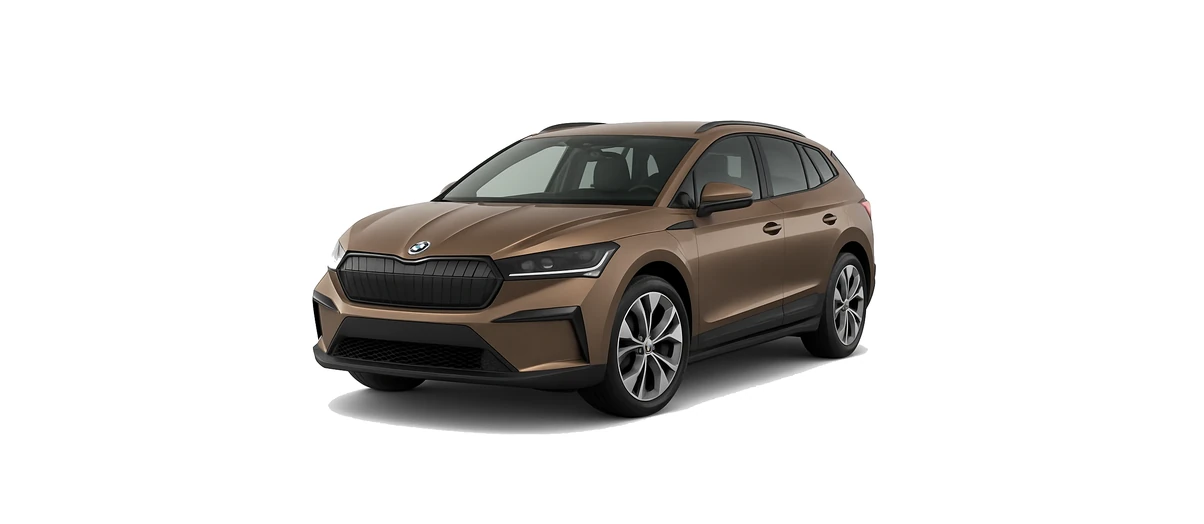
The Skoda Elroq is a compact all-electric SUV in the UK market, sitting on the Volkswagen Group MEB electric vehicle platform. It uses a Type 2 connection for AC charging and a CCS Combo 2 connection for DC rapid charging, which makes it compatible with the standard charging infrastructure used across the UK and Europe.
This guide explains what UK Elroq owners need to know about charging at home, using public chargers and choosing the right cable. The current UK range is mainly built around the Elroq 60, Elroq 85 and Elroq vRS, while the earlier Elroq 50 may be relevant for used buyers. Because some published battery and rapid-charging figures differ between current UK brochure data and later model-year information, the safest approach is to identify your exact variant before relying on a headline number.
View Skoda Elroq Charging Cables
Skoda Elroq Battery and Charging Specifications
The Skoda Elroq is a battery-electric vehicle, not a plug-in hybrid. UK cars use a Type 2 inlet for AC charging at home, at work and at many destination chargers. For high-power motorway and public rapid charging, the Elroq uses CCS Combo 2.
Most UK owners will charge from a single-phase home wallbox at around 7.2–7.4 kW. Some Elroq data lists an 11 kW onboard AC charger, but 11 kW AC normally requires a suitable three-phase supply and a compatible charger. That is less common in UK homes, although it may be available at some workplaces, commercial premises and public AC charge points.
For DC rapid charging, the headline performance depends on the Elroq variant and model year. Current and model-year update sources indicate rapid charging from 10–80% in roughly 26–29 minutes on higher-capacity models in favourable conditions, but peak kW figures are not identical across all sources. The Elroq 60 is generally listed with a lower DC peak than the 85 and vRS, so it should not be assumed that every Elroq has the same rapid-charging capability.
Battery Options
The Elroq range is variant-led, so battery size is one of the first things to check. Current UK brochure information lists the Elroq 60 with a 61 kWh gross battery and around 58 kWh usable capacity. This is the smaller-battery option and is likely to suit drivers who want a practical electric SUV for commuting, local use and regular home charging.
The Elroq 85 is the longest-range version in the current UK brochure, with a WLTP figure of up to 370 miles depending on trim and equipment. The brochure lists an 84 kWh gross battery with around 79 kWh usable capacity for some UK Elroq 85 versions. However, later model-year information from Škoda and independent database sources lists 82 kWh gross and around 77 kWh usable for Elroq 85-related models. Because of that conflict, owners should check their vehicle documents, VIN-specific information or the latest UK configurator before quoting exact capacity.
The Elroq vRS is the performance-focused all-wheel-drive model. The current UK brochure lists it with an 82 kWh gross battery and around 77 kWh usable capacity, with a WLTP range of around 344 miles depending on specification. Again, some separate public pages have used different figures, so exact vRS battery and peak charging details should be confirmed against the specific car.
Used buyers may also encounter the earlier Elroq 50. This version is no longer listed as a current new UK order option in the research data, so anyone considering an early or used car should check the exact battery, onboard charger and rapid-charge specification before purchasing accessories or planning regular journeys.
AC Charging Speed
AC charging is the type of charging most Elroq owners will use most often. At home, a dedicated wallbox on a typical UK single-phase supply usually charges at up to around 7.2–7.4 kW. Škoda UK brochure data gives approximate 7.2 kW charging times of around 10 hours for the Elroq 60 and around 13 hours for the Elroq 85 and vRS.
These figures are useful for overnight charging. In real use, many drivers will not be charging from empty to full every night. If you arrive home with 40% remaining and charge to an 80% daily limit, the session will be much shorter than the full 0–100% time.
Although the Elroq’s onboard AC capability is listed as 11 kW in some sources, that should be understood in context. A car with an 11 kW onboard charger can only make use of 11 kW AC when the supply and charge point can deliver it. Many UK homes are single-phase, so the practical home rate is usually closer to 7.4 kW. If you have a three-phase property or workplace charger, the Elroq may be able to charge faster on AC than it would from a standard single-phase home wallbox.
DC Rapid Charging Speed
DC rapid charging is used when you need to add range quickly on longer journeys. With CCS rapid charging, the charger bypasses the car’s AC onboard charger and supplies DC power directly to the battery system.
For the Elroq, it is best to think in terms of the 10–80% charging window rather than 0–100%. Battery charging naturally slows as the pack fills, and Škoda notes that charging above 80% becomes slower to help protect battery longevity. On a suitable rapid charger, higher-capacity Elroq versions are generally quoted at around 26–29 minutes for 10–80%, depending on variant, battery temperature, state of charge and model-year data. Elroq 60 versions are listed with a lower peak DC rate in current model-year information, so their rapid-charge behaviour will differ from the larger-battery models.
As with all EVs, real rapid-charging speed depends on more than the published peak. Cold battery temperature, a high starting state of charge, a busy or shared charger, or charger output limitations can all reduce the rate. For best results, arrive at a rapid charger with the battery warmed and at a lower state of charge, then continue your journey when charging speed begins to taper significantly.
Range and Efficiency
The highest current UK brochure WLTP figure for the Elroq is up to 370 miles for the Elroq 85, depending on trim and equipment. The vRS is listed at around 344 miles WLTP, while the Elroq 60 is positioned below the 85 because of its smaller battery. WLTP figures are useful for comparing cars, but real-world range will vary.
In mixed UK driving, weather, speed and wheel size can make a noticeable difference. Motorway driving in winter will usually use more energy than urban or A-road driving in mild weather. Heating demand, roof bars, heavy loads and tyre condition can also affect efficiency. A real-world figure around the high-200-mile region may be a reasonable planning reference for some larger-battery Elroq use cases, but your own car’s consumption history will be more useful once you have driven it for a few weeks.
The optional heat pump may help efficiency in colder conditions by reducing the amount of energy needed for cabin heating, but it is not listed as standard across all UK Elroq trims. If winter range is a priority, check whether the specific car has it fitted.
Charging at Home
For most Elroq drivers, home charging will be the cheapest and most convenient way to run the car. A dedicated 7.4 kW wallbox lets you plug in when you get home and wake up with the battery at your chosen target. If you use an EV electricity tariff with cheaper overnight rates, scheduled charging can reduce running costs further.
Škoda recommends an 80% target for day-to-day charging and 100% before longer journeys. This is sensible battery care advice: keeping the car at 100% for everyday use is usually unnecessary, while charging to 100% before a long trip gives you maximum starting range when you need it.
A tethered home charger has its own cable attached, while an untethered wallbox requires a separate Type 2 to Type 2 charging cable. Many public AC chargers are also untethered, so carrying a suitable Type 2 cable in the boot is useful even if your home wallbox is tethered.
A 3-pin charger is generally best suited as a backup or occasional charging solution, but can be used regularly if a qualified electrician has confirmed the socket and electrical installation are suitable for sustained EV charging. A domestic plug will charge much more slowly than a wallbox, so it is better viewed as a fallback option rather than the normal charging method for a large-battery electric SUV.
Public Charging
For public charging, the cable you need depends on the charger type. Most rapid and ultra-rapid CCS chargers have their own cable attached, so you do not use your own cable for DC rapid charging. You simply connect the charger’s CCS plug to the Elroq’s charging port.
Many slower public AC chargers, workplace chargers, hotel chargers and town-centre destination chargers are untethered. For these, you need your own Type 2 to Type 2 cable. A 32 amp Type 2 cable is the usual choice for making full use of single-phase 7.4 kW charging. If you regularly use three-phase AC posts and your vehicle supports 11 kW AC charging, a three-phase Type 2 cable may be appropriate.
On long journeys, plan stops around the 10–80% rapid-charging window. Charging to 100% on a rapid charger is usually time-inefficient unless you genuinely need the extra range to reach your destination or the next reliable charger.
Vehicle-Specific Features
Battery preconditioning is an important Elroq feature confirmed in the research data for current model-year cars. When supported, the car can prepare the battery for rapid charging, particularly when a suitable charging stop is entered into the navigation system. This can help the battery reach a better temperature for faster charging.
Vehicle-to-load capability is available on some Elroq versions when the relevant equipment is fitted. UK brochure information links a 230 V boot socket, rated at up to 3.6 kW / 16 A, to an equipment package or option. This can be useful for powering compatible devices, but it should not be assumed to be standard on every car. V2G and V2H support should not be assumed for the Elroq, as the checked model-year data does not list those functions as available.
The heat pump is also an option rather than a universal standard feature in the UK brochure. If comparing trims or used cars, it is worth checking the original specification rather than relying only on the model name.
Charging Tips
- Use 80% for daily charging: Set an 80% charge limit for routine use, then charge to 100% before longer journeys when extra range is useful.
- Know your variant: Elroq 60, 85, vRS and early 50 versions do not all share the same battery or charging figures.
- Carry a Type 2 cable: It is needed for many untethered public AC chargers and untethered home wallboxes.
- Precondition before rapid charging: If your car supports navigation-based battery preconditioning, route to the rapid charger through the car’s navigation system.
- Do not chase 100% on DC: Rapid charging slows significantly above 80%, so shorter stops are often quicker overall.
- Check used-car specifications: Early Elroq 50 and 2025 cars may differ from current UK model-year data.
Frequently Asked Questions
What charging connector does the Skoda Elroq use?
The Skoda Elroq uses Type 2 for AC charging and CCS Combo 2 for DC rapid charging.
How long does the Skoda Elroq take to charge at home?
Using UK brochure 7.2 kW figures, the Elroq 60 takes around 10 hours for a full charge, while the Elroq 85 and vRS are around 13 hours. Partial top-ups, such as 40–80%, will be much quicker.
Can the Elroq charge at 11 kW AC?
Some sources list an 11 kW onboard AC charger, but 11 kW AC generally requires a suitable three-phase supply and compatible charge point. Most UK homes will charge at around 7.2–7.4 kW.
Does the Skoda Elroq support rapid charging?
Yes. The Elroq supports CCS rapid charging. Depending on variant and model-year data, higher-capacity versions are generally quoted at around 26–29 minutes from 10–80% in suitable conditions.
Is V2L standard on the Elroq?
No. Vehicle-to-load capability is equipment-dependent. The UK brochure links the 230 V boot socket to a package or option, so check the specification of the individual car.
What This Means for Drivers
The Skoda Elroq should be straightforward to live with in the UK if you match your charging setup to your actual use. For most households, a 7.4 kW home wallbox and a suitable Type 2 cable will cover everyday charging. Public CCS rapid charging then provides the flexibility needed for longer journeys.
The main point is to avoid treating all Elroq models as identical. The Elroq 60, Elroq 85, vRS and early Elroq 50 have different battery and charging characteristics, and some published figures vary between sources. If you are buying a cable, comparing used cars or planning long-distance charging stops, confirm the exact vehicle version first.
Looking for a Charging Cable for Skoda Elroq?
We offer charging cables for the Skoda Elroq, including Type 2 options for home, workplace and public AC charging. Choose a cable that matches your charging setup, whether you use a single-phase home wallbox or regularly connect to public AC charge points.
View Skoda Elroq Charging Cables
Please note that this information is intended as a guide. Charging specifications may change due to model and year of manufacture. For precise information, always refer to your vehicle user manual.

