
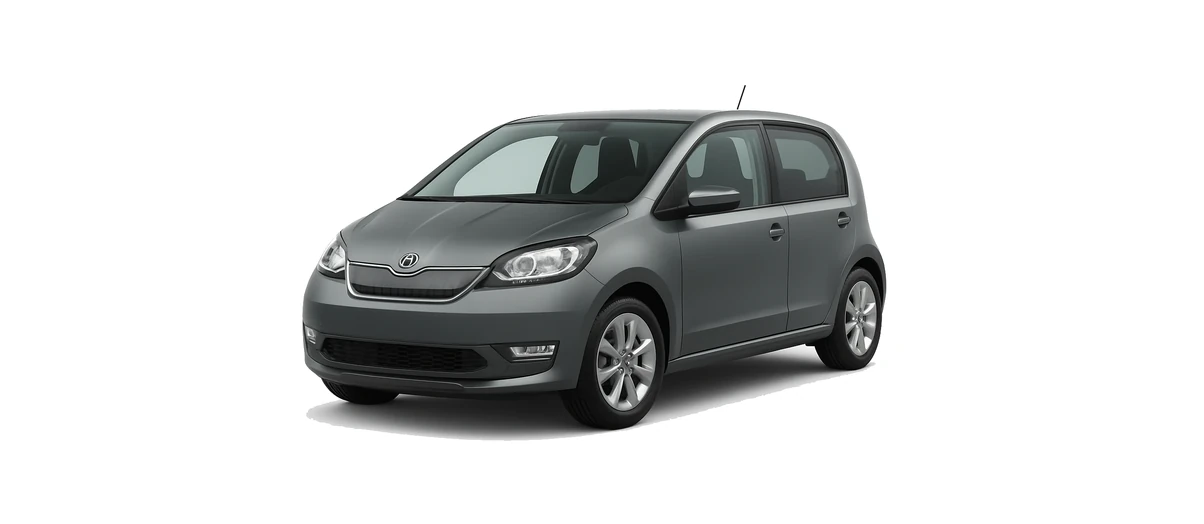
The Skoda CITIGO-e, also known in the UK as the Skoda CITIGOe iV, is a compact full electric city hatchback that arrived in the UK in early 2020. It was sold in very small numbers and is now a used-car-only choice, so this guide is aimed at owners and buyers checking how a second-hand example charges in day-to-day use.
As a small-battery urban EV, the CITIGO-e is at its best when charged at home, at work or on slower public AC chargers using a Type 2 cable. Some cars can also use CCS rapid chargers, but this is an important point to check on a used example because UK entry-level SE cars may not all have the rapid-charging hardware fitted.
View Skoda CITIGO-e Charging Cables
Skoda CITIGO-e Battery and Charging Specifications
The Skoda CITIGO-e is a battery electric vehicle, not a plug-in hybrid. It has no petrol engine and should not be confused with Skoda iV plug-in hybrid models such as the Superb iV or Octavia iV.
Official Skoda technical material lists a 36.8 kWh gross battery capacity, with 32.3 kWh usable. The electric motor is rated at 61 kW, which is well suited to city driving and shorter commuter routes. The charging inlet is positioned on the rear offside, on the right-rear flank of the car.
For AC charging, the CITIGO-e uses a Type 2 connection and supports up to 7.2 kW. For DC rapid charging, suitably equipped cars use a CCS Combo 2 connection, with official material quoting up to around 40 kW. However, not every used UK car should be assumed to have CCS: SE L cars were reported as having rapid charging as standard, while SE cars required it as an option.
Battery Options
The UK-market Skoda CITIGO-e was offered with a single battery pack rather than multiple battery sizes. The key figures are:
- Battery: 36.8 kWh gross / 32.3 kWh usable
- Powertrain: full electric, front-wheel-drive city car
- Official WLTP range: up to around 162 miles
- Real-world mixed range estimate: around 125 miles, depending on conditions
- AC charging: Type 2, up to 7.2 kW
- DC rapid charging: CCS, up to around 37–40 kW where fitted
Because the car is now only available used, condition, age, temperature, driving style and previous charging habits can all affect the range and charging experience. A well-kept example can still make a very practical local EV, but it is worth setting realistic expectations before relying on it for frequent long motorway trips.
AC Charging Speed
AC charging is the CITIGO-e’s day-to-day strength. On a 7 kW home wallbox or compatible public AC post, the car can charge at up to 7.2 kW. EV Database lists a typical 0–100% AC charge time of about 5 hours 30 minutes, while official Skoda material quotes around 4 hours 15 minutes to 80% on a suitable wallbox.
In practical terms, this means the CITIGO-e can usually be refilled comfortably overnight at home, or topped up during a working day if you have access to workplace charging. Its modest battery size is an advantage here: even if you arrive home with a low state of charge, a normal 7 kW wallbox should be more than enough for a full battery by the next morning.
For public AC charging, you will normally need to provide your own Type 2 to Type 2 charging cable. A cable suitable for 7 kW single-phase charging is the key accessory for regular ownership. Higher-powered AC posts may be available in public, but the car will only draw power up to its own onboard AC charging limit.
DC Rapid Charging Speed
Where fitted, DC rapid charging uses the CCS connector. Unlike AC charging, CCS rapid chargers have a tethered cable attached to the charging unit, so you do not use your own Type 2 cable for rapid charging.
Skoda material quotes up to 40 kW DC charging and approximately 0–80% in about an hour. EV Database gives a similar picture, listing a peak of around 37 kW and roughly 49–50 minutes for a 10–80% charge. By modern EV standards this is modest, but it can still be useful for occasional longer journeys or a quick top-up during a busy day.
The most important used-car check is the charge port itself. Open the charging flap and look at the inlet. If the car has only the upper Type 2 socket, it cannot use CCS rapid chargers. If it has the additional lower CCS pins beneath the Type 2 section, it is equipped for DC rapid charging. This matters particularly for entry-level SE examples, as UK review material indicates that DC fast charging was optional on SE and standard on SE L.
Range and Efficiency
The official WLTP range for the Skoda CITIGO-e is around 162 miles. In mixed real-world use, a figure nearer 125 miles is a sensible expectation, with winter, motorway speeds, hills, wet roads and cabin heating all reducing the achievable distance. DrivingElectric reported winter use involving motorway and town driving nearer 120 miles, which is a useful caution for UK conditions.
For urban and suburban driving, the CITIGO-e’s efficiency and small battery can work very well. Short commutes, school runs, local errands and workplace charging all suit the car. On faster roads, energy use rises and the relatively small battery means charging stops become more frequent. It is therefore best viewed as a very capable city EV rather than a long-distance electric tourer.
Charging at Home
A dedicated 7 kW home wallbox is the most convenient charging setup for the Skoda CITIGO-e. It lets you plug in when you arrive home, take advantage of off-peak electricity tariffs where available, and start most mornings with the range you need. For many owners, charging to around 80% for routine use is enough, with 100% reserved for days when the extra range is useful.
To connect the car to an untethered home wallbox, use a Type 2 to Type 2 cable. If your wallbox is tethered and already has a Type 2 plug attached, you will not need a separate cable at home, but you will still usually want one for public AC charging.
A 3-pin portable charger is much slower than a wallbox. It is generally best suited as a backup or occasional charging solution, but can be used regularly if a qualified electrician has confirmed the socket and electrical installation are suitable for sustained EV charging. Avoid relying on unknown sockets, damaged outdoor outlets or extension leads for EV charging.
Public Charging
For public charging, the CITIGO-e can use Type 2 AC charge points and, if equipped with the correct CCS inlet, CCS rapid chargers. On public AC posts, you will often need your own Type 2 to Type 2 cable. These chargers are common in car parks, town centres, workplaces, hotels and supermarkets, and they suit the CITIGO-e well because a few hours parked can add a meaningful amount of range.
Rapid charging is useful, but it should not be treated like ultra-rapid charging on a newer long-range EV. Even when CCS is fitted, the peak rate is around 37–40 kW, and the charging session will usually slow as the battery fills. For journey planning, it is better to expect a steady practical stop than a very short high-speed charge.
If you are buying a used CITIGO-e and plan to use rapid chargers, confirm the connector before purchase. Also check the car’s handbook, charging screen and service history where available, as specifications can vary by trim and options.
Vehicle-Specific Features
The Skoda CITIGO-e is closely related to the Volkswagen e-up! and SEAT Mii Electric, sharing the Volkswagen Group city-car platform rather than a dedicated modern EV platform. Its charging behaviour reflects that city-car brief: simple AC charging, a small usable battery and modest rapid-charging performance.
The car does not offer vehicle-to-load or vehicle-to-grid capability. Battery preconditioning for rapid charging is also not a feature to rely on for this model. In cold weather, charging speeds and range can be less favourable, so allow more time on longer journeys and try to start with a warm, adequately charged battery where possible.
Charging Tips
- Use Type 2 for daily charging: a Type 2 to Type 2 cable is the main cable to carry for home, work and public AC charging.
- Check for CCS before planning rapid stops: look for the lower CCS pins under the Type 2 socket.
- Charge to suit your routine: around 80% is often enough for daily use; charge to 100% when you need the extra range.
- Plan winter journeys cautiously: cold weather and motorway speeds can noticeably reduce range.
- Do not expect ultra-rapid speeds: even CCS-equipped cars are limited to around 37–40 kW DC.
- Keep a cable in the boot: many public AC chargers are untethered, so your own Type 2 cable is essential.
Frequently Asked Questions
What charging cable does the Skoda CITIGO-e use?
For normal AC charging, the Skoda CITIGO-e uses a Type 2 connection. A Type 2 to Type 2 cable is the standard choice for untethered home wallboxes, workplace chargers and many public AC charge points.
Can every Skoda CITIGO-e use CCS rapid charging?
No. Some UK cars, particularly entry-level SE examples, may not have the optional CCS rapid-charging hardware. SE L cars were reported as having it as standard. Check the charging flap: if the lower CCS pins are present beneath the Type 2 socket, the car can use CCS rapid chargers.
How long does the Skoda CITIGO-e take to charge at home?
On a suitable 7 kW wallbox, a full charge is typically around 5 hours 30 minutes from empty to full, with official material quoting around 4 hours 15 minutes to 80%. Actual time depends on starting charge level, charger output and conditions.
What is the real-world range of the Skoda CITIGO-e?
The official WLTP range is around 162 miles. In mixed UK use, around 125 miles is a more realistic guide, with winter and motorway driving potentially reducing this further.
Do I need my own cable for rapid charging?
No. CCS rapid chargers have their own tethered cable. Your own Type 2 cable is used for AC charging, not DC rapid charging.
What This Means for Drivers
The Skoda CITIGO-e is a straightforward and efficient used electric city car. Its small battery makes home and workplace charging easy, and a Type 2 cable will cover most normal charging situations. If your driving is mainly local, the car can be very convenient and inexpensive to run.
The main buying and ownership caveat is rapid charging. Do not assume a used car has CCS simply because it is electric. Check the inlet carefully, especially on SE models, and remember that even CCS-equipped examples charge at modest speeds compared with newer EVs. For urban use, commuting and predictable daily journeys, however, the CITIGO-e remains a practical little EV with simple charging needs.
Looking for a Charging Cable for Skoda CITIGO-e?
If you need a Type 2 cable for home, workplace or public AC charging, choose a cable that matches how you plan to use your Skoda CITIGO-e and whether you need a compact everyday cable or a longer option for awkward parking spaces.
View Skoda CITIGO-e Charging Cables
Please note that this information is intended as a guide. Charging specifications may change due to model and year of manufacture. For precise information, always refer to your vehicle user manual.

