
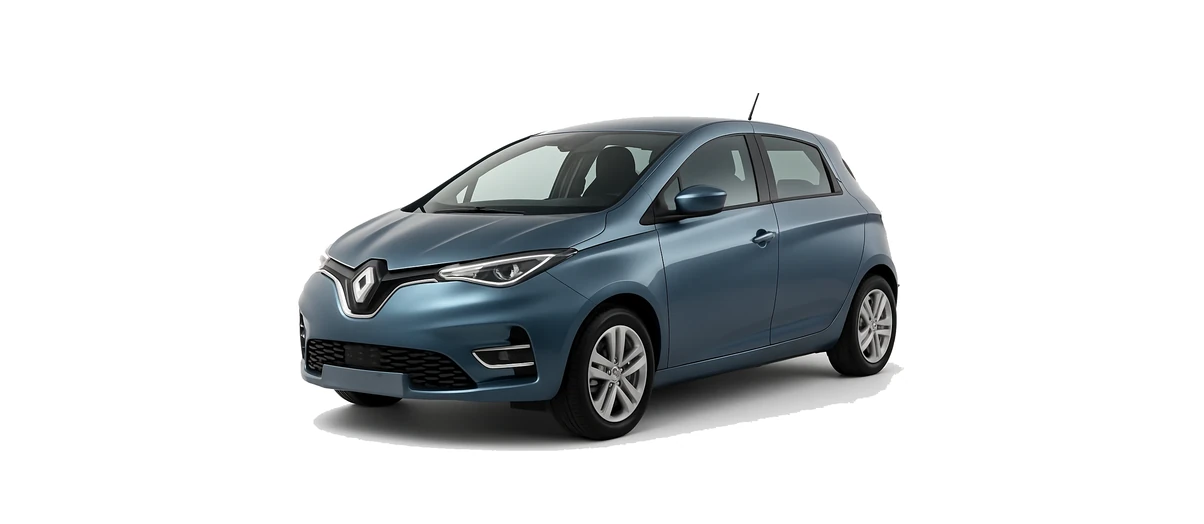
The Renault Zoe is one of the best-known small electric cars in the UK used market. Sold over many years as a 5-door electric supermini, it evolved from early 22 kWh cars through ZE40 models and finally to the ZE50 Zoe E-Tech Electric. UK sales have now ended, but the Zoe remains a popular used EV because it is compact, efficient and often very capable on AC charging.
The important point for owners is that not every Renault Zoe charges in the same way. Some earlier cars are Type 2 AC-only, some Q-motor models can use unusually fast 43 kW AC rapid charging, and some later ZE50 cars add CCS DC rapid charging. That means cable choice and public charging expectations depend heavily on the exact car in front of you.
View Renault Zoe Charging Cables
Renault Zoe Battery and Charging Specifications
The Renault Zoe is a battery-electric vehicle, not a plug-in hybrid or range-extender. All versions use a Type 2 inlet for AC charging, with the charging port positioned at the front-centre of the car behind the Renault badge. This can be convenient at many public chargers, but it may affect how you park if the charging cable is short or the bay layout is awkward.
For final UK ZE50/R135 cars, Renault listed a 52 kWh usable battery and a Chameleon charger capable of adaptive single-phase or three-phase AC charging from low power up to 22 kW. On suitable Boost Charge/CCS-equipped ZE50 models, DC charging is available via a CCS Combo 2 inlet at up to around 50 kW. However, CCS was not universal, so it should not be assumed on every 52 kWh Zoe.
Older Zoes need more care when checking specifications. A ZE40 R90 or R110 is usually 22 kW AC Type 2 only, while a Q90 ZE40 can support up to 43 kW AC via Type 2. Early 22 kWh cars also vary, with some Q210 cars offering 43 kW AC capability and later R-motor cars typically limited to lower AC rapid speeds.
Battery Options
Broadly, UK used Renault Zoe models fall into three battery generations. Early Z.E. 22 cars used an approximately 22 kWh usable battery. These can still work well for short commutes and local driving, but range and charging expectations are very different from later models. If you are buying one, identify whether it is a Q-motor or R-motor car, as that affects public AC rapid charging capability.
ZE40 cars use a larger battery. EV Database lists the Q90 ZE40 at 44.1 kWh nominal and 41.0 kWh usable. This generation significantly improved real-world usability, but again the motor version matters. Q90 cars can use 43 kW AC Type 2 rapid charging where available, while R90 and R110 versions are generally 22 kW AC and do not have CCS DC rapid charging.
The final ZE50 generation is the most recent UK-market Zoe. Renault’s final UK data lists a 52 kWh usable battery, with up to 239 miles WLTP range for some Techno models on 16-inch wheels and around 223 miles for Iconic models on 17-inch wheels. Many final cars have the stronger all-round package, but the presence of CCS still depends on trim and option level.
AC Charging Speed
AC charging is where the Renault Zoe is unusual. Many small EVs charge at 7 kW or 11 kW on AC, but the final ZE50 Zoe can charge at up to 22 kW AC using Renault’s Chameleon charger. Renault quoted official 0-100% times of around 9 hours 30 minutes from a 7.4 kW wallbox, around 6 hours from an 11 kW AC supply, and around 3 hours from a 22 kW three-phase AC post.
For most UK homes, the practical benchmark is 7.4 kW because domestic properties are usually single-phase. A 22 kW charge rate generally requires a three-phase supply or a suitable public AC charger. If you have access to workplace or destination charging with 22 kW AC, the Zoe can make especially good use of it compared with many other small EVs.
For cable selection, a standard Type 2 charging cable is essential for home wallboxes and most untethered AC public charge points. If you want the Zoe to take advantage of 22 kW three-phase AC posts, the cable must also be suitable for three-phase 32 amp charging. A single-phase cable will still work for single-phase charging, but it will not allow the car to use the full 22 kW capability on a compatible AC post.
DC Rapid Charging Speed
DC rapid charging is the area that causes the most confusion with the Renault Zoe. Many older Zoes have no CCS socket at all. They use the Type 2 connection for AC charging only, even if they can charge quite quickly on AC. This is different from most newer EVs, where motorway rapid charging usually means plugging in a tethered CCS connector.
On final ZE50 cars fitted with the CCS/Boost Charge equipment, DC rapid charging is available at up to around 50 kW. A typical 10-80% rapid charge is around an hour in favourable conditions, with Renault also quoting broadly similar official rapid-charging timings. When using a CCS rapid charger, you do not use your own Type 2 cable; the rapid charger has a tethered CCS plug.
Before planning motorway journeys, check the actual vehicle. A CCS-equipped Zoe has the usual Type 2 upper section plus two lower DC pins beneath it. If the lower DC section is absent, the car cannot use CCS rapid chargers. For used buyers, trim names such as Boost Charge can help, but a visual check of the socket and vehicle documentation is safer.
Range and Efficiency
The final ZE50 Zoe was quoted at up to 239 miles WLTP in some UK specifications, with other trims and wheel sizes quoted lower. A realistic mixed-driving figure for a 52 kWh Zoe is often nearer the high-100-mile range, with around 195 miles used as a useful real-world guide. As with any EV, temperature, speed, tyre condition, load and driving style all affect the result.
ZE40 cars will generally cover less distance than ZE50 cars, and early 22 kWh Zoes are better suited to shorter trips unless you are familiar with their charging pattern. The Zoe is efficient around town, so urban and suburban driving can be favourable. Fast A-road and motorway driving will reduce range more quickly, particularly in cold or wet conditions.
Charging at Home
For most Zoe owners, a dedicated home wallbox is the simplest charging solution. On a typical 7.4 kW single-phase unit, a final ZE50 takes about 9 hours 30 minutes from empty to full. In everyday use, you are more likely to top up from partial charge, so overnight charging is usually comfortable.
Scheduled charging can be useful if you have an off-peak electricity tariff. Renault’s later systems also support connected services for checking charge status and managing cabin preconditioning or scheduled heating and air conditioning, depending on the vehicle and service availability. This is primarily about comfort and scheduling rather than a confirmed battery preconditioning system for rapid charging.
A 3-pin domestic charger is generally best suited as a backup or occasional charging solution, but can be used regularly if a qualified electrician has confirmed the socket and electrical installation are suitable for sustained EV charging. Renault’s final brochure quoted around 32 hours for a ZE50 to charge from 0-100% at 2.3 kW, so it is not the most convenient option for regular high-mileage use.
Public Charging
At public AC charge points, the Renault Zoe normally uses a Type 2 cable. Many destination chargers at supermarkets, car parks, hotels and workplaces are untethered, meaning you bring your own cable. The Zoe’s strong AC charging capability is particularly useful at 11 kW and 22 kW posts, provided the car and cable can use the available supply.
At rapid chargers, the correct approach depends on the Zoe version. A CCS-equipped ZE50 uses the charger’s tethered CCS connector. A Type 2-only Zoe cannot use that CCS plug. Some older Q210 and Q90 cars can rapid charge from 43 kW AC Type 2 connectors, but these chargers are less common than CCS rapid chargers and may not be available at every rapid-charging site.
When planning longer journeys in a Zoe, filter charging apps carefully. If you have a CCS-equipped ZE50, look for CCS rapid chargers. If you have a Q-motor Type 2 rapid-capable Zoe, look specifically for high-power AC Type 2 availability. If you have a 22 kW AC-only Zoe, plan around 22 kW AC posts and allow more time than you would for a modern CCS rapid-charging EV.
Vehicle-Specific Features
The Zoe’s most distinctive charging feature is the Renault Chameleon charger. It allows strong AC charging for a small EV, with final cars supporting up to 22 kW AC and selected older Q-motor cars supporting up to 43 kW AC. This can make the Zoe very convenient where three-phase AC charging is common.
The front-centre charging port is another practical detail. Nose-in parking often works well, but in some public bays you may need to position carefully to avoid stretching the cable. If you charge frequently at an untethered post, a suitably rated Type 2 cable of an appropriate length can make day-to-day charging easier.
The Zoe is not known for vehicle-to-load or vehicle-to-grid support in the specifications checked, and battery preconditioning for rapid charging should not be assumed. For charging decisions, the more important points are battery size, AC capability, and whether the individual car has CCS.
Charging Tips
- Identify your Zoe first: check whether it is an early 22 kWh car, ZE40 or ZE50, and whether it is a Q-motor or R-motor version where relevant.
- Check for CCS visually: look for the two lower DC pins beneath the Type 2 section. If they are not there, the car is AC-only.
- Use a suitable Type 2 cable: a three-phase 32 amp Type 2 cable is the right choice if you want to use 22 kW AC posts where available.
- Do not assume 22 kW at home: most UK homes are single-phase and usually charge at up to 7.4 kW from a wallbox.
- Plan public charging by connector type: CCS for equipped ZE50 cars, high-power AC Type 2 for Q-motor rapid-capable cars, and 7-22 kW AC for many other Zoes.
Frequently Asked Questions
Does every Renault Zoe have CCS rapid charging?
No. Many older Renault Zoe models are Type 2 AC-only, and even some ZE50 cars were sold without CCS depending on trim and option level. Always check the socket or vehicle documentation.
What cable does a Renault Zoe need?
For home wallboxes and most public AC chargers, the Zoe uses a Type 2 charging cable. If you want to use 22 kW three-phase AC charging, choose a cable rated for three-phase 32 amp use.
How long does a ZE50 Renault Zoe take to charge at home?
Renault quoted around 9 hours 30 minutes from 0-100% using a 7.4 kW wallbox for the final 52 kWh ZE50 model. Normal top-ups from partial charge will usually take less time.
Can older Renault Zoe models use rapid chargers?
Some older Q-motor cars, such as certain Q210 and Q90 models, can use 43 kW AC Type 2 rapid charging. However, they do not use CCS unless the individual car is a later CCS-equipped ZE50.
Is the Renault Zoe a good used EV for charging?
It can be, especially if your driving suits its range and charging pattern. The key is knowing which version you have. A 22 kW AC-capable Zoe is very practical for home, workplace and destination charging, while CCS-equipped ZE50 cars are more flexible for longer trips.
What This Means for Drivers
The Renault Zoe is simple to live with once you understand its version-specific charging. At home, think of 7.4 kW as the normal UK benchmark, with a ZE50 charging overnight from empty. At public AC posts, the Zoe can be stronger than many small EVs, particularly if you have a suitable three-phase Type 2 cable and access to 22 kW charging.
For longer journeys, the crucial question is whether your Zoe has CCS. If it does, you can use modern CCS rapid chargers at up to around 50 kW. If it does not, you need to plan around AC charging, and if it is a Q-motor car you may be able to use less common 43 kW AC Type 2 rapid chargers. The right expectations will make the Zoe much easier to own and charge.
Looking for a Charging Cable for Renault Zoe?
If you need a suitable Type 2 cable for home, workplace or public AC charging, choose one that matches how you use your Zoe, especially if you want to make use of three-phase 22 kW AC charging where available.
View Renault Zoe Charging Cables
Please note that this information is intended as a guide. Charging specifications may change due to model and year of manufacture. For precise information, always refer to your vehicle user manual.

