
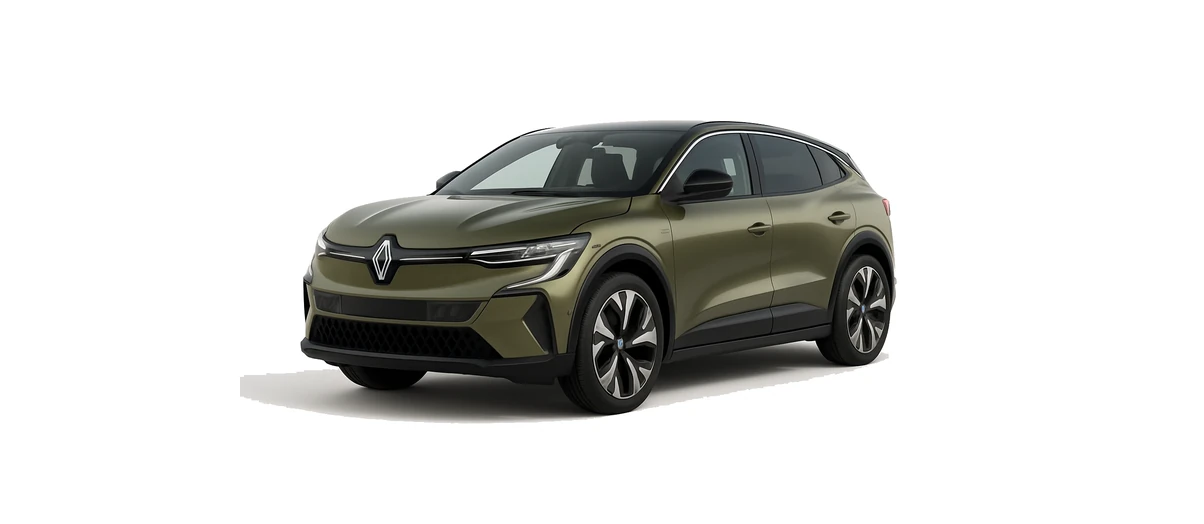
The Renault Scenic E-Tech electric is a 5-door family SUV/crossover designed around a large long-range battery rather than a plug-in hybrid powertrain. For current UK buyers, Renault lists the Scenic E-Tech electric as a 220 hp long range model with an 87 kWh useful battery, Type 2 AC charging and CCS rapid charging. That makes it a practical family EV, but it also means charging habits matter: a large battery is easiest to live with when you have a sensible home charging routine and know when to use faster public chargers.
This guide focuses on the current UK specification. Some older launch material and non-UK information has referred to 60 kWh battery versions or 22 kW AC charging in certain markets, but Renault UK currently states up to 11 kW AC charging for the UK Scenic E-Tech electric. If you are buying used or importing a vehicle, always check the exact vehicle specification.
View Renault Scenic E-Tech Charging Cables
Renault Scenic E-Tech Battery and Charging Specifications
The current UK Renault Scenic E-Tech electric is a pure battery-electric vehicle, using Renault’s AmpR Medium platform. It is not a PHEV and does not have a petrol engine. The charging port arrangement is the usual European EV format: Type 2 for AC charging and CCS Combo 2 for DC rapid charging.
- Vehicle type: Battery-electric family SUV/crossover
- Current UK battery: 87 kWh useful capacity
- AC charging: Up to 11 kW on current UK specification
- DC rapid charging: Up to 150 kW peak
- Charging port: Type 2 AC / CCS Combo 2 DC
- WLTP range: Up to 381 miles on the techno long range specification, with some trims/wheel specifications quoted lower
- Estimated real-world range: Around 295 miles, depending on conditions and driving style
For cable selection, the key point is that the Scenic E-Tech uses a Type 2 connection for AC charging. CCS rapid chargers use the larger CCS connector and the cable is normally permanently attached to the rapid charger, so you do not need to carry a separate DC cable.
Battery Options
For the current UK range, the Scenic E-Tech electric is centred on the EV87 220 hp long range version. Renault UK quotes an 87 kWh useful battery capacity. EV Database lists a 92.0 kWh nominal capacity and 87.0 kWh usable capacity, with the nominal figure marked as estimated.
This is important because the Scenic’s battery is larger than many everyday EV batteries. The advantage is strong long-distance potential; the trade-off is that very slow charging methods can take a long time if the battery is deeply depleted. In normal ownership, most drivers will not be charging from empty to full every day. Instead, a typical pattern is to top up overnight at home and use rapid charging on longer trips.
You may see references online to 60 kWh versions or different AC charging hardware. Those references can relate to older launch information or non-UK configurations. For a UK charging guide, the safest assumption for a new current UK car is the 87 kWh long-range battery and up to 11 kW AC charging, unless your vehicle documents confirm otherwise.
AC Charging Speed
AC charging is what you use at home, at many workplace chargers and at slower public destination chargers. The Scenic E-Tech’s Type 2 AC inlet accepts up to 11 kW on current UK specification cars.
In the UK, most homes are on single-phase electricity supplies, where a dedicated home wallbox is commonly rated at up to 7.4 kW. Renault quotes a 15-80% charge time of 8 hours 27 minutes from a 7.4 kW home charging point. That makes overnight charging realistic, even with the Scenic’s large battery.
To reach the car’s full 11 kW AC capability, you generally need a suitable three-phase AC supply and a compatible charger. Three-phase supplies are more common in some commercial, workplace and public settings than in typical UK homes. Renault quotes 15-80% in 5 hours 52 minutes from an 11 kW AC charge point.
If you plug into a 22 kW public AC post, the current UK Scenic E-Tech is still limited by its onboard charger to 11 kW, unless a specific vehicle has different hardware. A higher-rated post does not force the car to charge faster than it can accept.
DC Rapid Charging Speed
For motorway stops and holiday journeys, the Scenic E-Tech uses CCS rapid charging. Renault UK quotes up to 150 kW DC peak charging and a 15-80% charge time of 37 minutes. EV Database estimates a typical 10-80% rapid charging session at about 40 minutes.
It is worth treating the 150 kW figure as a peak rather than a constant charging speed. As with all EVs, rapid charging power varies with battery temperature, state of charge, charger capability and site conditions. The fastest part of a session is usually when the battery is warm and at a low-to-mid state of charge. Charging tends to slow as the battery approaches a high percentage.
For long trips, it is usually more efficient to rapid charge from a lower state of charge up to around 70-80%, then continue driving, rather than waiting for the last 20% unless you genuinely need it.
Range and Efficiency
Renault quotes up to 381 miles WLTP for the Scenic E-Tech electric in techno long range form. Professional reporting of later UK updates lists slightly lower WLTP figures for some other trims, such as techno esprit Alpine and iconic esprit Alpine, so the exact figure can vary with specification.
WLTP range is a laboratory-based comparison figure, not a guarantee for every journey. In mixed UK driving, EV Database estimates real-world range at around 295 miles. Cold weather, motorway speed, roof boxes, heavy loads, tyre condition and cabin heating can all reduce range. Slower urban and suburban driving can be more efficient than high-speed motorway use.
The Scenic’s standard heat pump should help efficiency in cooler weather by reducing the energy needed for cabin heating compared with a simpler resistance-heater setup. Range will still vary, but the heat pump is a useful feature for a family EV expected to cover year-round journeys.
Charging at Home
For most UK Scenic E-Tech owners, the best everyday setup will be a dedicated Type 2 home wallbox. A tethered wallbox has its own fixed cable, while an untethered wallbox requires you to use your own Type 2 to Type 2 cable. Both can work well; the better choice depends on whether you prefer convenience or cable flexibility.
On a typical 7.4 kW single-phase home wallbox, the Scenic can add a useful amount of range overnight. Because the battery is large, home charging works best when you think in terms of regular top-ups rather than waiting until the car is nearly empty. Many owners will set charging to run during cheaper off-peak electricity periods, especially if they have an EV-friendly tariff.
A 3-pin domestic charger is generally best suited as a backup or occasional charging solution, but can be used regularly if a qualified electrician has confirmed the socket and electrical installation are suitable for sustained EV charging. With a large 87 kWh usable battery, a 3-pin plug will be slow and is unlikely to be the most convenient main charging method for most drivers.
For daily battery care, many EV owners choose to charge to around 80% when they do not need maximum range, reserving 100% for longer journeys. Always follow Renault’s in-car guidance and owner manual advice, but this approach is a sensible general routine for balancing convenience and battery care.
Public Charging
Public charging falls into two broad categories: AC destination charging and DC rapid charging. AC posts at hotels, supermarkets, town centres and car parks usually require your own Type 2 cable unless the unit is tethered. A Mode 3 Type 2 cable is shown in Renault UK brochure and charging material as included, but it is still worth checking what came with your specific car, particularly when buying used.
For public AC charging, the Scenic’s current UK specification accepts up to 11 kW. If you use a 7 kW post, it will charge at roughly that level. If you use an 11 kW post and the site provides the correct supply, the car can make use of that higher AC speed. If you use a 22 kW AC post, the car is generally still limited to 11 kW.
For long-distance travel, use CCS rapid chargers. These are the chargers where the cable is attached to the unit. The Scenic’s battery preconditioning feature can help here: Renault confirms battery temperature pre-conditioning when a route with charging stops is programmed in Google Maps. Setting the rapid charger as a navigation destination can help the car prepare the battery before arrival, improving the chance of a faster and more consistent rapid charging session.
Vehicle-Specific Features
The Scenic E-Tech has several features that matter for charging and ownership. The standard heat pump helps manage cabin heating more efficiently in cold weather, while thermal management and Google Maps-linked preconditioning support better rapid charging preparation.
Vehicle-to-load is also supported with the correct equipment. Renault’s UK brochure describes a V2L power-to-object adaptor with up to 3.7 kW output. In practical terms, this means the car can power suitable external devices when using the correct Renault-compatible adaptor, provided the appliance load stays within the stated limit. It should not be treated as a way to run high-load equipment beyond that rating.
Renault’s Scenic manual also describes vehicle-to-grid capability as dependent on the vehicle and requiring a compatible two-way AC charging terminal and a V2G service subscription. For UK owners, this should be treated as conditional and service-dependent rather than a universal feature available with any wallbox.
Charging Tips
- Use a dedicated wallbox where possible: A 7.4 kW home charger is usually much more practical than relying on a 3-pin plug.
- Charge overnight: The 87 kWh battery suits off-peak charging, particularly if you do not need to fill it from a very low state of charge.
- Carry the right Type 2 cable: You need a Type 2 cable for untethered home, workplace and public AC chargers.
- Do not expect 22 kW AC on current UK cars: Even on a 22 kW post, Renault UK lists the Scenic E-Tech as accepting up to 11 kW AC.
- Precondition before rapid charging: On longer journeys, set the rapid charger in Google Maps so the car can prepare the battery.
- Rapid charge strategically: CCS sessions are usually fastest from a lower state of charge to around 70-80%.
- Use 100% when needed: For daily use, around 80% is often enough; charge to 100% before longer journeys when the extra range is useful.
Frequently Asked Questions
Is the Renault Scenic E-Tech a plug-in hybrid?
No. The current UK Renault Scenic E-Tech electric is a pure battery-electric vehicle. It has no petrol engine and is charged from an external electricity supply.
What charging cable does the Renault Scenic E-Tech use?
It uses a Type 2 connection for AC charging. For DC rapid charging, it uses a CCS Combo 2 connector, with the cable normally attached to the rapid charger.
Can the Renault Scenic E-Tech charge at 22 kW AC?
Current Renault UK specification states up to 11 kW AC charging. Some older or country-dependent information references 22 kW AC configurations, so check the exact vehicle if this matters to you.
How long does home charging take?
Renault quotes 15-80% in 8 hours 27 minutes from a 7.4 kW home charging point. On an 11 kW AC supply, Renault quotes 15-80% in 5 hours 52 minutes.
How fast is rapid charging?
Renault quotes up to 150 kW DC peak charging and 15-80% in 37 minutes. A typical 10-80% rapid charge is estimated at about 40 minutes, depending on battery temperature, state of charge and charger conditions.
What This Means for Drivers
The Renault Scenic E-Tech is at its best when treated as a long-range family EV with a proper home charging routine. Its 87 kWh useful battery gives strong journey flexibility, but it is too large for 3-pin charging to be convenient as the main approach for most households. A 7.4 kW wallbox will suit many UK homes, while 11 kW AC charging is useful where three-phase power is available.
For public charging, carry a suitable Type 2 cable for AC posts and use CCS rapid chargers for longer trips. The combination of a 150 kW DC peak, standard heat pump and Google Maps-linked battery preconditioning should make motorway and holiday charging straightforward when planned sensibly.
Looking for a Charging Cable for Renault Scenic E-Tech?
If you need a replacement, spare or additional Type 2 charging cable for your Renault Scenic E-Tech, We offer compatible cable options for home, workplace and public AC charging.
View Renault Scenic E-Tech Charging Cables
Please note that this information is intended as a guide. Charging specifications may change due to model and year of manufacture. For precise information, always refer to your vehicle user manual.

