
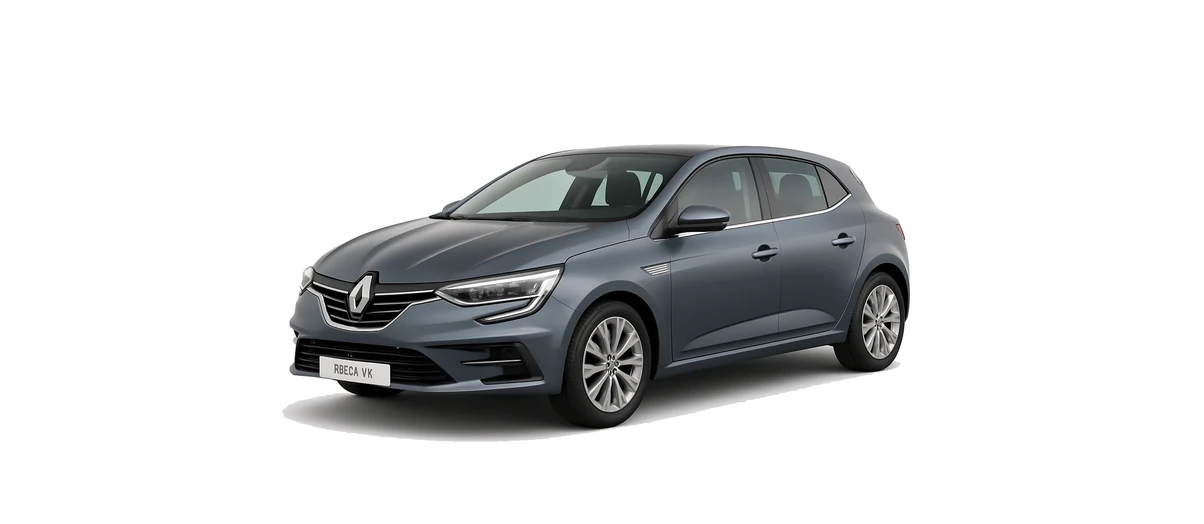
The Renault Megane Hybrid most UK drivers are referring to is usually the older Megane E-Tech Plug-in Hybrid 160, sold in the UK around 2020 to 2022 as a 5-door hatchback and Sport Tourer estate. It is important not to confuse this used-market plug-in hybrid with the current Renault Megane E-Tech electric, which is a pure battery-electric vehicle with very different battery and rapid-charging specifications.
As a plug-in hybrid, the Megane E-Tech Plug-in Hybrid combines a petrol engine with electric motors and a relatively small plug-in traction battery. That makes its charging needs straightforward: it uses Type 2 AC charging, charges at around 3.7 kW, and is designed for regular top-ups at home, work or public AC posts rather than motorway rapid charging.
View Renault Megane Hybrid Charging Cables
Renault Megane Hybrid Battery and Charging Specifications
The UK-market Renault Megane E-Tech Plug-in Hybrid 160 is a PHEV, not a pure BEV. It uses a 1.6-litre petrol engine, electric drive assistance and a plug-in battery to allow short journeys on electric power while retaining the convenience of petrol for longer trips.
For charging-cable selection, the key point is simple: the Megane plug-in hybrid uses a Type 2 AC charging inlet. It does not have confirmed CCS/DC rapid-charging support, so owners should focus on a good-quality Type 2 to Type 2 cable for home wallboxes and untethered public AC charge points.
| Item | Renault Megane E-Tech Plug-in Hybrid 160 |
|---|---|
| Vehicle type | Plug-in hybrid electric vehicle (PHEV) |
| Body styles | 5-door hatchback and Sport Tourer estate |
| UK status | Discontinued; mainly a used-market model |
| Charging inlet | Type 2 AC |
| Typical AC charging limit | Around 3.7 kW |
| DC rapid charging | Not supported / not confirmed for the PHEV |
| WLTP electric range | Up to 30 miles, depending on version and conditions |
Battery Options
Battery capacity information for the Megane E-Tech Plug-in Hybrid should be treated with care because Renault-related sources do not all use the same figure. A UK Renault brochure from December 2021 lists the Megane Hatch E-Tech Plug-in Hybrid with a 9.8 kWh battery, while the Sport Tourer E-Tech Plug-in Hybrid is listed with a 9.3 kWh battery. Renault’s more generic E-Tech plug-in hybrid charging information also refers to a 10.4 kWh Megane PHEV battery in charging-time tables.
Because those figures vary by source and may reflect body style, model year or market-specific information, it is best not to rely on a single universal battery-capacity number unless checking the exact vehicle documentation. For everyday charging, however, this uncertainty does not change the practical cable advice: the car is a small-battery PHEV with Type 2 AC charging and an onboard charger of roughly 3.7 kW.
That battery size is large enough for many short local journeys, school runs, commuting and town driving, but it is much smaller than the battery in the later Megane E-Tech electric BEV. Specifications such as a 60 kWh battery, CCS rapid charging or 10-80% rapid-charge times belong to the electric Megane, not this plug-in hybrid.
AC Charging Speed
The Renault Megane E-Tech Plug-in Hybrid is limited by its onboard AC charger. Renault information and UK brochure data point to charging at around 3.7 kW, with a full charge taking about 3 hours from a suitable 3.7 kW supply or a home wallbox. Even if you plug into a 7 kW home charger or a 7.4 kW public AC post, the car will only draw what its onboard charger can accept.
This is a common point of confusion for PHEV owners. A higher-rated wallbox is still useful because it is convenient, safer and more robust than relying on a domestic socket, and it may be better for future EVs. However, it will not make this Megane plug-in hybrid charge at 7 kW.
For most drivers, the real benefit is that the battery is small enough to recharge during an evening, overnight, or during a working day. If you plug in after returning home, the car should normally be ready for electric driving again well before the next morning.
DC Rapid Charging Speed
The Renault Megane E-Tech Plug-in Hybrid should not be planned around DC rapid charging. Reliable model information indicates that the PHEV uses AC charging and does not support DC rapid charging. In practical terms, this means you should not expect to use CCS rapid chargers, and you should not compare its charging speed with the later Megane E-Tech electric BEV.
This is not necessarily a disadvantage for the way a plug-in hybrid is intended to be used. The Megane PHEV has a petrol engine for longer journeys, so it does not need motorway rapid charging in the same way as a fully electric car. Its efficiency advantage comes from charging regularly and using electric power for shorter journeys, then allowing the petrol engine to cover longer distances when the traction battery is depleted.
Range and Efficiency
The Renault Megane E-Tech Plug-in Hybrid was quoted with up to 30 miles of WLTP electric-only range. As with any PHEV, real-world electric range will depend on temperature, driving style, route, speed, payload and accessory use. Shorter winter trips, motorway speeds and heavy acceleration can reduce the distance available on electric power.
The best way to get strong efficiency from this car is to keep the battery charged. If your daily mileage is within the electric range, regular charging can allow much of your routine driving to be completed with little or no petrol use. If you frequently drive long distances without plugging in, the car will behave more like a conventional hybrid once the plug-in battery reserve has been used.
The driver-selectable electric mode is useful for local trips or urban areas where you want to prioritise electric running. Renault also described an E-Nav energy-management function in My Sense mode, intended to help optimise battery use when a route is entered into the navigation system.
Charging at Home
Home charging is the most convenient way to run the Renault Megane Hybrid as a plug-in hybrid. A dedicated home wallbox provides a reliable charging routine and avoids the need to visit public chargers for routine top-ups. Because the car charges at around 3.7 kW, a full charge is typically around 3 hours, depending on state of charge, temperature and the exact vehicle version.
If your wallbox is untethered, you will need a Type 2 to Type 2 Mode 3 charging cable. If your wallbox is tethered and already has a Type 2 plug attached, you can use the attached cable. Many owners still keep a separate Type 2 cable in the boot for public AC charging, workplace charging and holiday use.
Charging from a domestic 3-pin socket is possible, and Renault’s UK brochure listed around 5 hours from a 2.3 kW domestic socket. However, a 3-pin charger is generally best suited as a backup or occasional charging solution, but can be used regularly if a qualified electrician has confirmed the socket and electrical installation are suitable for sustained EV charging. Avoid using damaged sockets, unsuitable extension leads or unknown outdoor supplies.
Public Charging
For public charging, the Megane E-Tech Plug-in Hybrid is best suited to AC charge points rather than rapid chargers. Many UK public posts are untethered, so you normally need to bring your own Type 2 to Type 2 cable. This is the same type of cable used with many home wallboxes and workplace chargers.
When using public AC charging, remember that the charger rating is not the same as the speed your car will actually accept. A 7 kW, 11 kW or 22 kW AC post may be available, but the Megane PHEV will still be limited to roughly 3.7 kW. This means a short stop may add some useful electric range, but the car is not designed for rapid en-route charging.
Public charging can still be worthwhile at destinations such as supermarkets, hotels, offices, leisure centres and town-centre car parks. If the car is parked for a couple of hours, it can recover a large proportion of its small battery, helping reduce petrol use on the next leg of the journey.
Vehicle-Specific Features
The Megane E-Tech Plug-in Hybrid’s most important feature is its flexible powertrain. It can drive on electric power for shorter journeys, while the petrol engine provides backup for longer trips or when the traction battery is depleted. This makes charging less stressful than with a pure EV, but it also means the car only delivers its best efficiency if it is plugged in regularly.
Renault’s UK brochure also described remote charging control via the My Renault app. Availability and functionality can vary with model year, subscription status, connectivity and vehicle setup, so used buyers should check that connected services are active on the specific car they are considering.
Renault’s plug-in hybrid information has also described a Mode 3 charging cable as included in some contexts, while a Mode 2 domestic cable may have been optional or market-dependent. Used-car buyers should always check what cables are supplied with the vehicle before collection, as missing or incorrect cables are common on used plug-in cars.
Charging Tips
- Choose the right cable: for most home wallboxes and untethered public AC posts, use a Type 2 to Type 2 Mode 3 cable.
- Do not overpay for speed you cannot use: the car is limited to around 3.7 kW AC, so a 7 kW or 22 kW post will not charge it faster than the onboard charger allows.
- Charge little and often: PHEVs work best when topped up regularly, especially if your daily mileage is within the electric range.
- Keep a cable in the car: a boot cable makes it easier to use workplace, hotel and destination chargers.
- Check used-car accessories: confirm whether the vehicle comes with a Type 2 cable, domestic charging cable, storage bag and any adaptors before purchase.
- Use petrol for longer trips: the car has petrol fallback, so do not waste time searching for DC rapid chargers that the PHEV cannot use.
Frequently Asked Questions
What charging cable does the Renault Megane Hybrid use?
The Renault Megane E-Tech Plug-in Hybrid uses a Type 2 AC charging inlet. For most untethered home wallboxes and public AC charge points, you need a Type 2 to Type 2 Mode 3 cable.
Can the Renault Megane Hybrid use a 7 kW home charger?
Yes, it can be plugged into a 7 kW home charger if the connector is suitable, but the car will not charge at the full 7 kW. Its onboard AC charging limit is around 3.7 kW, so a full charge is still typically about 3 hours.
Does the Renault Megane Hybrid support rapid charging?
No. The Megane E-Tech Plug-in Hybrid is not a CCS rapid-charging vehicle. It is designed for Type 2 AC charging, with the petrol engine covering longer journeys when needed.
How long does it take to charge from a 3-pin socket?
Renault’s UK brochure listed around 5 hours from a 2.3 kW domestic socket. A dedicated wallbox is usually the better everyday solution, while 3-pin charging should be treated with care and used only from a suitable electrical installation.
Is this the same as the Renault Megane E-Tech electric?
No. The Megane Hybrid covered here is the older Megane E-Tech Plug-in Hybrid 160. The current Megane E-Tech electric is a different pure-electric model with different battery sizes, charging hardware and cable considerations.
What This Means for Drivers
The Renault Megane Hybrid is a straightforward car to charge as long as you treat it as a plug-in hybrid rather than a rapid-charging electric car. Its small battery, Type 2 AC inlet and roughly 3.7 kW onboard charger make it well suited to home charging, workplace charging and longer destination stops.
The main ownership habit is consistency. Plug in whenever practical, use the electric range for local driving, and let the petrol engine handle longer journeys. If you do that, the Megane E-Tech Plug-in Hybrid can deliver the everyday convenience of electric driving without requiring you to plan around DC charging networks.
Looking for a Charging Cable for Renault Megane Hybrid?
We offer Renault Megane Hybrid charging cables suitable for Type 2 AC home, workplace and public charging, helping you replace a missing used-car cable or keep a spare cable ready for everyday use.
View Renault Megane Hybrid Charging Cables
Please note that this information is intended as a guide. Charging specifications may change due to model and year of manufacture. For precise information, always refer to your vehicle user manual.

