
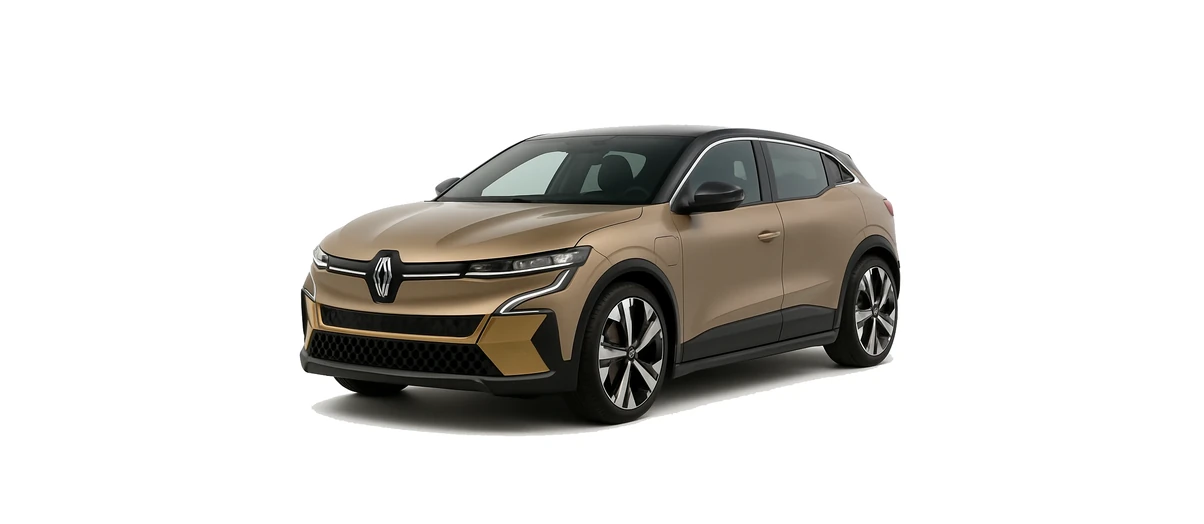
The Renault Megane E-Tech Electric is a compact electric hatchback/crossover built on Renault-Nissan’s CMF-EV electric platform. In current UK form it is a pure battery-electric vehicle, not a plug-in hybrid, and Renault’s current brochure lists it with a 60 kWh useful battery, 220 hp motor and up to 285 miles of WLTP range.
For charging, the main point UK owners need to understand is the model-year split. Current UK brochure information shows an 11 kW maximum AC charging rate, while many earlier 2022 to April 2025 EV60 220 hp cars are commonly listed with up to 22 kW AC charging. That difference matters when using three-phase public destination chargers, so it is worth checking the exact variant, build year or VIN before assuming your car can use 22 kW AC.
View Renault Megane E-Tech Charging Cables
Renault Megane E-Tech Battery and Charging Specifications
The current UK Renault Megane E-Tech Electric uses a Type 2 inlet for AC charging and a CCS Combo 2 connection for DC rapid charging. A Mode 3 Type 2 charging cable is listed by Renault as standard equipment, while a Mode 2 domestic socket/Flexicharger cable is available as an accessory rather than something that should be assumed to come with every car.
For current MY26 UK cars, Renault lists an 11 kW maximum AC charging capability. DC rapid charging is quoted at up to around 130 kW, with Renault giving a 15-80% rapid-charge time of 32 minutes under suitable conditions. EV Database estimates approximately 35 minutes for a 10-80% DC rapid charge, which is a useful real-world planning figure.
- Vehicle type: battery-electric vehicle
- Battery: 60 kWh usable capacity, 65 kWh gross according to EV Database
- AC charging: Type 2, up to 11 kW on current UK brochure cars
- Earlier EV60 cars: some 2022-April 2025 versions are listed with up to 22 kW AC
- DC rapid charging: CCS Combo 2, up to about 130 kW
- WLTP range: up to 285 miles for the current UK certified version
- Real-world estimate: around 235 miles, depending on conditions and driving style
Battery Options
Current UK Megane E-Tech Electric brochure material focuses on the 220 hp comfort range model with a 60 kWh useful battery. EV Database records this as a 65 kWh total, 60 kWh usable battery pack. This is the version most relevant to current UK new-car buyers.
Earlier UK EV60 220 hp models from 2022 to April 2025 are also listed with a 60 kWh usable battery. The important difference for charging advice is not the battery size, but the AC charging hardware fitted to particular versions. Some earlier Optimum Charge versions are listed with 22 kW AC capability, whereas current UK brochure material lists 11 kW AC. If you are buying a used Megane E-Tech, check the exact model documentation rather than relying on a generic Megane E-Tech charging figure.
AC Charging Speed
AC charging is what you will use at home and at many workplace, hotel, supermarket and public destination chargers. The Renault Megane E-Tech uses a Type 2 connection for this. For current UK cars, the maximum AC rate is 11 kW, which is enough to take advantage of three-phase AC posts rated at 11 kW or higher, provided the car and charge point are compatible.
At home in the UK, however, most drivers will be limited by their property’s single-phase electrical supply. A typical dedicated home wallbox provides up to 7.4 kW, and this is the practical maximum for many UK households. In that situation, the difference between an 11 kW and 22 kW onboard charger does not matter, because the home supply and wallbox are the limiting factors.
For public AC destination charging, the distinction is more important. If you own a current 11 kW Megane E-Tech, a 22 kW AC post will not charge the car at 22 kW; the car will take only what its onboard charger can accept. If you have an earlier 2022-2025 EV60 Optimum Charge version confirmed as having 22 kW AC, then a three-phase 22 kW AC post can be genuinely useful for faster top-ups while parked.
DC Rapid Charging Speed
For motorway journeys and long-distance driving, the Megane E-Tech uses CCS DC rapid chargers. Renault quotes rapid charging at up to around 130 kW and gives a 15-80% time of 32 minutes in current UK material. EV Database estimates a 10-80% rapid charge at about 35 minutes, which is a helpful way to compare it with other EVs.
As with all electric cars, the peak charging rate is not held for the whole session. Charging is usually fastest when the battery is warm, the state of charge is low and the charger is capable of supplying the required power. A 150 kW public rapid charger is generally sufficient to access the Megane E-Tech’s approximate peak rate when conditions allow; using a 250 kW or 350 kW charger will not make the car exceed its own maximum.
Range and Efficiency
Renault lists up to 285 miles WLTP for the current Megane E-Tech Electric. WLTP is a standardised test figure, useful for comparison, but it should not be treated as a guaranteed everyday range. EV Database estimates around 235 miles in mixed real-world use for the EV60 220 hp version.
Your actual range will vary with temperature, speed, route, tyre condition, passenger and luggage load, and use of heating or air conditioning. Motorway driving in winter will usually reduce range compared with slower urban and suburban use. The Megane E-Tech’s standard heat pump and thermal management system can help efficiency in colder conditions, but they do not remove the normal winter range reduction that affects EVs.
Charging at Home
For most UK Megane E-Tech owners, the best home charging setup is a dedicated 7.4 kW single-phase Type 2 wallbox. It is faster, safer and more convenient than relying on a domestic plug socket, and it allows you to schedule charging overnight or when your electricity tariff is cheaper.
A 32 amp Type 2 charging cable is the sensible choice for home wallbox use and public AC charging. It will work with a 7.4 kW single-phase wallbox and is also suitable for higher-rated public AC posts, subject to the car’s onboard charger. If your car is a current 11 kW version, the car will still limit AC charging to its maximum. If your car is an earlier confirmed 22 kW version, make sure your cable and the public charge point are suitable for three-phase 32 amp use if you want to make full use of 22 kW AC charging.
A 3-pin domestic charger is generally best suited as a backup or occasional charging solution, but can be used regularly if a qualified electrician has confirmed the socket and electrical installation are suitable for sustained EV charging. Renault’s own guidance indicates that charging from a standard domestic socket can take roughly 20-30 hours for a full charge, so it is much slower than a dedicated wallbox.
Public Charging
Public charging falls into two main categories: AC destination charging and DC rapid charging. AC charging is useful when the car is parked for several hours, for example at work, a hotel, a town-centre car park or a shopping location. You will normally use your own Type 2 cable at untethered AC posts.
DC rapid charging is designed for shorter stops on longer journeys. Rapid and ultra-rapid chargers have tethered CCS cables, so you do not need to use your own cable. Plug in using the CCS connector, follow the charge point instructions and monitor the session through the charger, app or vehicle display.
For best rapid-charge performance, Renault advises arriving at the charger with a relatively low state of charge, ideally below 20% where practical. Charging from 10% to 80% is normally much quicker than charging from 80% to 100%, because the car reduces charging speed at higher battery percentages to protect the battery.
Vehicle-Specific Features
The Megane E-Tech Electric includes a heat pump and thermal management features in official Renault material. Renault also confirms navigation-based battery conditioning via the route planner. On long trips, entering the rapid charger as a destination in the built-in Google navigation can help the car prepare the battery for more efficient rapid charging where supported.
Vehicle-to-load functionality is also referenced in Renault documentation. With the appropriate V2L connector or adaptor, the system can provide AC power up to 16 amps or 3.7 kW for suitable external equipment. However, UK inclusion of the adaptor as standard should not be assumed, and Renault’s manual guidance should be followed carefully. V2L should not be treated as vehicle-to-grid or vehicle-to-home capability, and Renault documentation warns against using it to power a home.
Charging Tips
- Check your exact model year: current UK cars are listed at 11 kW AC, while some earlier EV60 Optimum Charge cars are listed at 22 kW AC.
- Use a 7.4 kW wallbox at home: this is the practical maximum for many UK single-phase homes and is ideal for overnight charging.
- Choose the right Type 2 cable: a robust 32 amp Type 2 cable is the most versatile option for home and public AC charging.
- Plan rapid charging stops: aim to arrive at a CCS rapid charger with a lower state of charge, ideally below 20% where your journey allows.
- Use the built-in route planner: entering the charger into the car’s navigation can help battery conditioning before a rapid charge.
- Avoid sitting at 100% unnecessarily: for daily use, a 20-80% routine is sensible, with 100% saved for when you need maximum range.
Frequently Asked Questions
Is the Renault Megane E-Tech a plug-in hybrid?
No. The current UK Renault Megane E-Tech Electric is a battery-electric vehicle. It should not be confused with older Megane E-Tech plug-in hybrid references from the wider Megane family.
What charging cable does the Renault Megane E-Tech use?
It uses a Type 2 cable for AC charging. For DC rapid charging, it uses the CCS Combo 2 connector fitted to tethered public rapid chargers.
Does every Renault Megane E-Tech charge at 22 kW AC?
No. Current UK brochure material lists 11 kW AC. Some earlier 2022-April 2025 EV60 220 hp cars are listed with 22 kW AC, so owners and used-car buyers should verify the exact vehicle before expecting 22 kW destination charging.
How fast can the Megane E-Tech rapid charge?
Renault quotes up to around 130 kW DC rapid charging, with 15-80% in 32 minutes. EV Database estimates around 35 minutes for 10-80% under suitable conditions.
Is a 3-pin charger a good everyday solution?
A domestic 3-pin charger is slow and is generally better kept for backup or occasional use unless a qualified electrician has confirmed that the socket and installation are suitable for sustained EV charging.
What This Means for Drivers
The Renault Megane E-Tech is straightforward to live with once you understand its charging limits. At home, a 7.4 kW Type 2 wallbox will suit most UK owners and will comfortably handle normal daily mileage. On the road, CCS rapid charging at up to around 130 kW makes longer trips practical, especially if you use the built-in navigation to prepare the battery before arrival.
The main caution is the AC charging difference between current and earlier cars. If you are buying new, work from the current 11 kW figure. If you own or are considering a used 2022-2025 EV60 Optimum Charge model, check the exact specification because 22 kW AC may be available and can be valuable at three-phase destination chargers.
Looking for a Charging Cable for Renault Megane E-Tech?
We offer Renault Megane E-Tech charging cables for home wallboxes and public Type 2 charging, helping you choose a suitable cable for your exact vehicle and charging setup.
View Renault Megane E-Tech Charging Cables
Please note that this information is intended as a guide. Charging specifications may change due to model and year of manufacture. For precise information, always refer to your vehicle user manual.

