
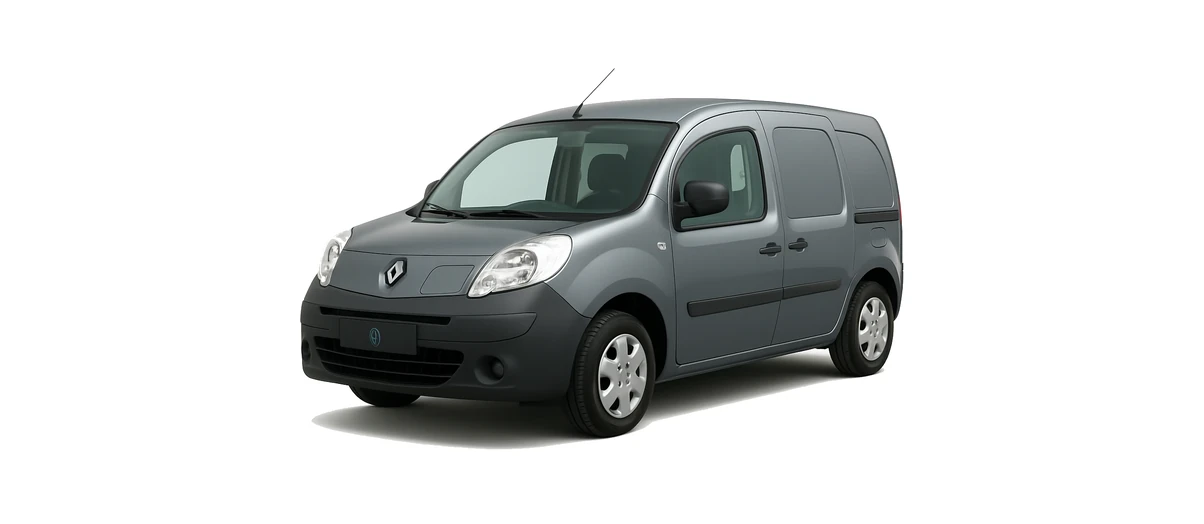
The early Renault Kangoo Z.E. is an important legacy electric van in the UK market. Sold from around 2011, it offered small businesses and local fleets a battery-electric alternative to a diesel panel van long before electric vans became common. This guide focuses specifically on Renault Kangoo Z.E. and Kangoo Maxi Z.E. models registered up to the end of 2012 that use a Type 1 / SAE J1772 AC charging inlet.
That distinction matters. Later Kangoo Z.E., ZE33 and Kangoo E-Tech models can have different charging hardware, battery sizes and connector types, so their cable requirements should not be mixed with early Type 1 vans. If you own, maintain or have just bought an older Kangoo Z.E., the key points are simple: it is an AC-only electric van, it is expected to charge at around 3.7 kW, and most UK public AC charge points will require a Type 1-to-Type 2 charging cable.
View Renault Kangoo Z.E. (Models Up To 2012) Charging Cables
Renault Kangoo Z.E. (Models Up To 2012) Battery and Charging Specifications
Early Renault Kangoo Z.E. vans were battery-electric vehicles, not plug-in hybrids and not range-extenders. Period Renault material described the Kangoo Van Maxi Z.E. with a 22 kWh lithium-ion battery and a 44 kW / 60 hp electric motor. The vehicle was based on the Kangoo II / X61 platform, with the traction battery mounted beneath the floor to preserve a practical van layout.
For this up-to-2012 category, the most important charging specification is the connector. These early vans are treated as Type 1 AC models. In the UK, many home wallboxes and public AC charge points use a Type 2 socket on the charger side, so the usual cable is a Type 1-to-Type 2 Mode 3 cable. The vehicle-side plug connects to the van’s Type 1 inlet, while the charge-point side connects to the Type 2 socket.
The maximum AC charging rate for this category is listed as 3.7 kW. A higher-rated wallbox or cable can still be used where compatible, but the van will only draw up to the limit of its onboard charger.
Battery Options
For the early Kangoo Z.E. and Kangoo Maxi Z.E. models covered here, the relevant battery is the original 22 kWh lithium-ion pack. Some third-party technical data lists around 20 kWh usable capacity, but the safest owner-facing description is to refer to the period Renault figure of 22 kWh and avoid treating usable capacity as a Renault-published UK specification unless confirmed for a specific van.
Because these vehicles are now older, battery condition can vary significantly from one example to another. An ex-fleet van with years of local delivery use may not behave like a lightly used private or specialist vehicle. Before relying on quoted range figures, it is sensible to check battery state of health, service history and whether the battery is owned or subject to any historic lease arrangement. Battery lease status was a notable topic with some early Renault electric vehicles, so it is worth clarifying before purchase.
AC Charging Speed
The early Type 1 Renault Kangoo Z.E. is an AC charging vehicle with an expected maximum charging rate of around 3.7 kW. Period UK reporting described a standard full charge as taking roughly 6 to 8 hours, which is consistent with an overnight charging pattern for a 22 kWh-class battery.
If you plug the van into a 7 kW home wallbox, it will not charge at 7 kW. The wallbox can offer more power than the vehicle can accept, but the onboard charger sets the actual rate. In practice, this means a modern 7 kW untethered wallbox can be perfectly suitable, but there is no benefit in expecting faster charging from the van itself.
For cable selection, many owners choose a 32 amp Type 1-to-Type 2 cable because it is widely compatible with UK Type 2 AC charge points and gives some flexibility. However, the van is still expected to charge at around 3.7 kW rather than using the full capability of a 32 amp single-phase cable.
DC Rapid Charging Speed
These early Kangoo Z.E. vans should not be planned around DC rapid charging. Period reporting described the original Kangoo Z.E. as having no quick-charge facility, and this up-to-2012 Type 1 category is for AC charging only.
That means you should not look for CCS or CHAdeMO charging times for this vehicle, and you should avoid applying later Renault Kangoo ZE33 or Kangoo E-Tech charging specifications to it. If a route requires repeated rapid charging stops, an early Type 1 Kangoo Z.E. is unlikely to be the right vehicle for that use case. It is better suited to predictable local journeys, depot return-to-base work and overnight charging.
Range and Efficiency
There is no WLTP range figure to quote for the up-to-2012 Kangoo Z.E., because WLTP was not the applicable test cycle for these early vans. The period official range was quoted under NEDC at 170 km, or about 106 miles. Contemporary UK reporting also noted Renault’s condition-dependent estimates of roughly 50 to 125 miles, depending on use and conditions.
Real-world range on an older electric van depends heavily on payload, speed, weather, tyre condition, driving style and battery health. Short urban routes with modest loads are very different from fast A-road or motorway running in winter. Heating use, repeated cold starts and heavy payloads can all reduce the distance available between charges.
For today’s owners, it is wise to treat the original NEDC figure as historical context rather than a practical guarantee. If the van is used commercially, build a buffer into daily routes and test the vehicle on your own roads before committing to a full working schedule.
Charging at Home
For regular home or depot charging, a properly installed EV wallbox is the preferred solution. An untethered Type 2 wallbox paired with a Type 1-to-Type 2 cable is a common setup for early Kangoo Z.E. models. This gives a dedicated EV charging circuit, safer long-duration charging and easier daily use than relying on a domestic socket.
A 7 kW wallbox is still suitable even though the van will only charge at around 3.7 kW. The charge point and vehicle communicate, and the Kangoo will take only what it can accept. For many drivers, plugging in at the end of the day and leaving the van to charge overnight is the most practical routine.
A 3-pin EV charger is generally best suited as a backup or occasional charging solution, but can be used regularly if a qualified electrician has confirmed the socket and electrical installation are suitable for sustained EV charging. Domestic sockets were not designed with repeated high-load overnight EV charging in mind, so condition, circuit protection and socket quality matter. Avoid extension leads, damaged sockets and any setup that becomes warm in use.
Public Charging
Most UK public AC charge points use a Type 2 socket. Because the early Kangoo Z.E. has a Type 1 vehicle inlet, you normally need to bring your own Type 1-to-Type 2 cable. A tethered Type 2 AC post will not usually connect directly to a Type 1 vehicle unless it has the correct attached connector, which is now uncommon.
Public charging speed will also be limited by the van, not just the charge point. A 7 kW, 11 kW or 22 kW AC post may be available, but the early Kangoo Z.E. will still be expected to draw around 3.7 kW. This makes public charging useful for longer stops, workplace parking, customer sites or town-centre parking, but not for rapid top-ups during a long-distance journey.
Before visiting a public charger, check that it offers untethered Type 2 AC charging and that you have the correct cable with you. Do not assume that rapid charger locations will help, as many DC rapid units are focused on CCS or CHAdeMO connectors rather than AC Type 1 charging.
Vehicle-Specific Features
The main vehicle-specific issue with the early Kangoo Z.E. is its legacy charging connector. This guide is for Type 1 models registered up to the end of 2012. Later Kangoo electric vans may use Type 2 and should be checked separately before buying a cable.
If you are unsure which version you have, inspect the charge inlet rather than relying only on the registration date. Type 1 has a different shape and pin layout from Type 2. Imports, late registrations, replacement parts and model-year overlap can all create confusion, particularly with older commercial vehicles.
It is also worth checking the physical condition of the charge port. Look for damaged pins, cracked plastic, poor latch engagement or signs of overheating. Older vans may have had years of depot use, and charging equipment can wear over time. If anything looks unsafe, have it inspected before charging.
Charging Tips
- Choose the connector first: for up-to-2012 Type 1 Kangoo Z.E. models, the usual UK cable is Type 1-to-Type 2.
- Do not expect 7 kW charging: even on a 7 kW wallbox, the van is expected to charge at around 3.7 kW.
- Ignore later-model rapid charging claims: early Type 1 Kangoo Z.E. vans are AC-only, so CCS and CHAdeMO planning is not appropriate.
- Use overnight charging where possible: the charging profile suits return-to-base vans and predictable local routes.
- Check battery health: range depends heavily on age, condition and previous use.
- Keep the cable in the van: many public AC posts are untethered, so you will need your own cable.
- Inspect used equipment carefully: damaged connectors, worn pins or hot plugs should not be ignored.
Frequently Asked Questions
Does the early Renault Kangoo Z.E. use Type 1 or Type 2?
This guide is for Kangoo Z.E. models registered up to the end of 2012 with a Type 1 / SAE J1772 AC inlet. Later Kangoo Z.E. models may use Type 2, so always check the vehicle’s actual charging socket before ordering a cable.
Can I use a 7 kW home wallbox?
Yes, provided the wallbox and cable are compatible, but the van is expected to charge at around 3.7 kW. The vehicle’s onboard charger limits the charging speed.
What cable do I need for UK public charging?
For most untethered UK public AC charge points, an early Type 1 Kangoo Z.E. will need a Type 1-to-Type 2 Mode 3 charging cable.
Does it have rapid charging?
Reliable period reporting indicates that early Kangoo Z.E. models had no quick-charge facility. Do not plan journeys around CCS or CHAdeMO rapid charging for this Type 1 version.
What is the official range?
The period official figure was around 170 km, or about 106 miles, under the older NEDC test cycle. There is no WLTP figure for these early vans. Real-world range today will depend on battery condition, payload, weather and driving style.
What This Means for Drivers
The early Renault Kangoo Z.E. remains a useful local electric van when its limitations are understood. It is best viewed as a return-to-base EV with overnight charging, modest daily mileage and predictable routes. Its 22 kWh-class battery and 3.7 kW AC charging are very different from later electric van specifications, so cable choice and route planning should be based on the actual early Type 1 vehicle.
For owners, the most important practical step is to avoid mixing generations. Do not buy a cable based on a later ZE33 or E-Tech article, and do not assume that a public rapid charger will be useful. Confirm the inlet, choose the correct Type 1-to-Type 2 cable, and keep realistic expectations around range and charging time.
Looking for a Charging Cable for Renault Kangoo Z.E. (Models Up To 2012)?
We offer charging cables for early Renault Kangoo Z.E. models up to 2012 with the Type 1 inlet, helping owners match these legacy vans with UK home wallboxes and public Type 2 AC charge points.
View Renault Kangoo Z.E. (Models Up To 2012) Charging Cables
Please note that this information is intended as a guide. Charging specifications may change due to model and year of manufacture. For precise information, always refer to your vehicle user manual.

