
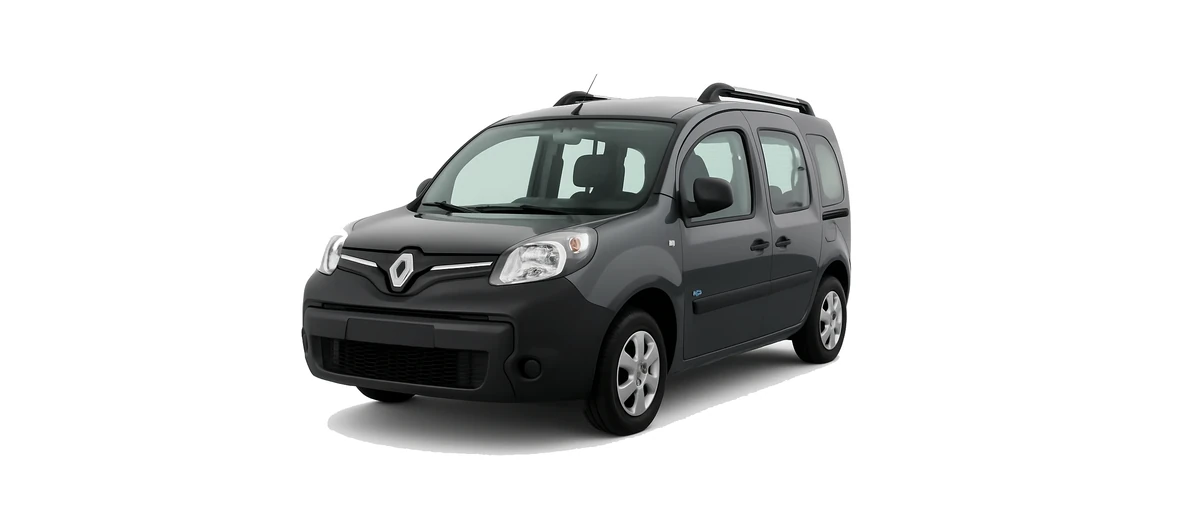
The electric Renault Kangoo has been sold in several different forms, from earlier Kangoo Z.E. vans through the ZE33 and the current Kangoo Van E-Tech electric. That makes cable selection more important than it is with many newer EVs: not every Kangoo electric van from around 2013 uses the same charging inlet, battery size or charging speed.
This guide covers battery-electric Renault Kangoo Z.E. and Kangoo E-Tech electric models only. It does not apply to petrol or diesel Kangoo models. The key point for UK owners is to identify which generation you have: some early or pre-facelift Kangoo Z.E. vans may use a Type 1/J1772 inlet, late-2013-on and ZE33 models are generally Type 2 AC, and the current Kangoo E-Tech uses Type 2 AC plus CCS rapid charging.
View Renault Kangoo Charging Cables – Models From 2013 Charging Cables
Renault Kangoo Charging Cables – Models From 2013 Battery and Charging Specifications
Because this category spans multiple electric Kangoo generations, it is best to treat the figures below as model-year dependent rather than universal. The older 22 kWh Kangoo Z.E., the 33 kWh ZE33 and the current 45 kWh Kangoo Van E-Tech electric are materially different vehicles for charging.
For cable choice, the charging socket is the first thing to check. Late-2013-on Kangoo Z.E. and ZE33 models are generally associated with a Type 2 AC inlet, typically located at the front-centre of the vehicle. The current Kangoo E-Tech electric uses Type 2 for AC charging and CCS Combo 2 for DC rapid charging. However, some earlier or pre-facelift vans around the 2013 registration period may have Type 1/J1772 instead, so owners should check the actual inlet, handbook or VIN information before buying a cable.
Battery Options
The main electric Kangoo battery groups are:
- Kangoo Z.E. 22 kWh: typically associated with earlier facelift-era vans around 2013 to 2017. Public range figures for these older vans often used NEDC rather than WLTP, so real-world expectations should be modest and vehicle condition will matter.
- Kangoo Z.E. / E-Tech ZE33: roughly 2017 to 2021/2022, with a 33 kWh nominal battery and around 31 kWh usable capacity listed by EV Database for the Crew Van ZE33. These models use Type 2 AC charging and are not DC rapid-charge capable.
- Current Kangoo Van E-Tech electric EV45: Renault UK lists a 45 kWh maximum battery capacity and around 44 kWh usable capacity, with up to 190 miles WLTP range depending on version and conditions.
These differences affect how the van fits into daily use. Older 22 kWh vans are generally most suitable for shorter urban delivery, local trade and predictable mileage. ZE33 models offer a useful improvement in battery capacity but remain AC-only. The current E-Tech is the most flexible for mixed routes because it combines a larger battery with DC rapid charging on suitable chargers.
AC Charging Speed
AC charging is the main charging method for most electric Kangoo owners, especially at home, at depots and at workplaces. However, AC speed varies by generation.
ZE33 models are generally listed with Type 2 AC charging at around 7.4 kW, with no rapid charging. That means a 22 kW public AC post will not make a ZE33 charge at 22 kW; the van’s onboard charger is the limiting factor. In practice, a ZE33 is best thought of as a home, workplace and destination-charge electric van.
Older 22 kWh Kangoo Z.E. vans can vary. Some may have lower AC charging capability, and the socket type can be different on early/pre-facelift examples. If you own a 2013 van in particular, do not rely on the registration year alone. Check the inlet shape, handbook, vehicle data or ask a Renault specialist if you are unsure.
The current Kangoo Van E-Tech electric is different again. Renault UK materials refer to 11 kW or 22 kW AC charging depending on version, and current UK specifications show 22 kW AC capability on some/current models. For most UK homes, though, a 7.4 kW single-phase wallbox remains the practical maximum domestic charging solution. Higher AC speeds normally require suitable three-phase workplace or public infrastructure and a vehicle specification that can use it.
DC Rapid Charging Speed
DC rapid charging is not available on every electric Kangoo. This is one of the most important distinctions between generations.
The ZE33 is AC-only and should not be planned around CCS rapid chargers. Even if a motorway or retail-park charger is labelled as a rapid charger, a ZE33 cannot use the DC connector if it does not have a CCS inlet. For ZE33 owners, route planning should focus on starting the day charged and using Type 2 AC charging where available.
The current Kangoo E-Tech electric supports DC rapid charging via CCS Combo 2. Renault UK commonly quotes charging from 15% to 80% in around 40 minutes on suitable rapid-charging equipment. As always, the actual rate depends on factors such as charger capability, battery temperature, state of charge, weather and how busy the charging site is.
For cable selection, remember that DC rapid chargers normally have their own tethered CCS cable attached. You do not usually bring your own CCS cable. Your own cable is mainly for untethered AC posts, home wallboxes and workplace chargers.
Range and Efficiency
The current Kangoo Van E-Tech electric is listed by Renault with up to 190 miles WLTP range. A more cautious real-world figure may be around 140 miles depending on payload, speed, temperature, driving style and route. Vans are particularly sensitive to load and aerodynamics, so motorway driving, roof equipment, heavy tools or repeated stop-start work can all affect efficiency.
ZE33 models have a smaller battery and should be expected to cover less distance than the current 45 kWh model. Older 22 kWh Kangoo Z.E. vans will be shorter-range again, especially as batteries age. For used vans, battery health, service history and usage pattern are just as important as the original brochure figure.
For business users, the most reliable approach is to base charging plans on your own daily mileage rather than the official maximum range. If a van completes a regular local route and returns to base each day, an overnight AC charge may be more useful than occasional access to rapid charging.
Charging at Home
A dedicated home wallbox is usually the most convenient charging option for private owners and small-business users who park off-street. In the UK, a typical single-phase home wallbox supplies up to 7.4 kW, which suits ZE33 models well and is also a practical home solution for the current E-Tech even where the van can accept higher AC power elsewhere.
For a late-2013-on Kangoo Z.E., ZE33 or current E-Tech using AC charging, a Type 2 to Type 2 cable is normally the right cable for untethered wallboxes and public AC posts. If your home charger is tethered, the cable is permanently attached to the charger, but it can still be useful to keep a separate portable Type 2 cable in the van for public charging.
A 3-pin charging cable can be useful, but it should be treated carefully. A 3-pin charger is generally best suited as a backup or occasional charging solution, but can be used regularly if a qualified electrician has confirmed the socket and electrical installation are suitable for sustained EV charging. Avoid using damaged sockets, extension leads or unknown outdoor supplies.
If you have an early or pre-facelift Kangoo Z.E. with a Type 1/J1772 inlet, you will need a cable appropriate to that inlet rather than assuming a Type 2 vehicle-side connector. This is especially relevant for vans first registered around 2013, where registration date and model-year changeover may not align neatly.
Public Charging
Public charging for the electric Kangoo depends heavily on which version you own. Untethered AC charge points are common in car parks, workplaces, hotels and some town-centre locations. These usually require you to bring your own cable. For Type 2 Kangoo models, that means a Type 2 to Type 2 cable.
ZE33 drivers should prioritise AC charge points and avoid planning journeys around DC rapid charging. Plugging into a 22 kW AC post will not override the van’s onboard AC charger, so expect charging to remain around the van’s own limit rather than the post’s maximum advertised output.
Current Kangoo E-Tech drivers have more public charging flexibility. They can use Type 2 AC posts with their own cable and CCS rapid chargers with the tethered cable supplied at the charger. For longer trips, CCS support is a major advantage because it allows a much shorter stop than AC-only charging, provided the charger is working and available.
Vehicle-Specific Features
The current Kangoo E-Tech electric is the most capable charging version in this model family, with a 45 kWh battery, Type 2 AC charging and CCS DC rapid charging. Renault also refers to connected charging functions such as remote charge scheduling and cabin thermal pre-conditioning through My Renault on current vehicles. This should be understood as passenger-compartment heating or cooling while plugged in, not as a confirmed battery preconditioning system.
ZE33 models are simpler from a charging perspective: Type 2 AC charging, typically around 7.4 kW, and no DC rapid charging. That simplicity can be an advantage for predictable daily use, but it does mean you should be realistic about longer journeys.
The checked information does not confirm V2L, V2G or V2H support for these Kangoo electric models, so owners should not buy the vehicle or a cable expecting vehicle-to-load or vehicle-to-home functionality.
Charging Tips
- Check the inlet before buying: this is essential for 2013 vans, where some earlier/pre-facelift examples may be Type 1 while later versions are Type 2.
- Do not assume 22 kW charging: the charge point’s rating is only one part of the equation. The van’s onboard charger sets the AC limit.
- Use the right cable for AC posts: most untethered UK AC posts require your own cable, usually Type 2 to Type 2 for late-2013-on and newer Type 2 Kangoo models.
- Plan ZE33 journeys around AC: ZE33 models cannot use CCS rapid charging, so they are best for routes where charging can happen at home, work or destination stops.
- Keep payload in mind: a loaded van, cold weather and motorway speeds can reduce range significantly compared with official figures.
Frequently Asked Questions
Does every Renault Kangoo electric from 2013 use a Type 2 cable?
No. Late-2013-on Kangoo Z.E. and ZE33 models are generally Type 2, but some earlier or pre-facelift vans may use Type 1/J1772. Always check the actual charging inlet before buying a cable, especially on 2013-registered vehicles.
Can the Kangoo ZE33 use rapid chargers?
The ZE33 is not DC rapid-charge capable. It uses Type 2 AC charging, so a CCS rapid charger is not suitable unless the site also has an AC Type 2 option you can use.
What cable do I need for a current Renault Kangoo E-Tech electric?
For AC charging on untethered home, workplace and public charge points, a Type 2 to Type 2 cable is normally required. For DC rapid charging, the CCS cable is attached to the rapid charger itself.
Is a 7.4 kW home wallbox enough?
For most UK home charging, yes. A 7.4 kW wallbox is a practical domestic solution for ZE33 and current E-Tech owners. Some current E-Tech versions may accept higher AC charging on suitable three-phase infrastructure, but that is not typical for a standard UK home supply.
Can I use a 3-pin plug charger?
Yes, but with caution. It is generally best suited to backup or occasional use, unless a qualified electrician has confirmed that the socket and installation are suitable for sustained EV charging.
What This Means for Drivers
The Renault Kangoo electric is a practical van, but charging depends on the exact generation. Older 22 kWh Kangoo Z.E. models need careful socket identification. ZE33 models are straightforward Type 2 AC vans with no DC rapid charging. The current Kangoo E-Tech adds a larger battery and CCS rapid charging, making it much more flexible for longer or less predictable routes.
For most owners, the safest approach is simple: check the inlet, confirm the onboard charging capability, then choose the cable to match the van rather than the badge. That avoids the common mistake of assuming all Kangoo electric models from 2013 onwards use the same charging setup.
Looking for a Charging Cable for Renault Kangoo Charging Cables – Models From 2013?
If you have confirmed your Renault Kangoo electric charging inlet and need a suitable cable for home, workplace or public AC charging, choose a cable that matches your exact model year and socket type.
View Renault Kangoo Charging Cables – Models From 2013 Charging Cables
Please note that this information is intended as a guide. Charging specifications may change due to model and year of manufacture. For precise information, always refer to your vehicle user manual.

