
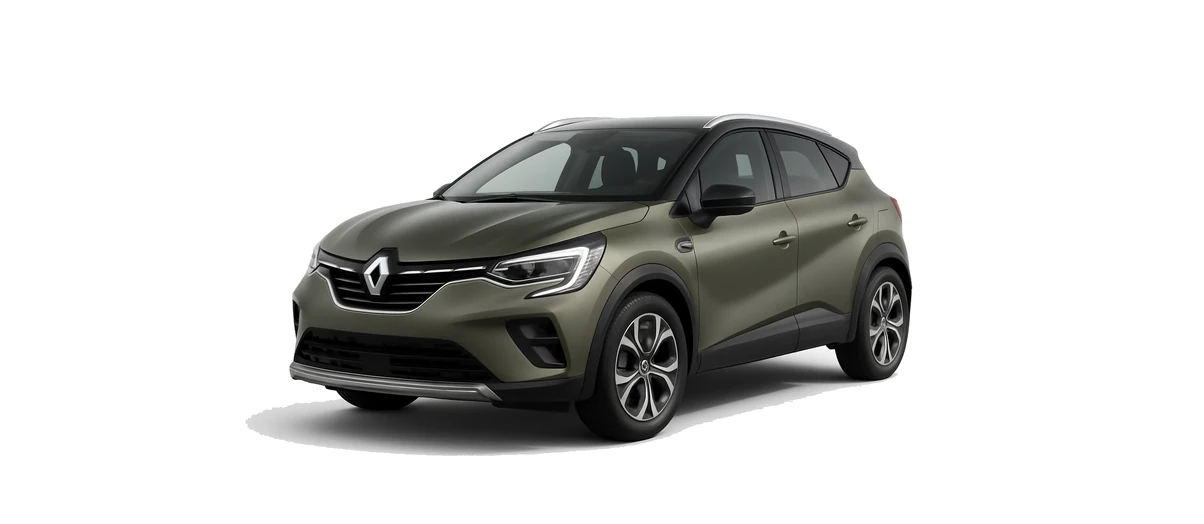
The Renault Captur needs a charging cable only if it is the discontinued UK-market Renault Captur E-Tech Plug-in Hybrid 160. This is an important distinction, because many Captur models on UK roads are petrol or self-charging full hybrid versions with no external charging socket. The current UK Captur range is listed as petrol and full hybrid E-Tech, not plug-in hybrid, so it does not use a charging cable.
This guide is therefore aimed at owners and used-car buyers of the Captur E-Tech Plug-in Hybrid 160 from the early 2020s. That model combines a petrol engine with an externally rechargeable traction battery and a Type 2 AC charging port. If you are buying a cable, the first step is to confirm that your car is the plug-in hybrid version rather than the more common full hybrid or petrol Captur.
View Renault Captur Charging Cables
Renault Captur Battery and Charging Specifications
The Renault Captur E-Tech Plug-in Hybrid 160 was a small SUV/crossover plug-in hybrid based on the second-generation Captur. It used Renault’s E-Tech plug-in hybrid powertrain, combining a 1.6-litre petrol engine, two electric motors and a lithium-ion traction battery. Renault brochure material quotes a combined output of 160 hp for this plug-in hybrid version.
For charging, the key point is that the Captur PHEV uses Type 2 AC charging and is limited by its onboard charger to around 3.7 kW. It is not a rapid-charging EV, and there is no confirmed CCS/DC rapid-charging capability for the UK Captur E-Tech Plug-in Hybrid.
- Relevant model: Renault Captur E-Tech Plug-in Hybrid 160
- Body style: small SUV / crossover
- Charging port: Type 2 AC
- Maximum AC charging rate: around 3.7 kW
- Battery capacity cited by Renault: 9.8 kWh for the plug-in hybrid battery
- Official electric-only range: around 30 miles WLTP in later UK brochure material
- Typical full charge time: about 3 hours on a suitable wallbox or public AC post
Battery Options
For cable selection, there are two Captur-related battery figures that are easy to confuse. The Captur E-Tech Plug-in Hybrid 160 uses a larger lithium-ion traction battery that Renault sources cite as 9.8 kWh. This is the version that can be plugged in and charged from an external power source.
By contrast, the current UK Captur E-Tech full hybrid is a self-charging hybrid, with Renault brochure material listing a much smaller 1.4 kWh hybrid battery. That battery is charged by the car’s hybrid system and regenerative braking; it is not externally rechargeable and does not require a charging cable.
If you are looking at a used Captur, check the exact model description, charging flap and vehicle paperwork. A badge that says E-Tech alone is not always enough, because Renault has used E-Tech branding for both plug-in hybrid and full hybrid models. You are looking specifically for the E-Tech Plug-in Hybrid 160.
AC Charging Speed
The Captur E-Tech Plug-in Hybrid is an AC-only plug-in hybrid. Renault UK brochure information states a maximum charging rate of 3.7 kW and describes a Mode 3 Type 2 charging cable as standard equipment for the plug-in hybrid, with a 6 m cable rated at 16 A / 3.7 kW.
In practical terms, this means a Type 2-to-Type 2 Mode 3 cable is the right cable for most UK home wallboxes and public AC charging posts. The car’s onboard charger is the limiting factor, so using a 7 kW or 22 kW AC charge point will not make the Captur charge faster than roughly 3.7 kW. The charge point may be capable of more, but the vehicle will only draw what it can accept.
Renault material indicates an empty-to-full charge time of around 3 hours on a secure socket, wallbox or public AC charge point. Actual times can vary slightly with temperature, the starting state of charge, cable condition and the charge point itself.
DC Rapid Charging Speed
There is no confirmed DC rapid-charging capability for the UK Renault Captur E-Tech Plug-in Hybrid 160. You should not expect to use a CCS rapid charger with this car, and a motorway rapid charger’s CCS connector should not be treated as compatible.
This is normal for many plug-in hybrids with relatively small batteries. The Captur PHEV is designed mainly for regular AC charging at home, at work or at slower public AC posts. For longer journeys, once the plug-in battery’s usable charge is depleted, the car continues as a petrol hybrid rather than relying on public rapid charging like a battery-electric vehicle.
Range and Efficiency
Renault UK brochure material quotes an electric-only WLTP range of around 30 miles for the Captur E-Tech Plug-in Hybrid, with some Renault material referring to up to 50 km / 31 miles. The actual electric range you see will depend on driving conditions, speed, outside temperature, terrain, tyre condition and how much heating or air conditioning is used.
For many drivers, the strength of this kind of plug-in hybrid is short daily use. If your commute, school run or local journeys fall within the electric range and you charge regularly, you can do a high proportion of local mileage using the battery. If you do not plug in often, the car becomes much more like a conventional petrol hybrid, and the benefit of the plug-in system is reduced.
Because the battery is relatively small compared with a full battery-electric vehicle, it is worth building charging into your normal routine. Charging little and often is usually more useful than waiting until the battery is empty.
Charging at Home
Home charging is the most convenient way to run a Captur E-Tech Plug-in Hybrid. With a dedicated home wallbox, the car can typically be charged from empty to full in around 3 hours, subject to conditions. For many owners, this means the car can be topped up overnight or between trips during the day.
A Type 2-to-Type 2 cable is used with most tetherless UK home wallboxes. If your home charger has a tethered Type 2 lead attached, you may not need a separate cable at home, although a separate cable can still be useful for public AC posts.
A 3-pin portable charger is generally best suited as a backup or occasional charging solution, but can be used regularly if a qualified electrician has confirmed the socket and electrical installation are suitable for sustained EV charging. Domestic sockets were not primarily designed for long, continuous high-load charging, so safety checks are important.
Renault Group guidance refers to around 5 hours from a standard socket and around 3 hours from a secure socket or wallbox. These figures should be treated as guidance rather than a guarantee, because installations and conditions vary.
Public Charging
For public charging, look for AC charge points with Type 2 sockets. These are common in car parks, supermarkets, hotels, workplaces and town-centre charging locations. You will usually need your own Type 2-to-Type 2 cable unless the charge point has a tethered lead.
When using public AC charging, remember that the Captur PHEV will still be limited to around 3.7 kW. A 7 kW post, an 11 kW post or a 22 kW post may all work for AC charging if they have a compatible Type 2 socket, but the car will not charge at those higher rates. For a relatively small plug-in hybrid battery, this is usually not a major problem if you are parked for a few hours.
The Captur PHEV is less suited to short stops at rapid-charging hubs. Those sites are primarily designed for battery-electric vehicles using DC rapid charging. If the site also has a Type 2 AC post, you may be able to use that, but charging will still be at the car’s AC limit.
Vehicle-Specific Features
The Captur E-Tech Plug-in Hybrid starts in electric mode when there is sufficient charge available, making regular charging especially worthwhile for urban and suburban journeys. It also uses regenerative braking to recover energy while slowing down, including a B mode that increases braking regeneration compared with normal drive mode.
As a plug-in hybrid, it is best understood as a car with two operating patterns. When charged, it can cover many shorter trips using electric power. When the battery charge is low, it continues using its petrol-hybrid system. This makes it flexible, but it also means that the charging habit matters: the more consistently you charge it, the more useful the plug-in part of the powertrain becomes.
Because the Captur plug-in hybrid is now a used/discontinued model in the UK market, owners should pay particular attention to cable compatibility and vehicle identification. Do not assume that advice for the current Captur full hybrid applies to the plug-in hybrid, or vice versa.
Charging Tips
- Confirm the exact model first: only the Captur E-Tech Plug-in Hybrid 160 has an external charging socket.
- Choose Type 2 for AC charging: a Type 2-to-Type 2 Mode 3 cable is the normal choice for UK wallboxes and public AC posts.
- Do not overpay for speed you cannot use: the car is limited to around 3.7 kW AC, even on faster-rated AC posts.
- Charge daily if possible: the plug-in hybrid system works best when the battery is topped up for short journeys.
- Keep a cable in the car: public AC posts often require drivers to bring their own cable.
- Avoid assuming rapid-charger compatibility: the Captur PHEV is not confirmed as a CCS/DC rapid-charging vehicle.
Frequently Asked Questions
Does every Renault Captur need a charging cable?
No. Only the Renault Captur E-Tech Plug-in Hybrid 160 needs a charging cable. Petrol Captur models and the current Captur E-Tech full hybrid do not have an external charging socket.
What charging cable does the Renault Captur Plug-in Hybrid use?
For UK home wallboxes and public AC posts, the Captur E-Tech Plug-in Hybrid uses a Type 2-to-Type 2 Mode 3 cable.
How fast can the Renault Captur E-Tech Plug-in Hybrid charge?
The Captur PHEV is limited to around 3.7 kW AC. Renault brochure material indicates a full charge time of about 3 hours on a wallbox or public AC charge point.
Will a 7 kW or 22 kW charger charge it faster?
No. A higher-rated AC charge point will not charge the Captur PHEV faster than the car’s onboard charger allows. Expect the vehicle to remain limited to around 3.7 kW.
Can the Renault Captur Plug-in Hybrid use rapid chargers?
There is no confirmed CCS/DC rapid-charging capability for the UK Captur E-Tech Plug-in Hybrid. Use Type 2 AC charging instead.
How far can it drive on electric power?
Later UK brochure material quotes around 30 miles WLTP electric-only range. Real-world range will vary with conditions, route, driving style and accessory use.
What This Means for Drivers
The Renault Captur charging question is mainly a model-identification question. If you own the discontinued Captur E-Tech Plug-in Hybrid 160, you need a Type 2 AC charging cable and should expect charging at around 3.7 kW. A full charge on a wallbox or public AC post is typically around 3 hours, making daily top-ups realistic and useful.
If you own a current Captur E-Tech full hybrid or petrol Captur, you do not need a charging cable. Those cars are not externally rechargeable, and the charging information for the plug-in hybrid should not be applied to them.
For the plug-in hybrid, the best ownership experience comes from regular AC charging. Keep the battery topped up, use electric mode for shorter journeys where possible, and treat public Type 2 posts as destination charging rather than rapid refuelling.
Looking for a Charging Cable for Renault Captur?
If you have confirmed that your car is the Renault Captur E-Tech Plug-in Hybrid 160, We offer compatible Renault Captur Type 2 charging cables for home wallboxes and public AC charging posts.
View Renault Captur Charging Cables
Please note that this information is intended as a guide. Charging specifications may change due to model and year of manufacture. For precise information, always refer to your vehicle user manual.

