
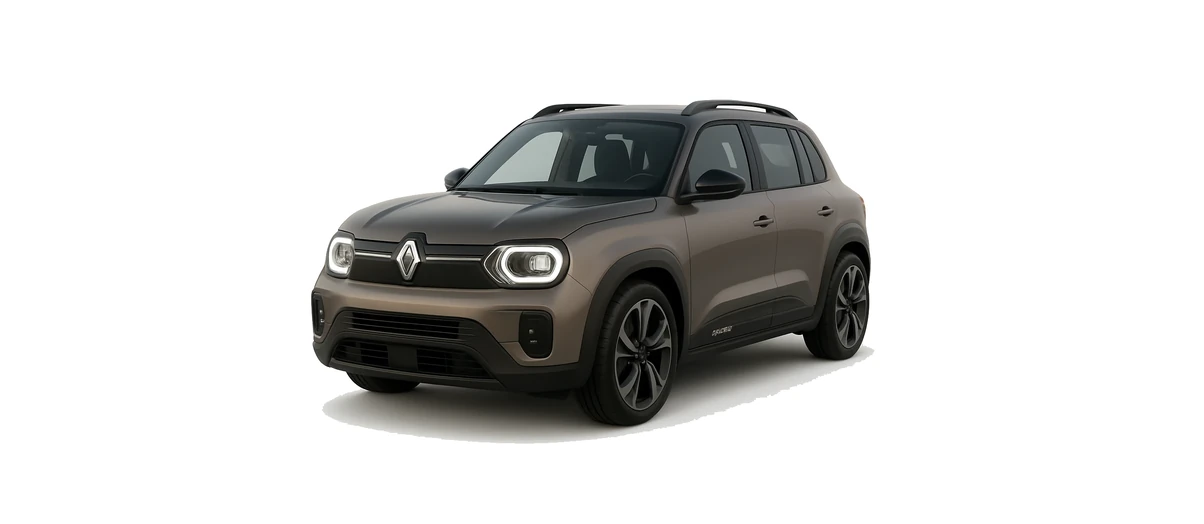
The Renault 4 E-Tech brings a familiar Renault name back as a fully electric, 5-door compact crossover. For UK buyers, the current retail information points to the 150 hp Comfort Range model with a 52 kWh battery, Type 2 AC charging and CCS rapid charging. That makes it well suited to everyday home charging, town use, commuting and longer trips with planned rapid-charging stops.
This guide focuses on practical UK charging: how quickly the Renault 4 E-Tech can charge at home, what its 11 kW AC limit means at public charge points, how to approach DC rapid charging, and what cable choices make sense for owners. It also covers confirmed features such as the standard heat pump and optional vehicle-to-load capability, while avoiding unconfirmed claims around vehicle-to-grid or home backup use.
View Renault 4 E-Tech Charging Cables
Renault 4 E-Tech Battery and Charging Specifications
The current UK Renault 4 E-Tech range is listed as a fully electric vehicle, not a hybrid or plug-in hybrid. Renault UK information and the UK e-brochure show the 150 hp Comfort Range model using a 52 kWh battery across the main UK trims, including evolution+, techno+, techno+ plein sud, iconic+ and iconic+ plein sud.
For charging, the Renault 4 E-Tech uses a Type 2 connection for AC charging and a CCS Combo 2 connection for DC rapid charging. In practice, that means a Type 2 cable is used for untethered AC public charge points and some home wallboxes, while motorway-style rapid and ultra-rapid chargers use their own tethered CCS cable.
- Vehicle type: fully electric BEV
- Current UK battery: 52 kWh usable capacity
- WLTP range: up to 249 miles
- Estimated real-world range: around 195 miles, depending on conditions
- AC charging: up to 11 kW
- DC rapid charging: up to 100 kW
- Connector: Type 2 / CCS Combo 2
Battery Options
For UK charging purposes, the Renault 4 E-Tech should be treated as a 52 kWh car in the current retail range. Renault UK describes the model as using a 52 kWh Comfort Range battery, while EV Database estimates a 55 kWh total capacity with around 52 kWh usable. The usable figure is the most helpful one for charging and range planning because it reflects the energy available to drive the vehicle.
Some earlier or non-UK European material has referenced a smaller 40 kWh Urban Range version. However, that version is not shown as the current UK retail battery option in the sources used for this guide. UK owners and buyers should therefore check Renault UK’s latest configurator or brochure if a smaller-battery version appears in future.
AC Charging Speed
The Renault 4 E-Tech has a maximum AC charging rate of 11 kW. This is an important detail, because it affects how the car behaves on both home wallboxes and public AC posts.
Most UK homes have a single-phase electricity supply. On a typical 7.4 kW home wallbox, the Renault 4 E-Tech will charge at up to 7.4 kW rather than 11 kW, because the household supply is the limiting factor. Renault quotes a 15-80% charging time of 5 hours 11 minutes on a 7.4 kW home wallbox, which is convenient for overnight charging or for topping up during the day.
On three-phase AC, the Renault 4 E-Tech can make use of its 11 kW onboard charger. This may be useful at some public AC charge points, workplaces or properties with three-phase electrical supply. However, a 22 kW AC post will not charge the Renault 4 E-Tech at 22 kW. The car is limited by its 11 kW onboard charger, and Renault quotes 15-80% in 3 hours 13 minutes on a 22 kW AC post where the car takes up to 11 kW.
For cable selection, the key point is that the car uses Type 2 for AC charging. A Type 2 to Type 2 cable is the appropriate cable for untethered public AC posts and untethered home wallboxes. If you regularly use three-phase public AC charging, choose a cable suitable for three-phase use; if you only use a tethered home wallbox, you may not need to handle a separate cable at home, but it is still useful to carry one for public AC charging.
DC Rapid Charging Speed
For longer journeys, the Renault 4 E-Tech supports DC rapid charging at up to 100 kW. DC rapid chargers use the CCS part of the car’s charging port and have a tethered cable attached to the charger, so you do not need to bring your own DC cable.
Renault quotes a 15-80% DC rapid charge time of 30 minutes under suitable conditions. EV Database estimates around 35 minutes for a 10-80% rapid charge. The difference is mainly because the starting and ending percentages are different, and because real charging speeds vary with battery temperature, charger performance and state of charge.
As with most electric cars, it is usually quicker on a road trip to charge from a low state of charge to around 80% rather than waiting for 100%. Charging speed tends to taper at higher states of charge, so the final 20% can take disproportionately longer. For motorway journeys, planning stops around the 10-80% or 15-80% window will usually be more efficient than trying to fill the battery completely at every stop.
Range and Efficiency
The Renault 4 E-Tech is rated at up to 249 miles WLTP with the 52 kWh battery. WLTP figures are useful for comparing cars, but real-world range depends on weather, driving style, speed, load, tyres and use of heating or air conditioning.
EV Database gives an estimated real-world range of around 195 miles for the 52 kWh 150 hp model. In mild weather and mixed driving, some journeys may get closer to the official figure; in winter motorway use, range may be lower. The confirmed standard heat pump is a helpful feature, because heat pumps can reduce the energy needed for cabin heating compared with more basic resistive heating systems, particularly in colder conditions.
For daily use, the practical question is not usually whether the car can reach its maximum WLTP figure, but whether it can cover your normal mileage between charges. For many UK drivers, a 52 kWh battery paired with home charging means the Renault 4 E-Tech can be topped up overnight and used without needing frequent public charging.
Charging at Home
Home charging is likely to be the most convenient and cost-effective way to run a Renault 4 E-Tech. A dedicated 7.4 kW wallbox is the usual recommendation for UK homes with single-phase supply. It is faster, safer and more practical than relying on a domestic socket, and it can often be paired with off-peak EV tariffs, solar integration or smart charging features.
Using Renault’s quoted 15-80% time of 5 hours 11 minutes on a 7.4 kW wallbox, the car is well suited to overnight charging. Many owners will not charge from very low to very high every day; instead, they will plug in when convenient and keep the battery within a comfortable working range.
If your home wallbox is untethered, you will need a compatible Type 2 charging cable. If it is tethered, the cable is attached to the wallbox, but carrying a Type 2 cable in the boot remains useful for public destination chargers, hotels, workplaces and town-centre AC posts.
A 3-pin charger is generally best suited as a backup or occasional charging solution, but can be used regularly if a qualified electrician has confirmed the socket and electrical installation are suitable for sustained EV charging. Domestic sockets were not originally designed around repeated high-load EV charging, so professional checks matter, particularly for older wiring, garages and outdoor sockets.
Public Charging
Public charging for the Renault 4 E-Tech falls into two main categories: AC destination charging and DC rapid charging. AC charging is often found in car parks, workplaces, hotels and town centres. These chargers may be 7 kW, 11 kW or 22 kW, but the car’s onboard AC limit remains 11 kW. That means a 22 kW AC post can still be useful, but it will not deliver 22 kW to the Renault 4 E-Tech.
For untethered AC posts, you will need your own Type 2 cable. This is the cable most owners should keep in the car for everyday public charging. If the charger is tethered, simply use the attached cable.
DC rapid charging is the better option when you need to add range quickly on a longer trip. These chargers are usually found at motorway services, retail parks and dedicated charging hubs. Plug the tethered CCS connector into the car and follow the payment or app instructions. Renault also references Plug & Charge at compatible DC fast-charging stations via Mobilize Charge Pass, which may simplify the process where supported.
Vehicle-Specific Features
The Renault 4 E-Tech includes several features worth understanding from a charging and ownership perspective. The standard heat pump is useful for efficiency in colder weather, helping reduce the energy demand of cabin heating compared with simpler systems.
Battery preconditioning is also referenced in Renault material, particularly in connection with route planning and DC charging. Where available, using the car’s navigation or route-planning features before a rapid charge can help bring the battery closer to an ideal temperature, especially in cold weather. However, Google built-in and route-linked functions may depend on trim, so owners should check the specification of their exact vehicle.
The Renault 4 E-Tech also has confirmed vehicle-to-load capability of up to 3.7 kW in the UK brochure, but it requires a vehicle-to-load adaptor sold as an accessory. V2L can be useful for powering outdoor equipment, camping kit, tools or small devices when used within the system’s limits. It should not be confused with vehicle-to-grid or vehicle-to-home backup. Current UK retail information used for this guide confirms V2L, but does not provide a clear UK retail confirmation of V2G or V2H availability.
Charging Tips
- Use a 7.4 kW wallbox at home where possible: this is the normal UK single-phase setup and suits the Renault 4 E-Tech well.
- Remember the 11 kW AC limit: a 22 kW AC public post will not charge this car at 22 kW.
- Carry a Type 2 cable: it is essential for untethered public AC chargers and useful even if your home wallbox is tethered.
- Rapid charge to around 80% on trips: charging above 80% is often slower because the rate tapers.
- Precondition before rapid charging where available: route-linked battery preparation can help improve DC charging performance in cold weather.
- Use V2L appropriately: the optional adaptor can power devices up to the stated limit, but it is not a domestic backup power system.
Frequently Asked Questions
What charging cable does the Renault 4 E-Tech use?
It uses a Type 2 connection for AC charging and CCS Combo 2 for DC rapid charging. For untethered public AC charging, you need a Type 2 to Type 2 cable. DC rapid chargers have their own tethered CCS cable.
Can the Renault 4 E-Tech charge at 22 kW AC?
No. The Renault 4 E-Tech has an 11 kW AC onboard charger. It can use a 22 kW AC post, but the car will be limited to up to 11 kW.
How long does home charging take?
Renault quotes 15-80% in 5 hours 11 minutes on a 7.4 kW home wallbox. Actual charging time depends on starting percentage, target percentage, temperature and charger conditions.
How fast is rapid charging?
Renault quotes up to 100 kW DC rapid charging and a 15-80% time of 30 minutes in suitable conditions. EV Database estimates around 35 minutes for 10-80%.
Does the Renault 4 E-Tech have vehicle-to-load?
Yes, UK brochure information confirms V2L at up to 3.7 kW, but an accessory adaptor is required. It is intended for powering devices and equipment, not as a confirmed UK vehicle-to-home or vehicle-to-grid system.
What This Means for Drivers
The Renault 4 E-Tech should be straightforward to live with if you can charge at home. A 7.4 kW wallbox can comfortably replenish the battery overnight, while the 52 kWh usable capacity gives a useful balance of compact size and everyday range. For longer trips, 100 kW DC rapid charging is competitive for this class, especially if you plan stops around the 10-80% or 15-80% charging window.
The main point to remember is that the car’s AC charging ceiling is 11 kW. That is better than a basic 7.4 kW-only setup when three-phase AC is available, but it also means 22 kW AC posts will not deliver their full output to the car. Choose a Type 2 cable that fits your charging routine, keep it in the vehicle for public AC use, and rely on CCS rapid chargers when journey time matters.
Looking for a Charging Cable for Renault 4 E-Tech?
We offer Renault 4 E-Tech charging cables suitable for home wallboxes and public Type 2 AC charging, helping you choose a cable that matches how and where you charge.
View Renault 4 E-Tech Charging Cables
Please note that this information is intended as a guide. Charging specifications may change due to model and year of manufacture. For precise information, always refer to your vehicle user manual.

